Two key challenges to IndyCar’s Washington, D.C. circuit
IndyCar Series drivers will need to embrace their inner angels during Sunday’s Freedom 250 street race around the nation’s capital.
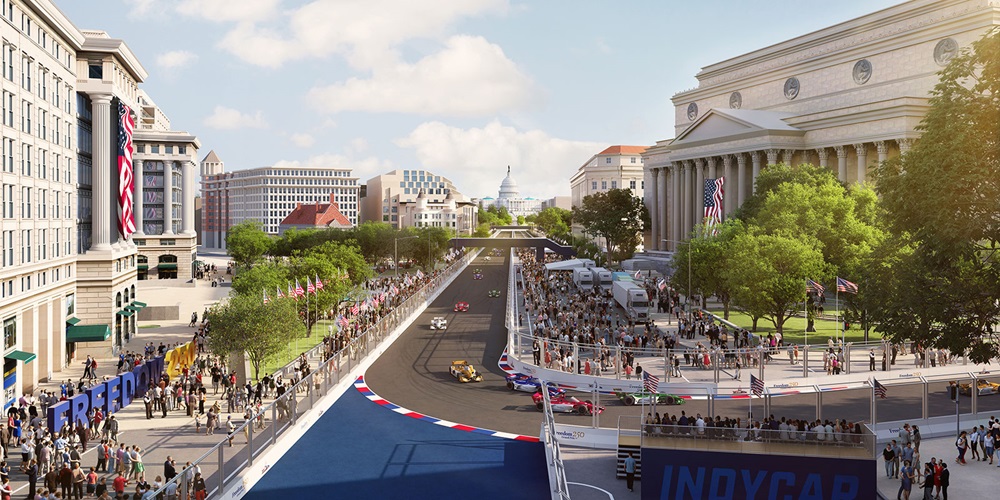
The Washington, D.C. track is short at 1.7 miles and has just seven turns, which might suggest each of the 147 laps on tap will be brief and simple for the 25 drivers to navigate, but there are two interesting wrinkles to consider during the 250-mile contest.
First is the abundance of track width to attempt those passes. Most street circuits are defined by narrow roadways that make single-file running the norm between corners, but the Washington, D.C. layout strays from street racing norms with expansive runways where drivers can run three- or four-wide between most turns.
It’s here where the sheer track width in those areas could invite ill-considered passing attempts by multiple drivers at the same time. With the potential for fanning out and spearing drivers who’ve already turned into those corners, the need for discernment between true passing opportunities and knowing when to fall in line and make it safely through the most inviting turns will be at a premium.
Without better judgment, the Freedom 250 could look more like a motorized bowling tournament than an automobile race, and that’s where drivers will need to avoid hitting each other and the concrete walls to avoid spending the afternoon behind the pace car.
“The wide corners are good on the start and the restarts because you’ve got so much room to play with, but they definitely invite more risk,” Indianapolis 500 winner and Long Beach street race polesitter Felix Rosenqvist told RACER. “There are some corners that could be a little tricky, where like if someone crashes, it might create like a chain reaction thing. That's probably the biggest worry here.
“But the fact that it is wide, if someone gets tangled up, maybe you can just put in reverse and restart and go. You can’t normally do that on street courses because there’s not enough open space most of the time. With 147 laps, I think it's going to be inevitable you're going to have a lot of yellows. I think that's the name of the game. I think the fact that we have the restart capability now is probably a very good thing.”
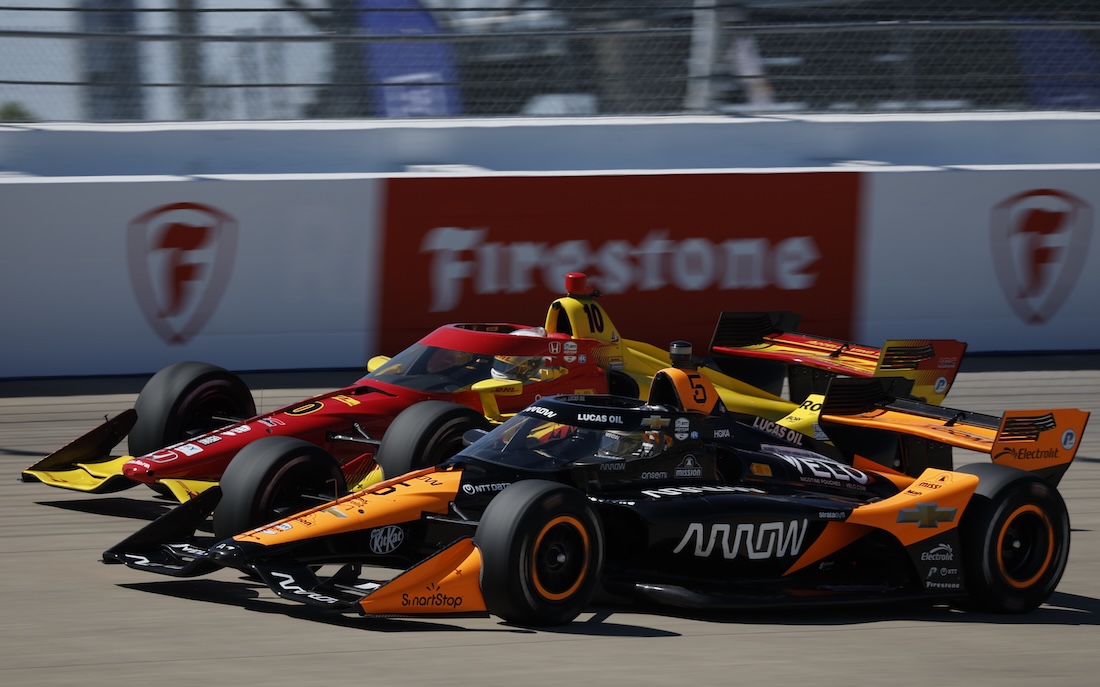
Team Penske’s Scott McLaughlin is one of IndyCar’s leading street course specialists and wants to use the comparatively open spaces entering and exiting many of D.C.’s turns to his advantage. Where the confines of most street tracks force drivers to follow the same lines throughout the course, the Freedom 250’s breadth should allow for more creativity on how and when to pull out and attempt overtaking maneuvers.
“The width is great for raceability,” McLaughlin said. “I think it allows a lot of passing, and then obviously with the brake distances as well, I think you'll see a lot of chances to pass and use your push-to-pass and to get past people. I've always said that any time you have a lot of 90-degree corners, I feel like that really bodes well for passing when they don't look after their tires.
“That helps the raceability standpoint as well. You’ve got to really think about those rear tires because there's going to be a lot of point-and-shoot stuff from corner to corner. It looks pretty simple on paper. but I think there's going to be that technical aspect to it, and it’s obviously going to be bloody close.”
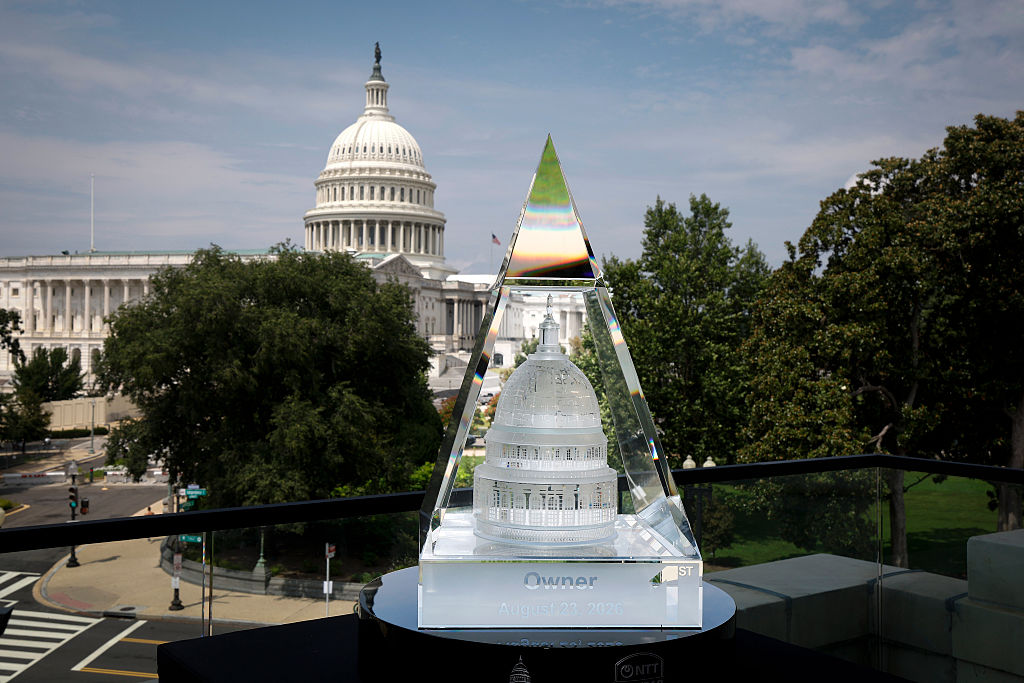
The race might reward patience, but will the promise of a one-of-a-kind trophy encourage the opposite? Michael Levitt/Lumen via Getty Images
The second key point to consider with the Freedom 250 is the marathon-like distance for the field to cover over those 147 laps and 250 miles.
The St. Petersburg street race is 100 laps and 180 miles in total; Arlington is 70 laps and 190 miles; Long Beach is 90 laps and 177 miles; Detroit is 100 laps and 165 miles, and Markham is the closest to D.C. with distance to cover at 90 laps and 197 miles.
With the high propensity for contact on street courses, completing all 250 miles without incident is where Rosenqvist is placing his focus.
“It’s going to be survival with it being such a long race,” he said. “I think that’s the biggest challenge, the length. That’s a lot of extra time in the car and a lot of laps to do. If you get through it all in one piece, I think that’s going to be a big reward itself.”
And what about embracing inner angels and making sure IndyCar’s big debut on the National Mall is remembered for excellence rather than a demolition derby?
“When the helmet comes on, man…I can only speak for myself, but you're probably not gonna care that much about any of that stuff,” Rosenqvist added. “I don’t think anybody is going to take it easy because the president is here or because it’s the 250th birthday of the country. Like, it's a race, right?
“That’s what we’re here to do. And I think everyone's going to have the same mentality once you put on the helmet. Let's say you have an opportunity to pass someone on the restart and take a risky move. You know, that's probably going to be the thing you're going to do.”
Marshall Pruett
The 2026 season marks Marshall Pruett's 40th year working in the sport. In his role today for RACER, Pruett covers open-wheel and sports car racing as a writer, reporter, photographer, and filmmaker. In his previous career, he served as a mechanic, engineer, and team manager in a variety of series, including IndyCar, IMSA, and World Challenge.
Read Marshall Pruett's articles
Latest News

Comments
Comments are disabled until you accept Social Networking Cookies. Update cookie preferences
If the dialog doesn't appear, ad-blockers are often the cause; try disabling yours or see our Social Features Support.