Andy Hone/Getty Images
For drivers, navigating F1’s silly season has become more complicated than ever
Formula 1’s driver market was once a carousel that spun continually, offering the tantalizing opportunity for drivers and teams to change their circumstances dramatically with one good decision.
Yes, superstar drivers became immovable fixtures in teams they thrived with, but with more competitive fluctuations at the front and a higher volatility in terms of driver line-up, there was always another chance around the corner. Play your cards right, and you could get the chance you deserved.
Over time, it has slowed down, making playing the driver market a more strategic game for most. Some are fortunate enough to be the kingpins who have a degree of control over their own destiny, such as Max Verstappen. There’s no F1 team that wouldn’t at least have a serious conversation with him about a move given the chance, but there will only ever be a tiny handful of drivers at any one time with that status. The established and well-regarded drivers jostle for position, waiting to pounce on the reshuffle triggered when the first domino falls. Those in the third group hold the weakest hands, either scrabbling desperately to cling onto a seat at the top table, or trying to force their way in.
The market was once ever-moving, usually building to a maelstrom better known as the silly season. Today, it ebbs and flows, with long periods of inactivity characterized only by positioning behind the scenes. Managers – the good ones at least – float around the paddock, absorbing information, making sure the key decision-makers understand the potential availability of their clients and laying the foundations for moves that might happen a couple of years down the line, if at all. The driver market kicks into overdrive when a bombshell like Lewis Hamilton joining Ferrari in 2025 drops. That’s when those taking their 10 percent (or more) really earn their keep, but it requires a rolling start building on work done in the background in anticipation of just such a moment.
When details of Hamilton’s Ferrari switch emerged in January 2024, everyone was impacted and it led to half of the seats on the grid changing hands. As is the usual pattern, that was followed by a calm period with relative stability into this year, when there was only the inevitable reshuffle in the Red Bull teams to worry about.
Right now, we’re at the inflection point where either a shockwave will energize the driver market, or it settles into an extended calm. There are two key players in this: Verstappen and Fernando Alonso.
Early on in the season, the question of Verstappen’s ‘27 future was the one everyone playing the driver market game wanted to know the answer to. This calmed down a little when it seemingly became clear he’s likely to stay on at Red Bull rather than triggering a release clause, albeit with the caveat that there’s always the risk of something unexpected happening.
Rumors about him joining McLaren or switching to Mercedes persist, and it would be naive to imagine conversations aren’t going on behind the scenes. However, it seemed heading into the August break that Verstappen’s interest is more in maneuvering himself for 2028 rather than making an imminent move.
There’s still the potential for him to reconsider and jump ship, either for another team or to take time out of F1, and this could set off a driver market feeding frenzy, but it would require a change of mind on his part. That’s possible, and disillusion with F1’s regulations and Red Bull’s problems could fuel such a decision, but there are good, sound strategic reasons for him to hang fire. After all, is Mercedes the place to be as the works team, or will McLaren eclipse it?
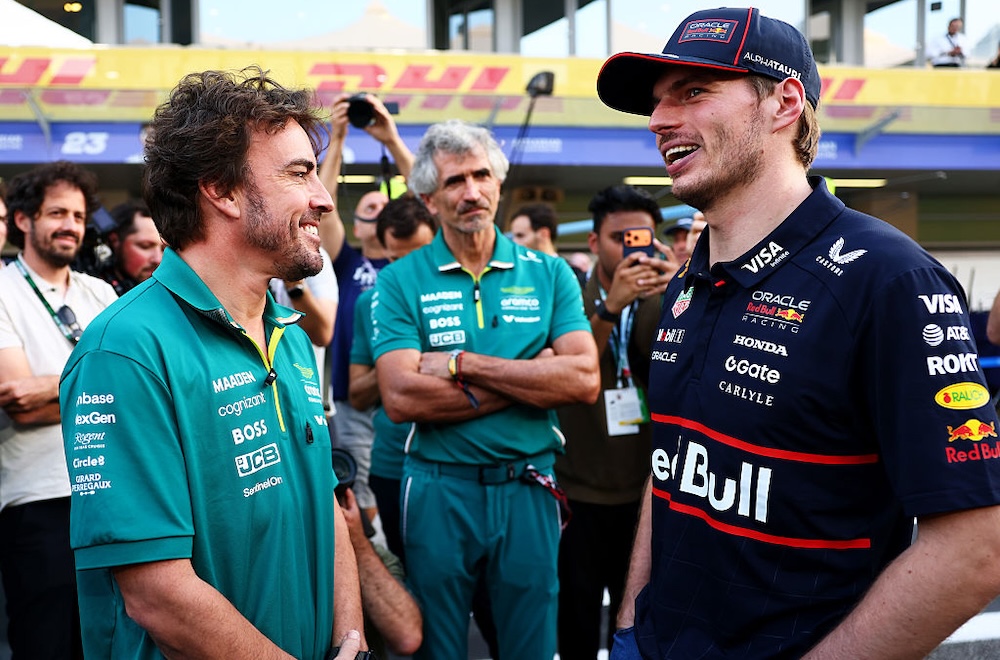
For most of the drivers and managers in the paddock, planning for the next couple of years revolves around what these two decide to do. Zak Mauger/Getty Images
In the races before the summer break, Alonso became an increasingly important figure given that a vacancy at Aston Martin would be of interest to a multitude of drivers. Its successful Hungarian Grand Prix upgrade, plus internal combustion engine improvements to the Honda power unit for the next race in the Netherlands as well as further chassis gains after that, should prove that it’s back on the right track.
With a state-of-the-art factory, big investment in infrastructure and Adrian Newey on its books, Aston Martin remains an appealing destination for anyone searching for a way out of the midfield to the front. It’s surely too far off for a top-team driver to dive in with confidence, but a high-risk, high-reward move can’t be completely counted out.
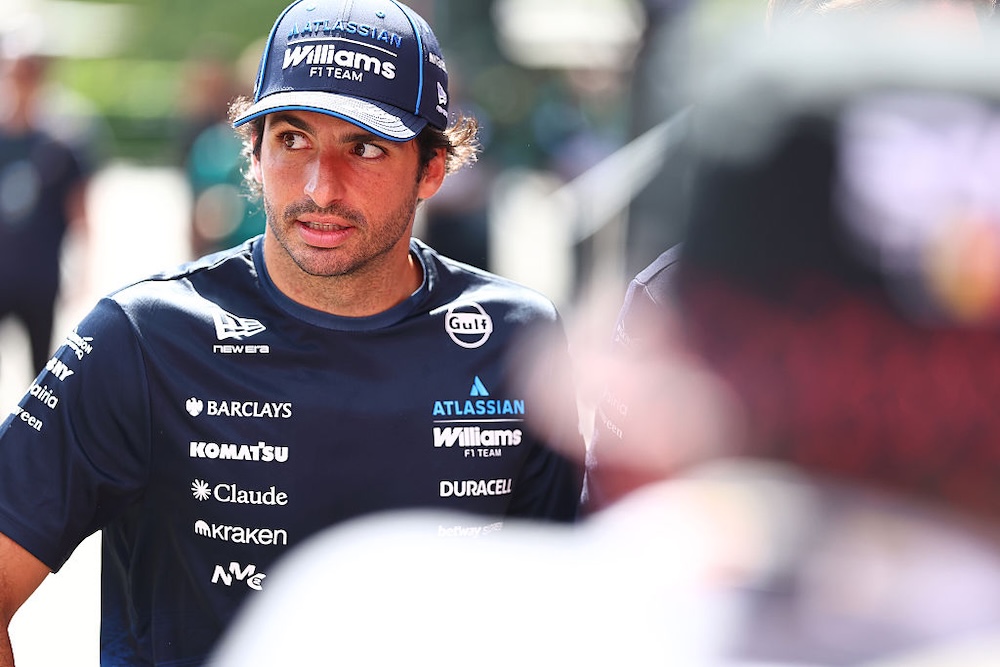
Take Carlos Sainz. He’s frustrated with Williams, and with good reason. His decision to turn down Audi was a bold one that appeared to have paid off with a midfield-leading 2025 season. As resources were focused on ‘26, the expectation was Williams would be in good shape this year, only for manufacturing and development problems to render it the ninth-best car so far. He’s already irritated at being forced out of a well-earned place at F1’s top table when he lost his Ferrari drive to Hamilton, and is now unsettled and does not appear convinced by Williams’s recovery plan.
The same applies to teammate Alex Albon, and both are understood to have the freedom within their contracts to move next year given results fall below the threshold required to give the driver the power to trigger a release should they want to. Sainz has performed well this season so his stock is higher, but his options are limited.
Aston Martin would be the most appealing, even if there’s a risk. Audi remains interested, but more likely for ‘28 once Nico Hulkenberg’s contract has expired – although it might choose to make space should Sainz be determined to jump ship. So his management is having to explore possible ‘27 vacancies, which look limited, while also considering what might happen in ‘28 and ‘29, also knowing that he would be on the radar of top teams should they have a vacancy if, say, Verstappen leaves Red Bull. Unfortunately, the avenues available to him are dictated by the choices of others, no matter how well he performs on track.
This captures the fundamental frustration for drivers. To make the most of a stint with any team takes more than a season or two. Not only does it take a year to settle in, to get your side of the garage working as you want, to adapt to the many details and systems needed to optimize performance, but also despite the rapid pace of development, changing competitive fortunes is like turning around a juggernaut. Car pace is the sum of a team’s parts, including its facilities and staff, with long lead times for improving both. Williams is catching up from almost two decades of under-investment prior to current owners Dorilton Capital buying it in 2020, and that will take years. But it’s the same for the other midfielders.
To underline how difficult it would be, put yourself in the position of a driver with the free choice of the midfield runners. Which would you select? Is it Alpine, which yo-yos between the top of the midfield and the back but hasn’t been a genuine front-runner for 13 years? Is it Audi, which has the potential and the investment but is striving to recover after years of falling behind? Is it Williams, which might be on a positive trajectory despite this one setback year? Is it Aston Martin, which has spent megabucks and has all the big-ticket items needed, but could become an "all the gear and no idea" operation? Do you bank on the GM-owned Cadillac squad to build on its promising start? Or perhaps you opt for Racing Bulls, limited in its potential by virtue of being a junior team but with a fast track to Red Bull Racing?
There is no definitive answer. And if you are a "middle-aged" F1 driver like Sainz, who reaches the grand old age of 32 next month, you know such a decision could be the difference between winning again, and seeing out your career feeding on scraps. So how do you balance up the desire for a quick move with playing the longer game? Whatever happens, you will get no mulligan so the stakes are sky-high in terms of career.
Thirty years ago, it would have been easier. That doesn’t mean it was ever straightforward, but the fluidity in the driver market and the faster swings in competitive cycles at least made it simpler. And it’s those drivers in the middle, who are good enough to be in demand rather than fighting for their racing lives, but who aren’t so prized that every team would roll out the red carpet for them, who have the most difficult decisions to make.
In that regard, a driver market that stays stable into 2027 and buys you more time, and therefore more information and greater opportunity to position yourself strategically, could be the best option. But there’s a fine line between stability and stagnation.
Edd Straw
Edd Straw is a Formula 1 journalist and broadcaster, and regular contributor to RACER magazine. He started his career in motorsport journalism at Autosport in 2002, reporting on a wide range of international motorsport before covering grand prix racing from 2008, as well as putting in stints as editor and editor-in-chief before moving on at the end of 2019. A familiar face both in the F1 paddock, and watching the cars trackside, his analytical approach has become his trademark, having had the privilege of watching all of the great grand prix drivers and teams of the 21st century in action - as well has having a keen interest in the history of motorsport. He was also once a keen amateur racing driver whose achievements are better measured in enjoyment than silverware.
Read Edd Straw's articles
Latest News
Comments
Comments are disabled until you accept Social Networking Cookies. Update cookie preferences
If the dialog doesn't appear, ad-blockers are often the cause; try disabling yours or see our Social Features Support.