James Black/Penske Entertainment
Take a long flight with: Mick Schumacher
You’ve just boarded a plane. Ahead of you is a non-stop flight from Los Angeles, to… somewhere in Europe with mountains and lakes and stuff. Let's say Switzerland. A flight long enough that you really hope you end up with someone interesting sitting next to you.
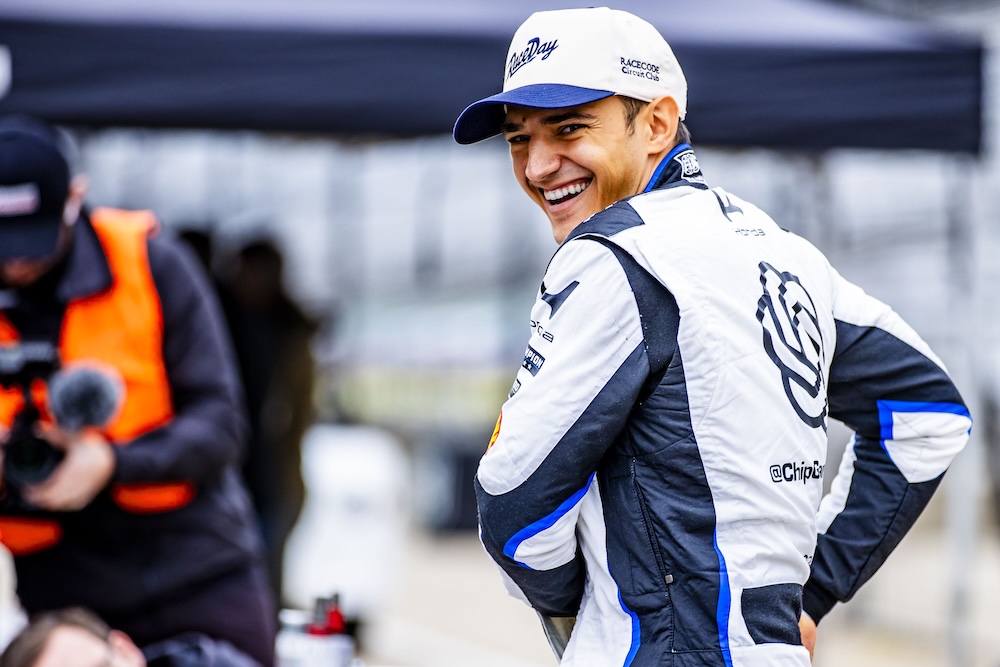
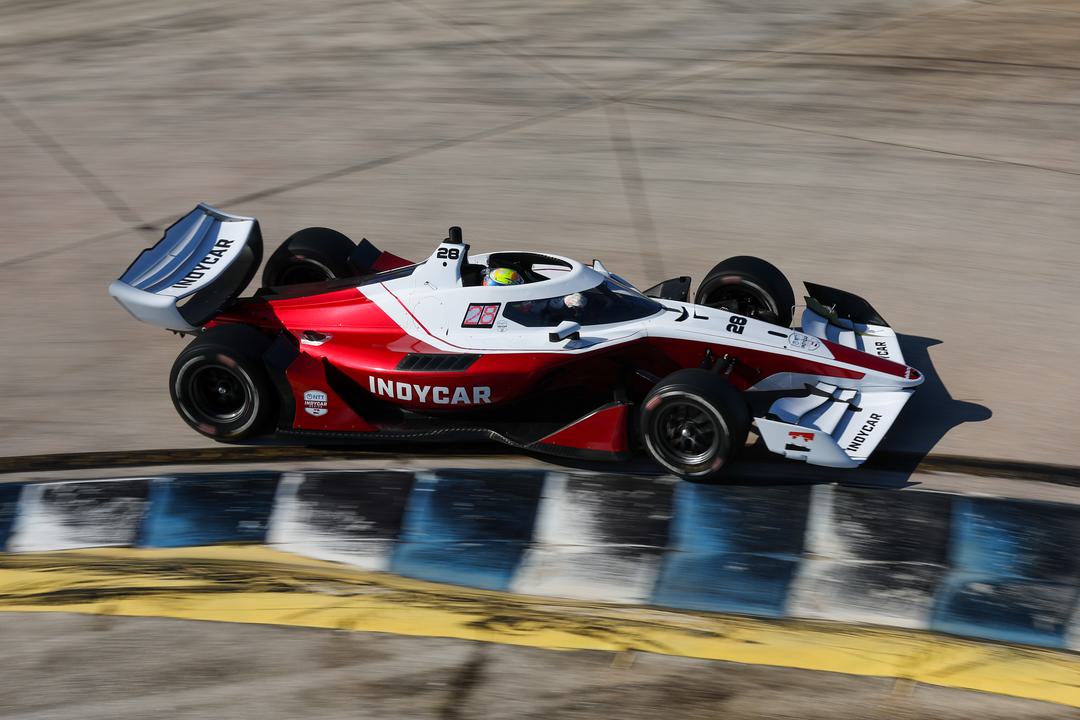
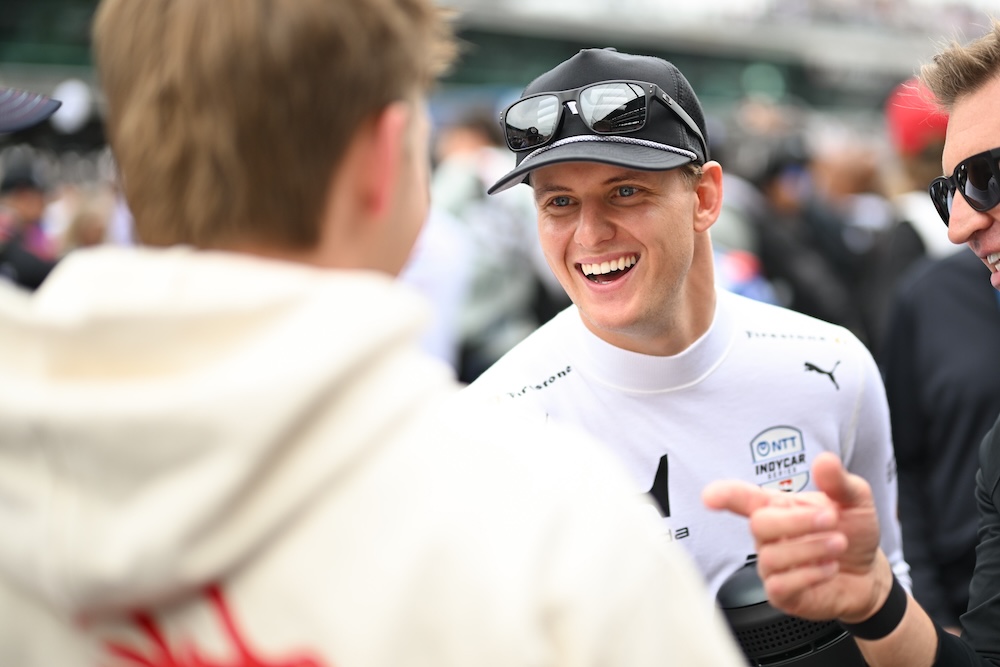
When you arrive at your row, your companion for the next 12 or 13 hours is already seated. He glances up and… wow, it’s Rahal Letterman Lanigan IndyCar driver Mick Schumacher! As a racing fan, you’re very excited about the hours of motorsports conversation that awaits as you cruise at 30,000 feet eating tiny pretzels. But given that it’s such a long flight, you’ll probably also learn some other stuff about him.
This interview is the third installment in an occasional series about that other stuff. Check out the previous editions to find out about Christian Lundgaard's greatest Lego achievement, and Marcus Armstrong's dog-eared book collection.
Aisle or window seat?
"Probably the window seat. I was told once that you collect the most germs in the aisle seat, so I try to always sit on the window seat.
"And I'm normally not in too much of a rush getting off. Normally I have a checked bag anyway, so it doesn't matter if I have to wait. I just want to make sure that I don't leave anything behind. And especially coming to the to the U.S., sometimes there’s quite a big queue in security and passport control, so I can’t wait too long. But equally, you don’t want to be the first one out."
He spends a lot of time jumping out of planes
"The first time I went skydiving, I must have been around eight or 10 years old. I don't really know exactly. I would have to look back at the pictures. But that was the first time my dad took my sister and I for a tandem skydive.
"I didn't jump the very first time. I went down with a plane again. And my sister went for the jump, and I was like, ‘I can't let my sister jump and me chicken out,’ So I had to go back up, and then I did it.
"It didn't take too many more tries before I liked it, just because I think the first time I was just not aware what was coming my way, and then the second time obviously I knew what to expect. Also, not being old enough to do my license at that point, I just was doing tandem after tandem. I probably did 15 or 20 tandems before I got to do my license, which is extensive in skydiving. It's a huge amount of tandems to do before you do your license. [ED: The license is required for solo jumps]. I've got around 1,700 jumps now.
"I usually tend to stay with the same drop zones. I have a couple of drop zones around me, and I have one that I really like. It's within an hour drive, which is super-easy for me to get to. And then back in Europe, there are different places like Spain or in Switzerland as well, which are very accessible for me, and I have a lot of friends out there that skydive themselves, too, so it helps.
"What makes a good drop zone? Safety is obviously one – different drop zones have different safety rules and regulations and stuff. And more than that, it's also the people that are at the drop zone. If you have people that are nice and fun to be around, it's easier to stay at that drop zone. If they're somewhat difficult, then it's easy to change.
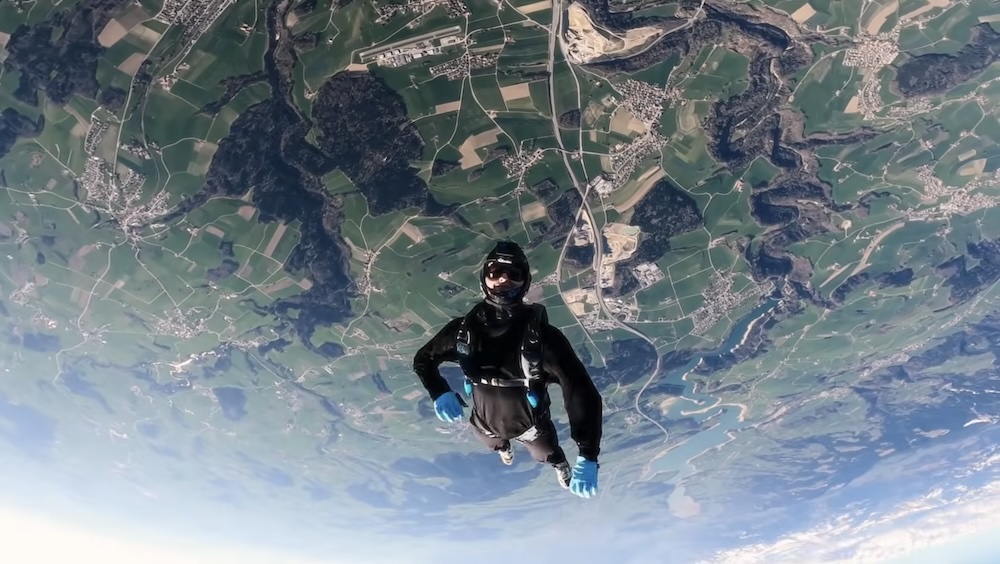
Safer than a bathtub. Screenshot/youtube.com/@mickschumacher
He lost the fear factor about 1,650 jumps ago
"I don't feel apprehension before jumps anymore. You get to a point where it's more just, OK, you go in, you want to plan something and you want to execute the plan. So you go in with the mindset, and you really focus just on doing that.
"But of course, one thing that I always tell myself, and frankly, anybody I'm around – it's the same for me in racing – I never want to lose respect for what I'm doing. These are things that are not necessarily dangerous – obviously, they're dangerous to a certain degree – but they're always within reason if you respect it, and if you have control over what you do, and if you do know the emergency procedures.
"People always say, 'Ah, but skydiving is so dangerous,' and I say, 'Yeah, but going to a bathtub to take a shower is dangerous, too.' You know, the amount of people that fall and break their neck or a vertebrate or whatever. I think there's a statistic that most people who die skydiving, die driving to the drop zone.
"I mean, you have paragliding, which is a lot closer proximity to the ground, and I feel like that is a much more dangerous sport in some ways because you're flying slower and you're trying to use the thermals to move up and down. Whereas in skydiving it's a much smaller parachute, but because you have more speed, it feels like you have more control, and you're not as affected by thermals than a paraglider, for example.
Whatever he's doing, he can apply to his day job
"There are different hobbies that I do and different sports that I like to do, all which I kind of try and find a connection to racing in some way. If it is training like swimming or a triathlon, if it is skydiving, if it's road cycling, running, there are parts of it which I can reflect on and say, ‘OK, this is how I would like to manage my race,’ for example. Like how I manage my run – not going all-out in the beginning, but keeping something in my pocket for the end.
"Same on the bike when I go road cycling, especially back at home for training purposes. I love to feel how much you can save by just sitting in the draft, for example. You know how much you save your energy, and that brings it back to, 'OK, that's how I can save my fuel running in the car.' Just by sitting behind somebody, you save so much in that dirty air, and because you have that, you now don't use as much energy to get around the track.
"So all these little points with skydiving, it's really being meticulous about what you're doing. Make sure you pack right. Make sure you have all your systems in in place when you get out of the plane. When you're jumping with somebody to always think ahead and think what could they do wrong so that you can anticipate it, which is something that I use in racing, too.
"Golfing… I started golfing last year and I really enjoy it. There's a level of precision that you need to have to be able to hit that ball relatively straight that is unparalleled to any other sport that I've tried so far, except for racing. You need to be so precise in racing, and I feel like I can really take that one-to-one to golfing in some ways.
"If you rush it, it will not work out. You'll slice it or you hook it. If you keep your pace and your tempo, suddenly everything just works much easier. And if you will force it, it won't work here.
He's curious about cars that slide
"There was a time, especially with Race of Champions, where I got to drive some rallycross cars and stuff like that. I actually got to drive on a proper rallycross track as well, back in Sweden on ice with a rallycross car. I also got to take a Dakar Rally car just for fun and try it. It was it was really interesting. It was an Audi car, the EV [ED: the Audi RS Q e-tron].
"It was super-interesting to drive for the simple reason of, it felt like a go-kart; it felt like you were sitting in the middle of the car and the car was just moving on you. Even though it was such a big, monstrous car, I could fit it through the tiniest of roads that I thought I would never fit through, and it was just bumping through things but you didn't even feel it.
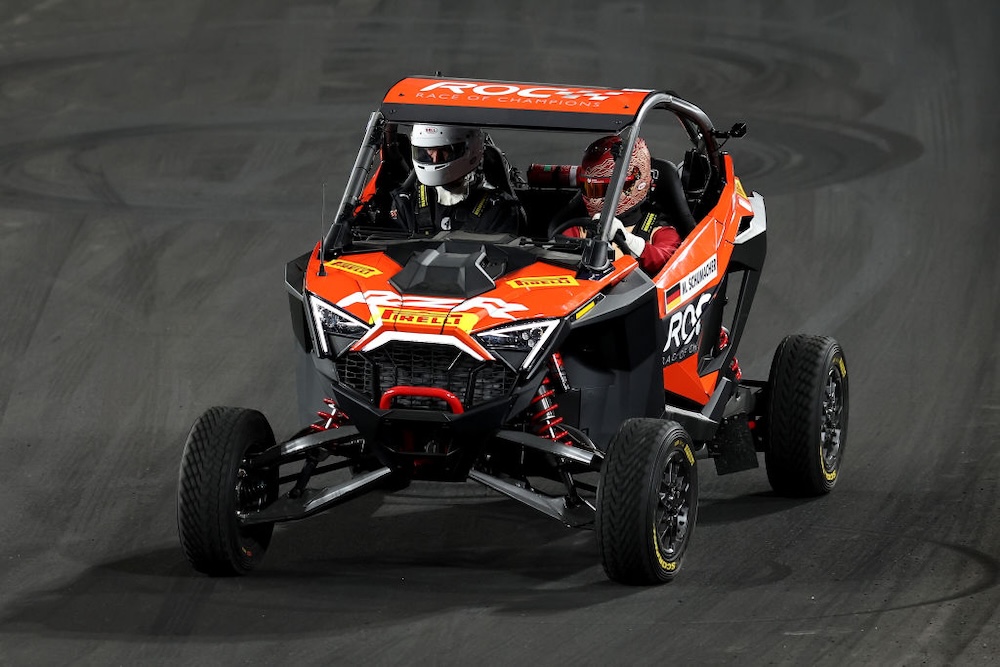
Schumacher at the Race of Champions in 2025. Brendon Thorne/Getty Images
"Definitely there are point parts of me where I'm like, 'I would love to try rallying. I would love to try some of this off-road stuff.' But then, I also go back to looking at what happened to Robert Kubica, where I'm like, if you go and try these out just for fun, there are chances that it might happen, right? [ED: Kubica sustained severe injuries in a rallying crash in Italy in 2011]. And you're in a risky position, especially in rallying. I mean, rallying in Finland or whatever, these places, if you hit a tree at those speeds, it's pretty dangerous, right?
Rallycross, on the other hand, might be more acceptable, and that might be something to do just for fun at some point, but for now, I'm very much focused on IndyCar and happy to be here.
"We have side-by-sides at the ranch (in Texas), which we take out every now and then. At the moment, since it's raining from time to time, the racetrack ends up pretty wet in places. We race on somewhat like semi-slick tires, which don't really do well in those really muddy circumstances, and also it would just ruin the track. But I try and do it whenever I can.
He can probably checkmate you – unless you're a certain bot
"I play chess. Not as seriously as I did in in F1. In F1, it was a very, very good way to pass time, but also I feel like it was always good to try and work out somebody's mind. I remember I did one interview where we were where we were playing chess, and (my opponent) was a 2600 rating [ED: i.e., world class], and he had two coaches and stuff. And I just played for fun, and I think he was just so focused on asking me questions that I ended up beating him. So I was pretty stoked about that! But my rating's gone down a lot since. I mean, I was probably around the 1500 to 1600 rating [ED: …which is excellent for a casual player] and now I'm probably back in the beginner level.
He's more of an e4 (i.e. attacking) than d4 (controlling) player
"Probably e4. I don't know why, I just like it. Honestly, I've never really studied it. It's just somebody showed me, ‘This is what you should do on an opening, and this is what you should have done.’
"Lately, I love using my knight to start off with, just keep everything intact and attack with the with the knight because I don't really care about it. I try to switch my openings around a little bit at times.
"But right now I'm stuck with this one bot on chess.com; just this one bot that I can't beat. I get frustrated. I try all the different things, and… yeah. I bought a chess board earlier this year, which I can play a bot on, have a physical board in front of me. It's pretty interesting. But the computers are just too good.
He had strong feelings about American air conditioning – but he's starting to come around
"I've actually gotten better about that because I realized how hot it is outside. I feel like after some time you kind of get used to it, and also on top of that, I was told by multiple people that the colder you sleep, the better it is for you. So I have an Eight Sleep mattress, which cools you down.
"I have it in Switzerland. I have it in in pretty much all my places. The exception is still the motorhome; that's waiting to to be equipped with it. But I love it. It's great. I feel the most comfortable I can with that thing. I was struggling a lot with sleep, and once I put that on, it just really made it made it a lot better and a lot easier for me."
Mark Glendenning
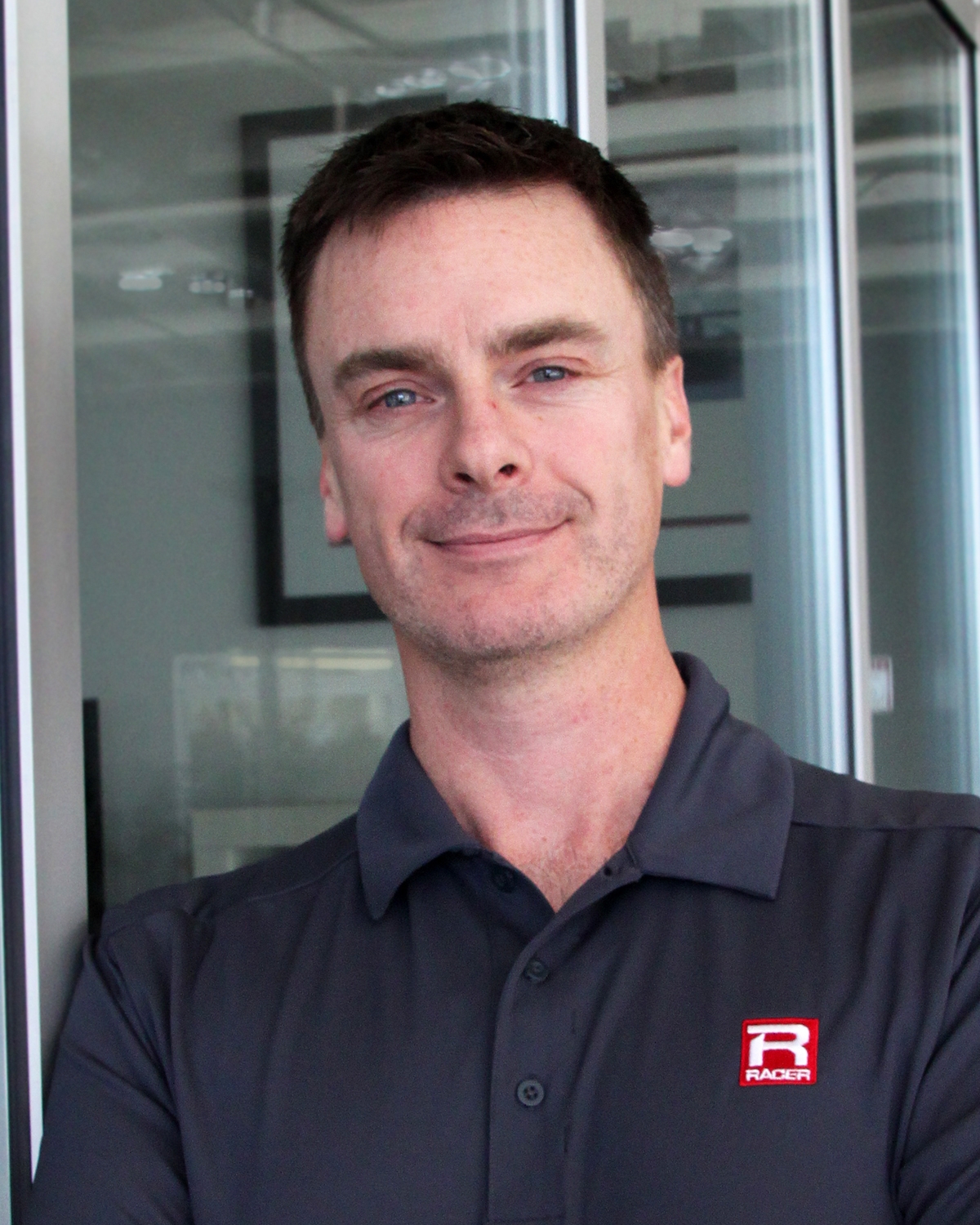
During his long career in racing, Mark has been placed into a headlock by a multiple grand prix winner, escaped a burning GT car, ridden a Ferris wheel with Ari Vatanen and almost navigated a rally car into a pond. He’s also had the good fortune to have reported on hundreds of races around the world, first while working for a national publication in his native Australia, and later during his years with Autosport in the UK. He moved to the U.S. in 2012, and after a serving as a contributor to RACER he joined the publication full-time in 2015. Mark now serves as Editor of RACER.com, and is also involved in the production of the magazine.
Read Mark Glendenning's articles
Latest News
Comments
Comments are disabled until you accept Social Networking Cookies. Update cookie preferences
If the dialog doesn't appear, ad-blockers are often the cause; try disabling yours or see our Social Features Support.