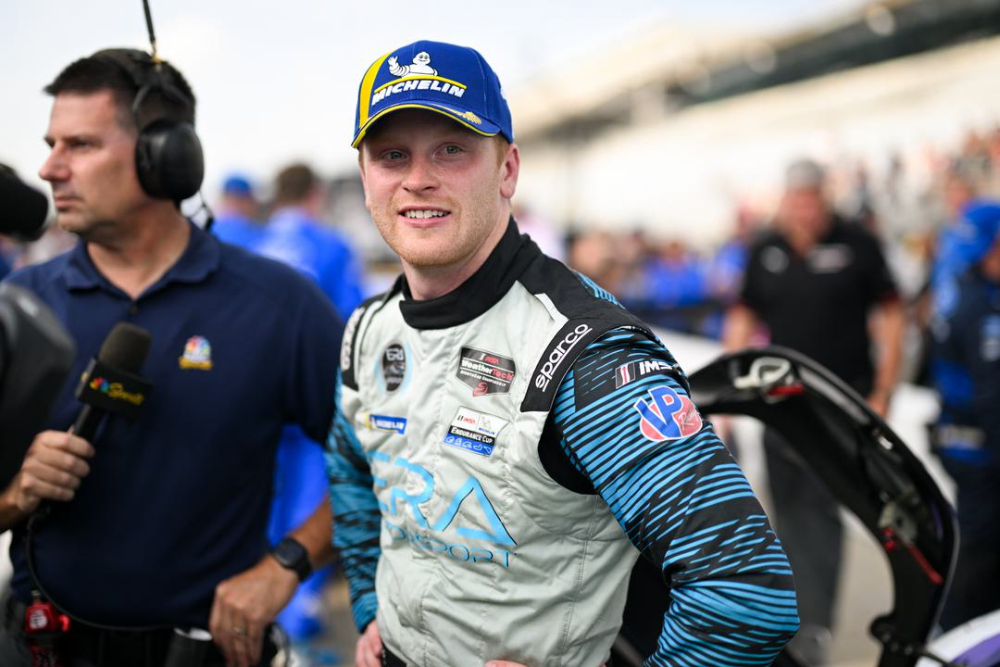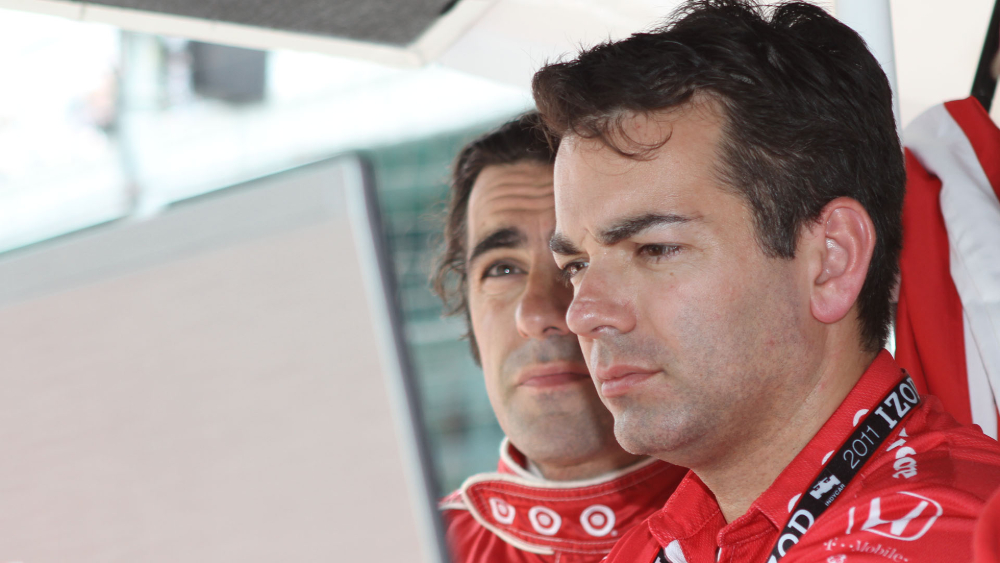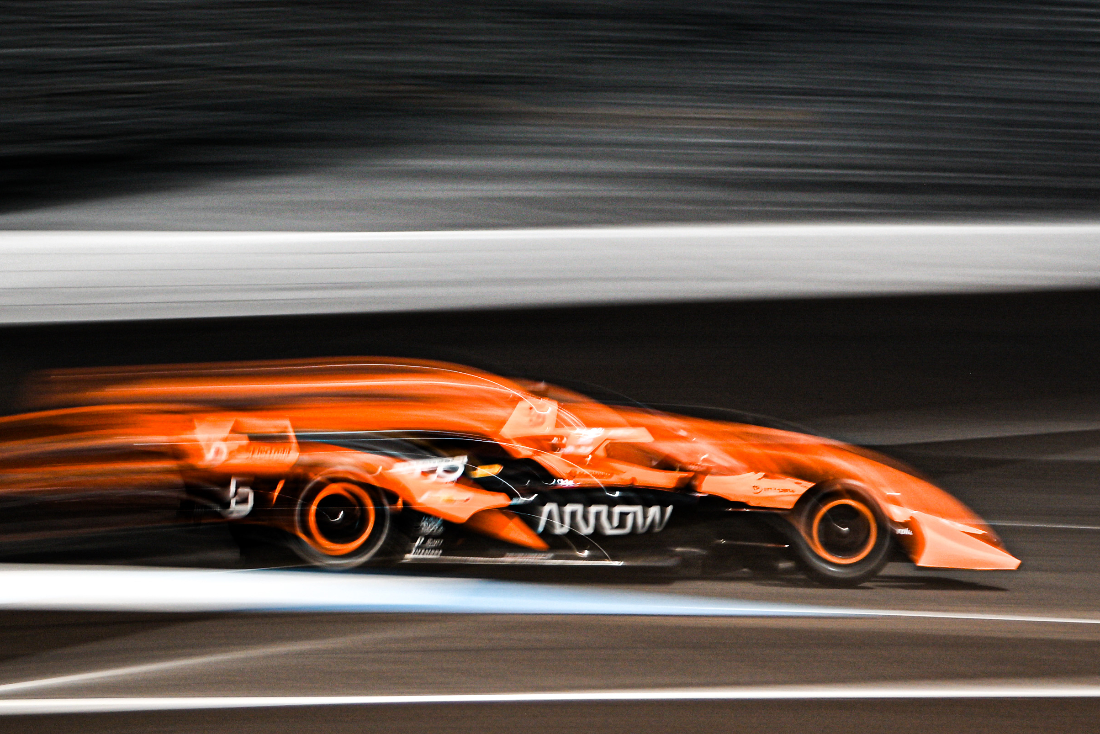
Brandon Badraoui/Lumen via Getty Images
What drove Arrow McLaren’s decision that the time for major change had come
As we await confirmation from Arrow McLaren on its driver changes, it’s worth diving into some of the issues the team has faced and the reasons why it is taking a fresh approach to its three-car program after recruiting Chip Ganassi Racing’s Scott Dixon to replace Christian Lundgaard and Felix Rosenqvist to replace Nolan Siegel.
Turning good into great
This is a highly confusing move for many fans of CGR, McLaren, Dixon, Rosenqvist and Lundgaard, and rightfully so. I’ll share what I know and surmise below on all fronts, and let’s start with the overarching reason for the changes.
Arrow McLaren is an extremely good team. That’s the positive.
Arrow McLaren is not a great team, and that’s the glaring negative in need of a grand solution.
Since McLaren entered the ownership picture, the team’s best performances in the drivers’ championship have been a third in 2021, seventh in 2022, fourth in 2023, fifth in 2024 and a distant second in 2025, all with Pato O’Ward as its top performer.
That’s an established five-year pattern of fluctuating competitiveness. That’s also well below expectations for a parent organization that just won the Formula 1 drivers’ and constructors’ world championships.
On average over its five years with McLaren involvement, the team’s top championship finishing position has been 4.2. And where does the team sit in the current championship standings? Fourth, with Lundgaard behind Andretti, Penske and Ganassi drivers. The Ganassi team it’s trying to catch has finished first, second, first, first and first over the same five-year span with Alex Palou for a championship average of 1.2.
For Arrow McLaren, it’s a trend that needs to be broken and won’t be resolved by showing up with the same people and hoping their fortunes somehow improve. Hope isn’t a strategy. That’s why the team has started the overhaul with the calculated onboarding of Dixon, the greatest IndyCar driver of the century, to infuse the team with many of the missing things that are preventing it from being great.
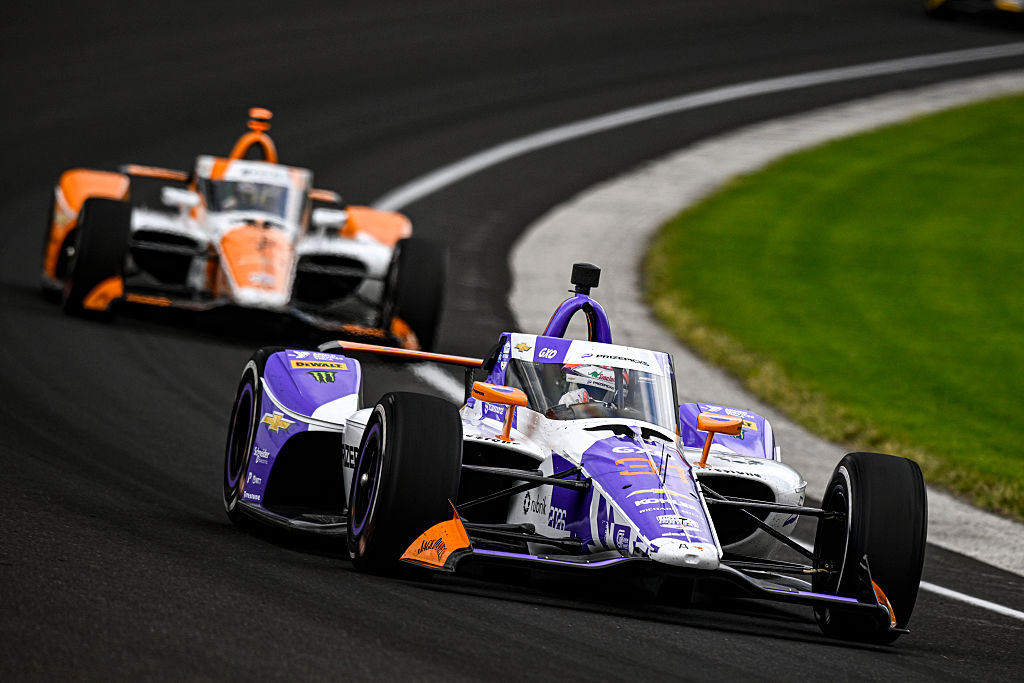
The struggles of Indy veteran Hunter-Reay at the 500 pointed to significant issues within the team. Brandon Badraoui/Lumen via Getty Images
Looking at this in basic terms of driver names and ages and who’s on the rise and who’s on the decline is the wrong approach. This change isn’t about how Dixon will fare in Lundgaard’s No. 7 Chevy at the Indianapolis Grand Prix or Road America.
It’s about using his two seasons in the No. 7 to bring the team closer to winning the Indy 500, and working with Arrow McLaren’s leadership while he’s in the car full-time – and afterwards – to mold the team into an outfit that has Ganassi, Penske and Andretti scrambling for answers on how to beat the bold new version of the team envisioned by team principal Tony Kanaan and CEO Zak Brown.
196
In its pre-McLaren days, finishing second in the IndyCar championship as it did last year would have been cause for a major celebration, but the bar has been reset in the era of Brown and Kanaan.
In 2025, Arrow McLaren reached its most competitive state since it was formed in 2001 as Sam Schmidt Motorsports. O’Ward surged to runner-up in the championship and Lundgaard took fifth on debut as Andretti and Penske fell back in the standings. But there was one inescapable truth in Arrow McLaren’s best-ever season, and that was the mountain-sized gap between teams.
O’Ward might have been the closest driver to Palou in the standings, but he was 196 points shy of Ganassi’s champion, which must be a record. For context, Juncos Hollinger Racing’s Sting Ray Robb participated in all 17 races last year and amassed 181 points, which is a smaller sum than the gap that stood between Ganassi’s best and Arrow McLaren’s best.
In the simplest of terms, the actions that are presently underway were triggered by 196.
That’s how far the team stood from title contention at the end of 2025, and with the revitalized efforts from Andretti and Penske in 2026, Arrow McLaren’s distance to first place has only grown as its heads to Mid-Ohio this weekend ranked as the fourth-best team in the standings.
This could change, of course, as Lundgaard and O’Ward are certainly capable of moving up in the standings, but the prospect of winning the championship without an epic and combined collapse from Palou, David Malukas and Kyle Kirkwood is unlikely. Again, hope for misfortune to befall others in order to win the title isn’t a strategy.
So that’s where this initiative comes into play with the gap of 196 in mind and the championship average of 4.2 to rectify.
Attempting to make itself a true and perennial championship contender and an annual multi-car threat at the Indianapolis 500 – the race it cares about more than any other – is the motivation behind signing Dixon and Rosenqvist and parting ways with Lundgaard and Siegel.
Arrow McLaren is also making a big push for the future with a new IndyCar chassis to develop in 2027 and race in 2028. As the team is currently constructed, it has no hope of catching Ganassi, Penske, or Andretti each season.
Technical turnaround
As it’s taken on younger and less experienced drivers, Arrow McLaren has regressed on the technical side. After Rosenqvist left for Meyer Shank Racing at the end of 2023 and Alexander Rossi departed for ECR at the end of 2024, the valuable engineering support they offered, which also benefited O’Ward, was lost.
Those two veterans, with an immense array of chassis knowledge and exceptional chassis feedback, made the team sharper at all events.
Since then, and with the current trio’s youthful average age of 24, Arrow McLaren has retreated due to their collective inexperience on ovals. In particular, all four cars were adrift at the Indy 500 and never factored at the most recent oval race at World Wide Technology Raceway.
Added as its star driver in May, Ryan Hunter-Reay, the 2014 Indy 500 winner, was shocked to discover how hard it was to drive Arrow McLaren’s speedway setup, and this was coming from someone who nearly won the race in 2025 with the comparatively diminutive Dreyer & Reinbold Racing team. Hunter-Reay’s brutally honest assessment of the team’s technical direction for Indy only reinforced the belief that foundational changes in the cockpit were necessary.
Lundgaard, at least on the road and street courses, has been a valuable asset to Arrow McLaren’s engineers, but that’s where the meaningful contributions begin and end from the full-time trio.
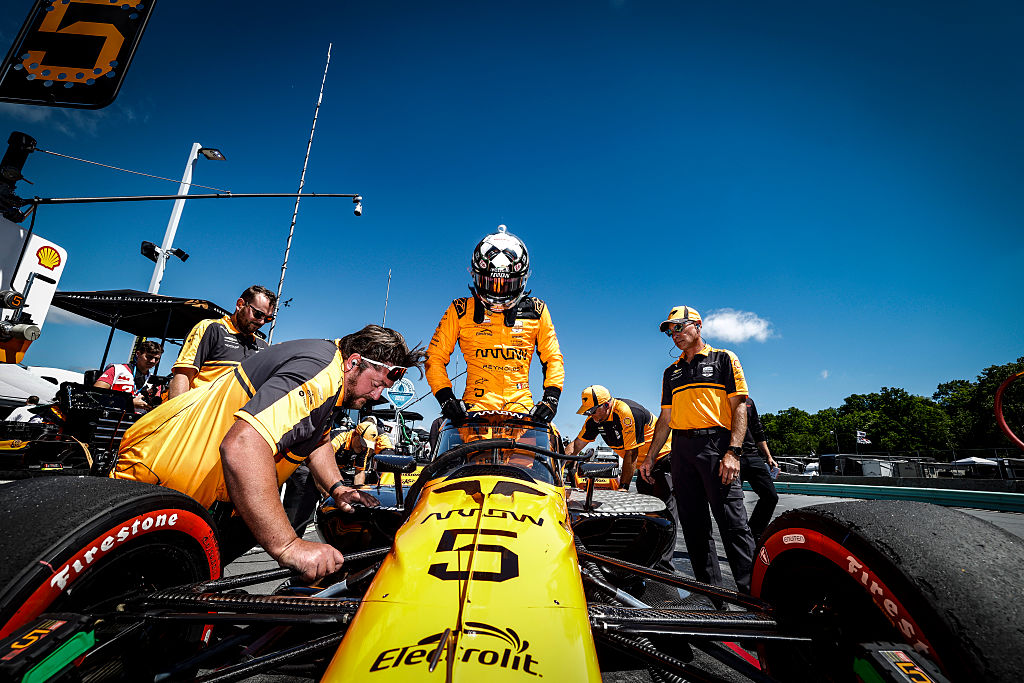
Give Pato O'Ward the car that suits him, and he will reward you like no other...for better and for worse. Michael Levitt/Lumen via Getty Images
O’Ward is widely regarded as one of the fastest and most naturally talented drivers in IndyCar, but he’s not known for assisting at a high level with team-wide chassis setups and overall vehicular development. Give him a capable car, and he’ll drive the wheels off the thing in pursuit of victory lane. But if the car has missed the setup target, it’s going to be a long weekend.
Dixon and Rosenqvist, however, are renowned for their technical feedback and development skills for every type of track, which will be critical as new-car testing begins in 2027. A large part of Arrow McLaren’s overhaul is going to take place on the engineering and R&D side, be it with the current or upcoming car.
And after years of largely focusing on the setup needs of its longstanding lead driver, the changes on the horizon will be to take the team in a more centrist direction where any driver can thrive. O’Ward, with his impossibly fast hands and unrivaled car control, has thrilled fans and left his rivals in awe while using chassis setups that have the No. 5 Chevy dancing on the ragged edge.
Drivers up and down pit lane marvel at how O’Ward can drive a car that’s constantly on the verge of spinning, and within his own team, it also led to prioritizing his tail-happy setup needs as the underlying focus with Arrow McLaren’s engineering efforts. O’Ward has been its best driver since he arrived, so it made sense to do whatever was necessary to support his engineering needs. But as the team found, none of his teammates, including Rosenqvist and Rossi, could drive the O’Ward chassis setup that served as Arrow McLaren’s baseline.
Efforts were made to dial back from the tail-happy engineering leanings, and as progress was made, O’Ward’s teammates became happier and went faster. Even so, in their absence, and without O’Ward, or Siegel, or Lundgaard (on ovals) in a position to feed Arrow McLaren’s engineers with the feedback they require to match or exceed the feedback a Palou, Kirkwood, Josef Newgarden and others are giving their teams, Arrow McLaren’s leadership realized fundamental changes had to be orchestrated.
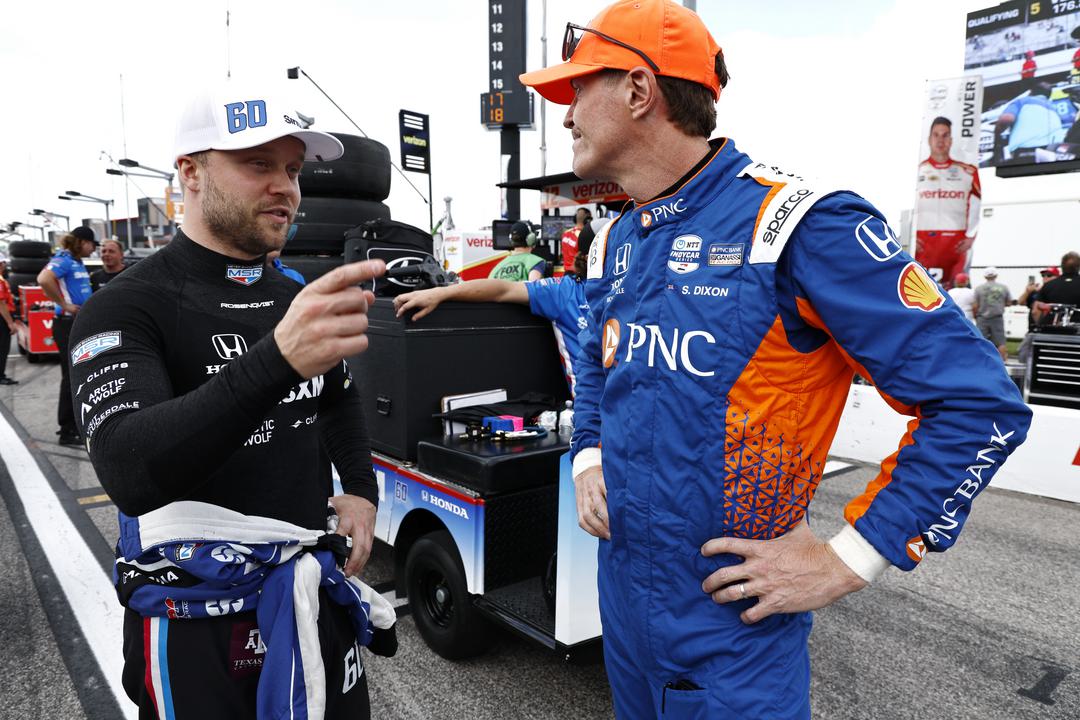
Rosenqvist (left) and Dixon could be just what the doctor ordered for Arrow McLaren on the technical side. Chris Jones/Penske Entertainment
Provided Dixon and Rosenqvist can elevate the team’s base setups across the board, this will make Arrow McLaren a player at every event and benefit O’Ward by having two of the sharpest drivers steer setups and development to a place where all of their cars are quicker.
Beyond the drivers, I’ve also heard of some personnel changes coming to the engineering group over the next 12-18 months, which underscores how heavily Arrow McLaren is looking to recalibrate its technical game.
Quarterbacks
One of the other downsides of having nothing but newish or young drivers is a lack of leadership from the cockpit that extends to the engineering offices and the shop floor.
There are exceptions of course, and most drivers are comfortable leading their specific cars, but few are willing or capable of being that program-wide voice to shape all aspects of the organization. In Arrow McLaren’s case, it does not have a quarterback who drives the entire team forward, and that’s a sizable gain with the onboarding of Dixon and Rosenqvist. They empower, push, or chide as necessary, and do so by rallying their teams from inside the huddle.
Dixon’s work ethic is a statement of its own. No shortcuts. No excuses. No showing up late. No leaving early. Singular focus on winning. Lead by example. The level of accountability within Arrow McLaren is about to reach new heights.
6:30pm Friday
The signing of Dixon has indeed been a mind-bender. Why would Arrow McLaren trade a rising star in 24-year-old Lundgaard for the New Zealander who’ll turn 46 later this month? And whose runway in the sport is limited compared to Lundgaard? Dixon’s only won one race since June of 2024, after all.
This is another area where framing is important. In Dixon, and in Rosenqvist, Arrow McLaren becomes a triple threat at the Indy 500. That’s the one on-track component where both drivers are significant upgrades to Lundgaard, and Siegel.
But this goes much deeper than being competitive across all cars at the Speedway.
Marshall Pruett
The 2026 season marks Marshall Pruett's 40th year working in the sport. In his role today for RACER, Pruett covers open-wheel and sports car racing as a writer, reporter, photographer, and filmmaker. In his previous career, he served as a mechanic, engineer, and team manager in a variety of series, including IndyCar, IMSA, and World Challenge.
Read Marshall Pruett's articles
Latest News
Comments
Comments are disabled until you accept Social Networking Cookies. Update cookie preferences
If the dialog doesn't appear, ad-blockers are often the cause; try disabling yours or see our Social Features Support.