NHRA Safety Gear 101: How drivers protect themselves behind the wheel
Ron Capps has a joke that is not necessarily a joke.
“Everything else you get to drive - midgets, sprint cars, IndyCar, NASCAR - are pretty much like pajamas compared to what we have to wear in a Funny Car,” Capps said. “The chance of fire, you’re sitting right behind the engine, so everything is as high-rated as you can get from SFI.”
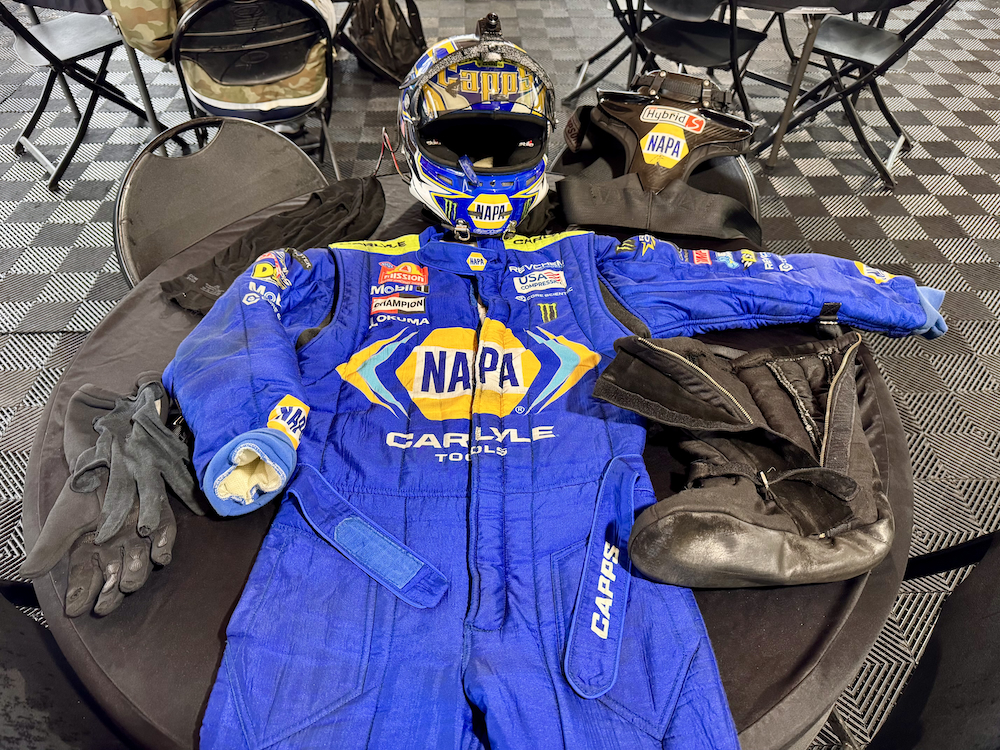
Capps is one of those drivers who has driven in other disciplines and experienced different cars and, thus, safety gear. Saturday, during a rain delay at South Georgia Motorsports Park, Capps took the time to show off his driver's gear to RACER to explain how it compares to what drivers wear in other series.
“Everything that a Funny Car driver wears has to be a 20 rating,” Capps said. “There are some that are a 10 rating in some motorsports. Most of them are five, like go-kart suits, NASCAR, IndyCar, and things like that. They are very thin.”
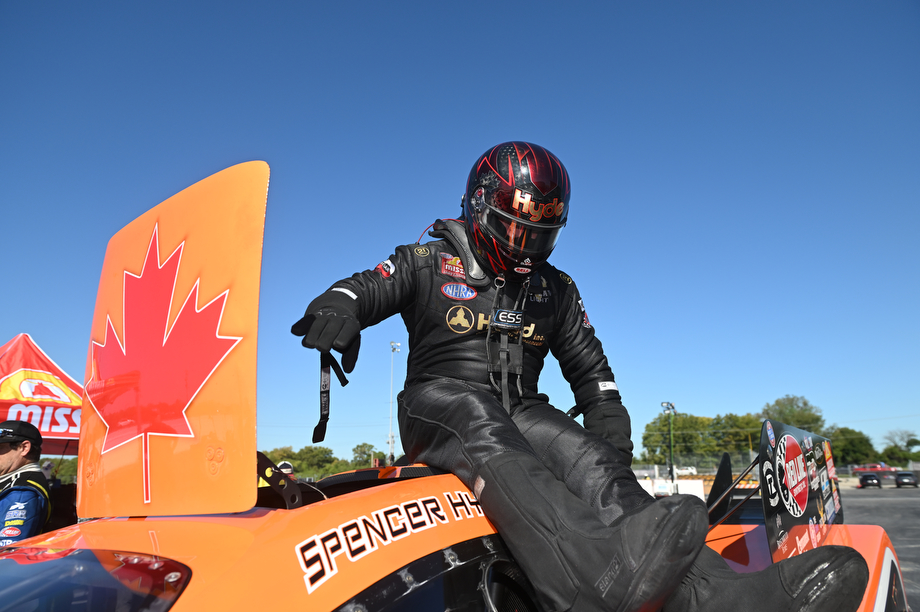
Something unique about drag racing is that it is, of course, over in a few seconds. However, drivers will be buckled in their cars for far longer in multiple layers of gear that can get very uncomfortable on a hot day. Capps, and most drivers in NHRA, will start to get ready when the fourth car in front of them in their lane fires up.
“That gives us three cars behind them to get dressed,” Capps said. “It takes two people to help dress me and put me in the car. But what happens is you get an oil down that is super bad, NHRA will come over the radio and say if the drivers want to get out, they can. A lot of the time, I stay in the car. It takes so much to get me in.
“If it’s a hot day, I might get out because the thickness of the firesuits in Funny Car, you don’t want to stay in too long.”
Here is your NHRA driver safety gear 101:
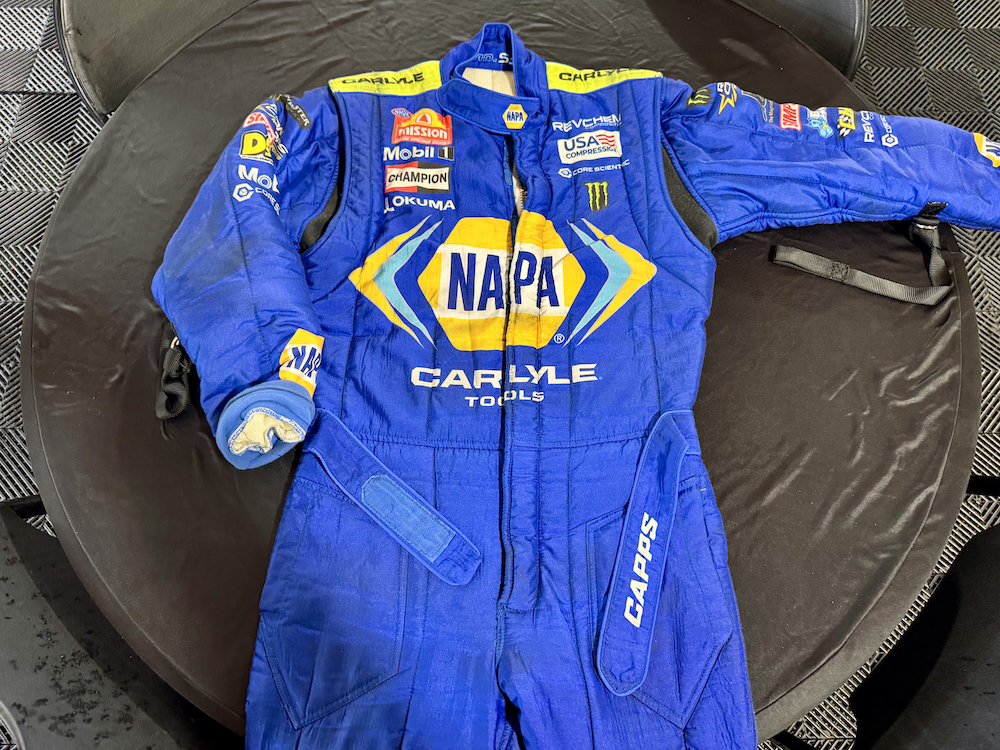
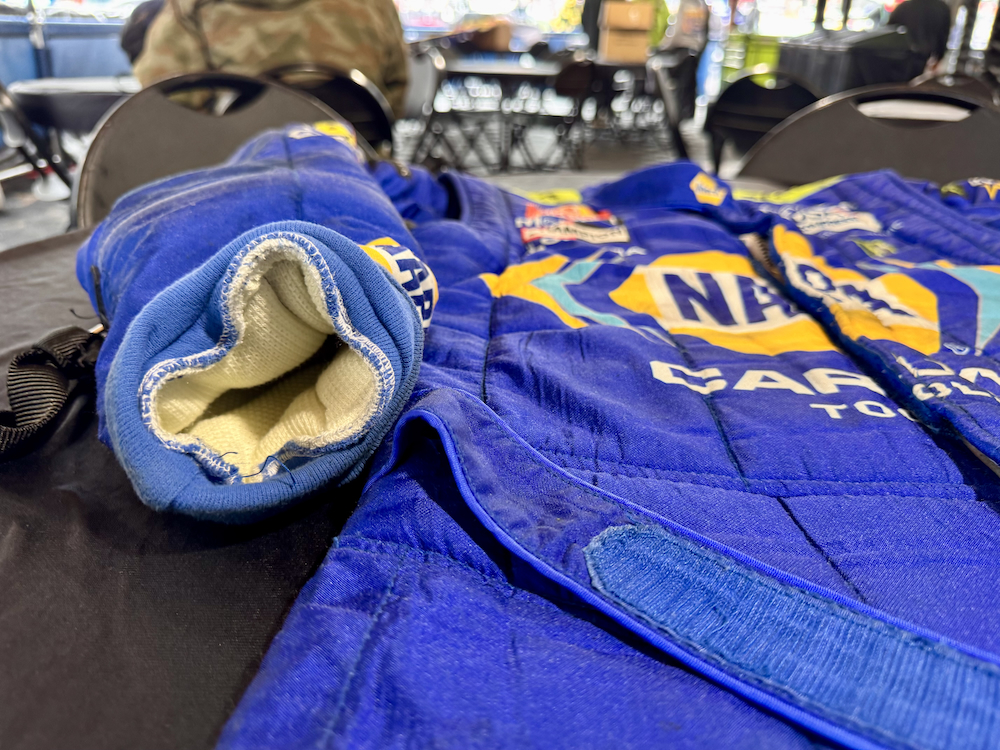
“The suit itself is very thick, as you can see. I don’t know how many exact layers there are. It used to be nine layers, compared to what an IndyCar or NASCAR driver wears, and that’s the whole suit.
“Under the suit, we have long underwear, as we call it, but it’s also fire-retardant Nomex. So the bottoms are long, much like you’d wear if it was cold out, and then a top is the fireproof Simpson long-sleeve. That’s one layer.”
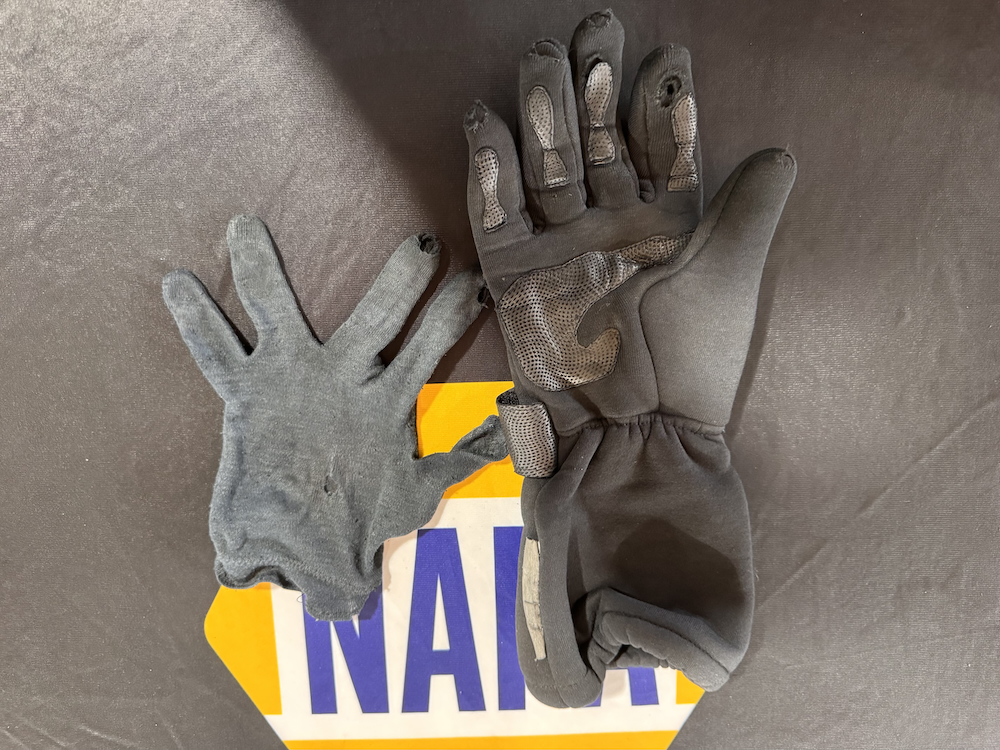
“We have one layer of the glove that’s a one-layer Nomex that is an under glove. Then we have our 20-rated gloves, which I believe are four layers of Nomex.”
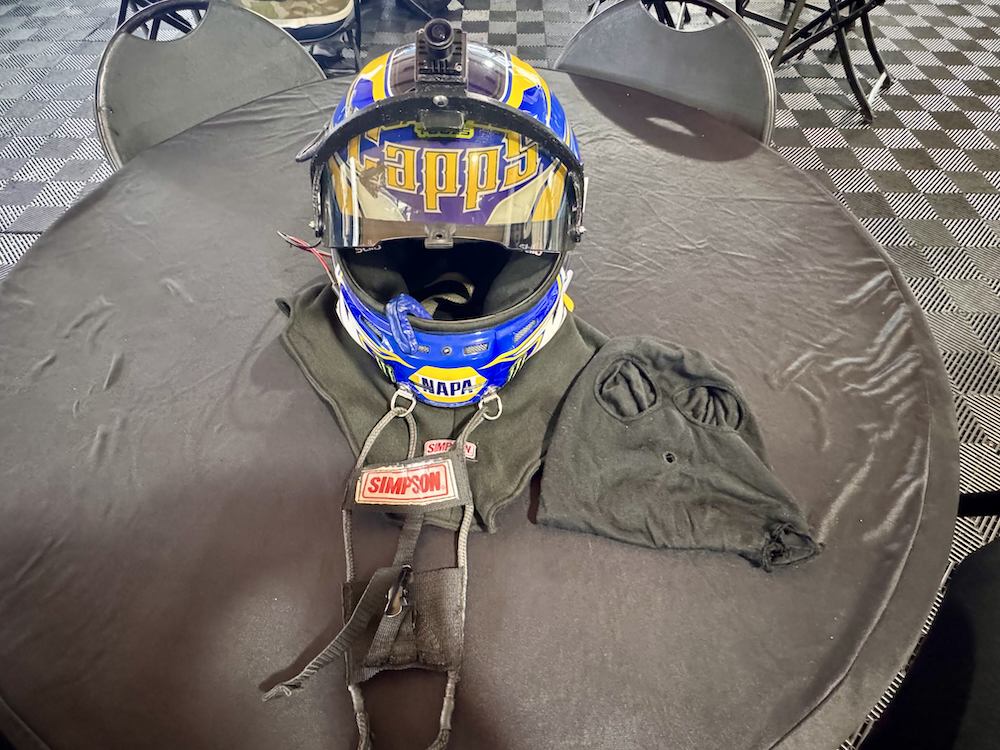
“The helmet we have to wear with a fireproof or fire-retardant skirt. This skirt has several layers. It’s also 20-rated, and it has to come out of the helmet, down around our neck area, to protect us. We also have the balaclava with the two-hole outlet, which is another layer underneath. I wear a Stilo helmet and I have for years. I started when I saw them in Rally, and then after Eric Medland’s accident, John Medland, his dad, did a lot of testing with helmets at that time, and I was staying close to John and he recommended a Stilo helmet back then.
“The mouthguard. I’m not sure how many motorsports drivers wear mouthguards, but it’s almost a necessity for a Funny Car driver. If they’re not wearing them, they’re dumb because not only of the vibrations you go through, but as you’ve seen the last couple of years (for me), the explosions and hitting the wall. Iso, it’s good to have that.”
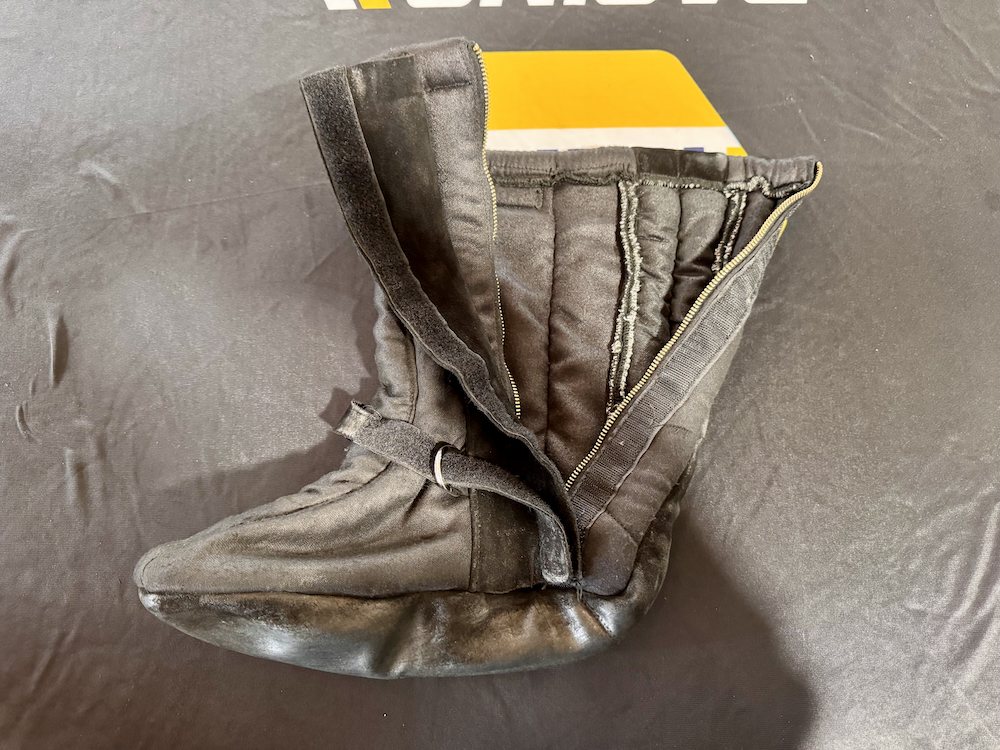
“The shoes are a 20-rated Funny Car shoe that looks like a shoe that Top Fuel dragster, NASCAR, or IndyCar drivers wear. In fact, a lot of them look exactly the same except we put a boot over the shoe. That’s probably another five layers, and it goes tojust under the knee. Because in the Funny Car you sit directly behind the engine, your feet go down to the floorboard and you have a gas pedal, clutch pedal, and the engine, if and when it does catch fire, you’re about a foot and a half behind that. So, we’re well protected there. I’ve had pretty good fires where it’s singed and burned it about shin high.”
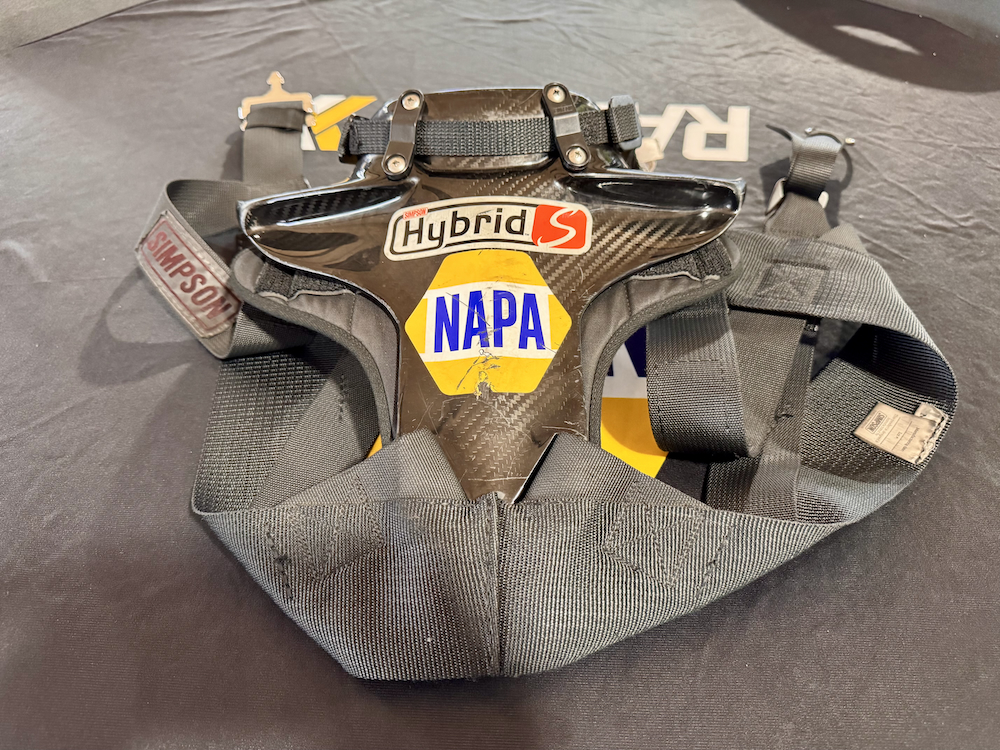
“This is called the Hybrid from Simpson, and they’ve evolved these quite a bit. You’ll see a lot of the NASCAR and IndyCar drivers wear different styles, and it’s the same here. Larry Dixon and I, back in the day at Don Prudhomme’s, were the first ones to have a HANS because the guys at GM developed it, and we tried it before anybody had it. They’ve come a long way.
“They move with your head, where a lot of the time before they didn’t. They make a smaller Hybrid from this one, and I used to wear the smaller one. But this one comes down where I feel like it gives me more support on my spine. A lot of NASCAR drivers take their helmets off and it goes with the helmet. This one stays on me, and that’s one difference with the Hybrid that it stays on my body, buckled to me.”
Kelly Crandall
Kelly has been on the NASCAR beat full-time since 2013, and joined RACER as chief NASCAR writer in 2017. Her work has also appeared in NASCAR.com, the NASCAR Illustrated magazine, and NBC Sports. A corporate communications graduate from Central Penn College, Crandall is a two-time George Cunningham Writer of the Year recipient from the National Motorsports Press Association.
Read Kelly Crandall's articles
Latest News

Comments
Comments are disabled until you accept Social Networking Cookies. Update cookie preferences
If the dialog doesn't appear, ad-blockers are often the cause; try disabling yours or see our Social Features Support.