David Jensen/Getty Images
How do you win a NASCAR championship under the new format? Turns out it's pretty simple
In one of the final years of the previous iteration of the Chase, the final 10 races served up what was perhaps a once-in-a-lifetime championship battle between Tony Stewart and Carl Edwards.
Stewart started the postseason as the ninth seed. He was winless. And in the midst of an admittedly miserable season, he stated that his team didn’t deserve to be in the Chase.
Of course, Stewart then won five of the final 10 races and won his third championship over Edwards. It came down to a tiebreaker in the finale.
NASCAR has reintroduced the Chase this season, and while many would love to see another Stewart-esque run in the postseason, it’s not likely to ever be seen again. The drivers are different. The racing is different. The point structure is different.
Or as Chase Elliott explains, it’s the fact that the road to a championship is pretty simple.
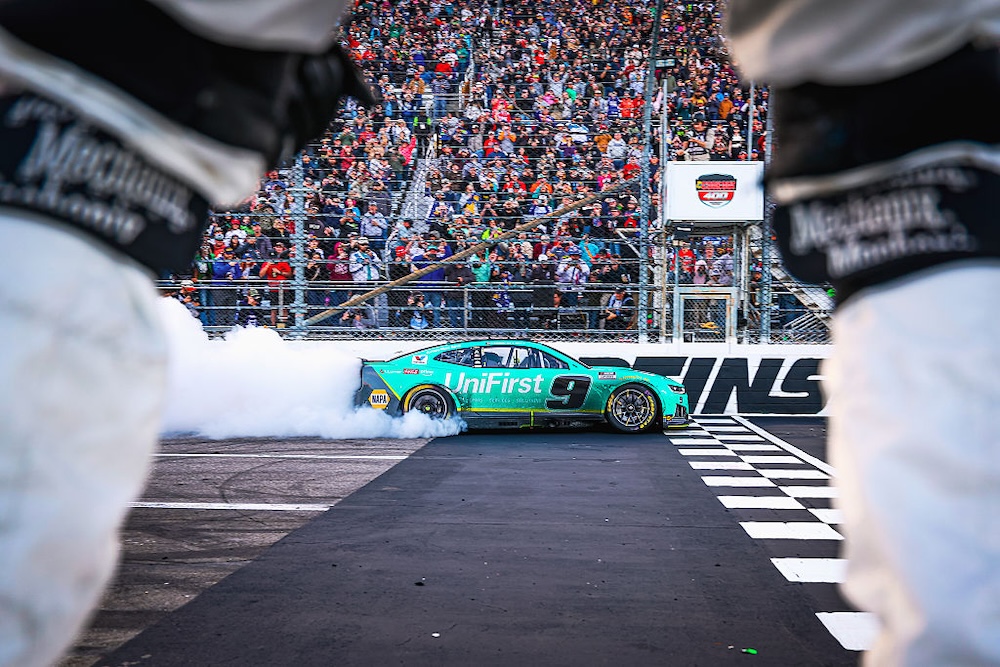
“You need to be able to win on almost a weekly basis, and you need to be leading laps and doing all the things that champions do,” said Elliott (main image). “That’s pretty simple to me. I don’t know what that gets you from a numbers (seeding) standpoint. Let’s be real, if you’re not leading laps, and if you’re not winning races, and you’re not putting yourself in those positions very often, you’re not going to back into it.
“Right? We agree on that? So, I don’t know what that gets you, but you’re probably going to be pretty high up if you’re doing those things.”
Elliott’s insight came in response to a question about where he thinks his No. 9 Hendrick Motorsports team should be seeded going into the Chase to have a realistic shot at the championship. NASCAR is not reseeding the drivers in this iteration of the Chase based on bonus points or wins. It’s strictly based on overall performance through the regular season.
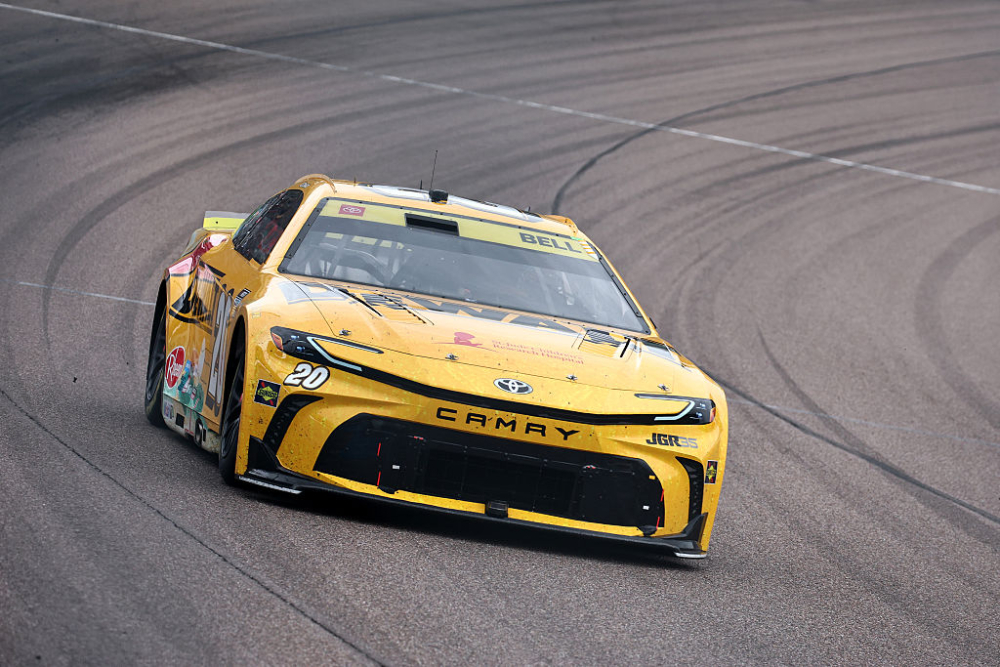
And it’s already on the minds of some drivers. For Elliott, it is in the sense of letting the points fall where they may. Christopher Bell, on the other hand, comes at it from the corner of knowing that his Joe Gibbs Racing likely has a good idea of how things will work out.
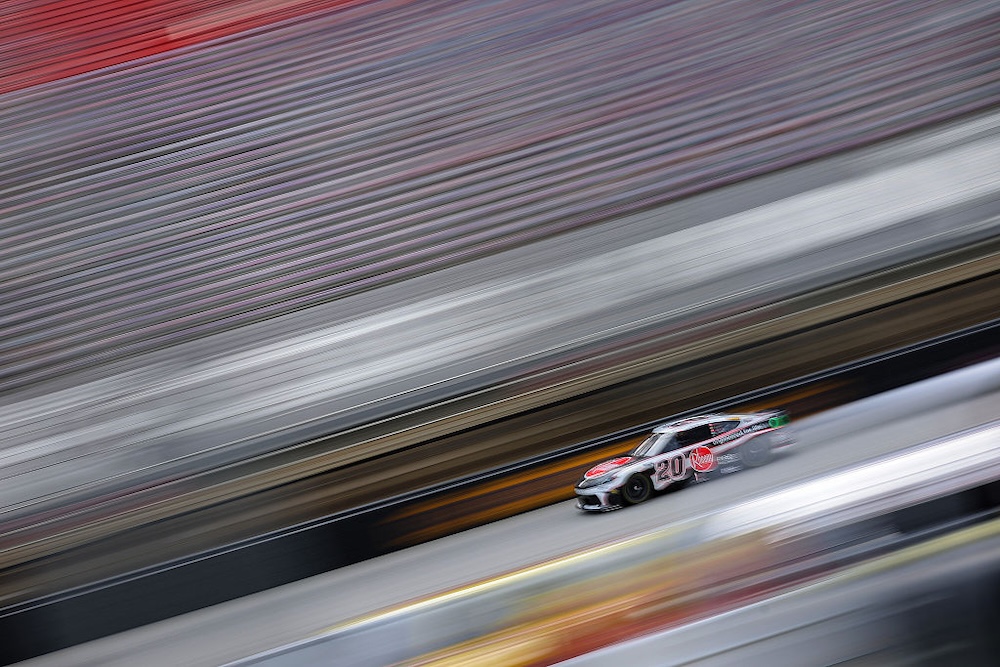
Bell's team is mathing out their road to title contention on a week-by-week basis. Jonathan Bachman/Getty Images
“I would assume that my crew chief, Adam [Stevens], has a lot better understanding of it,” Bell said. “He’s really, really analytical and digs into the numbers all the time, and I haven’t talked to him about that but I know our goal for the year has been a constant sliding scale. At the start of the season, we were like, all right, regular-season championship, we’re coming after it this year. Then, when we started the year with two DNFs in a row, it’s like, OK, well, maybe we’re fighting for a top 10. Then we started doing well, and now we’re fighting for a top five.
“So, right now, I think I’ve learned over the last couple of weeks not to pay attention to it. Don’t look at it; just go out and fight as much as you can, and the regular season standings are going to end up where they end up.”
What has been eye-opening for Bell is how the new points structure works. NASCAR began awarding 55 points for a victory this season, which is a 15-point increase from previous seasons. It is not only rewarding winners, but also creating swings up and down the standings for performance.
“If you can get on a roll and win some races,” said Bell, “you’re going to climb the standings in a hurry, and that’s what we’re focused on.”
NASCAR would tell you that a driver can win the championship from anywhere. But its own statistical modeling from Racing Insights has shown the most realistic chance comes from drivers sixth and above in the point standings when the Chase starts. Those with the absolute best shot are those third or better.
And that modeling didn’t stay a secret. It’s why some in the garage are not only admitting to looking at the points more than they ever have on a weekly basis, but are already focused on how to strategize the season to make it work to their advantage.
“Obviously, the easy answer is first,” Team Penske’s Ryan Blaney said of seeding. “But honestly, I think the beauty of the points nowadays and the win bonus and things like that, is you can make up a lot of points in a weekend. You can be 16th (in the standings), 100 points back to start (the Chase), and go rip you off some really good weeks, and you’re in the game. So, obviously, you want to build a cushion and maybe be in the top three or so.
“I think that’s a good spot, but it ebbs and flows. The waves can go up and down really quickly with the points the way they are with winning and things. But I think a goal of ours is you want to be top three in points; it would be a nice starter for the Chase.”
It’s no surprise some want to science out the path to a championship. It’s a sport built on working through the science of everything.
But for someone like William Byron, he doesn’t want his Hendrick Motorsports team to get too caught up in that when this version of the Chase hasn’t even played out for the first time yet.
“I hate to think in that way,” Byron said of seeding. “I know we all do, so it’s a hypothetical that’s kind of carried out there, but that doesn’t guarantee any success in the Chase. So I would hate to go down that rabbit hole because I feel like it could be disproven by somebody. We’ve seen this year that winning races is huge for the points.
“Yeah, I hate to go down that path of, ‘Hey, this is where I need to be.’ In my head, based on how we typically are in the points, I would love to be in the top three. But I feel like getting into that battle, mentally and psychologically, of ‘I need to be here,’ that could be dangerous.”
The top six in the championship points after eight races are Reddick, Blaney, Denny Hamlin, Ty Gibbs, Elliott, and Kyle Larson. Byron? He sits seventh. And down in ninth is Bell.
Thankfully, there are 16 races left. But they’re going to go by in a hurry, and those swings in points via wins are going to continue to be tested.
Kelly Crandall
Kelly has been on the NASCAR beat full-time since 2013, and joined RACER as chief NASCAR writer in 2017. Her work has also appeared in NASCAR.com, the NASCAR Illustrated magazine, and NBC Sports. A corporate communications graduate from Central Penn College, Crandall is a two-time George Cunningham Writer of the Year recipient from the National Motorsports Press Association.
Read Kelly Crandall's articles
Latest News

Comments
Comments are disabled until you accept Social Networking Cookies. Update cookie preferences
If the dialog doesn't appear, ad-blockers are often the cause; try disabling yours or see our Social Features Support.