Jacob Kupferman/Getty Images
How Gustafson outfoxed the field at Martinsville
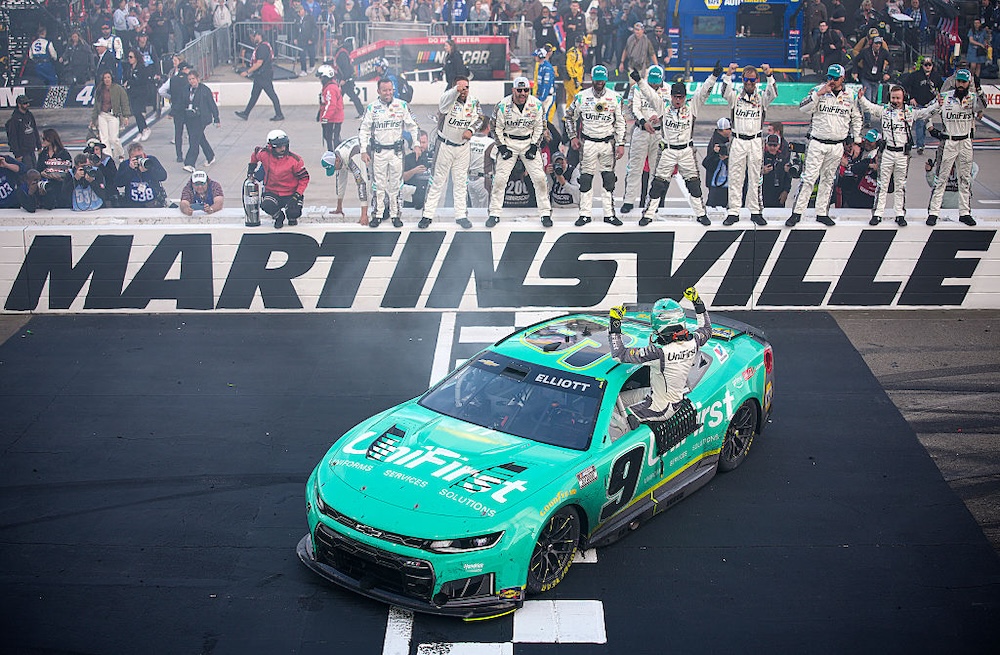
To the chagrin of his critics, Alan Gustafson won Sunday’s race for Chase Elliott at Martinsville Speedway.
Gustafson short-pitted Elliott in the final stage, calling him to pit road with about 138 laps to go. It put the team on a two-stop strategy, which gave them the chance to leapfrog some of the leaders and inherit track position.
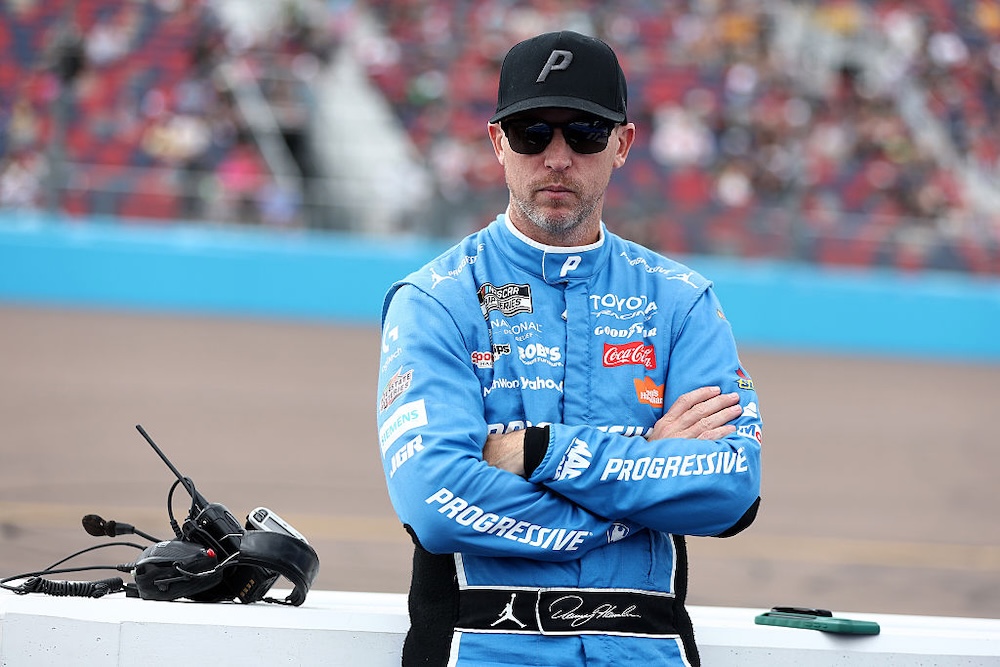
In the end, that track position paid off. Elliott was able to take advantage of the final restart to overtake Ross Chastain, who was on older tires, and then control the race. He drove away to his first win of the season, doing so at the expense of the race’s dominant driver, Denny Hamlin, who had led 292 laps and swept the stages.
Here is how Gustafson broke down how things transpired on the strategy call:
“For Denny, it was probably mathematically faster to run it one stop because he had track position and he had clean air, and then for us, we were kind of teetering (about) whether it was going to be better or not. I had a lot of confidence that most people would try to one-stop it and we had to give ourselves a shot, do something different, and give ourselves an opportunity.
“I think probably where it turned a little different is when we pit, everyone basically at that time has the same track position, relatively. You’re all square on the track. So that advantage the leaders had was diminished. And when we pit, our lap times, I think, were really pretty good, and our fall-off was less than expected, or less than the guys had run that run before. So as soon as those guys who were going to one stop then start shortening that by significant amounts of laps, that’s playing into our hands because then they’ve got to run a whole lot longer, and mathematically they then are going to be worse. From where the majority of people stopped, for anyone, I think that would have been better to two-stop it.
“The flip side of that is caution exposure. I think anyone in the top five, their cars were going to be good for long runs, and they’re ultimately going to be able to one-stop it and minimize the exposure of the caution coming out and being a lap down. If I’m in their spot, I’m doing the same thing; you don’t want to take that caution risk. But where we were, we were probably right around the position that it makes sense to take that risk. … You can’t sit on your hands and run 10th. So, you have to do something. I think that was the best shot.”
Elliott’s average running position was ninth during Sunday’s race. But when the strategy play was called, he cycled into the second position and then got the caution the team needed to keep the track position.
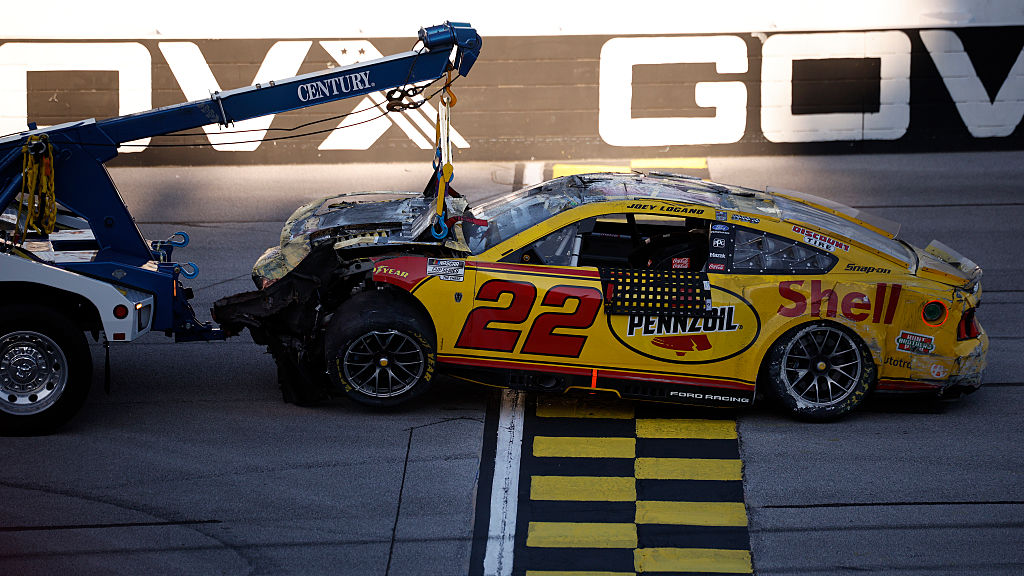
The caution came on lap 311 for debris. Ty Dillon had suffered a right front tire failure, leaving debris on the track and on pit road. Elliott was running second to Hamlin at the time of caution, which solidified his track position and then put him on even tires with the leaders as they all pitted for the final time.
Hamlin and Elliott led the way off pit road, but Chastain stayed out. The final caution flew one lap after the restart, on lap 324. On the final restart, on lap 332, Elliott, who had restarted on the outside of Chastain on the front row, took the lead and never looked back.
“It was a total team effort,” Elliott said. “They did a really good job of putting us in an extremely offensive position from that strategy call, and I think Alan saw that and saw an opportunity. We had gotten our car pretty good, and I didn’t hate it. There was nothing about our balance that I hated; I just wanted to be able to control my runs a little better and manage them the way I wanted to. So, saw an opportunity to two-stop that last stage, and I think we had ourselves in a position where it was going to work out really well for us either way.
“I think that we had forced those guys into stopping really early. They were going to have to run a hundred and some odd laps on a set. So, yeah, I think we were in really good shape. It was a great call. I’m glad that he picked up on that and saw it. Obviously, I don’t think anybody else did. It goes to show that he’s pretty good at what he does, which I try to tell you all that all the time. But he does a pretty good job, and I’m happy to work with him. I appreciate his effort and hanging in there, and to our whole team for doing that, too. I appreciate that out of all of them.”
Kelly Crandall
Kelly has been on the NASCAR beat full-time since 2013, and joined RACER as chief NASCAR writer in 2017. Her work has also appeared in NASCAR.com, the NASCAR Illustrated magazine, and NBC Sports. A corporate communications graduate from Central Penn College, Crandall is a two-time George Cunningham Writer of the Year recipient from the National Motorsports Press Association.
Read Kelly Crandall's articles
Latest News
Comments
Comments are disabled until you accept Social Networking Cookies. Update cookie preferences
If the dialog doesn't appear, ad-blockers are often the cause; try disabling yours or see our Social Features Support.