Takashi Aoyama/Getty Images
Honda details challenges, opportunities offered by its F1 relaunch with Aston Martin
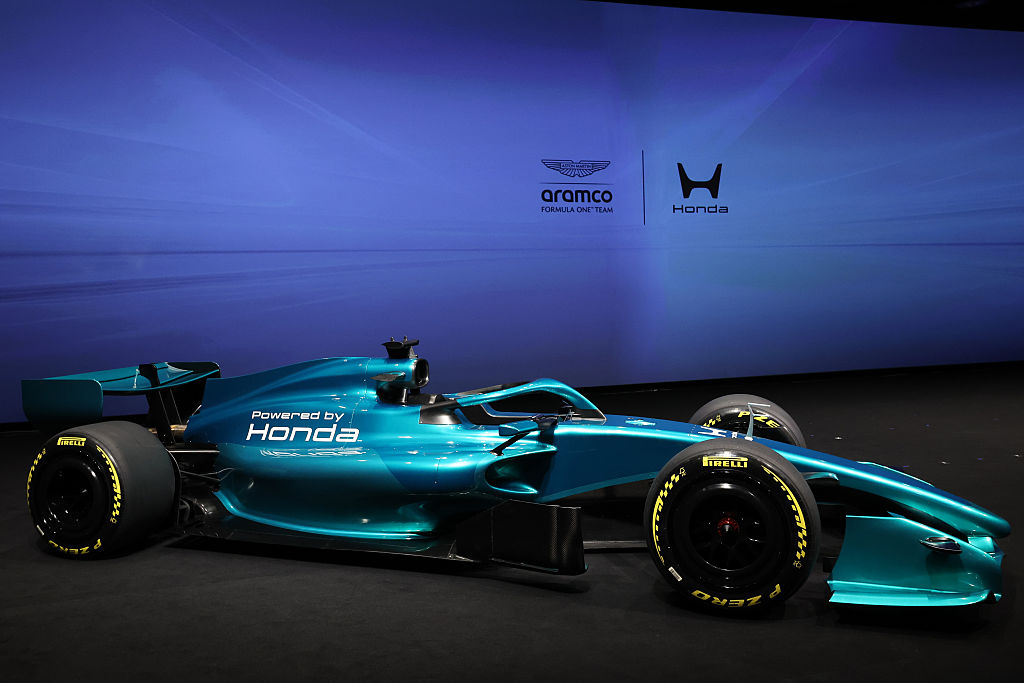
Honda is not underestimating the scale of the challenge it has taken on with its return to Formula 1 as a factory power unit manufacturer with Aston Martin.
Honda arrives on the 2026 grid with an F1 history that dates back almost to when it first expanded from its beginnings as a motorcycle manufacturer and began producing road cars. Its most recent entry as a full works operation was in 2021 with Red Bull, although even after scaling back it continued to provide support to Red Bull’s powertrain departments through to the end of last year.
While all PU manufacturers face similar challenges from a basic technical and regulatory standpoint, Honda’s latest program comes with the additional wrinkles of needing to integrate with a new team in Aston Martin, as well as new fuel and oil suppliers in Valvoline and Aramco. That work began back in 2023, when the Aston Martin/Honda partnership was first announced, and will continue through this year, when the structures and processes that have been created are tested in the real world.
The immediate challenge is ensuring that the engine’s performance on track aligns with its performance on the dyno. The first hints will come when Aston Martin tests for the first time next month. But just getting to this point has been every bit the engineering challenge that Honda signed up for, as HRC President Koji Watanabe told a small panel of media, including RACER, shortly after Honda’s new F1 engine – designated RA626H – was unveiled in Tokyo this week.
“The Formula 1 regulations for this season… in comparison to the regulations from last year, we're seeing a massive difference, technically, especially in the area of electrical,” Watanabe says. “The maximum output has been tripled. And also, the regulation requires the use of a sustainable fuel. Further on top of that, there's the cost cap that is being imposed, which makes it extremely challenging.
“With the cost cap, the focus is, of course, on the cost management. But in addition to that, there are strict limitations as to how many dynos that we can use for PU development. So it is (all) the other financial restrictions that we are working under, with a very restricted development environment as well. So the focus is on maximizing development efficiency.
“Also, the regulations pose very significant technical challenges on us, and we will have to overcome that through development ingenuity, if you will. The issue here (with) the development of the PU is, if there is a failure, the cost that was incurred for the failed part also has to be calculated into the cost cap. Which means that we have to aim for a maximum success rate, because of the failure will also be counted toward the cost cap. We have to establish a very high level of feasibility. So preventing failures is a big part (of it). And so for all for us, it's this battle of who can do this in the smartest way.”
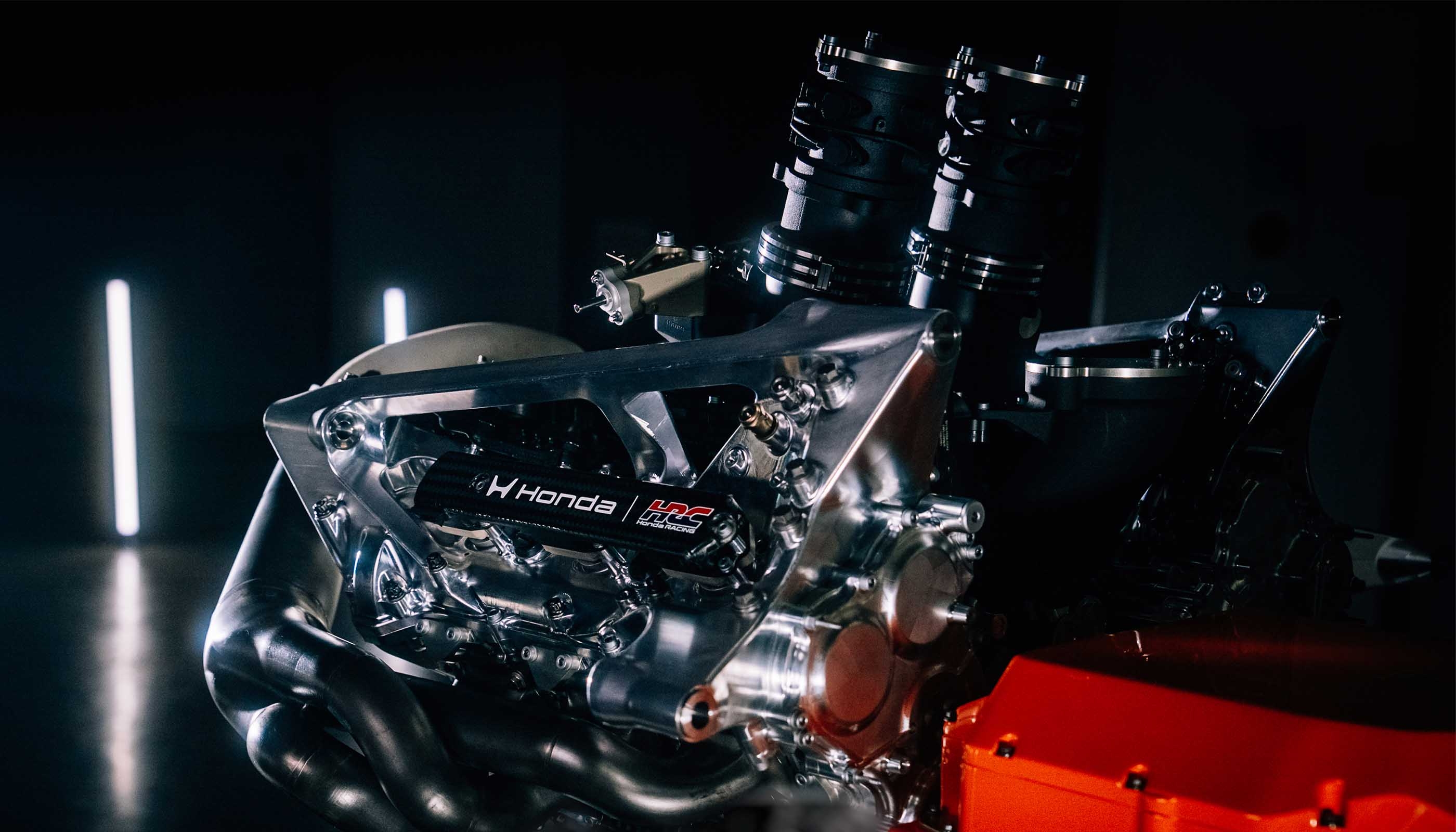
There have been many instances in F1 history where doing things “the smartest way” meant playing in the gray areas of the rulebook. Heading into 2026, most of the speculation in this area has been around some manufacturers finding ways to boost their compression ratios beyond the newly-mandated limit of 16:1. According to reports, this is achieved by taking advantage of the fact that compression ratios are measured when the engine is cold. The trick lies in engineering certain parts to expand when the engine is hot, which sends the piston closer to the top of the cylinder during its cycle. Potential benefits can include increases in both performance and fuel efficiency.
Watanabe says that Honda is aware of the compression ratio issue but downplayed it, saying that it is simply one of the many similar conversations that come with the territory of a rule change.
“We're working with a new set of regulations starting in the 2026 season, which means that there are many ways of interpreting these regulations and figuring out how to work under them,” he says.
“So this is not just limited to the topic of compression ratios. There are many other discussions that are ongoing. As I see it, the discussion about the compression ratio probably happens to be the one that just came to the surface. But there are many discussions that are ongoing – the compression ratio, and many other items.
“Ultimately, this will be up to the FIA, based on their understanding of the of regulations. The FIA will make, ultimately, the judgment as to how things should proceed. So Honda will simply follow what FIA decides and we'll carry out our development activities for the PU accordingly.”
In the meantime, all of the focus is on developing the most competitive PU possible based on Honda’s interpretation of the rules. Prior to the first race of the season at Albert Park in March, the dates with the biggest red circles around them on the Honda calendar are the pre-season tests, and the homologation cutoff at the end of February.
“We will have to run our tests in Barcelona and then twice in Bahrain,” Watanabe says. “After these three rounds of testing, we’ll be able to start setting some targets.
“This being the first year for the new regulation and for this team, new collaboration, new partnership, our focus is going to be establishing that the system as a whole – the overall system, the management, the organization, all functions, are functioning. That is going to be our target for the first year.”

Mark Glendenning
During his long career in racing, Mark has been placed into a headlock by a multiple grand prix winner, escaped a burning GT car, ridden a Ferris wheel with Ari Vatanen and almost navigated a rally car into a pond. He’s also had the good fortune to have reported on hundreds of races around the world, first while working for a national publication in his native Australia, and later during his years with Autosport in the UK. He moved to the U.S. in 2012, and after a serving as a contributor to RACER he joined the publication full-time in 2015. Mark now serves as Editor of RACER.com, and is also involved in the production of the magazine.
Read Mark Glendenning's articles
Latest News
Comments
Comments are disabled until you accept Social Networking Cookies. Update cookie preferences
If the dialog doesn't appear, ad-blockers are often the cause; try disabling yours or see our Social Features Support.