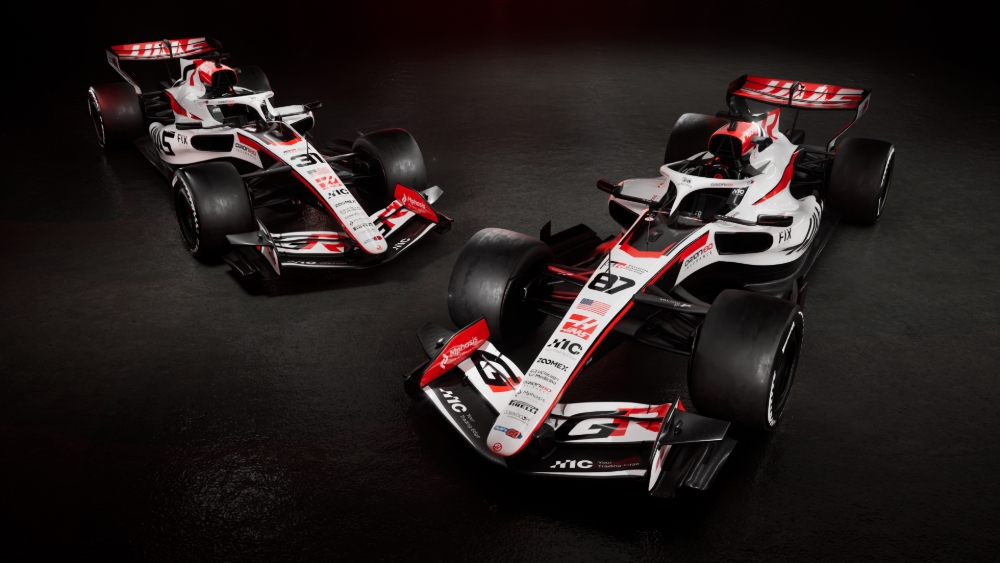
Toughest pre-season to date for Haas
Haas is facing “a huge challenge” to produce a competitive 2026 car within financial regulations as the smallest Formula 1 team on the grid, according to team principal Ayao Komatsu.
New aerodynamic regulations for the coming season are being introduced at the same time as a brand new power unit, with a greater emphasis on electrical energy while also running on a sustainable fuel. Having so many changes at the same time reduces the amount of carryover possible from previous seasons, and in launching the VF-26 Komatsu says Haas has faced its toughest pre-season to date.
“I would say so, especially for our size,” Komatsu said. “The new regulations mean it's financially challenging and regarding resources, everyone knows we’re still the smallest team. It’s a huge challenge, and as team principal, the responsibility is bigger, ensuring that this team is equipped to tackle this massive regulation change.
“I don't think any team, even the biggest, is going to say they’re fully equipped to tackle this, however for us, the challenge is bigger.
“We need to focus on what we’ve got, what we’re good at, recognize our weaknesses but play to our strengths, and continue learning. We’ve got to learn pretty fast with these new regulations. There will be surprises once everyone is up and running, for sure, and it’s going to be about sticking together, reacting, and adapting as quickly as possible.”
Although Haas unveiled its 2026 car design ahead of next week’s Barcelona shakedown, Komatsu says the car that runs in Melbourne in March will look very different.
“The car everyone will see in Barcelona won’t be the car that races in Australia, and I think that will be across the board, because it's simply too early. It’s different perhaps having one test two weeks before the first race, but with over a month before the first race, teams won’t stop wind tunnel development. Hence, the cars testing in Barcelona, and even the first week of testing in Bahrain will be less mature compared to what’s built in Australia for the first race.
“Between Barcelona shakedown week and the final Bahrain test, you will see very different cars across the grid focused on their aero package, because on the PU side of things, the hardware is pretty much set. How we’re going to use that PU, that’s the biggest thing. In Barcelona, everybody is going to be focused on how best to optimize energy usage, and that needs to develop very quickly for everyone.”
Given the importance of energy management on top of the new aerodynamic concepts, Komatsu says his main target for Haas is to be able to react quickly to what the team sees in the opening races of the year.
“Firstly, before we go racing, and even testing, we need to get on top of energy management, that’s the huge one,” he said. “I don’t know if we all understand the full extent of the challenge because we don't know what we don't know. Then with aero development, we’re reasonably happy with what we've done so far, but as with all new regulations, the question will be, is the target we’ve set good enough? When we get testing, I'm sure we’re going to see different concepts, and if we’ve missed something, we need to get on it very quickly.
“For the first few races, rather than setting a sporting target, it's more a target for us. First and foremost, get on top of PU management, then aerodynamic development. If we have to change direction or look at different concepts, again, we've got to do that promptly. To be able to implement certain things quickly, you've got to work as a team and have clarity on communication. These are things we’ve been doing the last couple of years, and that's going to be tested even more, but I feel like we’re prepared.”
Chris Medland
While studying Sports Journalism at the University of Central Lancashire, Chris managed to talk his way into working at the British Grand Prix in 2008 and was retained for three years before joining ESPN F1 as Assistant Editor. After three further years at ESPN, a spell as F1 Editor at Crash Media Group was followed by the major task of launching F1i.com’s English-language website and running it as Editor. Present at every race since the start of 2014, he has continued building his freelance portfolio, working with international titles. As well as writing for RACER, his broadcast work includes television appearances on F1 TV and as a presenter and reporter on North America's live radio coverage on SiriusXM.
Read Chris Medland's articles
Latest News
Comments
Comments are disabled until you accept Social Networking Cookies. Update cookie preferences
If the dialog doesn't appear, ad-blockers are often the cause; try disabling yours or see our Social Features Support.