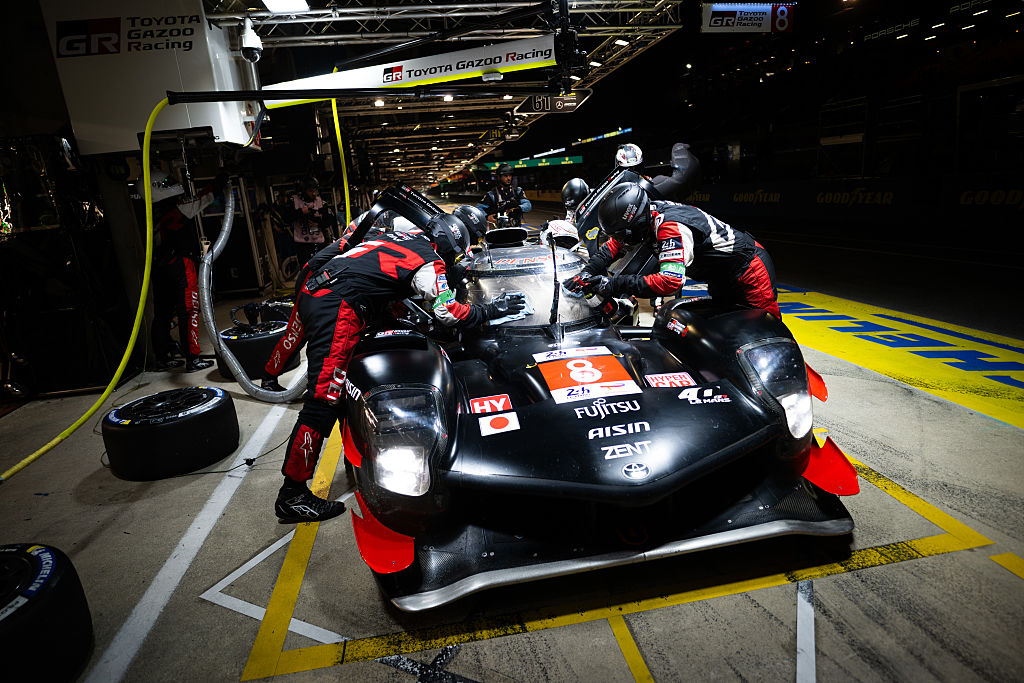
James Moy Photography/Getty Images
Nakajima seeks the way forward for Toyota’s troubled Hypercar program
Some would delicately call Toyota Gazoo Racing’s 2025 WEC campaign disappointing. Others would prefer to rip the bandage off and say it’s been an unmitigated disaster.
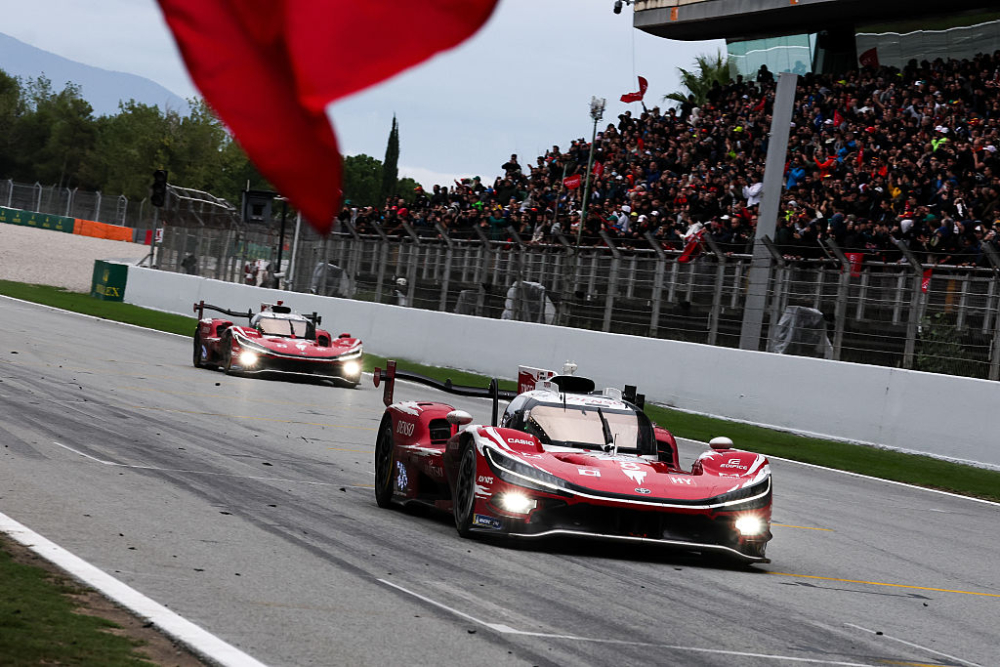
Two years removed from a near-perfect season in Hypercar, and a year removed from winning the FIA World Endurance Championship manufacturers’ title ahead of Porsche and Ferrari, Toyota followed up its worst Le Mans 24 Hours performance in nearly 10 years with its worst-ever WEC results in São Paulo last month.
Yes, the leadership at Toyota Gazoo Racing has said as explicitly as they can that they need relief in their Balance of Performance. But a closer look at how Toyota's Le Mans unraveled, and how sharp it fell at São Paulo from a 1-2 finish last year to 14th and 15th this year – BoP alone doesn't explain the degree to which Toyota has struggled this season.
And to his credit, Toyota Gazoo Racing team director and three-time Le Mans 24 Hours winner Kazuki Nakajima has taken accountability for the internal struggles within the organization.
“We are doing our best to, let’s say, react to the situation. And of course, it’s been very difficult," he says. "There’s many things we can still improve from the team perspective, and there’s also some… external aspect. We just need to focus on what we can control. And we have been pushing a lot.”
It was the first time in 10 years that Nakajima, either as a driver or as a Toyota executive, has ever felt like his team had no chance to win Le Mans on pace.
“Le Mans, obviously, was a very difficult race – much more than we expected," he admits. "But at the same time, we take this as a good wake-up call. Looking at the field, for sure, there is something we can learn from them.
“But also, we had some takeaways from São Paulo. Last year, we had a very good advantage from the tire choice – after a year of learning, everybody managed to use the medium tire as good as us, so we clearly lost this advantage. And then the rest – the new surface and the different conditions – there's a lot of reasons [for the downturn in performance].”
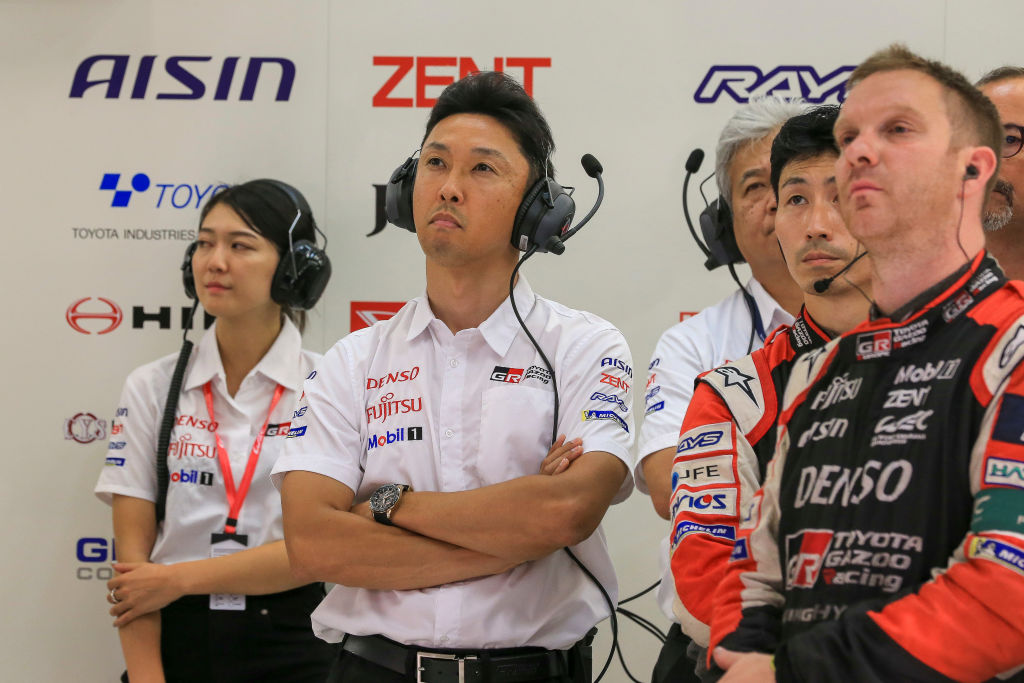
Nakajima hasn't liked what he's seen this season, but he and his team are eager to apply the lessons learned. Laurent Cartalade/Eurasia Sport Images/Getty Images
The weeks since the last round at Interlagos have offered Toyota “an opportunity to assess a challenging weekend and return stronger,” as it said in a press release filled with downtrodden remarks that have become the new normal for an organization which has prided itself on its competitive spirit and ability to deliver results, no matter how high or low they’ve placed the expectations for themselves.
Among the things Toyota has assessed are the GR010–Hybrid prototype itself, which is the oldest Hypercar in active service.
“Of course, there’s limited chances for development through the season, but we have been reviewing all the details of the car especially the controls, tires, whichever we can improve through the season,” Nakajima said. “We have different plans to improve our side from short term to long term; this is our approach. There is still some aspects that we’re not fully on top of.
“By regulation, there’s a limitation for us to bring a whole new car. But as I said before, we also have a medium- to long-term plan of development. And although we cannot reveal too much about the plan, hopefully we can bring this at one point – and make a bit of change to the hierarchy of the competition.”
Looking further down the road, Nakajima says that Toyota is ready to challenge the future class for Hydrogen regulations, once there is more clarity and a firm date on when they will be implemented. The manufacturer has already presented a concept for a hydrogen-powered prototype which would represent a quantum leap from the GR Corolla H2 Concept running in Japan’s Super Taikyu Series.
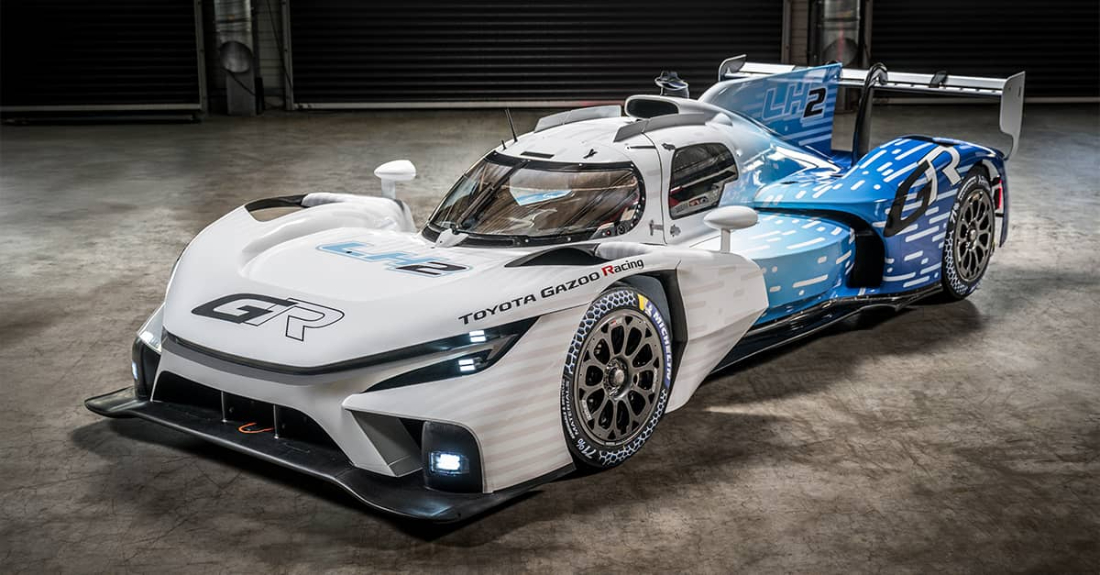
Toyota revealed this liquid hydrogen-fueled GR LH2 Racing Concept at Le Mans this year. Toyota Gazoo Racing photo
“Obviously, it’s kind of our dream to make it happen. But at the same time, we have to make it clear that it cannot be achieved only from our effort," Nakajima says of the Hydrogen program. "We also need good support from the organizer side, as there’s no clear regulations set.
“Of course, we are happy to support to move it forward, but this cannot be done from only a one-sided effort. So we need more gathering of people pushing for this.
“How we have been communicating, including the reveal of the GR LH2 Future Concept, is proof of that, that we are pushing for it. But at the same time, if you ask me how confident we are – we basically have to keep testing, keep developing, and that’s the only way we can gain our confidence.”
One thing that Nakajima made clear, though, was that Toyota is still committed to endurance racing at the highest levels.
“The current situation is a bit frustrating, in a way. But we are the team with the mentality of ‘hate to lose’ so, basically, we want to do whatever we can do to come back in position to fight for the win.
“[The morale in the team] is very high and we are always eager to perform as best as possible. All the difficulties we've had so far this year is giving us higher motivation to fight back. So let's see what we can do in Austin and the rest of the season, including our home race.”

RJ O’Connell
Read RJ O’Connell's articles
Latest News
Comments
Comments are disabled until you accept Social Networking Cookies. Update cookie preferences
If the dialog doesn't appear, ad-blockers are often the cause; try disabling yours or see our Social Features Support.