Joe Skibinski/IMS Photo
The Diuguid era at Team Penske starts now
The cars and the series where they compete have evolved since the team was established in the 1960s, but inside those buildings, stability and consistency among the men and women who build and run the machines has been central in creating Roger Penske’s racing empire.
Across IndyCar, sports cars and stock cars, excellence was established with leaders – from pit crews to managers – who committed decades of their lives serving as the foundations beneath Team Penske. Mechanics, engineers, car chiefs and more who became legends and hall of fame inductees for their contributions.
But the team’s bedrock was shaken in May when Penske fired Tim Cindric, who presided over all aspects of the business for a quarter-century and established a steely, machine-like culture that delivered wins and championships at an unrelenting pace. Penske also fired Ron Ruzewski, Cindric’s IndyCar second in command, its senior-most engineering mind, and IndyCar team manager Kyle Moyer, who anchored the shop floor.
Penske chose to initiate a leadership reset after suffering the embarrassment of a second major penalty handed down by IndyCar’s technical regulators since April of 2024. A seismic change, sweeping and without replacements at the ready. The instantaneous end of an era, days before the Indianapolis 500. It was sending a signal to the rest of the teams in the series he also owns that restoring their trust was paramount, no matter the price.
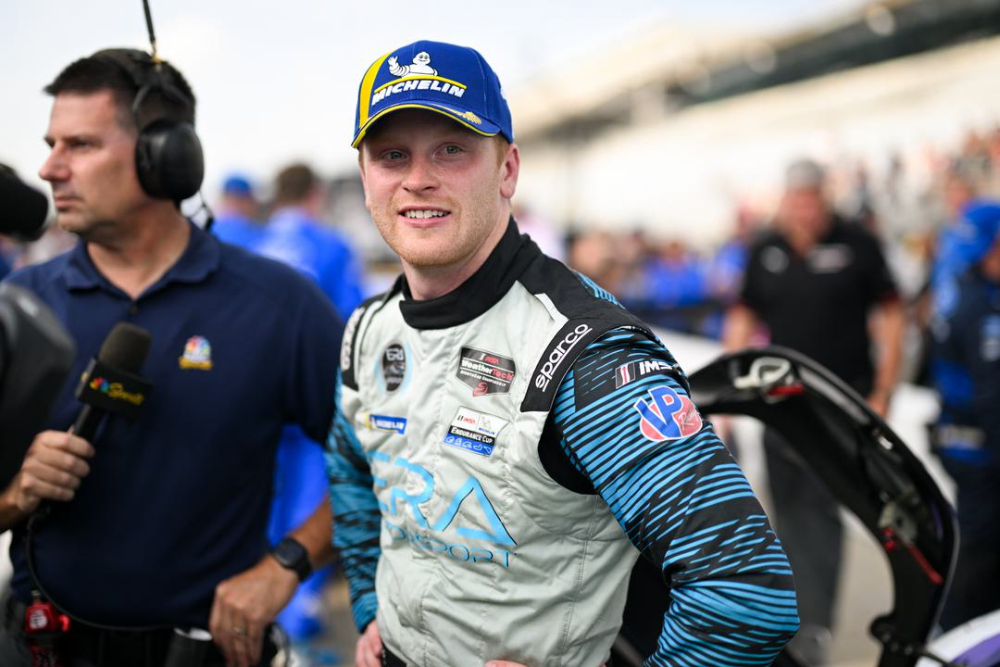
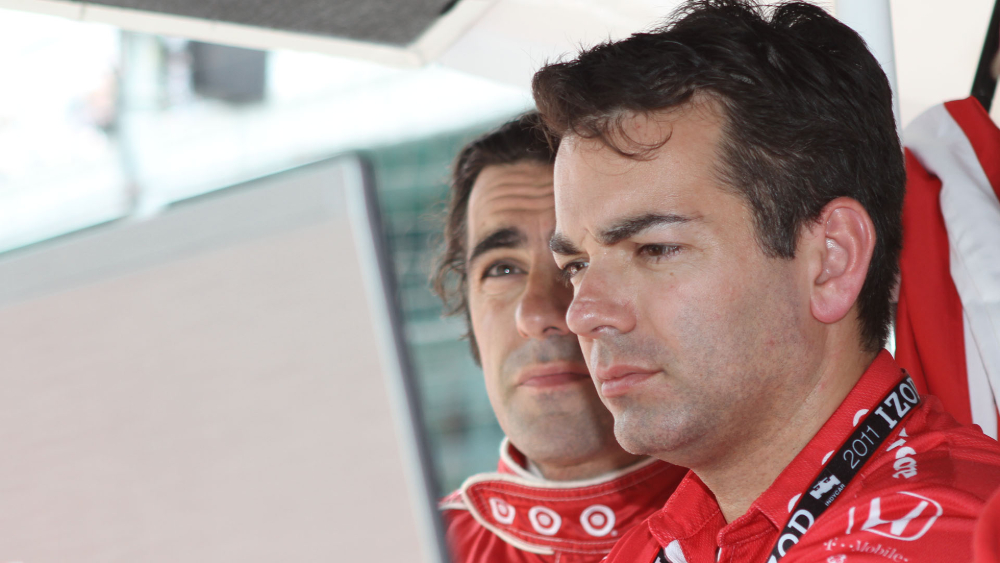
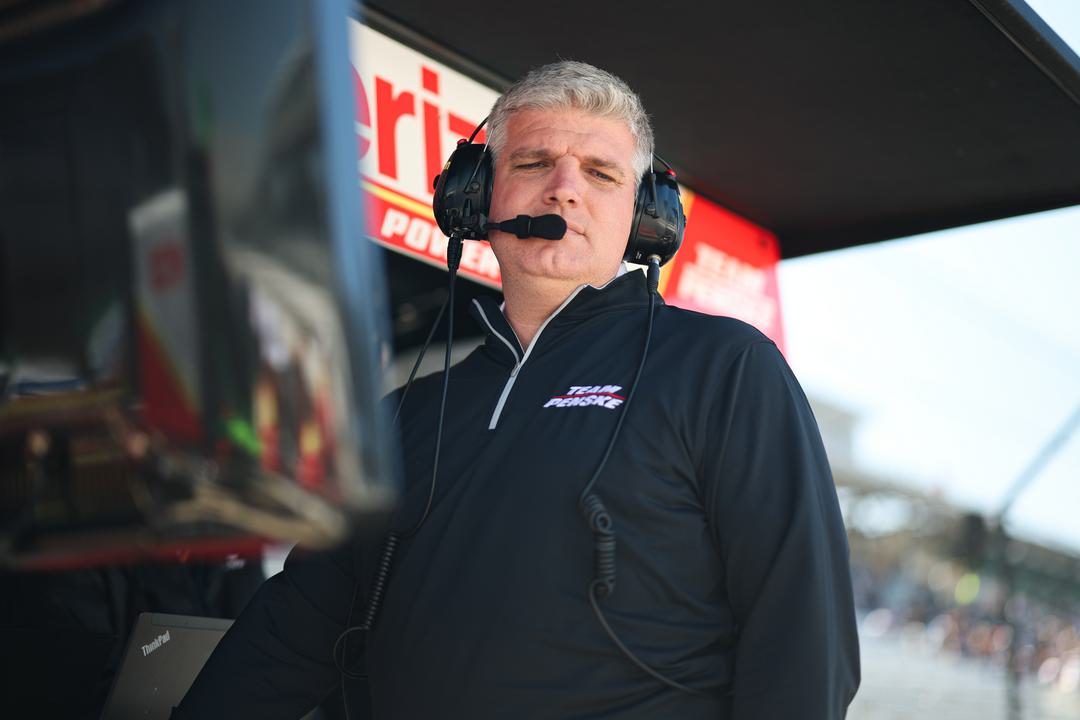
In early July, Penske announced the two new leaders for its IndyCar team. Former Penske IndyCar race engineer Jonathan Diuguid (pictured above), whose deep experience with the team in sports cars led to a vast promotion in 2022 to run the factory Porsche Penske Motorsport IMSA GTP and WEC Hypercar program, was named Cindric’s IndyCar successor. Travis Law, Josef Newgarden’s championship-winning crew chief who moved away from pit lane at the end of 2022 to join Diuguid as his IMSA/WEC No. 2, was given the same role in IndyCar.
As a tandem, Diuguid and Law became a highly effective pairing, taking four GTP wins, including the prestigious Rolex 24 At Daytona, as Porsche Penske Motorsport captured last year’s IMSA championship. The momentum continued this season as PPM took the first four wins in a row – including another Rolex 24, plus the Mobil 1 Twelve Hours of Sebring – and sits a comfortable 1-2 in the standings as the runaway GTP points leader.
Diuguid and Law return to IndyCar while maintaining their full PPM duties, but it’s a familiar open-wheel home for them and, critically, they bring their successful style of leadership to a team in transition.
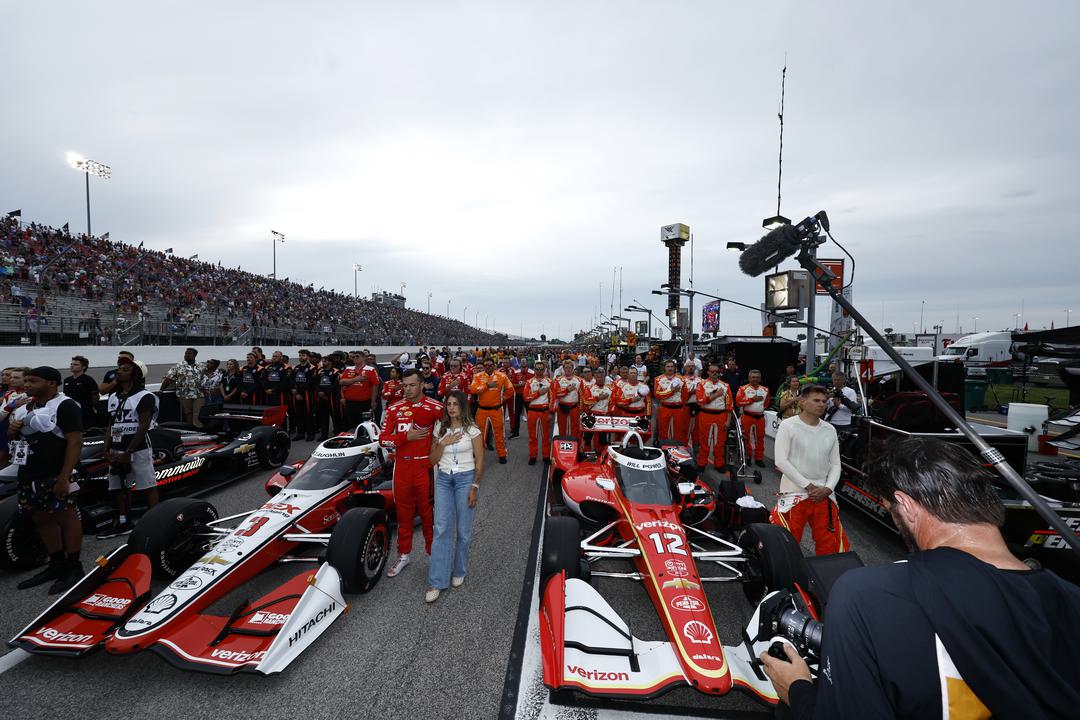
For a team used to starting and racing up front, expections multiply the frustration for the likes of McLaughlin, Power and their crews when they don't. Chris Jones/IMS Photo
“Team Penske is characterized by a lot of different things,” Diuguid told RACER. “I would describe it as an American racing dynasty. It's a team that's been around for 60 years and had all the success that it's had over that tenure. And over that tenure, the team has gone through multiple evolutions of team structure in whatever series they're competing in.
“From the Can-Am days to an IndyCar-only team to a sports car team, and then both, and with all these different iterations, the team has evolved and adapted and been successful. That's really the goal for Travis and me; it’s to stand on the shoulders of what the team is built on, foundation wise, but to continue that evolution and make sure we stay competitive. I'm very grateful for the opportunity, but at the end of the day, it comes down to results. And as a team, we've been delivering results that fall short of our expectations.”
Leading Team Penske into the future is an honor and an exceptional increase in pressure for Diuguid. The job’s availability came through adversity and the loss of close friends and teammates; there’s a lingering heaviness left to process.
He’s taken over the most successful IndyCar team of all time – Penske’s pride and joy – out of necessity; there’s a strong chance it would have happened at some point under normal circumstances, but it didn’t. Since the leadership change, Penske’s IndyCar drivers have endured some of the worst fortunes seen in decades; winless since the start of the season, they’ve recently come close to reaching victory lane, but the quest for first place continues this weekend in Toronto where Diuguid makes his trackside debut as team president.
“Openly speaking, we're focused on getting the team back to where it needs to be,” he said. “Sometimes evolution is a natural iterative process, and sometimes it comes with a lot of pain. And in this situation, it's coming with a lot of pain. A lot of pain for some people that I hold as dear friends. Tim, Ron and Kyle are teammates that I've worked with for decades, and what happened in Indy was personally devastating just because these people, I worked with them, but they're also my friends, too.
“As well, time doesn't wait for us, and the team has reacted. I talked to everybody after Indy and I said, ‘Look, I'm not going to lie. It's going to be a difficult, difficult couple of months. To get through the IndyCar season is going to be difficult, and it's going to be painful.’ I talked to them again last week and followed up on that comment, I said, ‘Hey, I know I told everybody that it's going to be painful. I didn't think it was going to be this painful.’
“Because we've had opportunities to win. Iowa was a good example of where we showed up and the cars were rock stars and the drivers were rock stars, and we couldn't get across the finish line to take home a win there. And so we're looking to turn around the immediate future and put together some race wins.”
Keeping everyone together across the final five races of the IndyCar season – while trying to lock down PPM’s second consecutive IMSA GTP championship – is the first order of business for Diuguid and Law. But time is the priority. IMSA’s season doesn’t end until mid-October, and they can’t afford to idle and start crafting Team Penske’s IndyCar overhaul during the offseason.
“We're also building for the future and that's happening in the background, and there's going to be some more announcements, closer towards the end of the year,” Diuguid noted. “Going forward, we're going to lean on a lot of the people that have been here for a long time because Travis and I aren't going to be able to do this by ourselves. Whether it's IndyCar racing and sports car racing, or IndyCar alone, or sports car alone, we need a pretty strong support system.
“The good thing is, we’ve got people like (veteran crew chief) ‘Swede,’ Matt Jonsson, crushes it every day. The rest of the team was on a travel day, and he's been here since 6am digging on everything. We’ve got people like Dave Faustino and Ben Bretzman and Luke Mason, who stepped up and are doing dual roles, race engineers and strategists. So we're working to organize ourselves, to lean on our people, and ask a lot of some really key people right now, and everybody’s stepping up to the plate.”
Diuguid’s been proud to see how the IndyCar team has banded together and pulled through rough events like the Iowa Speedway doubleheader where the highs of a pole position and season-best second place for Newgarden was countered by crashes with Scott McLaughlin and another engine malady for Will Power.
“You saw it in Iowa, even with all the external stresses and the lack of on track results that we have, the atmosphere in the team is really strong,” he said. “Scott crashed in qualifying, and we had people from the 2 car, the 3 car, the 12 car slamming that thing together, and they took that car from destroyed to watch Scott basically drive from the back of the grid to nearly win the damn race.
“Goes to show you that the core of the team is still strong, the preparation is still strong, the mechanics are still strong, the drivers are still strong, and we can do it. We’ve just got to put it together. A little bit of success rights the ship pretty quickly. So that's our that's our goal.”
This isn’t the Team Penske of old that’s loaded with nothing but battle-hardened veterans – the legends who steered the program to glory in CART and the IndyCar Series through the 2010s. There’s a strong blending of newer veterans and a lot of youth who bring diverse backgrounds and plenty of energy to the three cars.
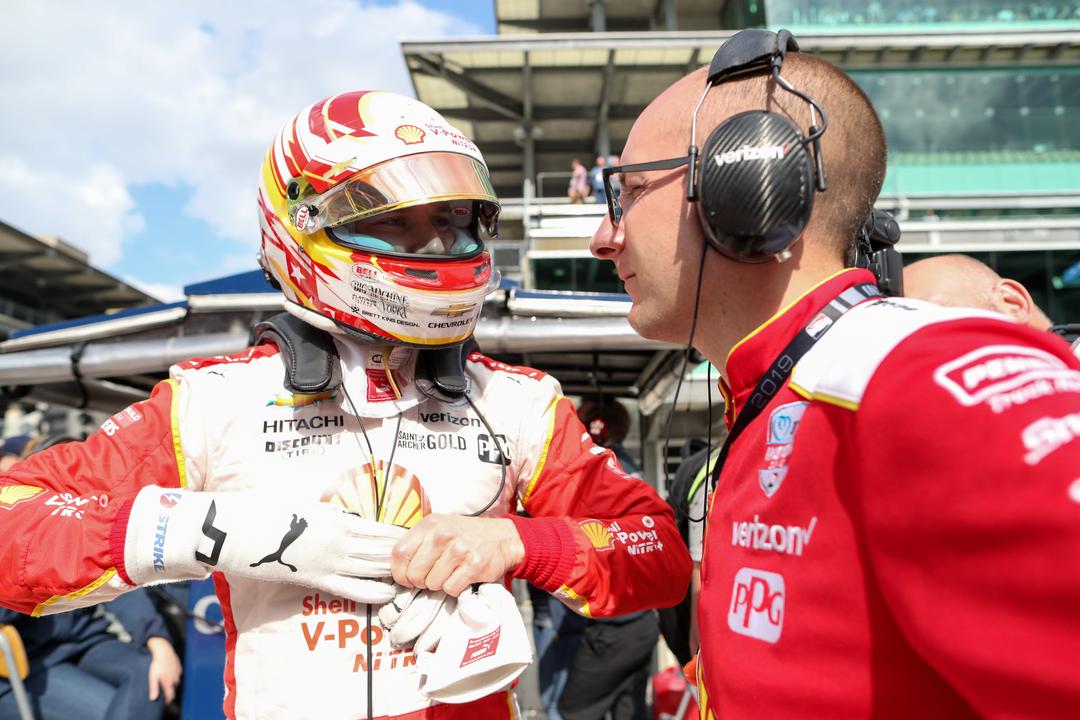
Law (at right, with Newgarden) exemplifies a new generation of leadership at Team Penske. Joe Skibinski/IMS Photo
It’s here in the 2025 version of Team Penske, with multiple generations coming together on pit lane, where the new leaders in Diuguid and Law should be able to connect in meaningful ways with the men and women they worked alongside since they joined Penske in the 2000s. And with those who’ve joined in recent years.
Law trained some of the new talent before he was promoted to PPM, and with Diuguid, his approachable demeanor is a great fit for those who’ve only known Cindric, Ruzewski and Moyer as their directors. Establishing his imprint on the team – shifting its culture in whatever ways that will bring it to new heights – is just one of many adjustments on the horizon. The role is also changing Diuguid.
“One thing I can say is that I still feel uncomfortable outside of a full team shirt with all the sponsors,” he said. “On the Porsche program, there was talk about, ‘Hey, we need to have management in this shirt, a management-looking shirt,’ and I said, ‘Look, can everybody just wear the same thing?’ And now we do. So I was able to make that (managerial) step without any visual or perceived changes. The IndyCar program is a little bit different, and so I definitely don't feel comfortable in that (management) shirt, but I do think it is important to embrace a role change and also not forget where you came from.
“But there does need to be a perception change. You can’t go out drinking with the car crews. There does need to be some separation of church and state, because in professional sports, there’s a lot of Type A competitive personalities and people that live and breathe this every single day. To lead a group of people like that, you also have to be strong.
“But at the same time, I feel like you need to be engaged and empower the people that you need to do the work with as well. Because I can't do it all. The more I get exposed to the higher-level operations of the team, the more and more I can appreciate what Tim did with Roger, when he was operating the team at that level of capacity and what they processed on a daily basis, especially when he was responsible for NASCAR, IndyCar and sports cars.
“It's a staggering amount of responsibility, and that can wear on people. I hope it doesn't change me, and I'm going to do my best to be the same approachable person that I have been. But I think the role change does require a slightly different approach, and I'm going to take my time to figure that out. But you know I'll still be in the paddock, I'll still be on the timing stand, and still be out in the garage.”
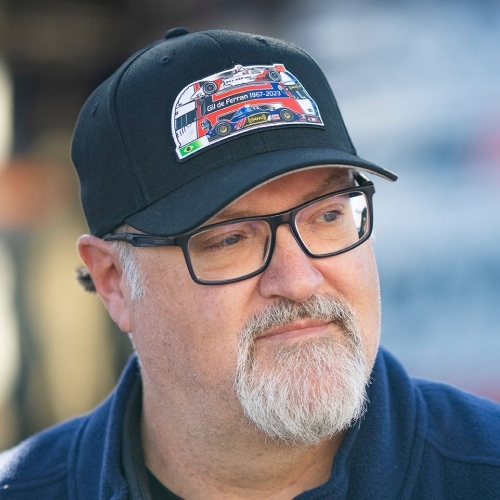
Marshall Pruett
The 2026 season marks Marshall Pruett's 40th year working in the sport. In his role today for RACER, Pruett covers open-wheel and sports car racing as a writer, reporter, photographer, and filmmaker. In his previous career, he served as a mechanic, engineer, and team manager in a variety of series, including IndyCar, IMSA, and World Challenge.
Read Marshall Pruett's articles
Latest News

Comments
Comments are disabled until you accept Social Networking Cookies. Update cookie preferences
If the dialog doesn't appear, ad-blockers are often the cause; try disabling yours or see our Social Features Support.