James Black/IMS Photo
IndyCar looks to shake things up in return to Iowa
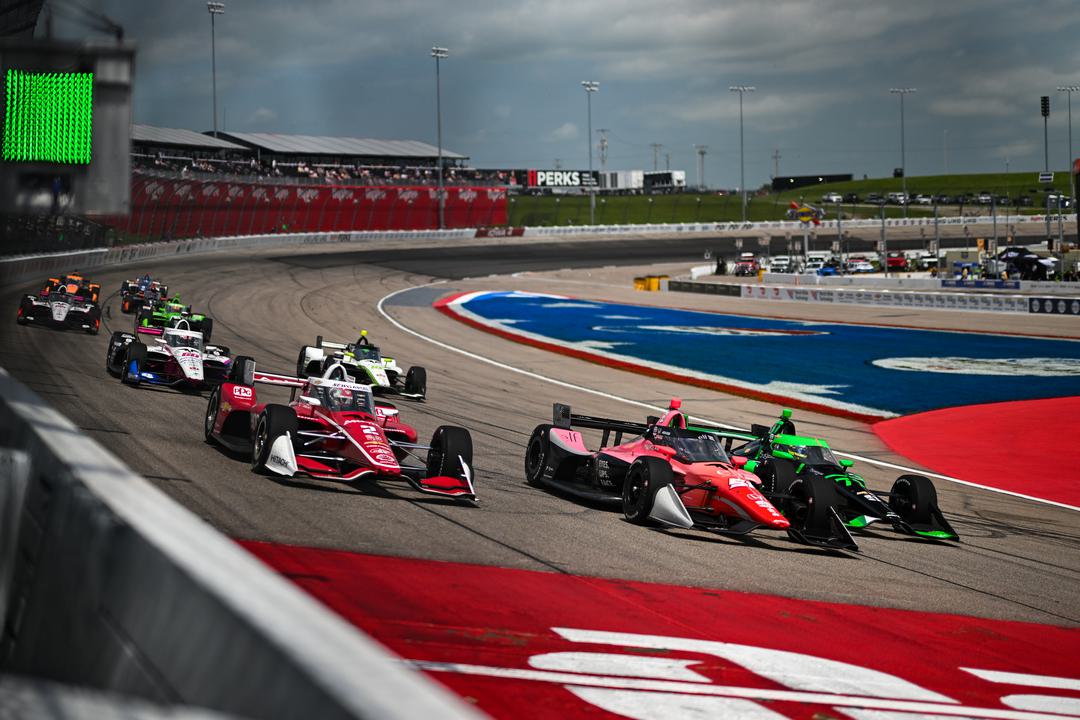
Coming off of the least memorable Iowa Speedway races since IndyCar debuted on the 0.875-mile oval in 2007, the series has made a range of changes to the technical specifications of its Dallara DW12s with the goal of improving this weekend’s show.
The doubleheader featuring twin 275-lap races Saturday night and Sunday afternoon will use a modified version of the tech specs teams sampled during a recent test at the short oval which underwent a repaving of the lower lane in 2024.
Last year’s race saw the field running single-file at the bottom of the track as there was insufficient grip to use the second lane. In response, the series is attempting to create passing opportunities between the turns by altering how the cars make downforce with the road course/short oval aerodynamic package.
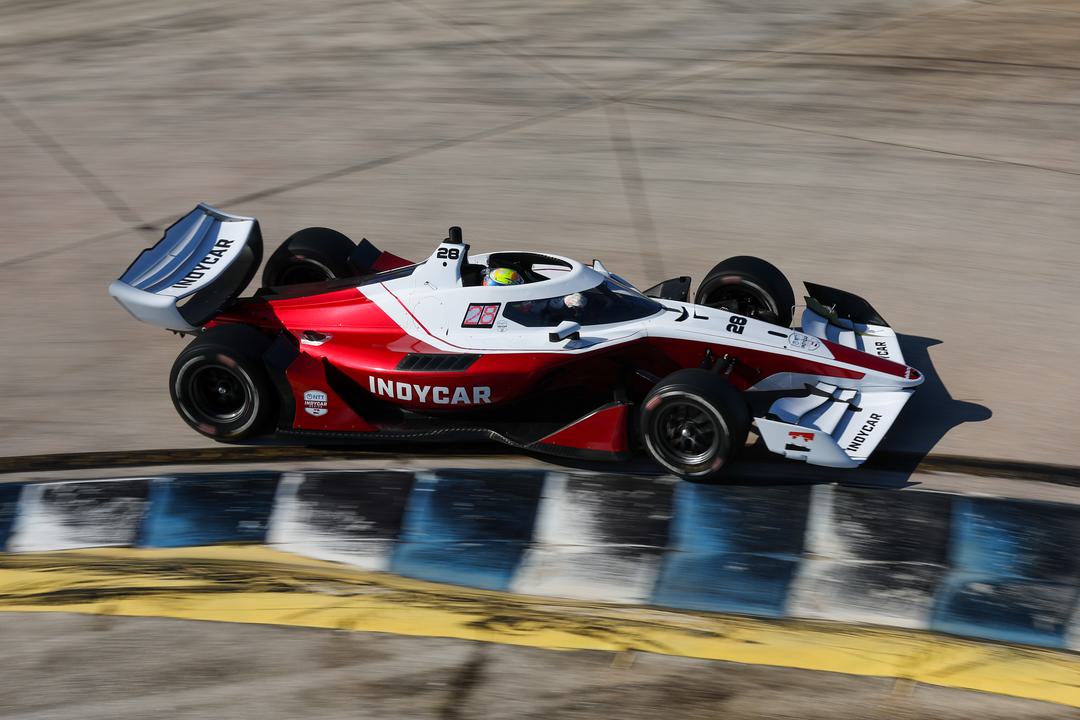
At the 2024 doubleheader, teams were allowed to use barge boards and strakes to increase efficient downforce production beneath the cars using the large underwings and diffusers. For 2025, the barge boards and strakes have been banned, which places a greater reliance on topside downforce production using the inefficient and drag-laden front and rear wings to replace what had been lost beneath the cars.
In shifting the downforce creation upwards to the wings, IndyCar hopes the ensuing drag –the "dirty air" spilling off the rear wings, in particular – will make it easier for trailing cars to move forward. One change from the test, where teams used Slot 6 for the rear wing’s upper element position, has been made with a trimming to Slot 4, which RACER understands takes approximately 275 pounds of downforce off the cars.
With the elevated weight carried by the DW12s in hybrid configuration, taking the cars to the upper limits of downforce production has been avoided in the interest of preventing mechanical and tire failures from exceeding the design tolerances.
The series will also have the field using its lowest turbocharger boost setting, the same 1.3bar/18.85psi found in practice and in the race at the Indianapolis 500.
Ed Carpenter Racing’s Christian Rasmussen had a massive crash in the test when a right-front tire is said to have burst, and in response, a more durable right-front tire is planned for the doubleheader. According to IndyCar, the tire plan involves “left side tires with the same compound and construction from this year’s Indy 500, right-rear tires with the same compound and construction from last year’s Iowa races,” and “right-front tires with the same compound but different construction from last year’s Iowa races (and the team test, June 25).”
Andretti Global’s Kyle Kirkwood, winner of the most recent oval race at World Wide Technology Raceway, was ninth fastest at the June 25 Iowa test and share in IndyCar’s hope for more exciting races, but fears it could look similar to 2024’s races.
“The only thing I will say about Iowa is don’t be upset if it isn’t a lot better,” Kirkwood told RACER. “With just the one lane getting the repave, it's stuck where it is. IndyCar’s doing their part by throwing a whole new package at it for this year, but it's got nothing to do with the package that we run, the power that we run, the fact that the car is heavier, or even if it was lighter. None of those things would fix it. It's just the fact that they changed the asphalt and it creates too much grip and too little (tire) deg.
"So, it's just not going to change until we see degradation in that asphalt. Or they repave the entire track. The only line that they that they repaved happens to be at the bottom, so that’s where all the grip is for our cars and so that’s where we run. That's the issue.”
Team Penske’s Josef Newgarden, a two-time Indy 500 winner, has made Iowa Speedway his personal hunting grounds after winning six times since 2016. He was 11th in the test and wants to put on a great show for fans. And like Kirkwood, he sees the same limitations from the limited repave rearing its head at the Sukup-sponsored event.
Although it wasn’t chosen by the series, the two-time IndyCar champion recommends going in the opposite direction with downforce to remove the ability for drivers to run comfortably in the bottom lane.
“My sense is that you're going to have a very similar show,” he said. “I think the only way in Iowa's current condition, with the repave, to open up that second lane is to run with minimal downforce. You've got to take the downforce off the car to create degradation and to force people to find grip in different areas, and that would force them to use a second lane to find air in a different place.
“I think the current config is going to lend itself to just push people onto the bottom and not make them go up. Now we'll see what happens. It’s hard to say exactly, but that's my prediction. It's the opposite of Gateway (WWTR). Gateway was a scenario where loading the downforce on the car at that track with the with the current state of the pavement was a good thing, and it produced better racing.
“I don't think that's the case for Iowa right now with the current config, but we'll see. You just never know. We’ve just got to open up the second lane. That's always the holy grail at a short oval. If you have a second lane, you're gonna have good racing, and we'll see if we get it.”
Marshall Pruett
The 2026 season marks Marshall Pruett's 40th year working in the sport. In his role today for RACER, Pruett covers open-wheel and sports car racing as a writer, reporter, photographer, and filmmaker. In his previous career, he served as a mechanic, engineer, and team manager in a variety of series, including IndyCar, IMSA, and World Challenge.
Read Marshall Pruett's articles
Latest News
Comments
Comments are disabled until you accept Social Networking Cookies. Update cookie preferences
If the dialog doesn't appear, ad-blockers are often the cause; try disabling yours or see our Social Features Support.