Paul Hurley/IMS
IndyCar's enigma: Why the best racing on the planet changed
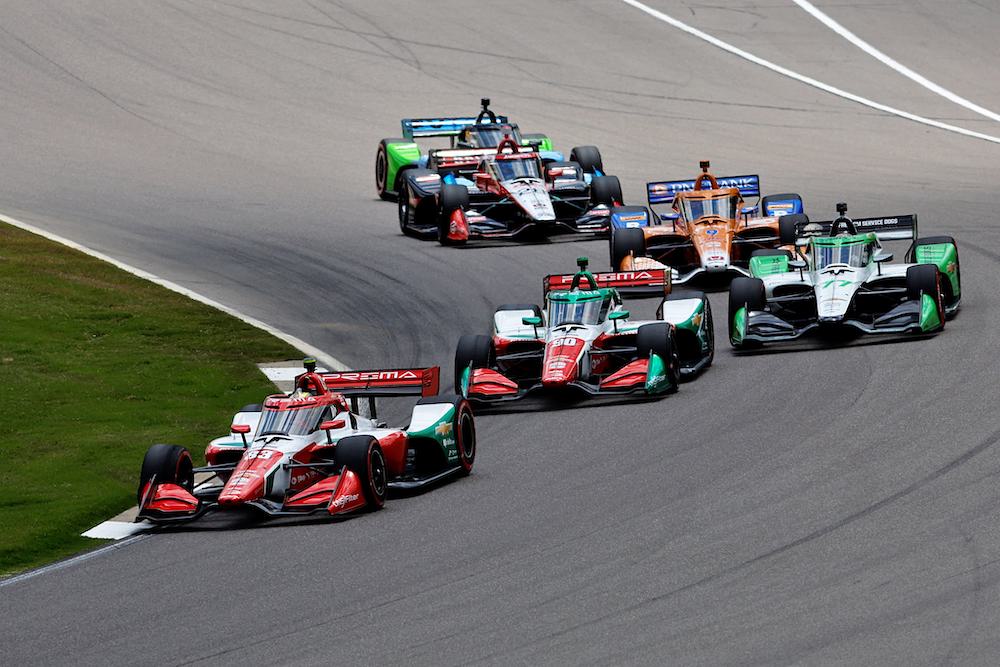
It took two IndyCar races and 146 combined laps for the first wheel-to-wheel lead change to happen this season.
Plenty of passing went on behind the leaders, but up front where most eyes and TV cameras are fixed, the 2025 season opened with an absence of compelling battles for victory, made worse by an absence of caution periods.
There were no on-track passes among leaders during the 90 laps race at St. Petersburg, and 56 additional laps were needed to put Alex Palou in a position to overtake Pato O’Ward for victory at The Thermal Club. In the 189 laps that followed, Palou went unchallenged over Thermal’s final nine laps before Long Beach polesitter Kyle Kirkwood won the 90-lapper without ceding the lead while on the circuit.
Palou reclaimed the baton at Barber Motorsports Park and wasn’t threatened at any point during his dominance of the 90-lap event.
Four races. A total of 335 laps of IndyCar competition. And a single pass at the front of the field. This hasn’t been the IndyCar we know.
Saturday’s Indianapolis Grand Prix offered a reprieve with some good action, and in a welcome twist, not one, but two on-track lead changes when Graham Rahal passed Palou at the start, and again when Palou took the lead back from Rahal on the way to his fourth win of the season.
Nonetheless, the adjusted tally sits at five races, 420 laps of action, and three passes for first place.
What happened to the series that was proudly -- and correctly -- known through 2024 for some of the best racing on the planet? The mistakes and misfortune that create cautions, restarts, and major passing opportunities have also gone missing. But why?
With plenty of questions hanging over the early road races and the strong possibility of the trends continuing after the Indy 500, RACER asked a range of experts to explain the unusual start to the season.
Background
IndyCar introduced its energy recovery systems (ERS) last July at Mid-Ohio and completed the second half of the season with the Dallara DW12 chassis in hybrid configuration. The ERS units, placed towards the back of the cars between the engines and transmissions, added 132 pounds. To offset the increase, some of the DW12’s drivetrain components were remade in lightweight magnesium, bringing the net gain down to approximately 100 pounds.
A total of two road courses, one street course, five short ovals, and an intermediate oval were run in 2024 with the hybrids. The roads and street races weren’t the most memorable, but the ovals – with the exception of Iowa – were among the best races of the year.
So what’s led to the downturn in lead changes and cautions?
Tires
Seeking to create more excitement on the roads and streets, Firestone was asked by IndyCar during the offseason to create a wider gap in grip and durability between its harder primary tires and its softer alternates. Firestone delivered on the request, especially with its street alternates, which have given short bursts of immense performance before extreme degradation begins and grip evaporates.
With the alternate tires surrendering long before the fuel tanks need replenishing, the intent was to create more excitement as some drivers scrambled to hold onto their cars while others thrived on the steadier primaries. But the opposite happened at St. Petersburg and Long Beach, where most front-running teams shed the alternates as quickly as possible and spent the rest of their races on primary tires.
“I don't think it's a coincidence that there’s been the change at IndyCar’s request to Firestone’s tires," says Chip Ganassi Racing's Mike Hull. “IndyCar asked Firestone to try to contribute positively to making the racing better by making the tire choice between the alternates and the primaries effective. In fact, I don't think that's happened.
“I don’t see anything else that’s changed, frankly. It has been a contributor to the issue, because we proved from Mid-Ohio onward (last year) that the racing was still pretty good.
“And then, if you combine that with the pendulum effect of the hybrid weight… that’s probably not as big of a contributing factor to tires themselves, but together, there’s been a change. I think the way to fix it is to go back to where they were before with the tires.”
The weight, aka, “The hybrid”
The 100 pounds and rearward location of IndyCar’s spec ERS units have fundamentally changed the handling of Dallara’s DW12 model.
Looking back to the 2013 regulations when the DW12 chassis specification was settled (the car underwent numerous updates when it was new in 2012), the DW12’s road/street course minimum weight (minus driver and fuel) was 1580 lbs. In 2025, with the ERS, the aeroscreen from 2020 and other safety updates applied since 2013, the road/street minimum has ballooned to 1785 lbs -- a 205-lb increase -- and taken the car to a physical state where it was never intended to function.
In human terms, it’s akin to strapping 22.5 lbs to the back of a 175-lb person and watching as they run slower, jump lower, struggle to deftly cut left and right, and take longer to stop from a full sprint. Prior to the hybrid weight, the DW12 lost some of its performance capabilities with the 50-ish pounds from the aeroscreen, but it wasn’t a night-and-day difference. In hybrid form, the DW12’s athleticism has been compromised.
With the 100 lbs of ERS heft, elite drivers and engineers have been forthright in saying the DW12 has reached its tipping point. At 1785 lbs dry -- and over 2000 lbs with drivers and full fuel to start the race -- the car’s current weight diminishes its ability to perform at the highest levels.
To keep the hybrid cars on the racing surface, pointed in the right direction, and the new tire compounds from boiling over, drivers have had to tame their inner animals -- some more than others -- to comply with the DW12’s lowered performance threshold.
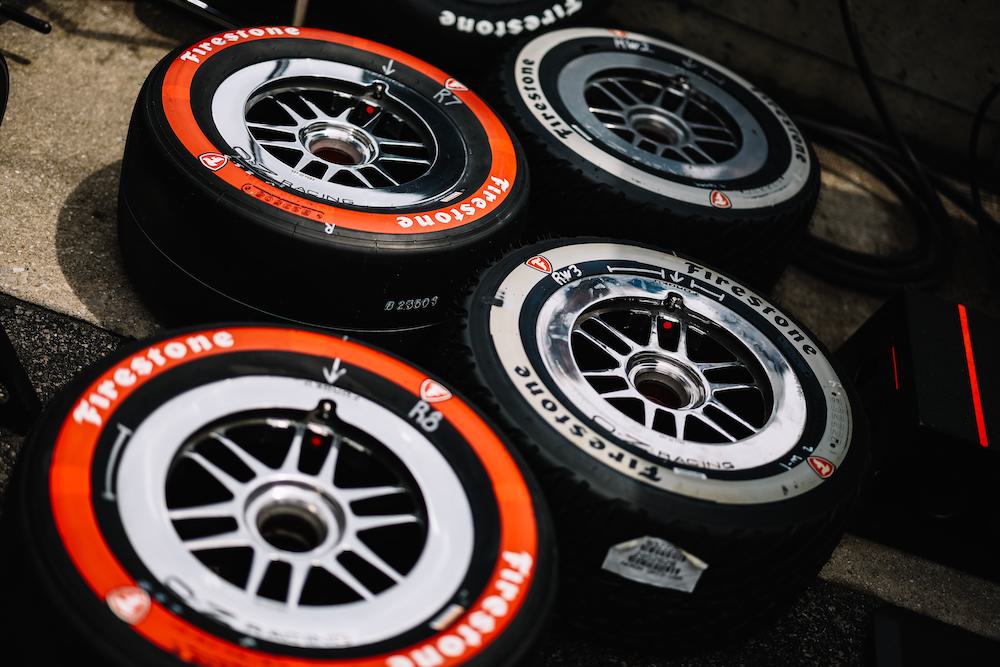
Firestone delivered on IndyCar's request for greater differentiation between its tire compunds, but it seems to have inadvertently been to the detriment of the racing. Joe Skibinski/IMS
The series’ best drivers are unable to attack the steering wheel, and each other, with the same daring road/street course passes that made for such great racing previously.
“The heavier any race car gets, the less forgiving it is for minor corrections," notes Andretti Global driver Kyle Kirkwood. "If you think about a 1500-lb open-wheel car versus a heavier sports car, you think of something nimble, fast, very direct. If you have a small snap (sideways moment), it’s a quick snap, a quick grab, and you're continuing on.
“Sports cars, on the other hand, if you start to slide, you just get a big, lazy slide. Now we're falling in between those two with the added weight. It’s a lazier car with added weight, no matter what you do power-wise. It doesn't matter if you put a 5000-horsepower engine in it -- if you add 100 lbs, it's going to be slower in the corner. That's just a given fact.
“And in some ways, you can't push the absolute limit, because as soon as you get to the edge, the car tips over more than what you had in previous years. The lighter the car, the more nimble it is, the more you can catch it, the more that you can push and get away with it. So now you're falling into this realm of needing to keep it at 99 percent, not 105 percent like you've seen in the past.
“It's mostly because it's just less forgiving," Kirkwood continues. "If you push to that 105 percent and you're all over the wheel, like maybe you've seen with Pato (O’Ward) in recent years, that's not actually the fast way to drive it anymore. You need to be smooth, concise, not sliding the tire with the way the weight has gone. And the weight distribution with where the weight lives is probably the bigger factor. It has migrated the type of driving that you have to do to get lap time out of the car.”
Those who prefer cars tuned with slight oversteer, or drive in a manner that induces the oversteer, have found a smaller margin of error while dancing on the edge with the 100 pounds, which Kirkwood describes as no longer playing above 99 percent. But we’ve seen some small oversteering moments since the hybrids arrived; it’s just a case of the frequency being greatly reduced.
Ed Carpenter Racing's Alexander Rossi offered a different take that speaks to understeer, the opposite handling phenomenon.
"Certainly, the hybrid has made the car really numb and unenjoyable to drive, and it's also added a lot of understeer," Rossi says. "So, that's a safer way to drive a car too, right? It's not that we're choosing to have this massive level of understeer, but you can't really get the car to the same oversteering that it once was. It’s just induced so much push that you can't really even spin if you wanted to. Like, you can, obviously, but the car is not free (to easily oversteer) anymore.
“When we added the aeroscreen, it overloaded the front axle, and so now it has nothing to do with where the weight is – high, low, forward, back; the physical capacity of the car and tire right now can't tolerate the higher weight. So the weakest link is the front, and that's what's obviously going to give up first.
“You’d think rearward weight would make it super-loose, and that's not the case because most of the time the front tire is what's struggling in the pure balance of the car to combat the added 100 lbs.”
Tire thresholds as a limitation
With the changes to the road racing tire compounds, and the excessive weight of the car placing extreme demands on those tires, the DW12 hasn’t been able to withstand the same level of abuse.
The riskier passing attempts under braking and into the corners seen in the pre-hybrid era, placing high loading on the tires, have been mostly abandoned in the name of managing tire life. In turn, green-flag racing has ruled the season.
“Even though it's not technically a fuel race for distance, it's a fuel race for tire life," says Rossi. "You're driving under the performance threshold, and so you're not as prone to mistakes. And then at Thermal, even though it's not a different tire, but because the (tire degradation) is so high there, it's a similar situation. Not from a fuel standpoint, but you're driving to a tire temp target to make it survive, so again, it’s the same sort of situation.”
Braking
Turn 5 at Barber Motorsports Park was a prime example of how the DW12 has changed with the hybrid weight onboard. Prior to the hybrid, the long run to the downhill braking zone and hairpin corner is where most of the passing happened, as driver after driver would shoot down the inside and take the position from a rival, often banging wheels and forcing those on the outside onto the dirt and grass. It was messy and made for great theater.
But those kinds of passes -- the daring lunges – were somewhat muted in 2025. Christian "Lunge-gaard" as FOX’s Townsend Bell has called the Arrow McLaren racer, certainly used Turn 5 to his benefit, and passes continued to happen into the corner, but it wasn’t the same aggressive use of the inside lane.
It was cleaner, which isn’t necessarily a bad thing. But Barber’s most dynamic turn for passing was transformed into any other anonymous corner because the new tires and weight won’t accept the same kind of spirited stopping and turning.
“My old friend Mr. Rossi and I were chatting about this after the race," relates Rob Edwards, Andretti Global COO and Colton Herta’s race strategist. "I don't think you can follow as close. It’s changed braking distances. That ability to get close enough to throw the car down inside or alongside it, I think that is not there as it was before.”
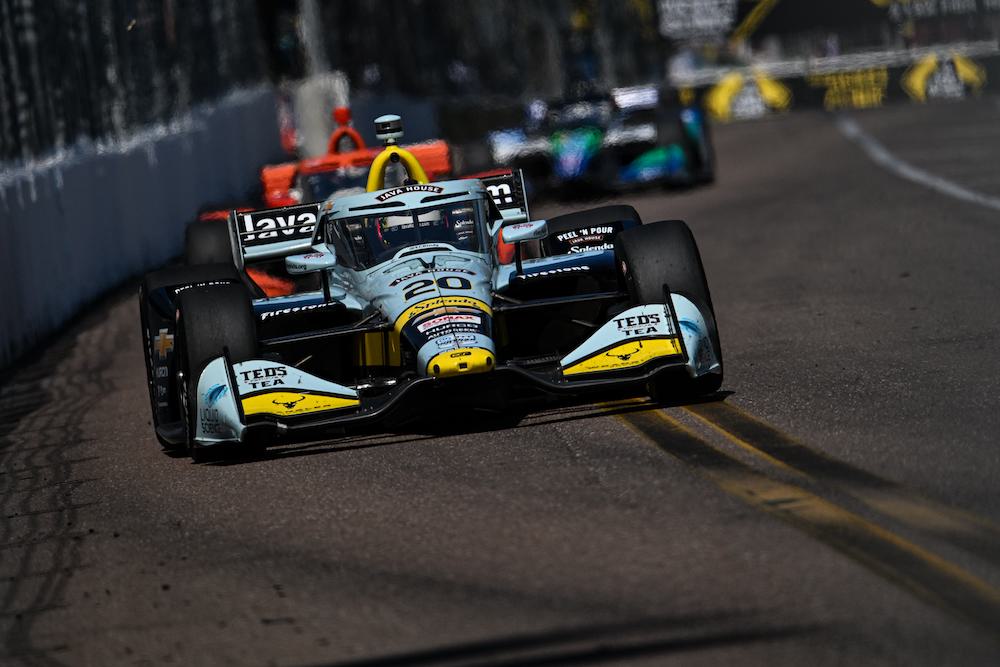
The characteristics of the current-spec IndyCar work against late braking – which in turn means less passing. James Black/IMS
Race strategy
Great racing is often produced when the field is split on how many pit stops to perform. It’s the "risers and fallers" routine, where half or so of the drivers are on a two-stop strategy, for example, and have to save their fuel and tires to complete long stints that delete the need for a third stop. The other half hammer the throttle the entire time, commit to a three-stop plan, and as those dueling strategies play out, their various fortunes rise or fall throughout the contest and generate plenty of passes throughout the field.
The season opened at St. Petersburg with the familiar willingness to get creative with race strategy, and in particular, the sequencing of when Firestone’s new primaries and alternates would be used.
Polesitter Scott McLaughlin from Team Penske was the key case study. His car was outfitted with the long-lasting primaries while Colton Herta, alongside him on the front row, plus all of the drivers starting sixth through 10th -- including Alex Palou -- chose the quick-burn alternates.
An immediate caution on the first lap that allowed those on alternates to complete the regulatory minimum of two laps with their new sets and pit to run the rest of the race on primaries meant McLaughlin’s strategy backfired. Those starting on alternates shed the unloved compound under caution while the Penske driver stayed out on primaries and later pitted under green to do his mandatory run on alternates.
He finished fourth, which led to a wholesale change towards conservative strategies after St. Pete that have contributed to this season’s racing product.
As Edwards explains, “At St. Pete, there were a few guys that started on primes and we all saw how it worked out. By the time you get to Long Beach, effectively, everyone at the front has converged. We're going to start on the alternates and we're going to get off them as quickly as possible.
“When the offset between the two different compounds of tires is correct, you do get passing, because you get tires going off and people are on different tires at different times. I think you could say that on the road courses, the difference between the two types of tire is probably not great enough. And on the street circuits, the difference between the two type of tires is way too great, to the point that one tire is really unusable as a race tire.”
Kirkwood's view: “If everybody does the same thing, pits around the same lap, you're never going to see a pass; that's just how IndyCar racing is. You get in dirty air and you're going to lose time. You have to do something different to get by somebody. Whether that's an undercut or an overcut or a different strategy, different fuel save, different tires, that's where you actually see good racing. And the past events you’ve been stuck in one thing, like Barber. It was three stops for everybody.
“At Long Beach, everyone's scared of the alternate tires, so you get off of them, and then you go to a very consistent, normal rate that everybody else is doing, with the exception of Lundgaard and a couple other guys. But that didn’t work, and you don't see the big strategy splits at the front because they're not as advantageous or as appealing.
“We saw McLaughlin try and do that at the beginning of the year, and it didn't work for him at all. So now everybody's gun shy. They just do a safe thing. If you're up front, you're really not going to take a gamble.”
No cautions means no restarts
In pulling back to 99 percent, and the related need to make Firestone’s 2025 tires survive as long as possible, plus some incredibly good luck and immense mechanical reliability, the typical things that cause multiple cautions with over-the-limit driving and mannequins falling from bridges and broken drivetrains have not impacted the first five races.
The ensuing lack of restarts, barring the one on the seventh lap of the season, and on Saturday — after 408 consecutive laps of green racing — when David Malukas lost an engine, has removed the steady opportunities for leaders to be overtaken and other shuffling of the running order to produce big thrills.
“The facts are, we haven't had the restarts that we've had in the past, which generate a lot of that passing and action," says Team Penske president Tim Cindric, who handles race strategy for Josef Newgarden. "When you have an all-green race, most of the time the fastest car wins. And that's good for the purists, but sometimes not what you want from a spectator standpoint.”
Lap counts
Listening to its fans, IndyCar made adjustments to the lap counts at specific races to reduce the likelihood of teams going into fuel-save mode. Long Beach, won by Kirkwood, was the first, with five laps added to stretch the distance out to 90 tours.
Scott Dixon won the 85-lap race in 2024 by employing a fuel-save strategy for a significant portion of the contest, then mashed the throttle to close the race and left his pursuers behind.
“Long Beach, they added laps, so it completely took the two-stop out of contention," says Kirkwood. "At Barber (which stayed the same), I can't really explain. But last year, you saw Rinus [VeeKay] drive through the field. You saw Santino [Ferrucci] drive through the field, and that's because they were on the three-stop and the people they were racing against were saving a ton of fuel, which made that race super interesting. But this year, everybody was just on the same playing field, which there were still some passes, but it was nowhere to near to the extent of the previous years when you have those big split strategies.”
Only one of the first four in 2025 had longer races, so it’s not a significant contributor to the overall phenomenon, but it’s an interesting point raised by the Floridian.
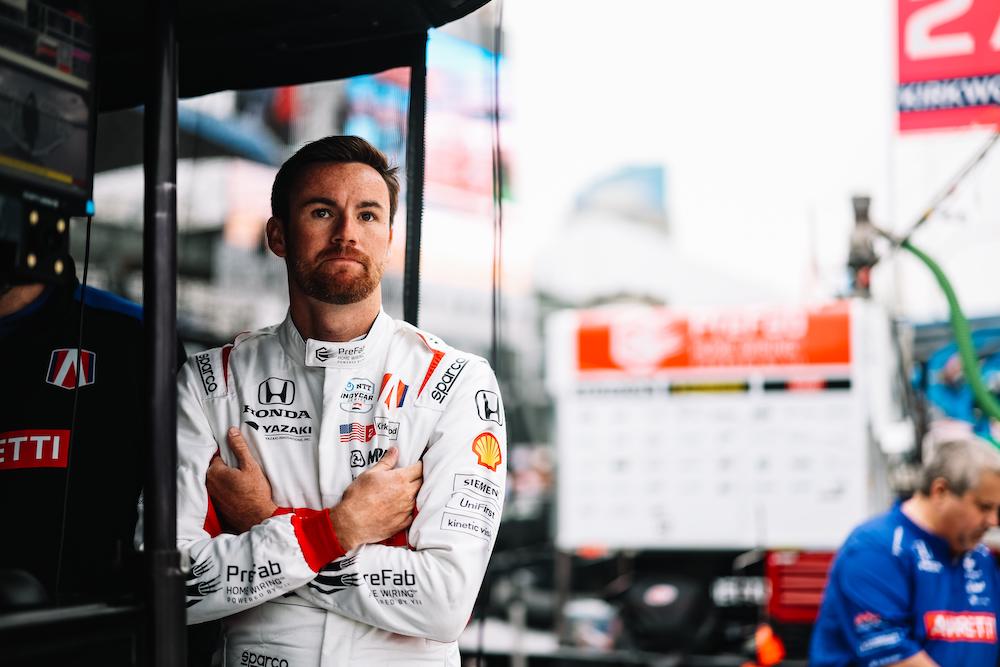
Are lap counts a factor in teams gravitating towards the same strategies? Maybe, says Long Beach winner Kyle Kirkwood. Joe Skibinski
Fuel consumption and its effects on race strategy
“One thing for sure, though -- and I don't know if I'll be castrated for saying this -- but we burn more fuel now and it's not due to the hybrid; it's due to the weight," Kirkwood says. "We're in a position now that we have to push much harder to get lap time out of the car. And because of the added weight, you actually end up burning more fuel to be able to do the pace that you want to do in a race.
“Like Barber, it turned it into a guaranteed three-stop for everyone where that place has been, notoriously, a two- or three-stop. The three-stop has won the past couple years, but it was still doable on two. With the fuel burn, it's made it nearly impossible now to do it on two, so it changed up the strategy for a couple of these places that had the same lap count. You didn't leave anything out there. It was 90 qualifying laps out there.
“I appreciate that they want to see people not fuel saving, but at the same time, what's made our racing best is when you have split strategies and you have cool things going on. In a situation like that, you actually want to reduce lap counts. You want to try to bring it back down to what the fuel burn has been percentage wise so there’s a reason for people to try one (strategy) or the other.”
In closing
Revert the DW12 to non-hybrid specification, and most of the problems are solved. But that won’t be happening. Return to Firestone’s 2024 hybrid tires, and many of the problems are solved. But that isn’t feasible since there’s a long production timeline required to make those tires, and there’s a significant cost involved that nobody wants to cover.
Short-term answers that would restore IndyCar’s routinely great road and street course racing aren’t readily apparent. But a healthy dose of bad luck and the return of multiple cautions per event could re-introduce some of the restarts and unpredictable outcomes that are missing.
“Some of what the modeling tells us is this race could be more drawn out than the other races so far, with more separation among the cars. So we’ll see that actually happens out there," Ganassi's Hull said ahead of the Indy GP -- which turned out to have one caution for two laps. "But I don't think we should expect to see much in the way of changes to the (road and street course) racing before next year. Whatever they might choose to do is probably more for the future than it would be for this moment today.”
Respect
On the surface, Kirkwood’s note of needing to drive and hold the hybrid DW12 at 99 percent on road and street courses, and Rossi’s description of driving up to a thermal limit with the tires, sounds like an acknowledgement that they aren’t pushing as hard throughout each lap. It’s not the case.
The hybrid car’s ability to be driven beyond 99 percent is what’s changed, and from the cockpit, the effort and skill required to reach and maintain the new limit is harder than in the pre-hybrid times. Mastering this bigger raging bull is by no means easy.
“When I say you're driving to a target, you're driving your ass off to that target,” Rossi emphasizes. "That is why we've had the same winner in three out of four races. (ED: Now four out of five.) If you look at (Palou’s) history of races that he's dominated, it's been races where tire deg is a pretty big factor, and he is able to go quicker than everyone else, still keeping the tire energy under control. They're very good at the tire-saving setups and that sort of thing, but I think Alex is exceptional at it from a driving style standpoint, and so he's able to be the difference-maker in going quicker than everyone else, while still managing tires.
“We're all managing tires, but if we go that two-tenths a lap quicker, we're taking too much energy out of the tire and hurting ourselves in the long run. So it's unfair to say that we're not pushing. You're driving in a different way. You're still out there busting your balls, for sure. It's different, because in say 65 percent of the (pre-hybrid) races, there was really no repercussion for just hammering every lap like the tires were durable enough. You could pretty much be flat out for an entire stint.
“That doesn't exist anymore, and it doesn't really exist in any form of racing. IndyCar was a little bit of an outlier in that standpoint. We used to be able to do that, but that’s changed. And there's no other championship where you can do that. You can't do that in IMSA. You can't do that in Formula 1. A change has occurred where you can't just be 100 percent at the maximum limit of the car for an entire stint anymore. That seems to be behind us.”
Marshall Pruett
The 2026 season marks Marshall Pruett's 40th year working in the sport. In his role today for RACER, Pruett covers open-wheel and sports car racing as a writer, reporter, photographer, and filmmaker. In his previous career, he served as a mechanic, engineer, and team manager in a variety of series, including IndyCar, IMSA, and World Challenge.
Read Marshall Pruett's articles
Latest News

Comments
Comments are disabled until you accept Social Networking Cookies. Update cookie preferences
If the dialog doesn't appear, ad-blockers are often the cause; try disabling yours or see our Social Features Support.