The RACER Mailbag, January 1
Welcome to the RACER Mailbag. Questions for any of RACER’s writers can be sent to mailbag@racer.com. We love hearing your comments and opinions, but letters that include a question are more likely to be published. Questions received after 3pm ET each Monday will be saved for the following week.
Q: For decades, car design was all about speed. Sometime in the mid to late '90s, IndyCar evolution became more about safety, reliability, and cost control. Huge gains were made in these areas, but at the expense of 25-30 years of incremental speed evolution.
What would the cars look like today if they would have been allowed to continually evolve through annual engineering and design advancements meant primarily to gain competitive speed advantages? In a perfect world, the anticipated 2027 car design should make up for as much of this gap as possible, at least aerodynamically. That’s the car I’d like to see considered, imagined, designed, tested, and raced.
Greg K.
MARSHALL PRUETT: I’m with you, Greg. Let’s do a deep dive to start the new year.
For most of IndyCar’s 100-plus years of existence, the cars and all of the innovations and unique ideas they were conceived from held the interest of its fans. There was no separation of the drivers and their cars; curiosity for what made the drivers so brave and skilled carried over to the cars and curiosities about the unique or boundary-pushing concepts they contained.
Unlike a football or basketball, the main tool we use to play our sport constantly changed and evolved, and the interaction between our athletes and the dynamic machines they strapped into was a big part of the intrigue.
Even the post-WWII "junk" formula and the roadster era that followed, which mostly went against the high-tech grain, were beautiful, or offered interesting takes on the same basic chassis layout and Offy engine package. A few cool and new things emerged like a turbodiesel polesitter at Indy and the SUMAR Streamliner, which fully encapsulated the driver and had four fenders, but they were outliers. Nonetheless, the cars were still a huge part of the intrigue and attraction.
And then we had IndyCar’s wildest creative decade in the 1960s when wings and turbocharging arrived, which carried into the 1970s, and even with the arrival of mass-produced off-the-shelf cars from March and Lola in the 1980s, there was enough freedom and variety to make the technological side interesting for fans.
More mass production came in the 1990s as Reynard joined in, and it was with the engines where the greatest variety was found, and huge power as well. That bled into the early 2000s and peaked with Gil de Ferran’s record qualifying run of 241.428mph at Fontana in 2001, and then it soon settled as Champ Car became a de facto Lola-Cosworth formula while the Indy Racing League went full spec on the chassis side starting in 1997 with Dallara and GForce, and two types of engines in Oldsmobile and Nissan.
The Champ Car Lolas (with the odd Reynard thrown in) were still super-fast, and there were plenty of tiny improvements made on the chassis and aero side, but they weren’t things that the average fan would notice, and all the engines were supplied by Cosworth, and together, it led to a gradual loss of caring about the technology side.
That kind of care was surrendered even earlier with the IRL on its debut in 1996, with possible exception for the monster Menard Buick V6 power that was being made. But the cars, as a whole, became spec tools by 1997 that not only looked the same, but by rule, could not be modified.
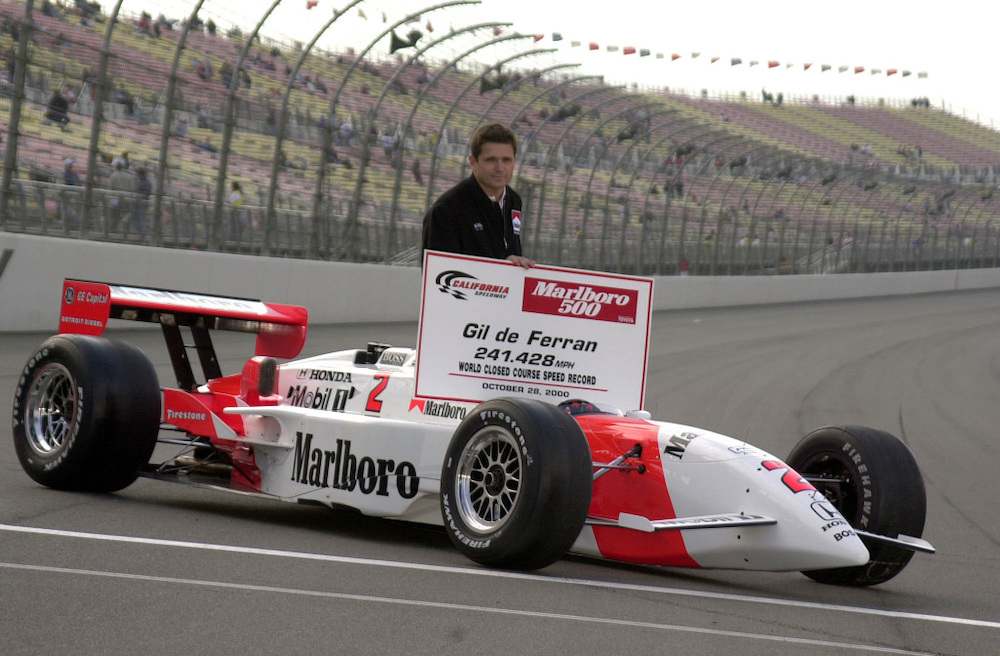
Will the U.S. open-wheel history books forever record de Ferran's record-breaking lap at Fontana as the high water mark for cool cars that went really fast? Michael Levitt/Motorsport Images
So with both IndyCar series locked into a spec or spec-ish look and sound, it’s easy to understand how and why, after nearly a century of awesome and vibrant cars being a central part of an IndyCar follower’s fanhood, that elevated degree of vehicular interest – of wanting to know about the finer details – started to die on slightly different IRL and Champ Car timelines.
Once both series stripped the personality out of their formulas to present a cheaper, generic product, the desire to know all about those cars largely died.
Today, they’re just tools where the only innovations are found inside the dampers, which fans can’t see and don’t care about. And inside the engines, which follow the same can’t see/don’t care theme, because IndyCar’s engine suppliers keep everything they do under lock and key and don’t welcome fans into that world.
Hybridization, the newest tech in the cars, has been relatively open for sharing, and some folks have shown an interest, but it, too, is spec, which makes it a lot like the cars: Something cool to process and learn about when it’s new, but after a short period, you’ve learned what there is to know or grown accustomed to seeing the same old thing, and the curiosity is lost.
Also, hybridization hasn’t been embraced by a decent amount of fans, along with some team owners and drivers. So while the DW12s have cutting-edge energy recovery technology inside the bellhousings, I’ve seen more "kill it with fire" reactions than, "wow, that’s amazing, tell me all about it."
Racing’s origins are an offshoot of human creativity. One person’s big ideas pitted against the next person’s grand ideas. It’s human expression in its coolest vehicular arena. But when we allow ourselves to kill that creativity and expression, we can’t be surprised when racing series that stifle creativity also end up stifling their popularity.
The easy argument against embracing creativity is costs, but I’ve never known a time where racing wasn’t insanely expensive. I don’t want to blow up IndyCar by having wide-open technological freedom, but I also don’t want the costs-first side to win and give us another decade or more of good-but-underwhelming growth with a car – the core of our sport – that does nothing to spike new interest. Not while IndyCar is living deep in NASCAR’s shadow, and in the widening shadow cast by F1.
There can be a middle ground allowing human creativity back into IndyCar -- beyond the effing dampers -- without breaking the bank. Pick a region or two on the cars where teams can play with bodywork, internal aerodynamics, or suspension technology… and seek sponsors and corporate partners to be involved in those areas to enrich their bank accounts.
Come up with styling options for the engine suppliers to use to make it easier to tell a Chevy from a Honda from a Toyota/Dodge/whatever, to whatever degree is possible -- outright stealing what IMSA has done with its manufacturer GTP styling requirements.
Identify areas in the electronics, or software/apps where teams and manufacturers can apply their expertise and give them a six-month window of exclusivity before having to publish those solutions. Many folks love seeing what Apple/Google/Samsung/etc. come up with for phone/tablet creations and app developments; why not tap into that by pulling those folks and fans and companies into IndyCar with the same creative process? Is there a Chevy/Honda/whoever head-up display that can be integrated into the cockpit?
How about those same, but custom phone/tablet solutions in the cockpit instead of a spec steering wheel that delivers the display on a spec LCD screen? Imagine big and small tech companies having a green light to get involved with teams -- to the teams’ enrichment -- and use the cockpits as tech labs and promotional tools.
Instead of endless worrying about costs and keeping creativity and innovation to a minimum out of fear for runaway budgets, how about opening up tech areas and ideas where IndyCar teams can actually profit and become wealthier through bringing all manner of sponsor/partner deals into the paddock?
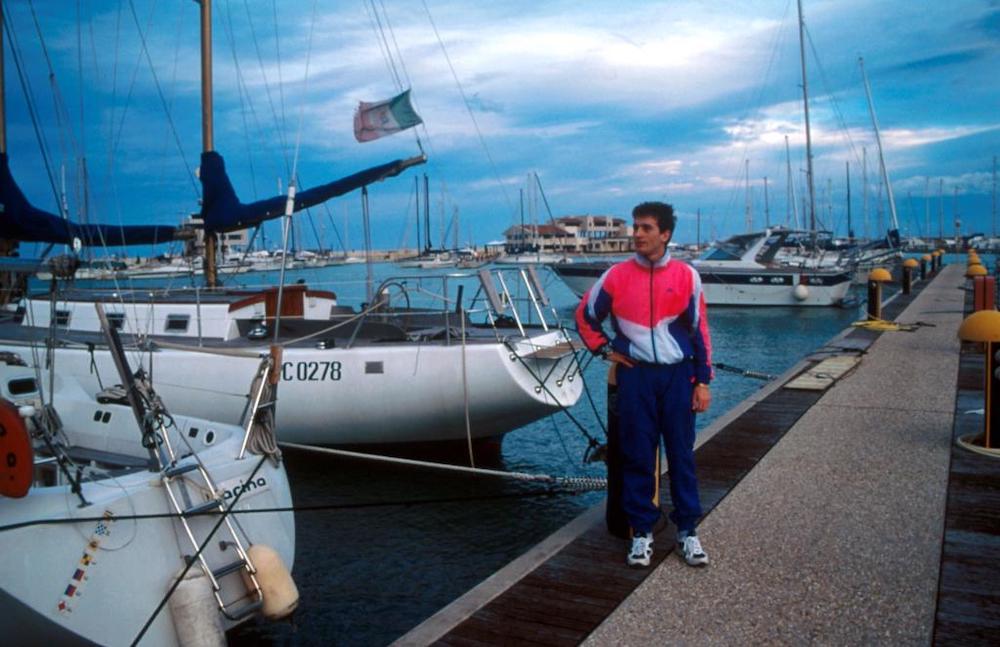
Here's Jarno Trulli looking at a boat. Motorsport Images
An example: As we’ve had in IMSA and the WEC for many years, I’ve heard IndyCar is considering a rear-view video camera system for the next car. In sports cars, the first systems were simple bullet cameras pointing out from the bumper that fed a little monitor on the dash, but they’ve become pretty serious, with some using lidar and software that point to which side an approaching car is trying to make a pass.
In keeping with how IndyCar has done things for decades, it will find a single vendor, sign that vendor as the spec supplier, make a modest profit on each sale, and that’s the end of it. Everybody must use the new rear-facing camera and cockpit monitor, pay a set price, and it’s installed and forgotten. It’s a broken way of thinking that kills business and innovation.
No wonder so many teams are having to take on investors or sign more paying drivers just to stay alive.
Regarding how I hope Penske Entertainment approaches this hypothetical rearview camera situation, it will set the technical specification for a rear camera system, identify a spec vendor that can be used, if desired, but leave it open for teams to seek their own vendors. Hey, Sony, or Nikon, or Apple/Google/Samsung/Intel/Bosch/LG/Philips/Toshiba/whoever, let’s do some cool things together in creating a solution, have you become an associate sponsor, and use our team’s cars as a rolling laboratory and promotions machine for this item, and maybe other things you make as well.
Imagine the advertising possibilities with those big companies, using their IndyCar involvement as part of their annual marketing campaigns. It’s everything we dream of, and would also enrich FOX, racetracks with banners and onsite activations, and through digital advertising.
IndyCar can change its future if it’s willing to stop doing dumb things like making almost everything spec. From Hisense to Sharp to JVC to Vivo to Motorola, to all of the big names like Apple and Google, they are barred from doing anything tech-related in IndyCar. Think of all the significant tech brands you know of, or whose products you own, and of all the up-and-coming firms in Silicon Valley and other tech-rich regions, and they can’t make a single thing to be used in IndyCar. By IndyCar’s choice.
(And yes, I realize there are other series who do the same dumb thing, but the question was about IndyCar. And also, the spec rules we have today were written long before Penske Entertainment bought the series or IndyCar’s entire operations and tech department led by Jay Frye were hired.)
Think small and spec, and get small results, which is what has plagued IndyCar -- traced back to the IRL and Champ Car -- for longer than some of its newest fans have been alive. Or have some balls, and refuse to be driven by fear, and make smart business decisions that benefit the teams.
Every time a decision is made to sign a spec deal, it’s the series that profits and the teams who are further strangled in some financial way. Penske Entertainment, led by Roger Penske -- among the greatest business people this sport has known -- has its first chance, through bringing a new car to market with Dallara, to show his business expertise by removing the word "spec" from a range of areas on the car.
Opening up big and new and real business opportunities for the paddock by breaking decades of spec thinking is critical.
And if the whole damn thing is another spec car from nose to tail that continues to handcuff IndyCar’s teams from seeking and finding new technology sponsors and partners, I’ll have to question why the series signed its entrants up for another decade of financial struggles.
"Spec" has been the noose IndyCar willingly places around the neck of its teams and watches as they complain about struggling to breathe. It’s time for a rethink on the ways and places where open competition can make IndyCar better, more interesting, and stoke new business development.
Let the technology world -- aerospace, aviation, automotive, electronics, and so on -- in and let their collective infusion of money and engineering and creativity lift IndyCar to heights some of us once enjoyed before the word spec started choking the life out of the series.
Q: Next season, a notable last name will enter new boundaries. In 2025, Sebastian Wheldon will compete in the Italian Formula 4 and the three-weekend Euro 4 summer series with PREMA. Sebastian will have Andretti Global backing for his European debut. Not many U.S. drivers have this kind of opportunities. Young talent like Jak Crawford (Aston Martin) and Ugo Ugochukwu (McLaren) have team backing. And this is where Cadillac F1 comes in. Under FIA regulations, how long before a new team establishes a development squad before its inaugural season?
Sebastian's father Dan had his vision about bringing IndyCar to Silverstone. It did not materialize. Now, Lionheart will be watching his son from the skies above hopefully fulfill his dream of competing in Formula 1 if he gets chosen by Cadillac, and racing at Silverstone in the future. Did Dan ever test a Formula 1 car back in the past before changing paths to IndyCar?
JLS, Chicago, IL
MP: No. Dan was never on a sustained path to F1. He arrived here in 1999 to race in USF2000, moved to the Toyota Atlantic Championship in 2000 where I competed against him as a race engineer for Hylton Motorsports with Hoover Orsi, and then he went onto Indy Lights and IndyCar -- the Indy Racing League -- so it was the Road to Indy for Danny Boy, not a rerouting to America after trying to get to F1, and while there was the offer of a test with BMW, he turned down. He remained 100-percent IndyCar.
Q: With 2024 over and done, what were the biggest racing stories of the year? The biggest surprise announcements in racing of the year? The race of the year? The team of the year?
Kurt Perleberg
MP: I put 20-plus hours into a story on that topic, so rather than rehash those items, here are a few that didn’t make it in:
• Penske dominating everything he touched in winning the IMSA GTP title? Check. Indy 500 win? Check. NASCAR Cup championship? Check. Rolex 24 At Daytona? Check. FIA WEC Hypercar championship? Check. The only things he didn’t win were the Daytona 500, 24 Hours of Le Mans, and the IndyCar championship.
• On the IndyCar side, Penske nearly won half the races -- eight of 17 -- but lost the title to a Chip Ganassi Racing team that won five, and didn’t earn a victory after June -- over the last three months of the season. That one’s a head-scratcher and makes it easy to say Ganassi was the best of all teams.
• Race of the year is a tie with the Indy 500 and the Milwaukee doubleheader. Each race at The Mile was like a condensed Indy 500 of thrills.
• Who had a better year than Jonathan Diuguid? The former Penske IndyCar race engineer-turned-Porsche Penske Motorsport director presided over the IMSA and WEC championships, Rolex 24 win, and engineered Josef Newgarden to the Indy 500 win when Penske suspended his regular engineer after the push-to-pass scandal. What an incredible season for Diuguid.
• Over in IMSA, Robert Wickens being signed to race in the top WeatherTech SportsCar championship in a DXDT Racing Corvette Z06 GT3 using hand controls fill my heart.
• It felt like there were a thousand announcements last season, and none were more grand or important than the all-network FOX news. Slight caveat: With so many new sports deals getting done of late, all of which seem to have big or important streaming components, Penske appears to have come away with nothing here that would bring its product to more people via streaming at home or internationally. Looking at the insane streaming numbers the NFL just put up on Netflix for its two Christmas games -- bought for $150 million -- I couldn’t help but think what IndyCar is missing with streaming in its big new TV deal. Is this something that can be fixed?
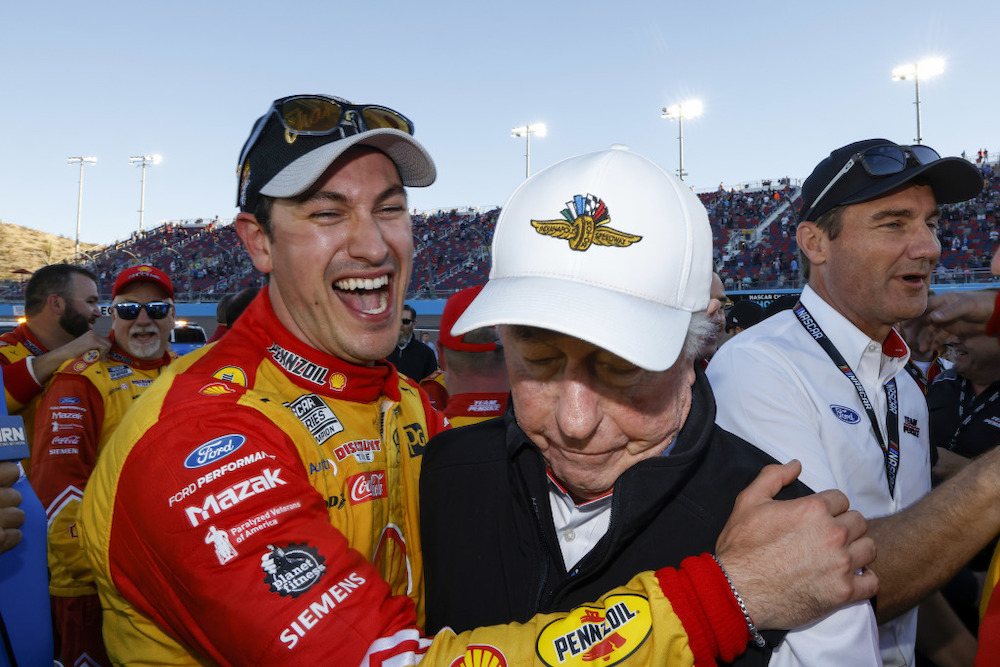
Sir Wins-a-lot. Also, why am I only noticing now that Roger Penske wore an IMS hat to the NASCAR finale at Phoenix? Michael Levitt/Motorsport Images
Q: Understandably, there’s been a lot of chatter about the proposed, potentially, maybe, new IndyCar chassis lately, and what should power it. I thought of that when I saw Andy’s fabulous photo from 1981 a couple of weeks back of the BLAT Eagle and the last "real" Coyote. Two proper IndyCars!
Maybe we should roll one of those Eagles up to the Dallara factory and show them how Dan Gurney and his band of heroes produced a car 45 years ago that looked nothing like anything else in CART or F1 at the time. A car that was a race winner and one that could happily live with either a big monster stock block V8 or a smaller turbo V8 race engine in the back. If only we could update that concept.
On a serious note, two major manufacturer-backed series, the World Rally Championship and the British Touring Car Championship, have both announced that they are ditching their hybrid powerplants, citing costs and a push to 100% renewable fuels among the reasons why. Has this registered with the powers that be at IndyCar do you think, and what’s your take on it?
Peter Kerr, Hamilton, Scotland
MP: My mind started to wander as I finished your last paragraph, Peter, and I imagined the leaders at Penske Entertainment Googling, “What is World Rally Championship and the British Touring Car Championship?” I’m sure some in the organization have heard of those series, but the Penske Entertainment side, not the competition side at IndyCar, isn’t prone to following smaller (BTCC) or wholly unrelated forms of racing (rallying) to their and basing decisions on whatever a WRC or BTCC is doing.
General Motors races a hybrid Cadillac prototype in IMSA and in the WEC by choice. It’s entering F1 in 2026, a 100-percent hybrid formula, by choice. And it’s in IndyCar, now a hybrid formula, by choice. If hybridization was not of interest to GM, you’d see it in its choices of where it races. Same for Acura/Honda, with hybrids in the same three places.
From what Penske Entertainment has told me for years and continues to tell me, auto manufacturers say they want and need hybridization to go racing. NASCAR and the NHRA are the primal outliers, right? But the rest, for the most part, conform to the latest technology/promotional needs of the auto industry.
Q: Happy New Year to yourself and all the Mailbag readers! There is often talk of Indy 500 car prep and how it is worked on in the offseason in preparation for the race. We often hear how devastating it is to wreck the car at 500 qualifying or practice and the backup cars usually being substantially slower. Colton Herta in 2022 comes to mind – I was at the race and he was way off the mark due to a backup being used.
I was wondering if each team dedicated a crew member or members just to this task over the winter off-season, or even throughout the year? Or is the work simply filler during downtime? How many hours could go into a pole-winning car?
I’m sure budget and available talent are obviously determining factors. Do most teams buy new cars to prep for the 500? Recently heard an interview with Josef Newgarden where he said that had new cars for his recent 500 wins, I believe.
Darryl K., Bernville, PA
MP: It’s usually part of each team’s offseason workload. There are specialists who some teams bring in to perform the body fit, and there are some specialists who can be hired to reduce mechanical drag in the suspension and transmission. Hard to say on hours since some teams make it a massive priority while others commit less time and resources, but it’s in the hundreds, easily, for the most committed.
Buying new cars ahead of the Indy 500 is not a common thing. Keep in mind that heading into 2024, Team Penske received all of the insight and tricks that made Chip Ganassi Racing’s cars the best at the Speedway in recent years via the Foyt relationship, so if I was going to make full use of everything related to car builds for the 500 with the best Ganassi+Penske info, and I had the money, I’d start with brand-new cars.
Q: I know you would have to have one hell of a crystal ball to predict the drivers of this team, but does Jack Harvey’s signing with Dreyer & Reinbold for Indy confirms his departure from Coyne? What about any of the other plethora of ‘24 drivers? Any chances of Legge returning to do ovals?
Josh Crawford
MP: Yes, Jack is focused on the 500 with DRR/Cusick. I’ve not heard him mention anything with another team, nor have I head Dale mention Jack’s name. He’s rumored to have gotten almost an entire season with Dale for something in the $1-1.5 million range, which is unheard of, so with all of the increased costs in mind, I can’t see how that type of budget would get him back into a car for something similar with Dale. Coyne wants to have two full-timers, so if that happens, I’d assume Katherine would be up for another Indy 500 run with his team, or another, provided her sponsors are in.
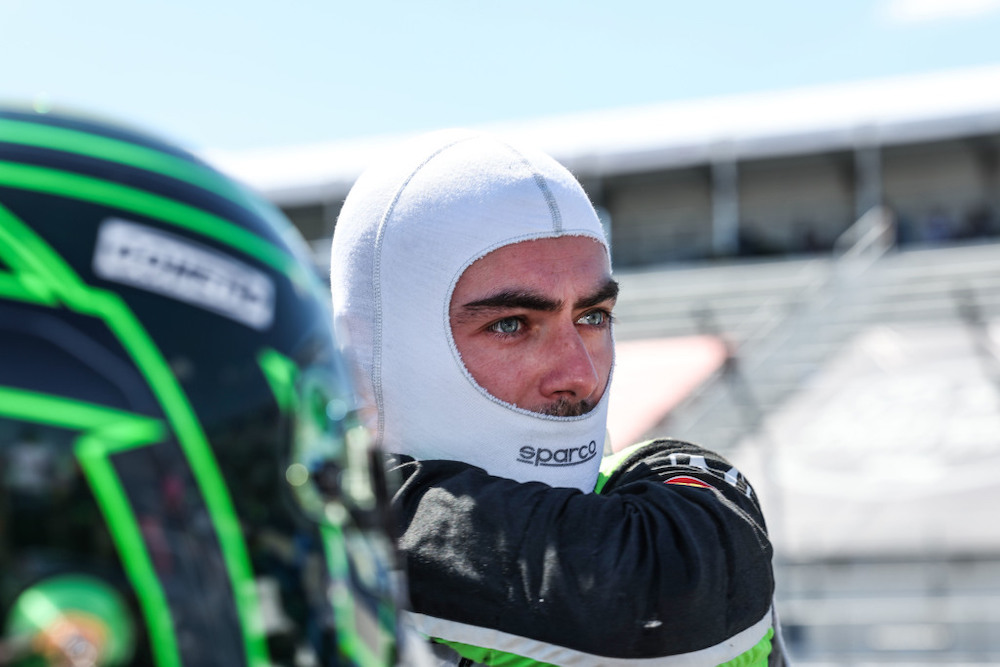
If the 2024 IndyCar season taught us anything it's that things can change fast, but as it stands, Coyne and Harvey don't figure in each other's plans for the year ahead. Brett Farmer/Motorsport Images
Q: Is IndyCar planning to add power steering to the next car?
William Mazeo
MP: It is not.
Q: I’ve watched F2 with the new Dallara car and now followed the end of season Super Formula test. That car is a Dallara and F1 drivers in the test were impressed how close it was at Suzuka to F1 cars. Certainly seems that IndyCar could develop with Dallara a modern new car with less weight, better looks, newer technology and make better racing.
Even the 2026 F1 car will be smaller, with a simpler engine and hybrid system. I believe the comments of keeping components or similarities to current 12-year-old car are ridiculous. F1 and other series vigorously crash test and safety design. Once the new IndyCar is done, the cost will likely spread over another six-10 years. Give us new motors and an exciting, relevant car. F1 had the Halo first and IndyCar has reacted with body kits, and seems slow to introduce safety and motor upgrades. It’s clunky compared to all other series. Penske, get creative and with it and innovate. It was far more interesting in the 1960s motor-wise and chassis-wise, with roadsters all the way to turbines.
Craig B, Leland, NC
MP: If it wasn’t for IndyCar racing on ovals and all of the added protection that requires throughout the chassis, IndyCar could easily go with a Super Formula-style car. But the demands on an IndyCar are unlike anything found in any other top-tier open-wheel series, so the design challenges are totally unique.
Q: What do some of the IndyCar crews do during the off season? For example, how do the fuelers and the tire changers make ends meet during the long six-month layoff? Similarly, how do the less wealthy drivers and pay drivers make ends meet when no racing takes place?
Jerry, Houston
MP: Best way to answer the pit crew question is to explain that those roles are their secondary job duties, not their primary. The truck driver for Car X might also be the refueler, but their first responsibility is the transportation of the car and equipment, maintenance of that equipment, servicing and presentation of the transporter, and various duties to help the team/car crew.
The gearbox specialist might be the out-side tire changer as well, but that takes up a tiny portion of their days at the track; prepping and servicing the transmission on Car X is Job No. 1. Same goes for back at the shop with mechanics, engineers, managers, and so on.
The long offseason is a time to break everything down, clean and repair everything, build new things, order new things, take in new items -- cars and components -- and prepare them for the new season. Review all data, devise R&D plans and execute those plans, etc. Also, which is usually forgotten, teams get to spend an offseason being still. Being home. With family. Leading a normal life like everyone else before it turns into six months of non-stop travel.
Paying drivers either come from money and have it, or take a good slice off of the funds they find and bring to teams. Think of them like drivers/agents who take a cut and enjoy the spoils. For the rest who aren’t wealthy or highly sponsored, they tend to do driver coaching with wealthy amateurs -- the Ferrari Challenge series is loaded with pros teaching CEOs and the like how to handle fast cars -- and some also do driving events for manufacturers where they take invitees around a track or parking lot in the latest creation from Brand X.
Q: Longtime race fan, grew up watching super-mods every Saturday night at Oswego, NY. And many trips to Watkins Glen.
I haven't watched NASCAR except for races on Broadcast TV. Why? FOX Sports. I subscribed to FOX Sports, then they wanted me to subscribe to FS1. I dropped FOX on the spot.
I respect former racers’ knowledge, but to have someone like Jeff Burton just keep talking, I mean ram-bling, not really saying anything is a great reason we have mute buttons.
Now IndyCar is only available on FS1. This is a clear indication people at Penske have their head on back-wards. (I’m being nice). I guess these marketing gurus figure hiding their product behind a paywall is the way to go. Wrong on every level. Thank the Lord IMSA is still on Peacock. (Not a fan of them either).
Waiting on F1's pricing for 2025, but most likely won't spend over $100 for the entire year. The little guy (me) is being driven away from enjoying televised races.
You know all too well how things come full circle. What will these "smart people" say when merch sales drop and they don't have the younger crowd getting involved because races are hidden behind this paywall they are praying to?
Via email
MP: Not sure what you’re referring to, since every IndyCar race starting in 2025, as we’ve written dozens of times since the announcement, will be on the FOX network.
Practices and qualifying and warm-ups will be reserved for FS1, and a tiny amount on FS2, so in that regard, yes, the non-racing sessions are reserved for cable, but isn’t that the absolute norm for just about every domestic racing series?
Q: Now that we're about halfway through the off-season, have you gotten a sense from teams and drivers about how much the new FOX TV contract has impacted their sponsorship searches? Increasing network coverage from 10 races to all 17 races seems like it would be a big help.
Stu
MP: I interviewed a handful of team owners about this exact topic and need to get that story spooled up in the coming days. All were positive about it having an impact now, not just after a season of ratings have been delivered.
Q: It’s no surprise that Santino Ferrucci will race at the Chili Bowl. But somebody should do a feature on how Katherine Legge ended up on the Chili Bowl entry list.
Tom Hinshaw, Santa Barbara, CA
MP: That’s a great idea, Tom.
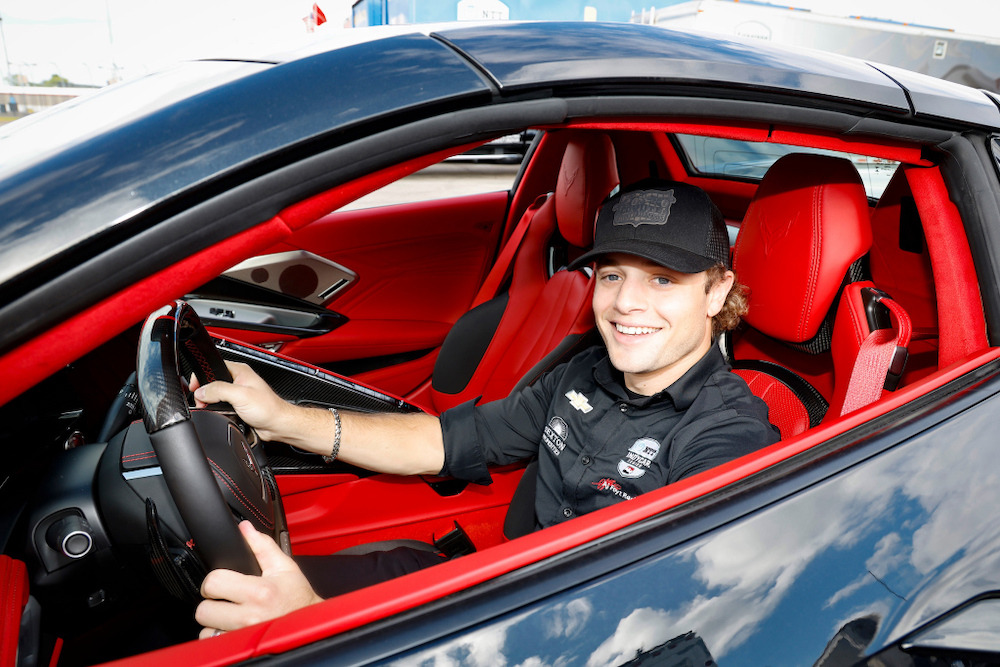
Not sure that Corvettes are eligible for the Chili Bowl. Motorsport Images
Q: You've had a lot of readers comment that the current F2 chassis would be a good reference for the 2027 IndyCar. It wouldn't for a lot of reasons, but it got me to thinking about another F2 feature – the motor.
I've read internet threads that contend the Mecachrome V6 is unreliable, but as with a lot internet stories there are no statistics included.
Of course, the engine's reputation took a hit when both Alpines dropped out of the Le Mans 24 Hours with allegedly the same issue. The remainder of the WEC season was trouble-free. And I can't remember F2 engines expiring left and right.
I am curious to know what you and Chris' technical opinion on this subject is?
Jonathan and Cleide Morris, Ventura, CA
MP: Small, turbocharged engines failing in their first 24-hour race is a rite of passage, isn’t it? If anybody harshly judged Alpine for motor issues on debut with their Hypercars at Le Mans, they lack a proper grasp of history. As for F2, that’s Medland’s fishbowl.
CHRIS MEDLAND: I’m always quick to point out that my technical opinion is never one to listen to! My knowledge is pretty limited, but largely comes from comments from teams and drivers.
The biggest issue with the Formula 2 car this year hasn’t just been the engine, but from a technical perspective it is general reliability problems that ideally should be at a lower rate for a spec series, even in the first year of new technology. The drivers are paying so much money for their seats (or others are on their behalf) that to have incidents at the start of the 2024 season that are not down to the way a team or driver operates the car was frustrating.
That led to criticism early in the year – I remember Campos had three engine-related issues across the opening two rounds – and that can set the tone, even when reliability after that did improve. Mecachrome actually points to 2022 as its worst year reliability-wise, and felt this year was pretty strong.
The year also ended with what Christian Horner described as “technical glitches with start line software” for title contender Isack Hadjar in Abu Dhabi, and many drivers had struggles off the line through the year.
Often, the actual reason is kept private – be that a supplier/Mecachrome issue or a team or driver one – so it’s tough to give you actual statistics. To do a general comparison on the rate of attrition in the series, we can look at overall failure to finish races in both Formula 1 and F2.
An F1 car didn’t legally complete all of the laps – including those retiring late on and still being classified, and also disqualified post-race – 55 times in 24 races. That’s a grid of 22 cars, and does not include Sprint races.
In F2, that figure of 55 was reached by the end of the Austrian Grand Prix weekend – its seventh round of the season featuring 14 races – albeit with 22 cars per weekend compared to 20. Extend it out to the full season and you end up with 99 occasions from 14 rounds and 28 races.
Collisions and errors obviously play a part in both sets of results, and junior racing is where you’re likely to see more of those, but it is a high rate.
Given my lack of technical access and expertise, I’d summarize it more generally as a reliability level that was not as disastrous as it can be made to sound at times during the year, but certainly could be better.
THE FINAL WORD
From Robin Miller's Mailbag, December 31, 2013
Steve Huntley
ROBIN MILLER: In 1972, my pal Art Pollard took me to Chicago to Andy’s shop so I could buy a Formula Ford that Francis McNamara had given him as a present (McNamara designed the slug that Mario drove at Indy for Granatelli in ’70 and ’71).
I borrowed $5,000 from my banker buddy and just before we went inside, Art told me to put $2,000 back in my pocket and let him negotiate. Well, Andy wasn’t around so his son, Vince, handled the transaction and he wasn’t about to sell it for $3,000. I was foaming at the mouth looking at that gorgeous little day-glo orange FF sitting next to a couple of Novis, but Pollard stood firm and Vince finally relented. Suddenly I was the proud owner of a car that wouldn’t fit in my rented trailer without the aid of a forklift because the trailer was way too skinny.
Art went with me to shake it down at IRP and just before we started it up he asked me if I’d added oil and water. “Don’t they come with oil and water?” I replied. Ah, the first sign I should have never been allowed to own a race car.
Marshall Pruett
The 2026 season marks Marshall Pruett's 40th year working in the sport. In his role today for RACER, Pruett covers open-wheel and sports car racing as a writer, reporter, photographer, and filmmaker. In his previous career, he served as a mechanic, engineer, and team manager in a variety of series, including IndyCar, IMSA, and World Challenge.
Read Marshall Pruett's articles
Latest News
Comments
Comments are disabled until you accept Social Networking Cookies. Update cookie preferences
If the dialog doesn't appear, ad-blockers are often the cause; try disabling yours or see our Social Features Support.