
The RACER Mailbag, March 13
Welcome to the RACER Mailbag. Questions for any of RACER’s writers can be sent to mailbag@racer.com. We can’t guarantee that every letter will be published, but we’ll answer as many as we can. Published questions may be edited for length and clarity. Questions received after 3pm ET each Monday will appear the following week.
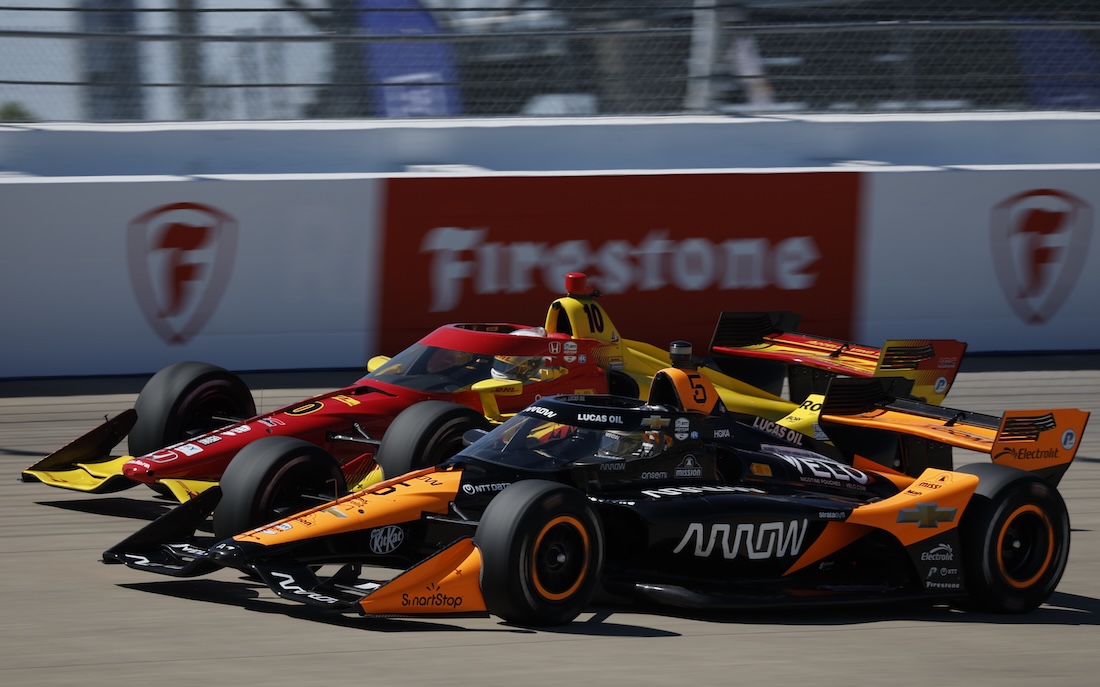
Q: Another IndyCar race, another round of post-race gripes from drivers about fuel savings/fuel management/fuel mileage. My monitoring of driver-to-pits radio traffic yielded much of the same theme. In post-race interviews I've watched, most of the drivers, including Will Power and Alex Palou, complained of having to lift and not being able to attack, adding that cars having to "just stay in a line" is not "good for the fans." Agreed.
Surely there's an answer to this so that fans and race car drivers alike can get what they want: gas pedals pushed down without restriction? Let racers race. A possible solution I've expressed before is a mandatory minimum number of pit stops for a minimum number of seconds per stop (and a corresponding increase in fuel stored in the pits). Or perhaps breaking the race into segments to allow for refueling, etc. -- along the lines of what Thermal might look like. Smarter people than me can come up with something, can't they? Anything, please, other than watching race car drivers having to conserve fuel.
K. Campbell, Nashville, TN
MARSHALL PRUETT: From my experience, when you start adding in a bunch of forced items like mandatory stops and minimum stop times, you create more problems instead of solving the ones we already have.
One item that’s been overlooked is how relatively clean Sunday’s race was, with three quick issues that accounted for nine of the 100 laps behind the pace car. In 2023, which was more like what we’re accustomed to seeing in St. Pete, we had five cautions for 26 of the 100 laps.
This year was abnormally well-behaved, and as a result, there was a need to save fuel. Last year, it was typical street racing carnage, which has a lot of downtime and sipping fuel behind the pace car, and it wasn’t a snoozefest.
Q: Just read your article on St. Pete and I have to agree that fuel and entertainment conservation were clearly on display throughout most of the race. A high-speed parade is one of the two major complaints about F1 (along with predictable results) so it’s a shame when IndyCar suffers from the same malady.
So what’s the answer? I know you don’t like the mandated number of pit stops approach, but I’d much rather see that than another race like Sunday’s. Most position changes happened as a result of pit stops, and at least knowing they will have a more than adequate supply of fuel should encourage the drivers to stand on the loud pedal rather than coast around the track in someone else’s draft. I’ll bet Firestone would be happy to make enough extra tires to meet any additional need. I’m also pretty sure it would make the fans a lot happier.
John, Madison
MP: It was one race, a bad one, and that hasn’t been a thing we often see in IndyCar. We’d need a few more like this to have a trend and then have a reason to look at changes.
Keep in mind the call to delay the hybrid to start the season happened after tire manufacturing began, so we have harder tires, meant for a heavier car, being used on one that’s significantly lighter without the energy recovery system lump installed. That made activating the tires take longer on restarts, so passing was limited into the first turn among the leaders.
And with the new restart line forcing drivers to hold off on passing, and that line being closer to the final corner than expected, the leaders streaked away and kept good gaps behind them. With softer tires, and the restart line working too well, we had some of the restart fun largely taken away, and from there, it turned into a procession as almost everyone then went into fuel conservation mode.
Q: Do you believe IndyCar should reduce the fuel cell capacity to 15 gallons? It would make the cars a bit lighter, open up strategy options and hopefully keep everyone from going into instant fuel saving mode from the drop of the green flag. Even the Indy 500, especially for the past five years or so, has been reduced to a dismal pace as everyone is just saving fuel running around at 212-215mph or much less in a lot of cases.
Or another thought, maybe just have a minimum number of pit stops per race? Most road and street courses could be a three-stop minimum, and maybe a track like Road America could be four? The Indy 500 should be a minimum of seven stops, and maybe we’ll see some better action throughout the entire race. Maybe just reducing the fuel capacity would do this naturally, but if not, I’d impose a minimum number of pit stops.
TK
MP: I believe we need to calm down and stop trying to rewrite the rulebook and chassis formula because the opening race of 2024 sucked. Let’s talk after Long Beach or Barber, if the same thing happens over the next three or four events.
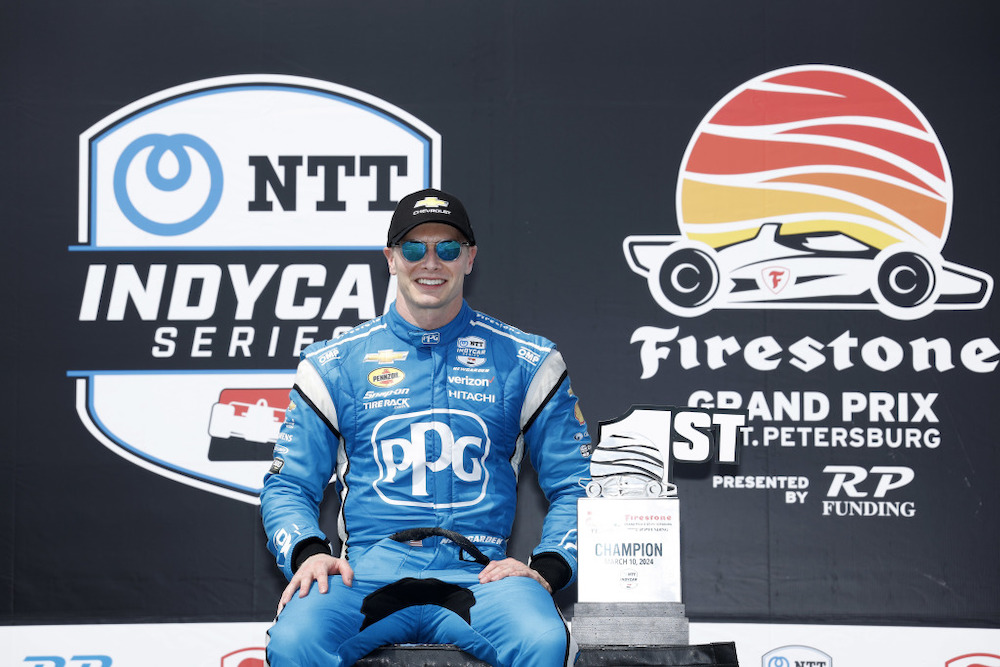
Newgarden enjoyed himself in St. Petersburg on Sunday, although the race was a bit of a grind for some Mailbaggers. Michael Levitt/Motorsport Images
Q: I can’t remember a time, save for when the tobacco and alcohol companies had dollar bills to burn, where the amount of money dumped into this series has ever been greater. Hy-Vee, Arrow, Gainbridge and NTT have considerably ponied up. Beyond that, the cars are littered with sponsorships. The field is stacked, and quite a few of the drivers are making millions-plus. The attendance at races, as a whole, is above par. Pinch ourselves here but there is actually two major networks vying for the TV rights, and yet there is nothing but bitching going on.
Yes, the series is Indy 500 top-heavy, and things do of course always need to be better. Penske isn’t perfect either, but he isn’t one to be idle, which makes for this calamitous screaming being a bit over the top. What on earth gives?
Pat Jenkins, Columbus, OH
MP: When team owners who, in this case, aren’t idiots or prone to being unnecessarily dramatic, say there are big problems, you can either question their views, or trust them to know what they’re talking about. Said another way, if you’re in a building and the people around you start running for the exits, do you stand there and scoff at their overreaction to something you know nothing about, or start running with them?
Q: You get a pass for not knowing that Barney Oldfield was the first "IndyCar" champion back in 1905. After looking that guy up, I discovered that the Astor Cup, given to our champions, and supposedly honoring all the champions at the top level of American open-wheel history, is missing Oldfield’s name, and his isn’t the only one! The Cup also honors the wrong name for 1920, which should be Gaston Chevrolet, brother of the founder of the company that is a loyal supporter of the series we love.
What really blew my mind about all this is that these mistakes were first discovered decades ago. Apparently the historians who discovered the errors and proved them using professional methods have been ignored or brushed off by IndyCar management ever since. I am wondering if you or any of the more experienced readers here have any understanding of why this might be? It’s very disappointing to learn.
Why can’t we have our series champions properly honored? I’ve read enough comments on social media about how Penske and his leadership team only care about Indy and not the rest of the series. Things like this only add credence to those assertions. It’s all about money -- how much does it cost to add new tracks, and create a new chassis? All I can say is it costs a lot more than showing respect to our past champions by listening to historical experts and calling up the nearest engraver. It’s a quicker fix, too.
My proposal is IndyCar and Mark Miles have those two names added before we race in Detroit, several months from now. What a cooler way than for GM representatives at the Chevrolet Detroit Grand Prix to be on hand with the Astor Challenge Cup during its rededication with Gaston Chevrolet’s name on the base. If that is too quick a turnaround, I’d love to hear a reason why these corrections cannot be made at the same time as that of the 2024 NTT IndyCar series champion is added after Nashville.
If all else fails, can you ask Mark Miles to at least confirm that our 2017 and 2019 series champion has his name spelled with an ‘f’ and not a ‘ph’?
Braxton
MP: As I’m constantly reminded, the things I don’t know could fill an ocean; let’s compromise with "Josefph," and you are correct, Penske Entertainment, like its owner, is fixated on what’s next, with no time or grand interest in living in the past. Unless it’s about Penske Racing/Team Penske’s history, which continues to receive great attention.
Q: I listened to the post-qualifying TV interview with Josef Newgarden where he gave kudos to Chevy. He essentially said that after last season, Team Penske gave Chevy a list of requests and Chevy delivered on all of those requests. If that is the case, do all of the Chevy teams get the benefits of those requests, or is it just Team Penske? Perhaps another way to ask the question is, are engines from a given manufacturer "tailored" for each individual team?
RR, Lisle, IL
MP: The same intensive requests also came from meetings with Arrow McLaren at McLaren Racing’s base in the UK, so no, this was just Josefph referring to what took place between his team and manufacturer, and not a revelation that Penske and Penske alone was responsible for the year-to-year improvements.
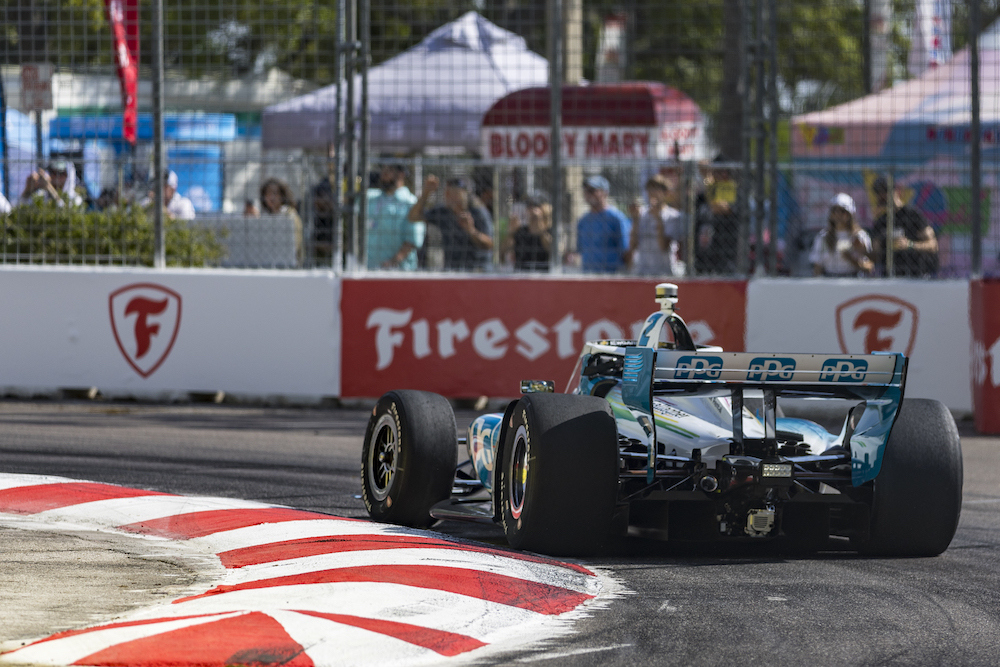
Penske provides development feedback to Chevy, but so do other Bowtie teams. Josh Tons/Motorsport Images
Q: Observation: After walking around the entirety of the track on Saturday at St. Pete, it seems like the amount of advertisement signs has definitely increased. I noticed it most on the run down from Turn 3 to Turn 4. There are also more from Turn 2 to Turn 3.
What is also clear is that attendance has to be growing as well. It just seems counterintuitive to block more views for the fans who purchase general admission tickets, especially on race day.
Eric, Mequon, WI
MP: Thanks for the on-the-ground insights, Eric.
Q: Michael Andretti was fairly critical about the future and the proposals from Penske Entertainment. I tend to agree with him. I think there is a window here for IndyCar. F1 wants growth in America, but frankly it is providing a very, very boring on-track race product. The races are snoozers and there is really no hope for change until new engine regulations. America gets bored real fast.
I will be forever grateful for Penske saving IndyCar through COVID, but it is a different time. Seems like the time may be ripe for selling to someone who can put more marketing muscle behind IndyCar.
Jeff Smith, State College, PA
MP: Penske has no intentions of selling the series or the Speedway. This is one of a few factors behind why team owners have rallied together to see how they can get Roger to do more and do better since Liberty Media and every other possibly entity has no chance of buying the series and doing all of the things they want in a timely manner.
Q: Intrigued to see that Otmar Szafnauer was at St. Pete. Any color on whose guest he was, or was he taking a weekend out to enjoy himself?
Oliver Wells
MP: I was speaking with folks at the HRC/Honda hospitality bus when one pointed to my left and said they had a new social media influencer in the house. I looked over and it was poor Otmar (the latest season of "Drive To Survive" is brutal for him), filling his plate with tasty breakfast items. They mentioned his past F1 links with Honda from the 2000s, and said it was nice to have him there. I’m told he was invited by old friend Townsend Bell, who learned he was in the area, and Honda was kind enough to provide him with a credential and a warm belly.
Q: Ericsson said, after making it to the pits, that his team was unable to diagnose the problem just from plugging it in and looking at the data. What types of problems tend to be more difficult to identify, and which are clearly identifiable through data analysis?
Kristopher Strebe, Seattle, WA
MP: If it’s an electronics issue, that can make diagnosis using electronics -- a laptop -- a challenge, but if the malfunction was sent across telemetry with something failing to work, or if a parameter was out of range, the team would have an insight into the end result of the problem as the car heads into the pits. Getting to the root is the hard part if it’s not a highly specific issue.
The "it just shut off" scenario is a fun one because it could be a battery issue, or wiring, or a sensor, or a dozen other things. The "it’s running rough" is also a challenge because there are so many things that could be the cause. For Ericsson, it was something that was sucked into one of the two ducts that feed air to the turbochargers which starved the motor, and it’s also possible that some of the debris made it past the filter and was digested by the engine.
Q: I wish to propose a new rule. Either bring back the LED, and/or no two, much less three cars can have the same or similar paint schemes.
Shawn, MD
MP: Welcome to the new season.
Q: I truly enjoy the IndyCar Series but I’m dismayed to think of how hard it must be to be a part of the series and have to watch what one says so they don’t upset Roger Penske. How thin-skinned is he? I know he has attacked you verbally because he didn’t like what you wrote. I also know he owns the series, but to sit on people and get offended about what they say when they are just trying to get the series elevated is so sad.
I have not been a fan of Penske’s ownership of the series. He seems to be very concerned with doing things cheaply and not doing a good job promoting it. It is unbelievable how old the chassis is and trying to charge the owners a million dollars each for their charter is just bad business. It makes one wonder how Penske has been successful in his other businesses.
Do you think Penske will step up and do what is correct, or stay cheap, or perhaps sell the series?
Paul, Indianapolis, IN
MP: I’ve been around IndyCar since 1986 and have never known the team owners to be as afraid of angering the series owner as they are now. And to be clear, it’s not a true fear, like they cower at the thought of making Penske mad. They’re all wealthy beyond belief and live the most amazing lives compared to 99 percent of the world. It’s a fear of triggering Penske into closing his mind on whatever it is they want to see fixed or improved.
That fear is driven by their love for the sport. They could all sell their cars and spend the rest of their days on yachts in the Caribbean. But they love IndyCar and want it to be better and more affordable. And they have the owner who is only good at giving orders, not taking them. And that’s why you have them treating Penske like a pit bull that’s ready to snap at any moment. It’s a hard situation to endure. I have no clue what Penske will do in terms of heeding the owners’ needs, but no, he won’t sell the series.
Q: One thing I noticed during the St. Petersburg race is that there didn’t appear to be a large difference between the alternates and the primaries -- both in terms of overall speed and also in terms of fall-off, which seemed to lead to a lack of passing in the middle/end of stints, especially compared to previous years.
I’ve grown to love the differences in the tires, as it creates passing and creates really interesting strategy. The broadcast mentioned that the tires were different this year. What were the teams/drivers/Firestone’s reactions to the new tires and how it played out in the race, and is Firestone bringing the same tire to other street courses? Do you think the similarity of speed and fall-off will continue at the other street courses?
Ben Leraris
MP: The St. Pete tires and all that have been made for the rest of the season were meant to handle heavier, full-hybrid cars. Since the cars are actually lighter than they were in 2023 by about 31 pounds, the tires weren’t punished as expected with all of that missing weight, and as I’m told, that’s why the harder primary and alternate compounds -- the alternates, in particular -- didn’t fall off as much as we’re accustomed to seeing. We’ll have to see if/how things change until we go hybrid.
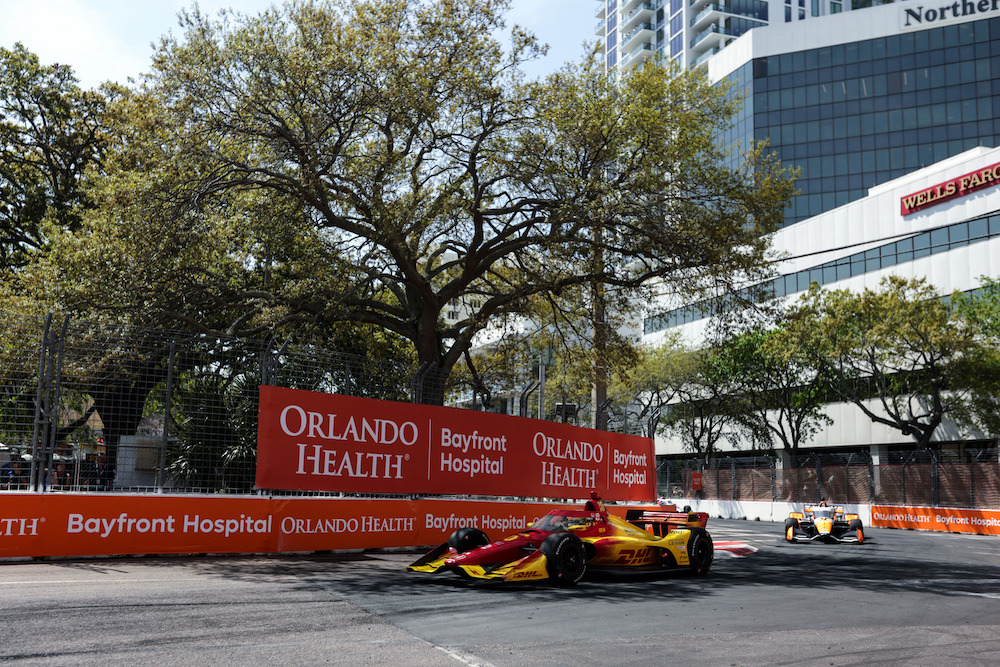
From a 2024 IndyCar tire design standpoint, no hybrids = not much deg. Josh Tons/Motorsport Images
Q: I for one am in favor of Michael Andretti having more influence on IndyCar. He strikes me as a person who is more in touch with what the fans want, and dare I say, cares more about the fans. I am glad he has the guts to tell Roger Penske what most of us fans are thinking. All I know is we can only give Penske the "remember COVID" pass for so long. The series is honestly pretty boring, and definitely stagnant. The thing Penske has accomplished more than anything the past few years is making me more of a NASCAR fan than I have been in years. I have always been an IndyCar-first guy, but pretty soon, that will not be the case. If I don’t hear anything concrete and positive by the end of this year, I’m out the door quicker than you can say Honda.
Brian, Joliet, IL
MP: IndyCar, you’ve been put on notice.
Q: Will IndyCar consider standing starts on road and street tracks again once it has the hybrid working?
William Mazeo
MP: No.
Q: I’ve always been a fan of the open-wheel feeder systems and I am always rooting for the next young American up-and-comer(s).
Seems we got a lot of hope for the next American superstar:
14-year-old Max Garcia – USF2000
16-year-old Nikia Johnson – USF2000 Pro
19-year-old Nolan Siegel – NXT
All three with impressive victories at St. Pete.
Mark, Niagara Falls
MP: They did. Put Michael d’Orlando and Jacob Abel in there as well from the NXT side in St. Pete.
Q: After reading the different articles about charter systems, guaranteed spots at Indy and owners bickering, it reminded me of the CART days where the owners only cared about themselves and not the sport.
"Dallara DW12 reaches 200th race" is a sad commentary on IndyCar racing. The owners don’t want to spend the money on a new car. They want guaranteed spots at the 500. IndyCar went hybrid to appease the engine manufacturers, and now it looks like Honda is bolting to NASCAR anyway. I would rather have 20 full-time teams and 40 cars at Indy than 27 full-time teams and 33-35 cars at Indy. IndyCar cannot survive without the Indy 500, and if you screw around with guaranteed spots at Indy, you take the risk of diluting the 500 and alienating your fans.
I was thankful that RP bought IndyCar and invested millions upgrading the Speedway, and I believe if R.P. was not the owner, we would not have had a 500 during COVID. But since then, it feels like the bean counters have taken over. I side with Michael Andretti here. IndyCar needs an infusion of money. Robin Miller used to say, pay a million to make the 500, and I agree with that. Pay a million for the pole, a million to make the race and 10 million to win. Open up the rulebook and watch the manufacturers and "bus engine" builders come running.
Joe Mullins
MP: Funnily enough, Michael recently had the biggest infusion of money of any IndyCar team in series’ history. I wonder if Group 1001/Gainbridge would want to be Michael’s partner and also be the financial solution Michael wants for the series?
As well, based on all of the problems you cited, someone would need to be insane to make a huge investment in the series right now. We love IndyCar, but what exactly would an investor be investing in while it’s known to be a business that loses an estimated $15-25 million per year if you don’t account for the profits from the Speedway that are used to pay for the series? Tricky times.
Q: So The Emperor, Penske Entertainment, has no clothes. Making matters worse, beneath those illusory clothes, there are very thin skins. Never a good or sustainable combination.
I’m glad that this has come to light, will play out in real time, and somewhat in front of the fans -- unlike The Split, which even most longtime fans didn’t fully see coming, both in the actual decision, and certainly the duration.
For those who feel this coming out before the first race gives a black eye to IndyCar, I disagree. Other major sports, and certainly other motorsports, have controversies all the time before, after and sometimes during their biggest events. We all understand that IndyCar’s grip on public focus always seems tenuous and fleeting. We revel, or despair, in a half-point TV rating swing up or down. But we’re talking about the very future of the sport here, and there is no right or wrong time to throw the topic on the table.
Is there a good reason for hope here that negotiations, discussions and arguments can lead to what we all agree the series needs, like more engine manufacturers (someone please pay strict attention to what Honda said), better marketing, no guaranteed Indy 500 positions, and a more robust effort on marketing and similar?
Mike, Chicago, IL
MP: Thanks for giving us your take, Mike.
Q: If someone is mid-pack or further and everyone is in fuel save mode, why not just go balls out and floor it? This has to be a better option versus just traveling in a parade resigned to your fate. Right?
Second, with Chevy crushing Honda, is there truth that while Honda got its 2.4L up and running that Chevy had inside info knowing the 2.4 wouldn't see the light of day and really worked out its 2.2? I'm assuming not, but why not ask...
JakeTheSnakeFromStateFarm
MP: On the first note, that would lead to doing an extra pit stop and finishing last among the remaining runners. On the 2.4L, we’re talking about decisions made to not use it 16 months ago, and we went into the 2023 season where Honda won more races than Chevy, so I’m not sure what this is about. Both had an equal opportunity to improve their engines leading into 2024, and based on one race, it looks like Chevy has made up the ground it was missing.
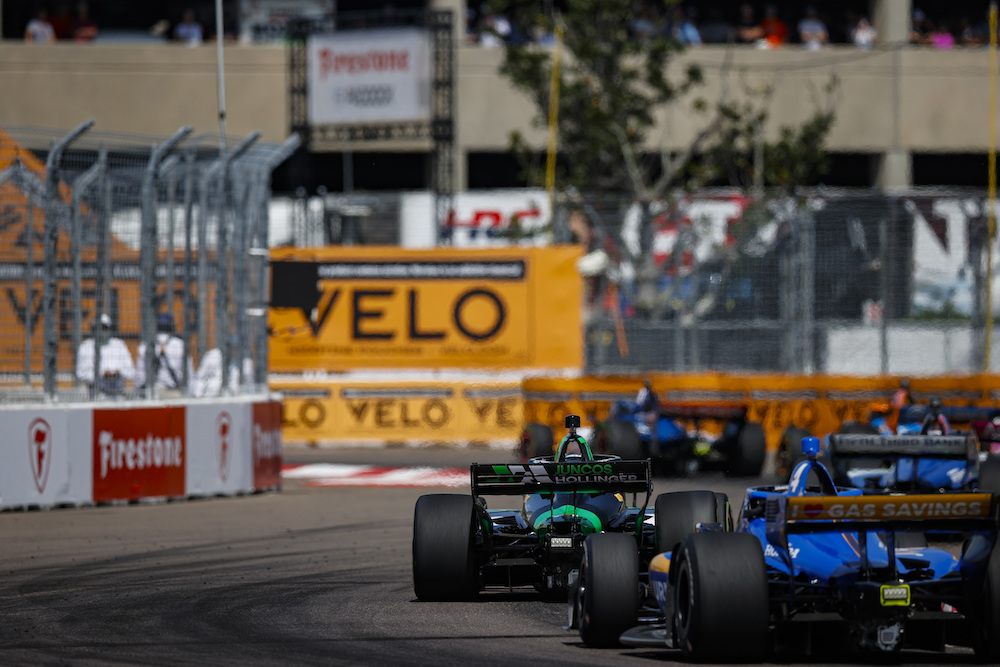
Any strategy that requires you to make an extra pit stop probably isn't going to be a winning one. Jake Galstad/Motorsport Images
Q: I loved your article about the DW12. I remember years ago it was reported that the bigger teams like Penske and Ganassi had purchased newer tubs because they were lighter. I was surprised to read that Andretti was still using an original, especially at Indy.
Watching practice and quali for St. Pete, there are quite a lot of new parts. Have you heard how much it cost to get a chassis up to spec this year?
I actually still like the looks of the 18 design. I just wish they had a sleeker, pointier nosecone (which they probably wouldn't change to minimize intrusion into the sides of another car) and something cooler than those dated BBS wheels. Even the small teams like Juncos seem to be pretty well-funded these days. I know money is always a thing, but how much of the hesitation to move to a new chassis is because the series owner is a fellow team owner, vs they haven't nailed down the engine formula?
Lastly, any current guestimate as to how much a new rolling chassis would cost if they did go all-new? $1 million each, or would it be capped again? I know you also have the added cost of spares, etc.
ET
MP: One of the big owners’ gripes is the costs of hybrid conversion, which have been double or more than what the series told its teams to expect. The $250,000 per car that IndyCar forecasted will be a lot more, according to the teams once they started getting invoices for everything. Many put the true per-car figure at $400,000 to $600,000.
No clue on what a new chassis would cost since there are no rules in place to know what it would need to be.
Q: What did I miss on Sunday? I watched the race on the local NBC channel; as soon as the checkered flag fell, no more coverage -- straight to golf. I went to Peacock for, wait for it, golf. I could not find it on NBC Sports. Now mind you, I am not gifted with much of an understanding of streaming and the like, but...
Peter Carey, San Bruno, CA
MP: Sorry to hear, Peter. I was on pit lane interviewing people when that would have happened, so I’ve got no insights to offer.
Q: Sunday was Josef Newgarden’s day after he basically led flag to flag, but Michael Andretti’s comments about RP and the leadership was a huge deal around the pits and paddock. He may be the only voice, but are there others behind closed doors growing frustrated with RP and the direction of the IndyCar Series?
Alistair, Springfield, MO
MP: Might be worth reading the breaking feature we spent most of February developing that went up Saturday morning.
Q: Do you read anything into Chevy taking the top four spots last Sunday relating to Honda’s potential withdrawal from the series? I don’t think they would want to depart on a sour note.
Jack Woodruff
MP: Honda’s signed through 2026, so no, the company wouldn’t lift off the throttle three years early. Sometimes Honda does a better job during the offseason and beats up on Chevy, and sometimes Chevy shows up and knocks out Honda. The rarity is when both are nearly equal.
Q: Rather than contact IMS for an answer that will benefit one attendee, I'm sending you the question so that others can benefit.
With the Indianapolis Motor Speedway Museum construction taking place for 2024, will there be a display of winning cars somewhere else on the speedway grounds, and will the Borg-Warner Trophy parade march take place? I'm meeting my daughter for her first Indy 500 and want to make the experience as memorable as possible.
Bruce Schaffer
MP: Our friends from the Museum -- which wasn’t part of Penske’s purchase of the Speedway -- provided the following answers courtesy of Kara Kovert Pray:
"The Indianapolis Motor Speedway Museum understands that the capital campaign and renovation are altering many people's Month of May and Race Day traditions. However, we are excited to transform the institution to better tell the Indianapolis Motor Speedway's stories, improve artifact presentation, and continue to be a destination during race weekends and throughout the year. We look forward to welcoming everyone back to the Museum in April 2025.
"For the 2024 Indianapolis 500, our restoration team has been working over the past six months to prepare the vehicles we plan to run race morning. We plan to have nine ionic Indy cars from the Museum's collection, including a few Indianapolis 500-winning cars. We are working with IMS on opportunities to display these cars during race week, and more information is to come.
"IMS is putting the final touches on the pre-race schedule and ceremonies. We believe the Borg-Warner Trophy will be part of the morning festivities leading up to the 108th Running of the Indianapolis 500.
"We plan to announce the roster of race morning cars in a few weeks, but in the meantime, please keep up to date on our social media pages on Facebook, Instagram, TikTok, and X @imsmuseum."
Additionally, we noticed the question from your March 6 Mailbag and wanted to provide some information:
Q: Not a question, but a suggestion for Doug Boles or someone at IMS: It has become a tradition to tour past Indy cars from the IMS Museum collection prior to the Indy 500. With the addition of IMSA to the IMS calendar, would it be possible for the museum to prepare and tour some of their sports cars prior to the IMSA event? Many of us would like to see and hear the Ferrari 250LM, Mercedes W196 and Ford GT40. There may be others in the vault that we don’t know about.
"As the Indianapolis Motor Speedway Museum is a separate entity from IMS, we have worked alongside IMS and the respective sanctioning bodies over the past few years to participate and run relevant collection vehicles during additional race weekends on the IMS calendar. Last year, the Museum participated during the IMSA weekend by running the 1964 Ferrari 250LM and the 1966 Ford GT40 with IndyCar drivers Conor Daly and Jack Harvey. In addition to running the cars, we also participated in the IMS's IMSA Street Fair on Main Street Speedway with a static display of the Ferrari 250LM.
"Race weekends are packed with various scheduled events outside the on-track racing schedule. Track inspections, sponsor laps, TV broadcasts, and other events lead to limited open track time. Still, all involved understand the history behind the vehicles and enjoy seeing them in demonstration laps.
"Over the past four years, the Museum has invested in our restoration department, allowing the team to assess, run, and preserve more cars. With this effort, we look to run more vehicles at various events at IMS and outside. Our social channels are the best way to keep up with our projects and events at which we display or run vehicles."
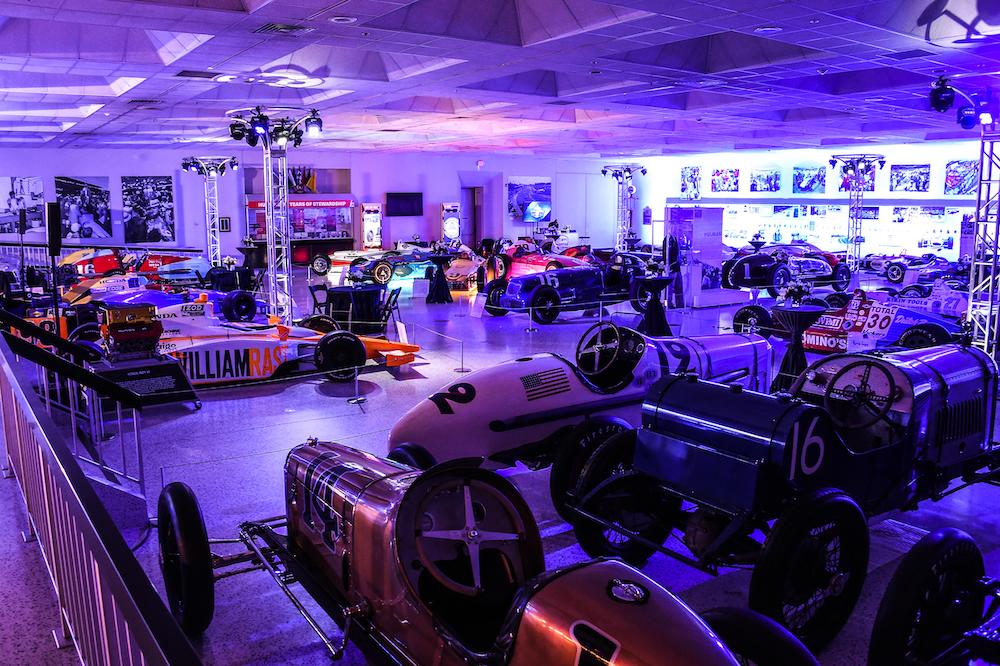
The IMS Museum is closed for this year, but during the Month of May you'll still get a chance to spot some of the cars that live in it. IMS Photo
Q: I recall that both Ferrari and BMW were penalized and BMW was furious about a penalty they received at the Daytona 24.
As a lifelong motor racing fan, I confess I'm not smart enough to keep up with all the nuances of the various year-to-year IMSA rules which has detracted from my interests in IMSA, at least for so as the lower classes go.
From reading your article, it appears both manufactures' GT3 cars were "performing too well." I'm I correct? Just what is it they were in violation of?
On another front, I am excited to get the IndyCar season started, although the whole concept of a non-points paying event is confusing on its face and I cannot imagine what a casual fan must think.
I know many are tired of hearing about what IndyCar was about prior to the Split, but to me that is historical proof of what is achievable. While never fully on par with Formula 1, IndyCar was gaining ground back then and shared headlines evenly in many sources with NASCAR. Is it just me or does IndyCar management now have a certain acceptance of mediocrity competitively compared to these other major racing series?
I have been in sales management most of my life and know the day I admitted this kind of performance to my bosses would be the day I would have been shown the door.
IndyCar's product, its teams, and driver line-up is just too stellar to accept a market condition where they cannot stage a race after Labor Day when their competitors are all just heading into their home stretch.
James Herbert Harrison
MP: IMSA, and most sports car series, use Balance of Performance regulations to try and create parity between a bunch of different cars that are nothing alike. All of the manufacturers, and there are 18 in IMSA, embrace BoP and agree to play within BoP. Part of that embrace is to run as hard as you can so the BoP officials can look at honest performance data -- not intentionally masked performance where the manufacturer or team is pushing the car to 98 percent but saying they’re at 100 percent -- and use the info to accurately dial up a car’s performance or pull it down to they all have an equal-ish shot at winning. When you have a model running faster in the race than it demonstrated in testing or practice sessions, that’s where a series will step in and hit them with a penalty. Again, they all agree to play within the rules of BoP, so when one or more do not, it leads to the referees stepping in.
IndyCar’s executive leadership and the series’ owner are paralyzed by fear of failure.
Q: The Southeast (Florida doesn't count) lacks for IndyCar races other than Barber. Nashville is a bit more Midwest to me than Southeast. I notice that Greenville is often one of the best individual markets for IndyCar TV ratings. I know it just takes a promoter and money and I am not that guy, but I would love to see a street race come to Greenville, SC. Close to the heart of NASCAR in Charlotte, but just far enough away to be on their own. Beautiful city that is growing rapidly.
What I love most is that BMW and Michelin both have factories there. Clemson University has a motorsports engineering program and this would be an excellent doubleheader with IMSA. Should IndyCar go the spec engine route it would be great to get BMW to sign up and become the promoter of said event. Wishful thinking, maybe it will happen one day along with Pittsburgh, Boston, Cleveland, and so many others....
Andy Brumbaugh
MP: I have spent very little time in Greenville, but I’d love to spend more time there to cover an IndyCar race.
Q: OK, so normally when I put forth something like this, it's with my tongue either halfway or firmly planted in cheek. But this time I've had a thought that actually might be an idea genuinely worth evaluating. Not necessarily the exact method I'm about the outline, but the basic idea.
So the IndyCar charter arguments are abuzz again, and the matter of guaranteed Indy 500 starts has been part of it, then not part of it, the fans are biting each other's heads off over it as per normal, but nobody ever really seems to address how to do a charter system with actual value if it doesn't guarantee Indy 500 starting spots. Even as someone who does not like the idea of guaranteed spots in the 500, I have to acknowledge that such gives more value to the charters in such a system -- and that there is little value to an IndyCar charter system without that.
Well, I'm about to anger a LOT of people because this idea is a great big fat compromise, meaning the right answer is going to annoy everyone on some level.
Instead of actually guaranteeing starting spots, a charter entry can still get in the show as long as they're within 110% of the pole speed -- or 112, 115, something appropriate for the 500, but which isn't such large leeway to make it a de facto guarantee. In short, instead of a guaranteed starting spot, you have a leg up over non-charter entries, requiring you to still perform to a reasonable standard.
I can see this having roughly the same effect on a charter's value as guaranteed starting spots as long as the... let’s call it a safety net for now, isn't made too ridiculously small. Finding the right balance would be a delicate thing and I do not envy whoever would have to figure it out.
Personally, I'd rather not have charters at all, but they seem inevitable at this stage so if we got to have them, let's at least try to smooth out the more annoying elements of them.
FormulaFox
MP: I would really like to give the growing list of charter/Indy starting spot ideas a whirl in iRacing to see how the concepts would play out in real time.
Q: Instead of Dallara waiting around for IndyCar to get off their butts and request a proposal for a new chassis, why don't they take the initiative and go ahead and design a new car? Dallara approaches IndyCar with a splashy presentation including colorful renderings of an updated sleek looking racing machine and all of the technical specs in a brochure or even a well-put-together video presentation. Dallara will say, "Look, this is what we can provide you and this is how much it costs." Nothing wrong with being proactive?
Bob Gray, Canoga Park, CA
MP: Unfortunately, it’s bit like asking why a construction company hasn’t started building a house without knowing how many rooms it needs to have, how tall it should be, how much land it has to use, and so on. You need to know the basics of the task before work can start, and since IndyCar has no basics to offer, Dallara would be crazy to start a new-car project.
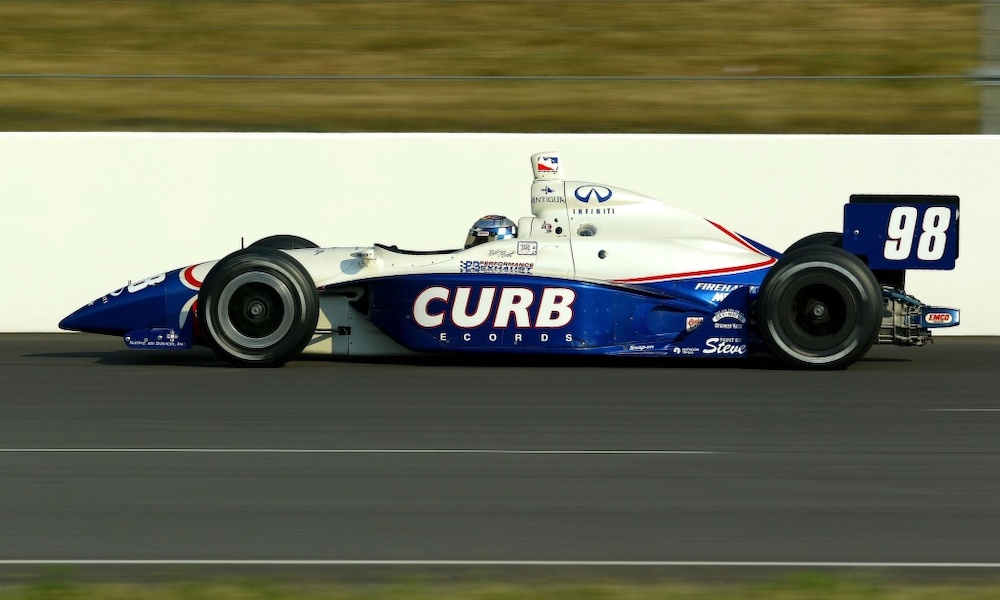
"IndyCar? It's Dallara. We've sketched out an idea for the DW12's replacement, and we'd like you to take a look." Motorsport Images
Q: I just read your response to Steve in last week’s Mailbag about the chassis and engine talk for 2027. All ifs and maybes, isn't it? My thought is, about what a new engine formula could be. I believe EVs are not the future. There are too many issues with batteries and charging. I believe the future will be in hydrogen fuel. A quick Google search showed me that there are a number of manufacturers investing in hydrogen fuel including Honda, GM, Diamler, BMW, and others.
Could hydrogen be the answer for IndyCar to attract new manufacturers? This would bring innovation back to IndyCar and the 500 would once again be a showcase for cutting edge technology. What are your thoughts on the potential for hydrogen, and would the series be willing to take that risk?
Jacob Perl, Mansfield, OH
MP: Hydrogen-fueled cars need a ton of space to house the freezing system and all of the other systems that make it viable in production cars and prototypes. For where we are today, I can’t think of how such a thing would fit in an open-wheel car due to the extreme space limitations. Until some sort of miniaturization happens that would make it viable for an open-wheeler, it’s not an option.
Q: Looking at the latest attendance numbers for IndyCar compared to NASCAR and F1 and the ages of the fans makes me wonder -- do you know of the attendance numbers and ages for other open-wheel series such as sprint cars, midgets, modified stock cars etc?
The ladder for sprints, etc., had the rungs removed many years ago. These race fans might follow IndyCar if drivers could advance (another than Kyle Larson) to IndyCar.
Lew
MP: The series you mention are outside of what I cover and have insights into, unfortunately, so no, I have no clue on attendance and demographics for short track racing. I learned about the Australian Supercars championship many moons ago, and have followed it closely -- despite it being half a world away from me -- ever since. I feel confident in saying that someone watching sprint cars in Iowa would have an easier time coming across IndyCar and wanting to see what it’s about than my discovering Aussie Supercars, and there were no Americans or IndyCar or IMSA drivers competing there to make me want to follow.
But maybe I’m different in that regard. I don’t disagree that having a short track racer in IndyCar would attract more interest from that community, but I like to think times have changed enough in recent years to where a racing fan who would only follow their favorite series has branched out and follows others forms as well.
Q: I appreciate Rick Owens’ response to my letter of February 28. Unfortunately, Rick missed the point.
I made no bitches or complaints about IndyCar racing or the Indianapolis Motor Speedway. My concern is about the absence of a mission plan for the future of the sport.
IMS and IndyCar are now in the hands of one of America’s most successful businessmen and owner of arguably the most successful racing team in the history of all motorsport. Other than the improvements at IMS, there has been a little progress seen for the future of IndyCar.
Many years ago, Roger Penske was the subject of a Wall Street Journal front page article about his successful career. The article stated that Penske’s corporate strategy was the TEAM principal: “Together Everyone Achieves More.” Hopefully Penske ownership and management will do its magic for the future of IndyCar racing.
IndyCar racing is the best-kept secret in motorsports. IndyCar is the most competitive in all of auto racing. After watching the F1 parade and the NASCAR taxicab circus, I can not understand why IndyCar is not the most watched and attended series in motorsports. It comes down to technological progress, marketing strategy, promotion and advertising, which is the responsibility of leadership.
The Indianapolis 500 has been my New Year’s Day for the past 70 years. Rick, I will be in Paddock Penthouse B, Section 23, Row A, Seat 9. Come by, I’ll buy you a cold one, and we will salute the Greatness Spectacle in Racing.
Is it May yet?
David Felstein, Terre Haute, IN
MP: Thanks for being awesome, Mr. Felstein.
Q: While the evolution of NASCAR, WEC and IndyCar’s TV deals have been well-publicized, IMSA appears to be on the final year of its deal with NBC. News on what comes next for them seems to be very sketchy at the moment. Has there been any movement on that front, and can we expect an announcement soon?
Chris, Staten Island, NY
MP: Great questions. I’ll try to find out what’s happening on the IMSA broadcast front at Sebring this weekend.
Q: Over the course of the off-season, it seemed like Devlin DeFrancesco's name (and his substantial backing) was being linked to every team on the grid outside of the traditional powerhouses. I had been assuming he was nailed on to be starting this season at whatever the biggest paid-for seat in the paddock wound up being. However, come St. Pete, Devlin appears to have missed the boat. Do you have any insight into how or why his efforts to find a seat in 2024 ran aground? And do you know if he and his people are eyeing anything part time for this year, or is the focus on 2025?
Henry
MP: Here’s the story I’ve been told by many people: The DeFrancescos offered Coyne $4.5 million somewhat early in the offseason and were turned down. Coyne was the only real option for them. From that sum, $2 million was taken and used to secure an endurance seat in IMSA’s GTD class for the big races like Daytona, Sebring, and whatnot. As problems finding drivers with solid budgets emerged, Coyne went back to the DeFrancescos to welcome Devlin and that $4.5m into the team. But almost half of that sum was gone, which led to no business being done with Coyne.
So, is that accurate? I’d bet it’s pretty close, but who can say? I’ve also heard Coyne went back to the DeFrancescos in recent weeks to see if that $2.5 million was still on the table. While I can’t say if that’s accurate as well, I can say Devlin’s not in a Coyne car, so draw your own conclusions…
Not sure on if or where he’d end up in 2025, but I’ll try to find out.
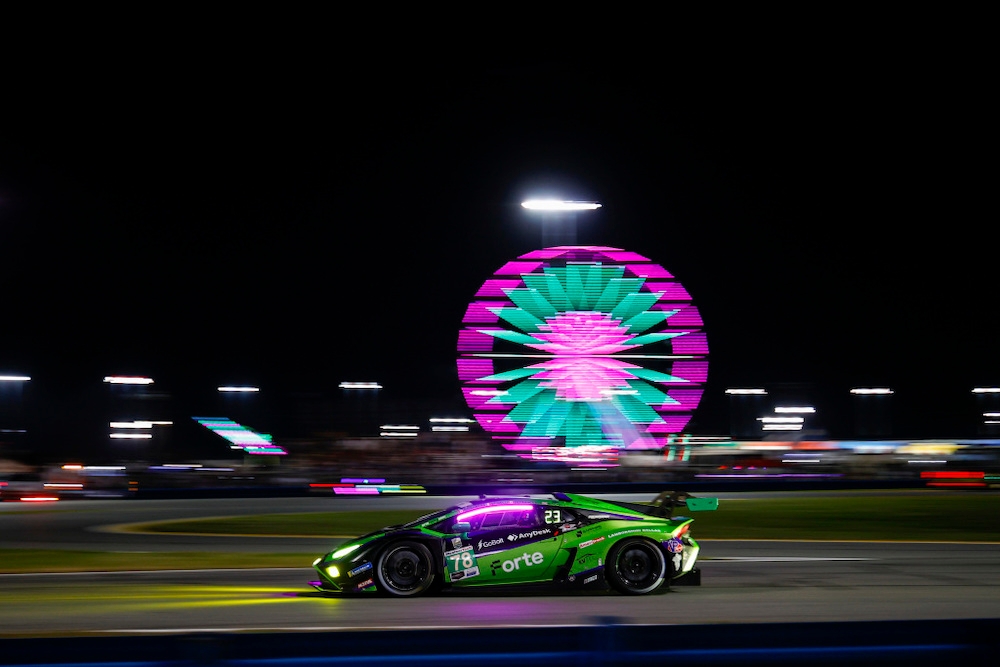
Now you know what a part-time Coyne IndyCar budget looks like if you take it to the IMSA paddock. Pretty cool, actually. Jake Galstad/Motorsport Images
Q: So, the IMSA cars are fast, and the off-season progress seemed to show in Qatar that the Cadillac will be very competitive in WEC, but it seems GM is still finding a way to blow its chance in an international top class again. Only one LMDh entry means that with a minimum of six hours of stuff happening every event, the odds are short that stuff will find a way to happen to its one entry and it goes home with nothing.
Meanwhile, although last year involved eating a lot of pain for Porsche, having no less than nine 963s across IMSA and WEC means that it has at least 300% of everyone else’s data to develop from (the next nearest competitors would be the three cars from Ferrari or GM), and no less than five cars in the hunt in WEC. Knock one down, and four more are still there.
GM seems to never quite have the backbone to cut loose and go for it when it really needs do. Is this just the stereotypical corporate bean-counters holding it back, or is GM’s motorsport management similarly unwilling to take the big swing when its chance really comes?
PS: A full F1 grid’s worth of Hypercars in WEC, and nary a joke entry among them. Best quality in depth ever in international sports car racing?
Duncan, Ottawa
MP: GTP/Hypercar is by no means inexpensive, so I wouldn’t position GM as being tight with its money. By the time you read this, we will have broken the news of Ganassi and GM parting ways at the end of the season. A two-car LMDh program in WEC is certainly possible, and would improve their odds at each race.
Q: I’m a millennial who started following IndyCar in 2006, so my connection to the sport’s heyday is limited to what I read or watch on YouTube. With that said, I appreciate the history of the sport as well as its traditions (particularly with respect to the month of May).
I understand the frustration of many readers about the age of the current engine and chassis formula. However, I think this frustration is myopic.
Don’t get me wrong, I would love a new chassis. But only if the new chassis makes economic sense and is an improvement on the DW12 aesthetically, improves or maintains the current quality of racing and improves driver safety.
The DW12 still looks good and sounds excellent; the quality of the racing is outstanding (particularly on road and street courses); and most importantly, its safety record -- while not perfect -- is better than any of its predecessors.
It’s natural to want something new. But new doesn’t always mean good. The DW12 may be approaching medicare eligibility, but it’s still quite good. And that’s what we as fans should hope for.
ARF, Northern Virginia
MP: I understand where you’re coming from. But no sport says, "Let’s stand still and do nothing to modernize our practices or try new things to appeal to more fans." The argument that trying something new should be avoided because it might not be good is the antithesis of a racer’s mentality. "Just stick with what we’ve got" works for a while, but at some point, you become the old guy at the club, wearing clothes that went out of fashion 20 years ago, who folks ignore.
Sadly, IndyCar has been spec for so long, the basic concept of creativity and innovation -- the exact thing racing is meant to lead and mirror back to the auto industry -- is a reality that some folks have never known.
Q: For the first time in a long time, there are no Canadian drivers in the IndyCar field. Even Cayman Islands, a British protectorate of less than 100,000, has more drivers in the field than Canada, a nation of 40 million.
I miss the Golden Age of Canadian motorsports -- aside from Villeneuve in both IndyCar and F1 and Fellows in sports cars, we had Tracy, Moore, Carpentier and Scott Goodyear in American open-wheel racing. Today, there is one Canadian in F1 and none in IndyCar racing.
Whatever happened to Canadian motorsports? And can the Honda Indy Toronto survive without a Canuck driver in the field?
Ken, Thunder Bay, Ontario
MP: Scott Hargrove was looking like someone who would turn his Indy Lights wins into an IndyCar future, but there was no money behind him to make it happen. Robert Wickens was dealt a cruel blow; he’d be a champion by now for a Penske or Ganassi, no doubt. Daniel Morad is wickedly good, but he’s been relegated to sports cars for most of his career. Lance Stroll had dreams of F1. The only kid we have who’s on the ladder that might have the skills to get to IndyCar in a few years is Mac Clark. Great kid, quick, and has gotten help from Hinch to raise awareness about his talent and need for sponsorship.
There’s nothing stopping Canadian parents from placing their kids on the USF Championships ladder, just as parents from all over the world do each year. Beyond the U.S., young prospects from Brazil, Australia, Italy, Mexico, New Zealand, Colombia, Ireland, Holland, England and more are ably represented in USF and Indy NXT. I’d sure hope the Honda Indy Toronto race can survive without a homegrown star to root for in the next year or two.
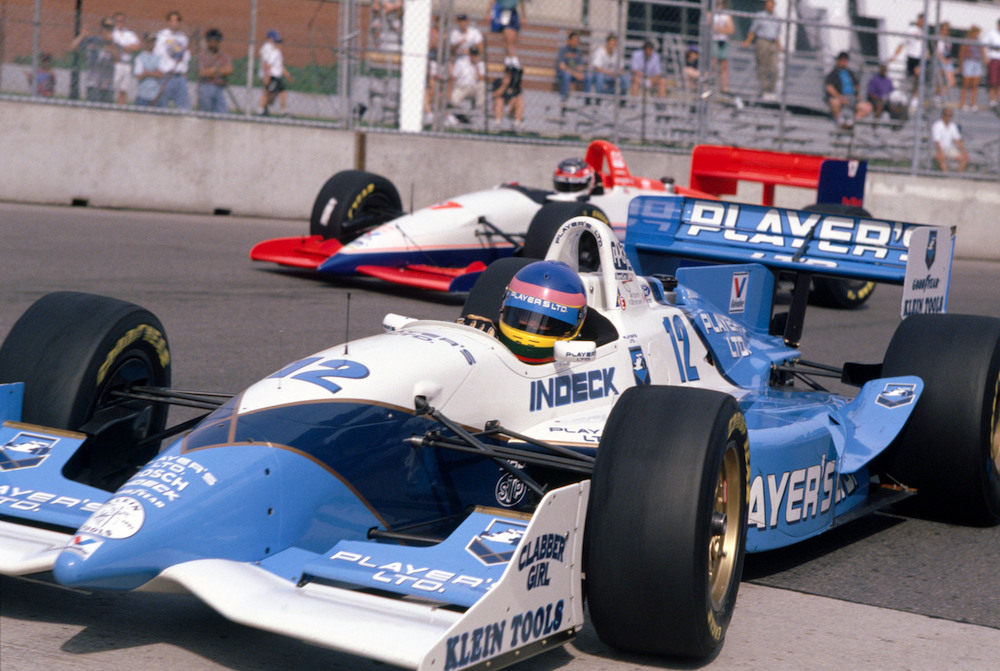
Jacques Villeneuve, in the Player's Forsythe car, in Toronto in '94. What a cool time to be a Canadian fan. (Well maybe not that weekend, since he finished ninth). Murenbeeld/Motorsport Images
Q: My brother and I are planning to travel to Indianapolis in May for the Indy 500. Our first 500 was in 2022, and we had a fantastic time. And our favorite driver, Marcus Ericsson, won the race! Such fun. We also are big fans of Stefan Wilson. He is getting better as an IndyCar driver, and he is such a gentleman. What happened to him last year was so sad.
Do you think there is any chance that he still may be able to secure a ride for this year's race? Maybe with Dale Coyne or Foyt? Time is running out, and I know that he will not race for the Dreyer & Reinbold/Cusick Motorsports team this year. If Stefan does not race, it certainly will put a dampener on our race experience in Indianapolis. I'm sure that he is trying to find a team to race for, but I have not read anything lately that mentions him possibly being in a car. I do appreciate any information that you can provide. Maybe we will see you race weekend at IMS!
Balz Amsler, Stockholm, Sweden
MP: The field is set with 35 cars and sadly, Stef Wilson won’t be driving. Please say hello in May!
Q: I just read that IndyCar is considering new chassis for their series. Just wondering how many new chassis are purchased each year, and how many race-ready chassis are out there? What is the projected life expectancy of a chassis barring major damage? What is the cost of a new chassis, and how long would it take to produce enough new chassis for the entire field?
Dan
MP: Depends on how many are ordered. I know Penske bought all-new cars for 2024, so that would be at least three. At least 60 are still in race-ready shape. Some from 2012 are still in use. No new chassis has been designed, so there’s no way to say what they cost or how long it would take to make them.
Q: I’ve read a few articles about the possibility of Audi backing out of F1 before it even gets there. From what the reports are saying, is it sounds like Audi wants Sauber to invest in the facilities, and Sauber is saying no, Audi needs to invest in the facilities. Is Audi really trying to do F1 on the cheap? Manufacturers have done it before, and it never works out well. Also, if Audi does back out before even lining up on the grid, how does that make F1 look after all the hoopla about them joining? What are your thoughts and predictions? Will we see Audi in Formula 1? [ED: This letter was submitted before Audi confirmed its F1 plans for 2026.]
Cory, PA
CHRIS MEDLAND: As you know now, Audi has announced the finalization of its full takeover of the Sauber Group, and it is definitely entering as a full constructor in 2026. But there's still a lot of merit to your question, as I feel like it's already been left a bit too long to make certain investments. Audi knew it was entering back in 2022, and it has taken until now to sort certain things out, whereas if it had invested fully at the start then Sauber could have been strengthening facilities and personnel earlier than this.
It's still an overwhelmingly positive outcome, but the last couple of years do feel like there was a bit of hesitancy and a stand-off about who was going to invest what (and when), leading to the current team being in a bit of an odd position. Realistically, there might be some aspects of the next two seasons that need sacrificing in order for Audi to hit the ground running as strongly as possible in 2026.
Q: It seems that the Red Bull issues keep coming. The investigation into Dr. Marko leaking information is leading to more problems for the team. Verstappen has said he is very much tied to Dr. Marko. Having seen Verstappen Sr. and now Dr. Marko having discussions with Mercedes/Toto Wolff, could something be brewing? Could Dr. Marko's suspension, firing or quitting lead to a Max-to-Mercedes move for next year? And if that happens, does Ford leave Red Bull? What happens to Red Bull’s driver lineup, seeing Perez might not be re-signed?
Frank, Mooresville
CM: If I'm honest, I believe the discussions with Toto have been a play from the Verstappen camp, who have pinned their colors firmly to the Marko mast. That didn't happen with Christian Horner when Verstappen was asked about his importance to the team, so it felt like picking a side that will have been noted further up in Red Bull GmbH. As much as you can't be beholden to one driver, it must be extremely tempting for Red Bull to do whatever it takes to keep Max happy, and therefore if there were certain things he or his management wanted then they needed to show there was a real possibility of them moving elsewhere. And Mercedes would be the most likely option.
Marko has now said he is going to continue after he and Red Bull executive Oliver Mintzlaff had a meeting in Jeddah that left the pair in full agreement as to how to move forward (according to Marko), and that will strengthen the likelihood of Verstappen staying put, too.
Even if that's the case, I'm still not sure what happens with the lineup right now as neither RB driver has started the season knocking the door down to replace Perez. It feels like Liam Lawson is a certainty for an RB seat next year, but I can't see him being promoted straight to Red Bull right now. So it would likely be a Daniel Ricciardo promotion given his experience and race-winning pedigree, but he'll need to produce better performances during this season than he's started with so far.
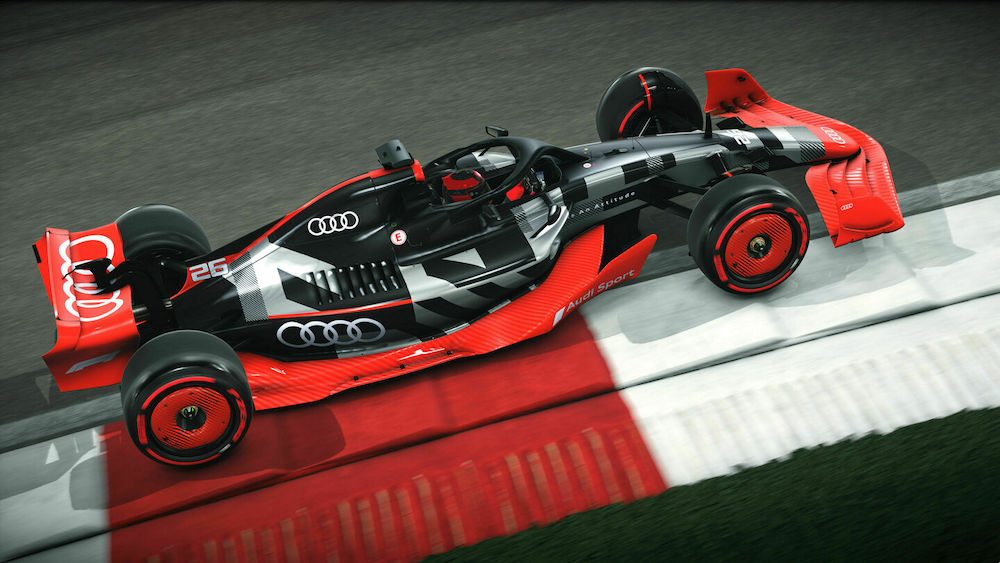
Audi is all-in on F1, but it has some work ahead if it wants to start off on the right foot in 2026. Image via Audi
Q: Is it coincidence or common denominator that the NASCAR and F1 teams owned by Gene Haas are stinking up the track?
Shawn, MD
CM: If this question had come last year, I think I'd have been giving this answer a lot more thought, although still defending Haas, as someone has to be last in a competitive F1. But this season, I don't think that's fair.
Hulkenberg's 10th place in Jeddah is the only score outside the top five teams so far this season, so Haas is currently sixth in the constructors' championship. But more than that, I think it can target staying there for the first third of the season, at least. The car is a good improvement on last year so far in terms of tire degradation so its race pace is stronger, and it remains quick over one lap. I'd say it has a lineup to rival any of those bottom five teams as well in terms of either driver scoring points.
The acid test will come when it needs to upgrade the car, because that was something that was severely lacking over the past few years. But it actually seems like Gene Haas' brave move to replace Guenther Steiner has provided a fresh outlook at Haas, and the different approach under Ayao Komatsu is showing there was more potential in the team's current structure. That still doesn't mean it can aim much higher than it currently is, and Gene will need to put serious money in at some point to help develop the team to keep up with its rivals, but the early signs from 2024 are what he was looking for in order to convince him to do so.
KELLY CRANDALL: It’s a coincidence. Stewart-Haas Racing has struggled with the introduction of the Next Gen car, something that Tony Stewart has pointed at and Rodney Childers has mentioned, as well. It’s been a different mindset for how they approach the car and what they their limitations are, which takes more out of their hands -- something that Childers told me a few years ago has been very tough on him. Kevin Harvick won nine races in 2020, and many thought was going to win the championship. Next Gen came in 2022. There have also been driver changes along the way and people need to find their footing. But as Stewart said before the season started, it’s been too many years of performing this way, and they need to figure it out or else.
Q: Before NASCAR races we see the field come down pit lane at the pit lane speed limit led by the pace car. I've also been led to believe that in NASCAR, actual speed values can't be shown in the cars so they rely on RPMs in a certain gear. Do they somehow calibrate the pace car to be at the correct speed? The speedometer in my vehicle and the speed shown by my GPS device often differ by a couple of miles per hour.
During the race, I know that NASCAR uses timing lines to determine the speed of the cars. When the pace car come down pit lane, do they use their speedometer, GPS or some other method to be at the correct speed? The timing lines are obviously the most accurate, but what does the pace car use as a benchmark coming down pit lane? I know this could probably be an entire article, but in addition to that, how do the teams calculate pit road RPMs during a race when they are on worn, hot tires at full pressure when the calibration readings are taken on cold, new tires at low pressure? What if there's a headwind at the start of a race and a tailwind on lap 200? Once an engineer, always an engineer.
Bob Gregor, Lenexa, KS
KC: Yes, the pace car gets the field to pit road speed. It’s a relatively simple process: the pace car leaves pit road, and once it gets to pit road speed that is when the lights on top of the pace car go on, which is the signal to the field that they are at pit road speed and to set their tach. Those speedometers on the pace car are calibrated early in the weekend as they go on track and work through the scoring loops.
The drivers will set their tach (or you’ll hear talk on team radios about “lights” and it’s how the digital dashboard is set to show green or red lights for pit road). If a driver goes red, then they were over what set for the speed limit and they know they have to back down before crossing a scoring loop and being hit for a speeding penalty. NASCAR does give them leeway. The pit road speed could be 45mph but NASCAR gives them an extra mph, so a penalty doesn’t technically incur until a driver goes over 50mph. Once the speed is set, it’s set. I’ve never heard of them adjusting during the race for different car conditions or the weather.
Q: Why can't NASCAR increase its horsepower package for all tracks outside of Atlanta, Daytona and Talladega to 750hp? That would make the racing more exciting on all the tracks, especially on the short tracks and road courses where the Next Gen car struggles.
Kurt Perleberg
KC: NASCAR can increase the horsepower, but doesn't want to because they are focused on bringing in new manufacturers and containing costs. It is their belief that the number they are at now is more enticing to making that happen. Here are the most recent comments from NASCAR: “Once we open up the horsepower, we have to have all three manufacturers on board. As soon as you open that up, there’s going to be development, there’s going to be reliability issues and putting that cost back into the engine builder’s category, where they certainly will develop the engine. As soon you open any horsepower, they’re automatically going to do that. They’re the best at it, and that’s what they do.
“The number we’re at seems to be where we want to be to potentially get new manufacturers interested. And if we start getting away from that number, it can create problems in that area. We’re always open to everything and we do consider everything, but there’s a lot of different parties that have to agree before that can happen.”
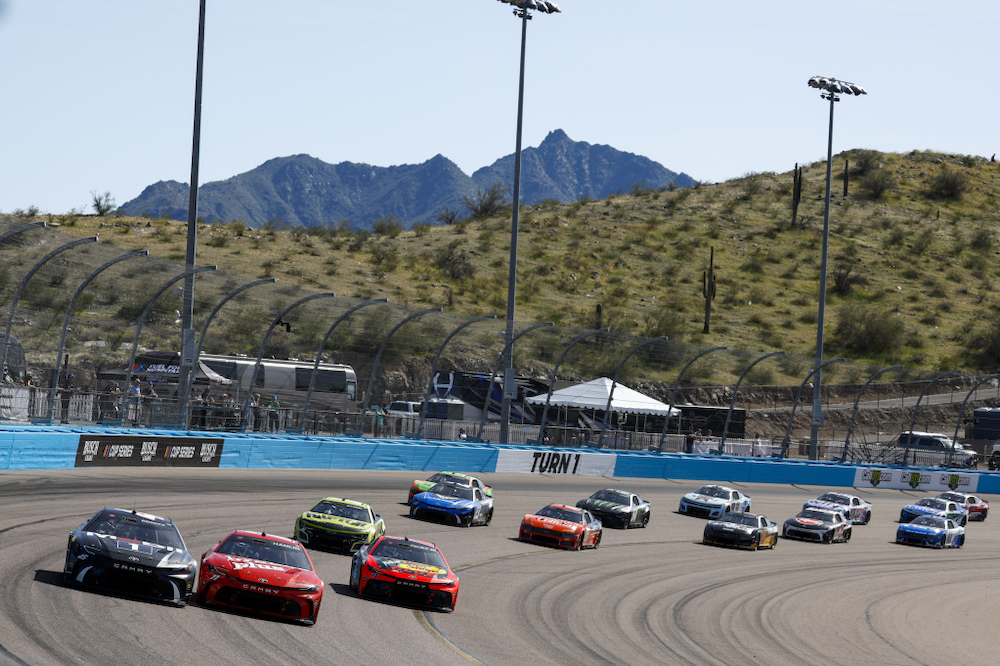
More horses = more money = sad manufacturers. Motorsport Images
THE FINAL WORD
From Robin Miller's Mailbag, March 12, 2014
Q: I am reading Nigel Bennett’s book (“Inspired to Design”) and I am enjoying it very much. There is a lot of technical insight into chassis design, suspensions, aero, etc. Not too complicated for the average reader. I think the comments and discussions of drivers, owners, race issues, etc., are really interesting. I can remember a lot of the incidents he describes, and now I know the story behind the story! I would highly recommend it to any race fan.
I was thinking about the cars he designed, all of the different ideas he tried. When I go to the Indy museum I find it fascinating to study the cars and the design concepts. That is why the current-era cars are such a BIG disappointment. I assume if I go to the museum in the future I can study the current cars and marvel at how the paint jobs changed over the years? I am well aware this is old news, but spec car racing is a BAD idea. Do you think anyone will write a book about all of the design ideas they tried to use to win Indy with a spec car? I suppose not. I submit that if the current spec series is not interesting enough to generate future history books or museum displays, then it is no wonder the current racing is not generating any great interest.
Mark Hamilton
RM: That is a good read (and so is “Black Noon,” the story of the 1964 Indy 500 which is due out in a month or so) but, of course, the biggest joke in the IMS Museum is seeing Eddie Cheever’s IRL toilet sitting next to a McLaren, Eagle, Coyote, Lola, Reynard or Lotus.
Marshall Pruett
The 2026 season marks Marshall Pruett's 40th year working in the sport. In his role today for RACER, Pruett covers open-wheel and sports car racing as a writer, reporter, photographer, and filmmaker. In his previous career, he served as a mechanic, engineer, and team manager in a variety of series, including IndyCar, IMSA, and World Challenge.
Read Marshall Pruett's articles
Latest News
Comments
Comments are disabled until you accept Social Networking Cookies. Update cookie preferences
If the dialog doesn't appear, ad-blockers are often the cause; try disabling yours or see our Social Features Support.