The RACER Mailbag, January 25
Welcome to the RACER Mailbag. Questions for any of RACER’s writers can be sent to mailbag@racer.com. Due to the high volume of questions received, we can’t guarantee that every letter will be published, but we’ll answer as many as we can. Published questions may be edited for length and clarity. Questions received after 3pm ET each Monday will appear the following week.
Q: Everyone has questions about a new IndyCar. Why doesn't someone re-engineer the DP01? After the Katherine Legge crash at Road America, it does have a robust safety cell, and if remember correctly, it was designed with possible oval use in mind. My opinion is that it was the best-looking open-wheeler.
Dino, New Hanover, PA
MARSHALL PRUETT: And every driver who raced Champ Car’s 2007 Panoz DP01 that went to the IndyCar Series and the old Dallara chassis and then the new Dallara DW12 said the DP01 was the perfect car.
I’m rarely a "Let’s go back in time to solve today’s problems" kind of guy, but I do think the designers of the DW29 or whatever year it arrives would be wise to buy a DP01 and study everything about it. Sublime aero and mechanical balance; looked great and made for great racing. Updating a car from 2007 isn’t the answer, but if Dallara could bring its spirit forward into it’s next chassis, that would be amazing.
Q: Why isn’t the "Ed Carpenter runs ovals and Simona De Silvestro runs the rest" arrangement happening again? It seemed like ECR was the perfect place for the female-forward Paretta Autosport. ECR evolved from Sarah Fisher Racing, and it was Carpenter who gave Danica Patrick her last ride at Indy, so obviously ECR has no issue with running/working with women. It would be a smart setup even if Ed hired Simona directly.
IndyCar in general is missing the boat in this area. Last time anybody checked, women account for just over 50% of the population, and wouldn’t it be nice to recruit a whole new fan base of girls and women? Was it five or six women that ran at Indy one year? No need for tokenism, either. While none except Patrick got a top-tier ride, there has been good success by women drivers given the chance. Sarah Fisher ran well, and given a good car Simona would have stood on the podium numerous times.
I’m starting to violate my own pet peeve about mailbox questions being more soapbox rants, so I will leave it with, “why not a bigger effort towards female drivers?”
Rob Stone, Culpeper, VA
MP: I hear what you’re saying, Rob. What comes to mind here is yes, IndyCar should be doing more to support women racers through the extremely specific "Race For Equality & Change" program it chose to create to address such things. What also comes to mind is IndyCar also has 10 full-time teams, many of whom have sponsors and partners who would benefit from initiating their own RFEC-type programs to develop women racers -- and that’s everything from drivers to mechanics to engineers and every other role -- and racers of color.
So, yes, IndyCar’s kicking ass when it comes to developing and advancing Black racers through the RFEC, but it hasn’t taken the same aggressive approach to developing more women racers. I hope that improves, obviously, but rather than place an expectation for IndyCar to solve every issue, this seems like one that improves rapidly if all 10 teams join in and help the series.
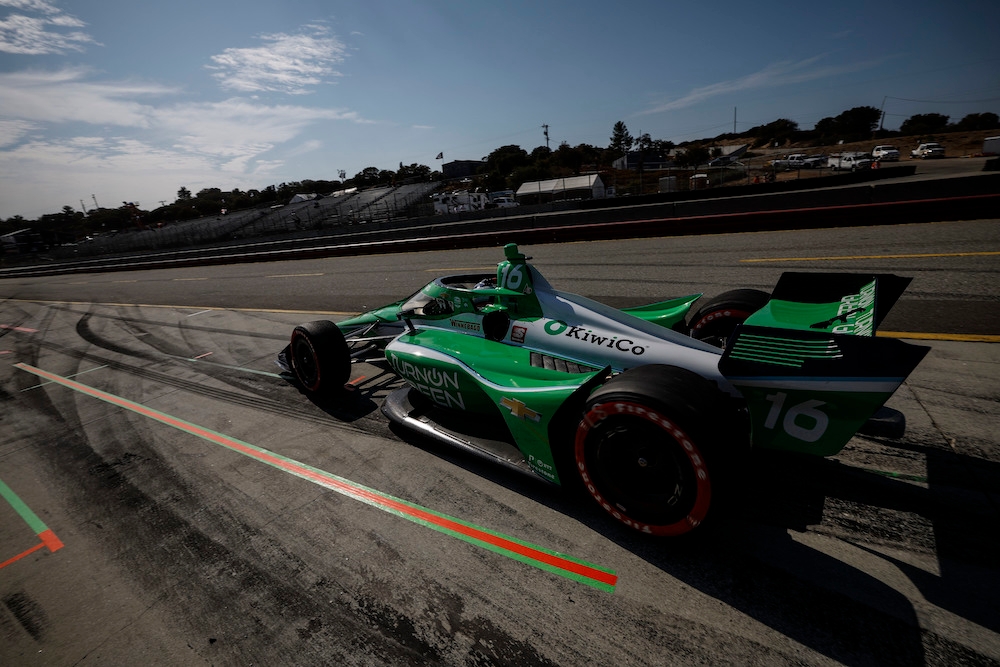
Simona De Silvestro has been flying the female driver flag alone in IndyCar over the past few years -- and even she's only been able to race part-time. Motorsport Images
Q: Penske, Ganassi, and Shank have all been involved with IMSA prototypes, joined now by Rahal and Andretti. I would think they have all seen how the new GTP regulations have led to an increase in manufacturer involvement and excitement, and they would be pushing for similar changes with IndyCar. Are they pushing? If not, why not? They certainly have seen the results.
My cynical side also wonders if Penske bought IMS and IndyCar only for the Speedway, which is the most valuable asset. If IndyCar lags behind NASCAR and F1, oh well, he still has IMS.
Lastly, a heretical thought. Would IndyCar be better if NASCAR owned the series, since they at least seem willing to market, experiment, and change regulations as they have with IMSA prototypes? I live in the Miami area and this is the most excited I have been for IMSA since the Miami GP days with the Porsche 962, Jaguar, Mazda, Nissan, and Toyota.
I agree with your comment in last week’s Mailbag: IndyCar needs some leadership from people not born last century, or at least not before 1990. IndyCar has to take the initiative and not wait for new manufacturers, etc. As a previous reader wrote, I also would like to see 20 cars with more manufacturers and technology than 27 spec racers. Thoughts?
Rick, Homestead, FL
MP: The reason we have half of IndyCar’s full-time entrants involved in IMSA’s new GTP class is because of the money those manufacturers are spending to have them run factory teams. And it’s good money. That’s just the facts. If those manufacturers wanted IndyCar teams to race shopping carts on their behalf and wrote the same big checks, drivers would be strapping in and racing shopping carts. That the GTP formula is awesome and has attracted a lot of manufacturers is just a bonus.
I came up in the sport where spec cars really weren’t a thing, so I’ll always lean towards individuality, customization, and letting one’s creativity be the core of what you build or develop. I’ll take that 20 with freedom over 27 that are spec every time.
Q: This relates to your response to the January 18 letter from "Bruce" regarding Formula E, the Indianapolis Motor Speedway historically being a proving ground for automotive technology, and whether there could be an opportunity for FE to run at IMS. Specifically, your comment that FE is a "spec series" so there would not be much to prove at IMS.
This may be splitting hairs, but your comment could possibly be re-evaluated. Yes, FE utilizes a spec chassis and battery. However, it has seven (yes, that’s seven) OEMs constructing and using their own drivetrains (engine, inverter, gearbox, electronics) in the series. And, they all go to great lengths to use the series to showcase and promote their technological engineering prowess (efficiency/range) to compete against each other in the consumer marketplace. Often, this leading edge technology gets transferred from their race cars to their road cars. So one could conclude that Bruce’s thought process isn’t totally off-base.
From closely following the letters, comments, and answers in this space regarding IndyCar’s inability to secure a third engine manufacturer which is hindering its viability within the sport, perhaps the path FE has taken that has led to seven engine manufacturers participating in and promoting the series could be applied to IndyCar? Sure, the cost to run a FE car is higher. But with the FE cost cap, it comes in around 30% higher per car than it is to run a competitive IndyCar for a season. That’s not insignificant, but also not too much of a stretch if the goal is to have more engine manufacturers in the series who, in turn, would use it to promote their road cars, leading to much more extensive coverage/awareness (and national/global viability?) for IndyCar.
Would FE gain anything now by running at IMS? That’s a larger topic for discussion. But Bruce’s suggestion that IMS could be a proving ground for FE’s automotive electrification technology certainly holds some weight.
Daniel Colombo, Toronto
MP: Thanks, Daniel. Lots to unpack, but I’ll keep it brief. Yes, I’m aware FE has more freedoms than ever. It still doesn’t land with me as being particularly interesting, nor would I ever look at the new cars and say that running them at IMS would connect with the Speedway’s original spirit of innovation. Today’s IndyCars do not celebrate that spirit, so my pushback isn’t restricted to FE.
As for all the manufacturers who are involved, it’s the world’s only all-electric open-wheel series. Where else would they get involved?
Q: Indy NXT -- sorry, Penske Entertainment -- has failed Linus Lundqvist. I am upset that the NXT champion cannot move on to a drive in IndyCar this year. I have heard over Swedish radio that Linus still has some plans to try and find a part-time drive (not sure where at this moment); if not, then IMSA. Have you heard of anything from the young Swedish driver? Also, with the advancement prize increase that Indy NXT announced, I am afraid that for the 2023 Indy NXT champion it may still not be enough and another talent will be lost to not having a budget.
Stefan Johansson (Not the Stefan Johansson)
MP: The world can never have enough Stefan Johanssons. I have it on pretty good authority that Linus, who has one hell of a work ethic, was present last weekend in the Daytona paddock for the Roar Before the 24 and hunting for opportunities. I’ve also heard he’s arranged an IndyCar test for himself in the next month or two, so give him credit for refusing to give up on his dream.
Q: Thinking about how IndyCar can become more relevant, and considering that the auto industry is moving toward electrification, isn’t there an opportunity for IndyCar to attract new manufacturers and return to its roots as a proving ground for innovative technology? What if IndyCar clearly identifies a long-term plan that it can share with manufacturers for becoming a fully electric series?
I’m thinking:
• Adopt an open ICE/hybrid engine formula that allows manufacturers to provide an engine format of their choosing that fits “within the box” on the chassis (as you’ve previously described) for the near future (10 to 15 years?)
• Starting in 2026, have a support race for the Indianapolis 500 that is fully electric. This is an open formula. Must be fully electric and open-wheel. The first year, the race is 100 miles.
• Once the winner of the electric race can average within 90% of the Indy 500 race winner’s avg. speed on green laps, the following year the electric race moves to 200 miles, then 300, and so on.
• Once the electric race reaches 500 miles, IndyCar’s formula transitions from ICE to fully electric.
Do you think this is feasible, and would this attract interest from several manufacturers?
Mark, Littleton, CO
MP: I’m not sure on the specifics outlined above, Mark, but yes, I think IndyCar -- if it hasn’t already done so -- would be wise to consult with the CEOs and CTOs at GM, Honda, and any other auto manufacturer that’s shown some interest in the series to better understand where they’re going in the next 10 years and to develop an engine formula that can adapt to their needs.
Some brands love their hybrids and have little interest in going full EV with their product range until they’re forced to do so. And others have zero interest in hybridization and are jumping straight to EVs as quickly as they can get there.
IndyCar’s in a hard spot. This is the worst time I’ve ever seen for a racing series to try and come up with a new and relevant formula. They could announce something grand and cutting-edge for 2026, but who knows if that three-years-out technology would still be relevant or attractive to manufacturers by the time we get to 2026 (or whatever year). I don’t envy the series and its forward-looking decision makers.
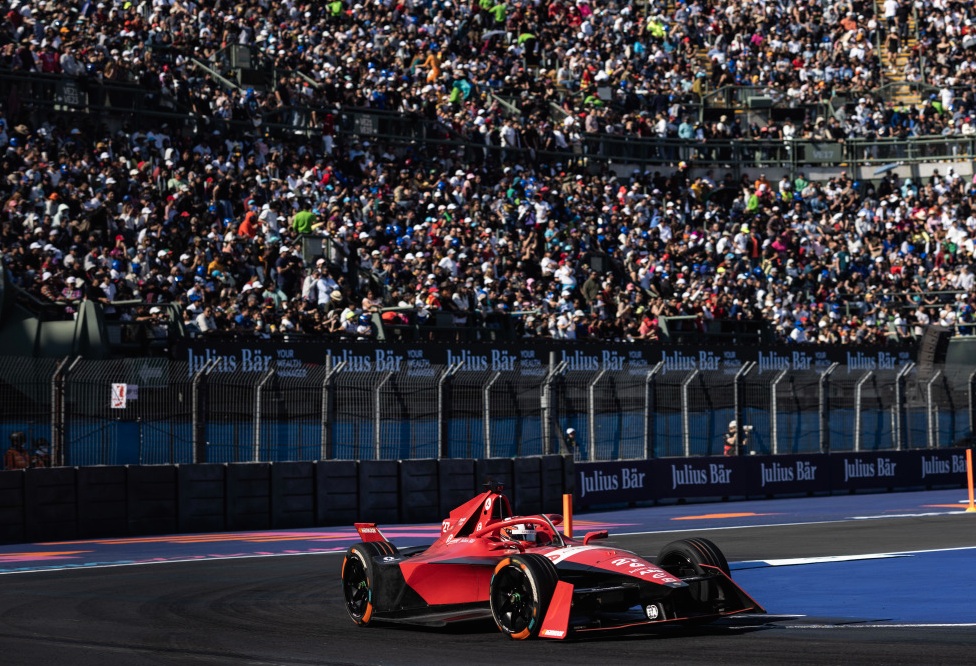
Neither of IndyCar's manufacturers have jumped into all-electric racing yet, but some of the teams have, with Andretti's Jake Dennis winning this season's opener in Mexico City. Andrew Ferraro/Motorsport Images
Q: This is not a complaint email! Sorry, just had to make clear that this is not a Mailbag letter complaining about IndyCar. I figured Robin would have appreciated that!
So, since you guys are more juiced into the inner workings of IndyCar than anybody, I figured you might have a clue as to what direction they might be heading in with the next engine and car formulas now that the 2.6 is scrapped. It seems like one of the major issues that Marshall wrote about a few weeks ago is that the technology is not something that makes new partners want to come in. I also understand that we just can't copy another series -- IndyCar knows that would be a fatal mistake.
So what really is the answer? Have you heard anything that makes you think they understand the direction that they need to go in? Since HPD said that it would never produce another ICE, are we looking at something like a full adoption to electric, something like the new hydrogen engine from Toyota, or perhaps something like the new Mazda rotary engine hybrid concept with a small rotary engine only provides extra power to the batteries?
Hell, why not harken back to the old days and allow parity rules to let every OEM compete with their respective clean technologies to prove who is king? What would be better than using the backdrop of the Indy 500 to test and push clean energy technology to last a grueling 500 miles race without having to fill up or change cars? Part of the public's hesitancy about these technologies is their range, so the marketing opportunity would be huge to sway public opinion. But maybe all of this makes too much sense?
Mike from Columbus
MP: “IndyCar Celebrates Origins With Embrace of New Propulsion Technologies” is the story I’d love to write, Mike. Maybe the answer is to break free from the self-imposed shackles of tight and overly-controlled rules and go back to letting teams and manufacturers show up with the future’s version of turbine-powered cars and then-new applications of turbocharging.
There was a time, long ago, when IndyCar was synonymous with open competition. If you had an idea, and the car passed its safety and inspection, you could go run it. A thought: Instead of writing yet another formula that tells manufacturers they must bring something that fits a narrow scope that IndyCar thinks would be good, maybe IndyCar needs to open its mind, welcome all comes, and let the best ideas win.
Q: My initial reaction when hearing the rules for the LMDh class last year was that they were underwhelming. Sure, new cars are cool, but spec hybrid units and cars that wouldn't be faster or significantly more powerful than the old DPis sounded boring. Then I read that the manufacturers were given narrow drag and downforce numbers to conform to: again, sounds uninteresting. How would we have cars with different design philosophies, like with the Cadillac and Acura DPis? Was this new class destined to be dressed up LMP2s but with hybrid drivetrains?
I was clearly mistaken. After seeing testing reports and watching the GTP 101 videos, Daytona can't get here soon enough! It's remarkable how different these cars look and sound, given the narrow rules. The variety in the engines used might be the most exciting thing about this class. These aren't the pseudo-spec engines of the DP days or the production-based motors of DPi. No, these have been pulled from the far reaches of each manufacturer's motorsports programs: DTM, IndyCar, LMP675/LMP2, who-knows-where for Cadillac, but it's awesome.
For IMSA to have pulled this off in a time where the racing world is going spec-everything is nothing short of miraculous. I never expected something like this again after the insane LMP1 Hybrid days. This era is shaping up to be worthy of the GTP name. I can't wait to see these cars up close and personal in Daytona.
Kyle P, MA
MP: I’m writing this from my Daytona hotel room late on a Sunday night (after my 49ers just beat "America’s Team"…) where the 220-pound heavier and 30-40-percent-less-downforce-having GTP cars eclipsed last year’s DPi pole and came within a half-second of the outright lap record. All with each team saying they’ve invested about 30 minutes in one Roar Before the 24 session trying to figure out how to make the cars go as quickly as possible. When we return next year, that lap record should fall with ease.
Give massive credit on the IMSA side to its president John Doonan, the series’ technical bosses and leaders like Simon Hodgson and Matt Kurdock, and a handful of other dedicated characters who’ve exhausted themselves over the last 24 months while bringing GTP to life amid all of the brutal supply-chain shortages we know about.
Having covered those mind-bending LMP1 Hybrids, I wouldn’t say we’re close in any way with GTP, but given them time. There’s vast potential that’s nowhere near to being unlocked by Acura, BMW, Cadillac, or Porsche.
Q: In response to reader Hisham Bate, Robbie Knievel did jump the IRL field in Texas in 2001 -- sort of. They lined the 20 cars up in two rows, and he jumped down the middle. I was one of the 12 or 13 fans in attendance that day.
Tobey Taylor
MP: I was there and completely forgot about it, Tobey. Thanks for sharing!
Q: With the Daytona 24 Hours fast approaching, I am looking forward to this IMSA season. My question relates to the convergence between IMSA and the ACO. I feel the North American prototypes are not going to be competitive against their European counterparts since it feels like there hasn’t been very much testing and developing time for the cars. Also, the FIA WEC is going with the GTE regulations for one more year in the AM class while IMSA is about to start a second season with GT3-spec cars. If IMSA and the ACO say they are trying to work together, why does it look like the two organizations aren’t exactly on the same page?
Brandon Karsten
MP: They’re aligned, after years of failing, on running their different prototypes together, but that’s about it. They tried to come up with a single prototype formula, but that fell through as the WEC side wanted to do their own thing, but we will have Cadillac and Porsche running their GTP cars (called LMDhs in WEC) against the WEC Hypercar prototypes, so they should be able to create a level playing field. As for GT, GTE/GTLM was the only alignment we had, and with it gone, and IMSA ahead of the curve on going all-in with GT3, we hope they’ll get to go to WEC/Le Mans soon. They’re on the same page in some ways and very different in others. Not sure if that will change.
Q: As a lifelong fan I speak for many fans who are feeling the disappointment of not having Indy Lights champion Linus Lundqvist on the grid at St. Petersburg. Without getting into the details, it feels to fans that he was not treated well financially during the transition of the series, and more importantly, a great champion with tremendous talent does not have a ride. How can we get this young star a seat to showcase his talent, and how soon can we make it happen?
My idea would be to keep him in Indy NXT until the first open seat and get him in an IndyCar in ’23.
If I am missing something, please let me know.
Doug Loeffler
MP: Well, as soon as we raise about $6 million for him and can then find a team that’s willing to run an extra car, and we can get Chevy or Honda to agree to put an extra full-season engine lease in place, we will have Linus on the grid. But until those dominoes fall…
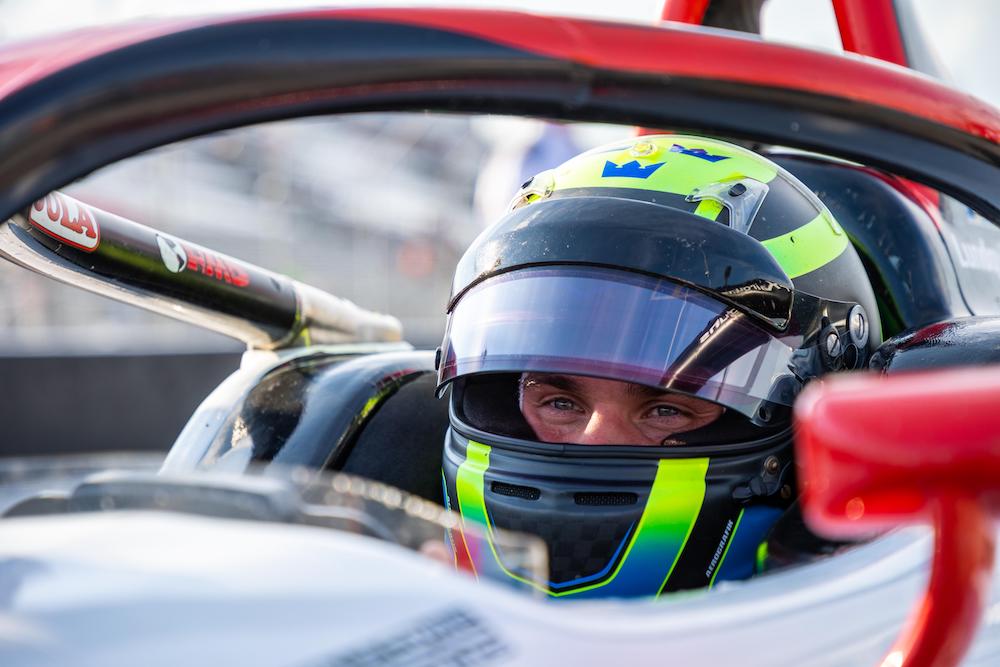
As things stand, Lundqvist will be the first Indy Lights champion since J.K. Vernay in 2010 to not move into IndyCar. Sean Birkle/Penske Entertainment
Q: I was really sorry to hear in one of your responses last week that you tell your wife not to tell people that you cover IndyCar when they ask what you do for a living for fear they’ll ask if that’s NASCAR. I take the opposite approach. I’m proud to be an IndyCar fan. I’ve been to every Indy 500 since 1965, and will be there again in May. I also teach an AP History class to juniors. So when we’re studying the advent of the automobile industry in the early 1900s, I show clips of the 1911 500 and follow it up with a discussion on how IMS was built as a testing ground for cars. I then follow that up with video clips of the 2022 500, including Back Home Again in Indiana, the command to start engines, and the race start and finish. One of my students asked if I also follow F1, and I said somewhat, and that led to a discussion of both IndyCar and F1.
The point is, I embrace IndyCar and the Indy 500 and am sorry you and many of the readers of the Mailbag have become so negative. I’m 71 years old and appreciate the sport and the 500 more than ever. I understand the popularity of NASCAR and F1, but I sincerely hope that you’ll use your passion for IndyCar in a positive way. Thanks for your continued coverage of the sport we love.
Gary, Crawfordsville, IN
MP: There’s no need to feel sorry for me, Gary. Of all the things that matter in my life, this isn’t one of them. I’m also a fan of peace, which I try to create for myself. So, after trying to explain that “IndyCar” is a thing that exists in the world and that it’s not NASCAR and it’s where I’ve spent most of my adult life, and done that awkward and painful explanation at least 100 times, I’m good with not actively creating situations where I need to do it again. I also cover IMSA, and if you think getting the average human to understand IndyCar is not NASCAR, try enlightening them on a series that has a fraction of the coast-to-coast awareness of IndyCar…
Seems like my mentioning of asking my wife to help me avoid those awkward interactions has been turned into an opportunity to judge whether I love IndyCar, which is ridiculous. I wake up every day thinking about it, writing about it, making videos about it, podcasting about it, and doing everything else this job I’ve created for myself entails.
I’m not here to be a cheerleader, but most of what I write is positive because that’s what I’ve seen and experienced. Same for our old pal Miller, who started this mailbag. When times were good, it was reflected in the mailbag. And when they weren’t, it was reflected in the mailbag. If we didn’t care, we would sell out, write shill pieces to suck up to the series, gloss over the problems, and just sing the series’ praises.
And for what it’s worth, I haven’t "become so negative." When there’s positives, I speak positively. Which, over the last decade-plus, is probably 95 percent of the time. And when there’s negatives, and there was an unfortunate cluster of those items to close 2022, I speak negatively. That’s the job.
Q: Very excited about the new GTP class in IMSA this year. I have very much enjoyed the RACER videos covering all the new machinery. I have a question regarding the alignment of LMDh and Hypercar. My understanding of the rules is that, in theory, both could run together in the GTP class. Is there not interest from the manufacturers (or privateers) to field Hypercars in IMSA? I would think for the brands that have a NA presence this would make sense (Toyota, Ferrari). Do you think we will ever see Hypercars running in IMSA?
Alan
MP: I think we will, Alan, but in 2024, at the earliest. I was surprised to see there were no takers in the WEC Hypercar class for this weekend’s Rolex 24 At Daytona. With all the questions regarding reliability for the brand-new GTP cars, it seems like a proven Hypercar model from Toyota (or similar) might have the most favorable odds of scoring the overall win that they’d ever receive.
Q: A strange question: Why are NASCAR driver trouser legs so much wider than the racesuits from drivers in other series?
Willem
KELLY CRANDALL: NASCAR drivers are quite funny about ribbing other drivers when it comes to boot-cut fire suits versus the straight leg that drivers use in open-wheel and other series. Kyle Busch jokingly called Jimmie Johnson a traitor when he went to IndyCar and showed a picture of him with a straight-leg fire suit. NASCAR drivers have always had bigger fire suits: they have more wiggle-room in the car, so to speak.
But there are also practical reasons. In open-wheel, for instance, drivers have said they can’t use a boot cut because they don’t want extra material to interfere with their position in the cockpit. However, it’s becoming more about what a driver prefers and their comfort level. There are NASCAR drivers who are using straight-leg firesuits -- Tyler Reddick and Austin Dillon both wore them at Richard Childress last year, and Justin Haley does at Kaulig Racing.
Q: What is the point in having such restrictive rules in place when there is now a cost cap for each Formula 1 team? The reasons given for previous rule changes -- those not associated with safety -- were always to keep costs under control. I can remember when the rule stipulated every engine must be a V-10 was to keep costs down. With a cost cap in place now, why doesn’t F1 allow teams to bring whatever car they can make, as long as it meets the minimum safety regulations and falls within the allotted cost? Current F1 cars are tediously similar for a supposed non-spec race series.
Travis Eckhoff
CHRIS MEDLAND: You’re not alone in making that argument Travis, as a number of team members have suggested similar in the past. And F1 hasn’t been totally against it happening at some stage, but a big part of the recent regulation changes (don’t forget we’ve only had one year of them) was to ensure cars could follow more closely. That meant being restrictive in a number of areas, because the more freedom they had the more likely that you end up with cars that affect the car behind more and that provide a bigger field spread.
Also, part of the logic not to do that yet was that under the cost cap it would mean it was very hard to copy what someone else had done quickly. So if you had a wildly different car philosophy (because you had the freedom) it would be tougher to completely change that without it taking a number of years due to the cap.
It’s also tougher to set safety regulations if the cars are all potentially completely different, and you might need to then factor in BoP if you have major differences in powertrains etc. Plus, if one powertrain stood out as the most competitive, it might not necessarily be the best in terms of the the global automotive industry, and that’s going to hurt the whole series’ future outlook.
It’s the sort of ideal concept that would take a lot of preparation to try and make work, but F1 has hinted there could be some moves in that direction a bit further down the line once the cost cap has been in place for a number of years and the playing field leveled a bit. (The big teams still have a residual advantage given facilities etc for now).
Q: Many of us Andretti fans are excited to have GM joining the F1 effort. Now that excitement has worn down a bit, it’s time for the unasked questions: How involved will GM be in building cars and power units? Will they develop their own oils, lubricants, and fuels? Will they build the rolling chassis? Will Andretti have input on any of things listed above, or will he just be the race logistics team leader getting everything from race to race?
Tom Ross, Morro Bay, CA
CM: These are exactly the questions F1 and the FIA are going to be asking when an entry bid gets submitted, as they want to know how much commitment and investment is there from GM or if it’s just a sponsorship deal of the Andretti effort.
During the initial press conference, GM president Mark Reuss said “we will support technically any of the aero/chassis/combustion development out of Warren, Michigan, then our racing technical center in Charlotte as well and will support whatever it takes to do that as well for Michael and Andretti Global.”
But Reuss also confirmed it would have a supplied PU initially (from Renault/Alpine) so that makes combustion development unlikely as there was no commitment to build a PU mentioned, and the logistics of building other parts and then having to ship them across to Europe to be assembled at the shop Andretti has there seems inefficient.
From the initial announcements, it appeared Andretti would still retain overall control of running the team and is building the headquarters in Indiana to do that, with GM’s initial input much more limited. But firm explanations and plans would only need to be outlined when the FIA opens up the process that allows for Expressions of Interest to be submitted.
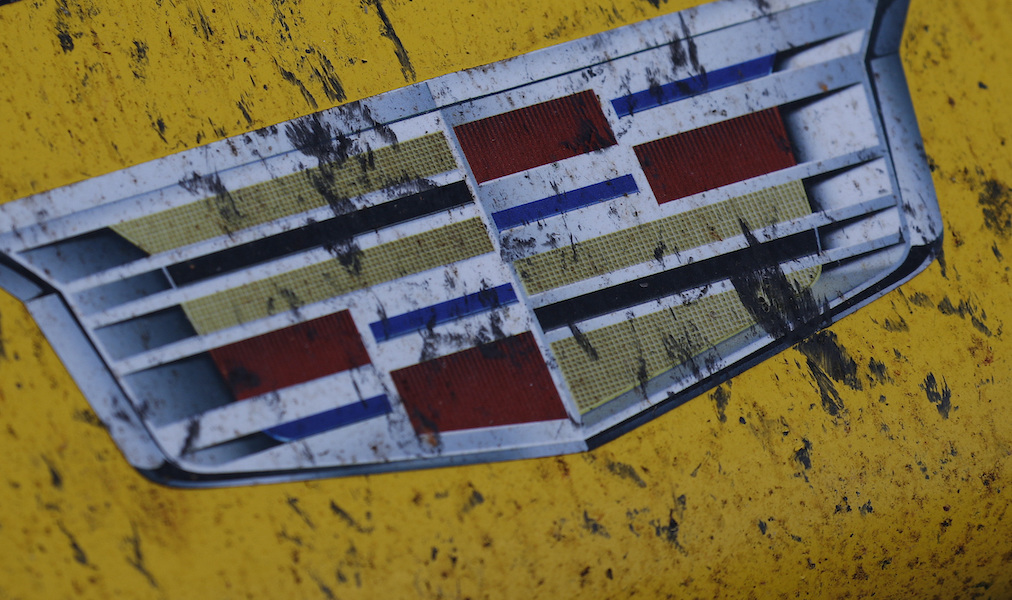
Everyone wants to see a Cadillac badge on an F1 car. (Especially if that badge is a bit cleaner than this one). But F1 will want to know just how much GM has to do with what's beneath the bodywork. Michael Levitt/Motorsport Images
Mark, Floral City, FL
CM: For Jamie, it’s just that she’s not yet got the experience in the right machinery. She’d at least need a year of F3 or F2 and to earn the Super License through it, because for now she only has 15 for winning W Series once (you don’t get to earn them again if you return as champion). So she’s not an option for Williams at this point.
Personally I feel Williams is doing a really good job by letting Jamie continue at her own career pace and still retaining her so that if she evolves into a serious proposition in the next few years she’ll be ready to take the chance, rather than cutting her loose after a couple of seasons.
I’m all for a third car being run by customer teams though! I want more cars on the grid too and more rookies getting a chance, especially in such a long season where there’s a risk of things getting monotonous -- it can really add another dimension to a weekend having a highly-rated rookie getting a shot.
Q: After reading Michael Andretti's recent comments about F1 owners wanting to shut out American teams, should we assume that is exactly what they will now do, and that the new Andretti/GM team proposal is already dead in the water?
CM: Not at all, and this idea that the owners are against American teams is not only completely false, but is also not helping Michael’s cause. They're against all new teams -- the existing ones aren’t happy with the terms that a new team could potentially come in on. But Andretti has been the most public of the potential new teams about its ambitions, and as a result, has drawn the flack.
The project is only dead in the water if Andretti decides it is. There’s two amazing brands that are highly respected that could absolutely get on the grid if they can agree the right terms with F1 (clearly much more easily said than done, I’ll admit), or if they can find a way to purchase an existing team.
THE FINAL WORD
From Robin Miller's Mailbag, 28 January, 2015
Q: To probably no one’s surprise, Kyle Larson performed very well this weekend [ED: At the Rolex 24 At Daytona]. Why did the Chipster decide to put Larson on the stock car path instead of the Indy path? Was it a matter of being able to make more money with stock cars, or was it Larson’s wishes?
Kyle Lantz
ROBIN MILLER: The night in 2011 that Larson swept the USAC Four Crown Nationals at Eldora, I watched in amazement with Tony Stewart from the infield. “This kid has never been here before and he’s only 19 years old,” I kept raving. After he won the midget and sprint features, Stew said he was going to give the kid a check for $10,000 out of his own pocket if he won the Silver Crown race. I said that was great but why don’t you offer him a contract too, because all he wants to be is a World of Outlaws or NASCAR driver and you’ve got teams in both? Tony said he didn’t have any place to put him, but I know he kicked himself later for not signing Larson. As far as Ganassi, he needed a youth movement in NASCAR and somebody to keep the sponsors excited -- he got one. Having said that, Larson wants to run the Indy 500 and I know Chip gets tired of all the lobbying Dario and I do about it, but I think it could happen in 2016.
Presented by:
Marshall Pruett
The 2026 season marks Marshall Pruett's 40th year working in the sport. In his role today for RACER, Pruett covers open-wheel and sports car racing as a writer, reporter, photographer, and filmmaker. In his previous career, he served as a mechanic, engineer, and team manager in a variety of series, including IndyCar, IMSA, and World Challenge.
Read Marshall Pruett's articles
Latest News

Comments
Comments are disabled until you accept Social Networking Cookies. Update cookie preferences
If the dialog doesn't appear, ad-blockers are often the cause; try disabling yours or see our Social Features Support.