Harold Hinson/Getty Images for NASCAR
INTERVIEW: Steve Phelps on how NASCAR is meeting the relevance challenge
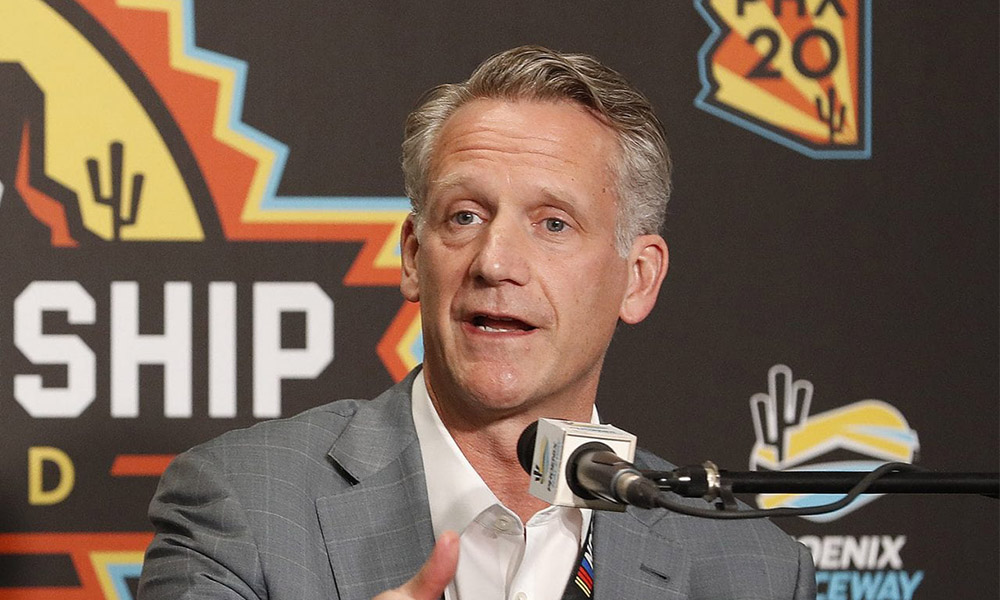
Early in his tenure as NASCAR president, Steve Phelps found that conversations were always about how the sport was struggling.
Four years later, Phelps believes the narrative has changed. And, somehow, NASCAR changed its reputation and relevancy pretty quickly, Phelps going back to a rough 2020 that saw the sport forced to navigate both a pandemic and social justice issues that came to the forefront.
“It used to be, ‘I heard that sport is not doing very good,’” Phelps told RACER during a nearly 30-minute interview. “I don’t hear that anymore. I did hear that in 2018. I think the cool thing is there are many additional opportunities for us to grow.”
In his state of the sport address at the season finale last month, Phelps touched on several topics, such as parity on the track and the first season of the Next Gen car. But as the new year approaches, there are other successes NASCAR executives are relishing in.
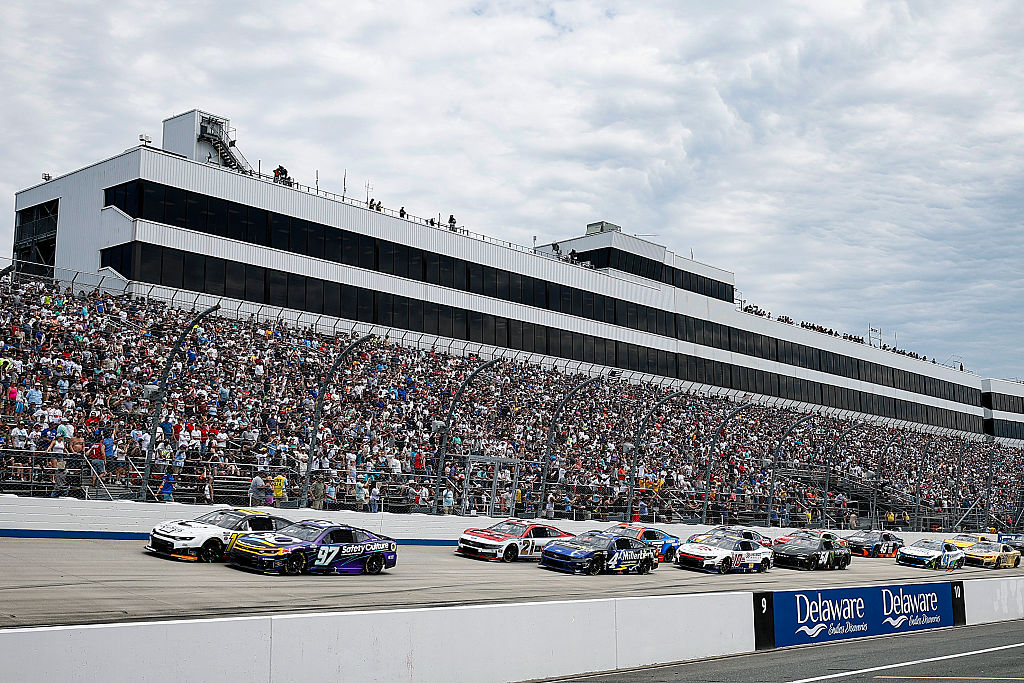
NASCAR added to its official partner list in 2022, including SeatGeek, which now has a presence across all NASCAR-owned tracks and Digital Properties. Viewership continues to increase as the entire season saw a 4% growth and NASCAR-controlled racing series (national, ARCA, IMSA, etc.) account for 80% of all viewing hours in motorsports.
And with fan engagement, NASCAR touted its digital platforms and the metrics. NASCAR Digital Media saw its highest level of consumption since 2015, with an increase of 11% in unique users in 2022.
The 2022 season had eight sold-out races and a spike of 11% in new individual attendees to events. NASCAR also saw its highest multicultural audience numbers since at least 2015.
While there will always be issues to address, overall, NASCAR as a business appears to be in a healthy place going into 2023.
This interview has been condensed for clarity.
Q: NASCAR says it has increased its relevancy. What does that mean, and how has the sport done that?
STEVE PHELPS: Use your relationships -- family, friends, whatever -- and when you talk about NASCAR, I imagine, because I get this a lot, it's like, "Wow, you guys are killing it. It's incredible what you've done." There's a March of Dimes luncheon last Tuesday of Nov. every year and it's attended by all the sports and media executives in this country. Plus, sponsors, plus agencies, plus all the leagues, and we are a bit of a toast of the town at this particular point, and I think that you'll see that (with a recent) Sports Business Journal reader survey about where NASCAR sits in the overall landscape of sports. We won League of the Year for SPJ, and by the way, I think we earned it and deserved it. We never would have done that (before).
So, if you think about us being a relevant brand that's what they're talking about, and it's relevance in a lot of different areas. There was a survey that came at the end of 2020 that showed that NASCAR was one of the top 10 fastest-growing brands with Gen Z. That's insanity to me when you consider how Gen Z considered NASCAR a year earlier. We wouldn't have been in the consideration set. But now we are, and I think that really has to do with the relevancy, and there are other things that we can pull, but that's really what we're talking about.
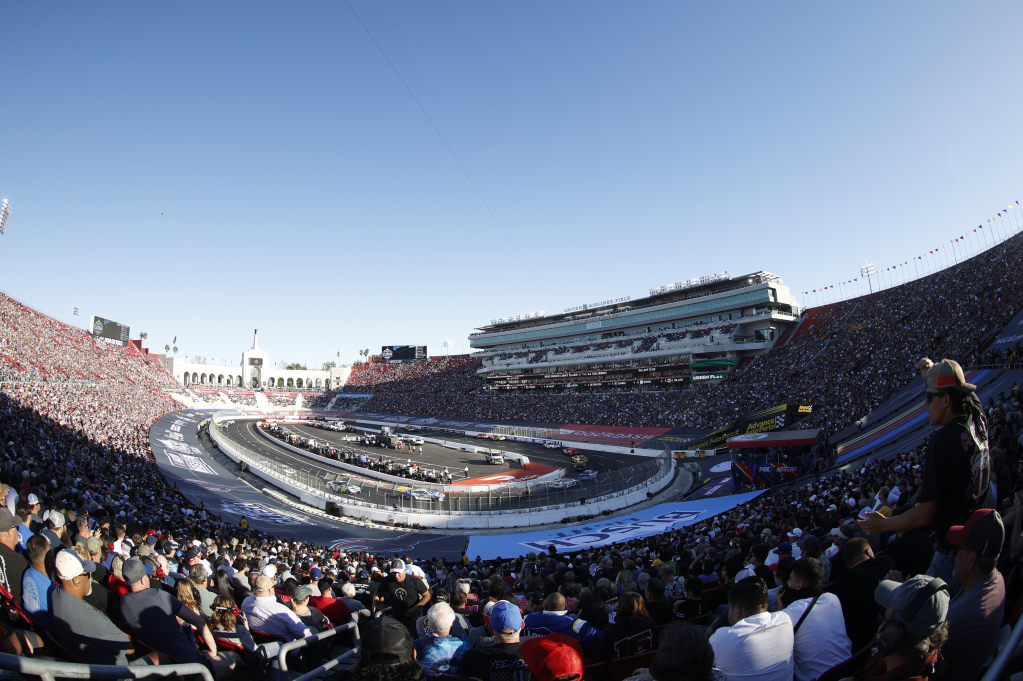
New events like the Busch Clash at the L.A. Coliseum have helped transform NASCAR's appeal, Phelps says. Matt Thacker/Motorsport Images
Q: How do you feel about the health of NASCAR right now?
SP: I think you need to take a step back and look at where things stand with the metrics, the engagement metrics with our race fans and so for us to be the most stable sports property since 2018, I would start there. This has nothing to do with our media rights negotiation, but it does have to do with visibility for our race teams and sponsorship. The digital metrics and social metrics being at all-time highs, those are important things as we think about the overall health of the business. Do we have additional opportunities to get better and to continue growing? I believe the answer is yes. Am I pleased with the progress we've made (through) 2019, 2020 and ’21, and now into ‘22? I would say the answer is yes, as well. This sport is far healthier than it was four or five years ago. But I think there's an opportunity for continued significant growth overall for the sport.
That bodes well for any stakeholder group, whether you're a media partner, whether you're a team, whether you're a sponsor, all with the backdrop of what it means from a sports standpoint, to have the highest quality fan from a sponsorship perspective and that is indisputable. The Sports Business Journal reader survey, where we were (by and large) where you would want to put your money if you're a sponsor. It wasn't even close. And every survey that we do like that, it's the same result. That's what is different about our sport -- that the fan understands the importance of the role sponsorship plays. I can speak to that because I've been in this sport for 17 years, and I spent 13 years at the NFL doing exactly the sponsorship work.
Q: Why is it important for NASCAR to have so many official partners, and how do they help the sport's overall health?
SP: I think if you see a decal on a car, the number of team sponsors there are, frankly, dwarfs how many official partners we have. That would make sense because, on the Cup side, there are somewhere between 36 and 40 cars running every week. I think the fans certainly understand what it means to have their logo on a car. But what does it mean -- and I think it's a fair point -- what does it mean to a fan to have official partners on there? It allows us to re-invest in the sport to make sure the sport continues to grow, and that's what official partners do for the sport overall. Whether it's Coca-Cola doing promotional things or any of the other sponsors that do things promotionally that help drive interest in our sport.
Q: What have been some of the critical points that the sport has looked at that have made it to where you feel like it's healthier than where it was a few years ago?
SP: I think you need to look at what has happened, starting with the product itself. I think our racing, honestly, is better than it was. Coming off what we saw this year with 19 different winners, 20 if you include (Ryan) Blaney at the All-Star Race or 21 if you're going to include Brad (Keselowski) with one of the Duels. That level of parity was brought about by this Next Gen car, and I think the Next Gen car, as we talked about in Phoenix, delivered. But it is much broader than that too.
If you think about NASCAR and what happened in 2020, in particular, it just really changed the trajectory of the sport. Think about 2019. Our ratings were up 3%, we are feeling good about getting back, you had a sitting president come to the Daytona 500 and then COVID. We had some momentum (before) cutting to March 13, everything shuts down and we have nothing. You don't have a plan for getting forward, etc. The fact that we as an industry came together to create something special, which was to get back to being the first sport to competing, I think was an important thing, and then combine that with the first sport that was competing in front of fans in the stands was another.
But I even put that aside and then really look at the changes that NASCAR made with respect to the stance we took on social justice, the banning of the Confederate flag and the diversity, equity and inclusion efforts that have led to new owners, new competitors and new fans that may have looked different, frankly, then what they looked like in 2019. I think that is really important, and I do think it's not just what we did in 2020 but what we have done since that time.
I would suggest two things led to Michael Jordan and Pitbull wanting to come to the sport. One was the Next Gen car itself and that kind of changing model that exists from the Next Gen car and an ownership perspective, and then what does it look like from the stance we took on social justice in our (diversity, equity, and inclusion) efforts? Without those two things happening, I don't think they'd be part of the sport. And frankly, millions of new fans who are watching and coming to races would not be there at all. Or, frankly, employees at NASCAR or new employees to the sport. All of that was what I would call a seismic shift in where NASCAR is today relative to where it was when I did that first state of the sport back in November 2018.
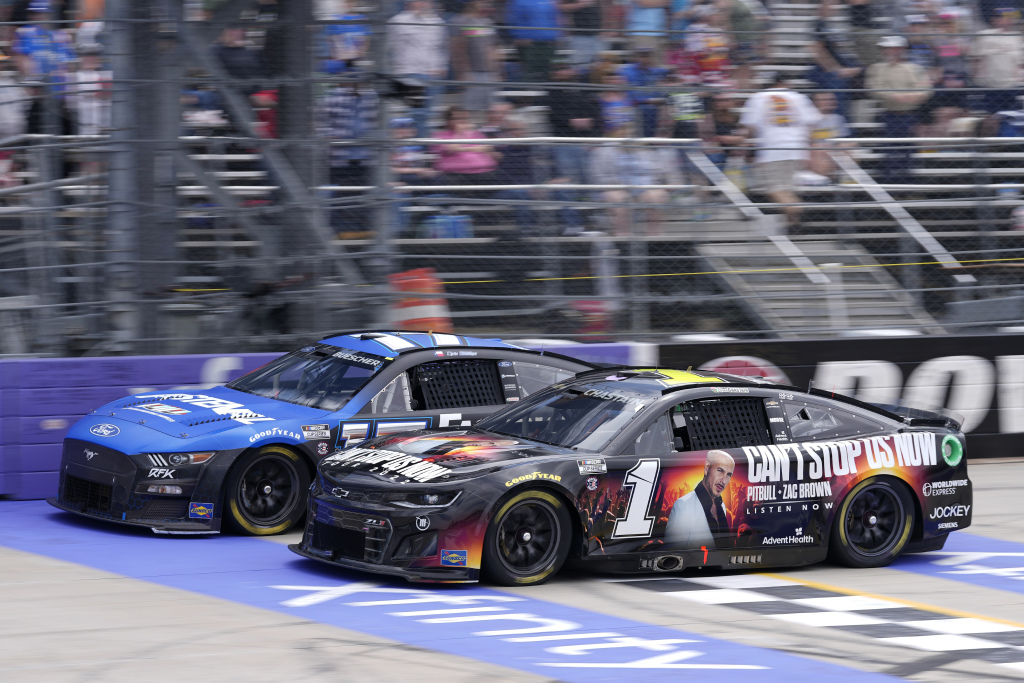
Financial stability offered by the Next Gen car as well as greater social outreach has helped NASCAR attract significant cultural crossover opportunities like Pitbull's involvement with TrackHouse Racing, Phelps believes. Motorsport Images
Q: You’ve said multiple times over the last few years NASCAR has been the most stable sport. How do you measure that?
SP: If you look at where our viewership was in 2018, our viewership now is higher than it was in 2018. We are the only major sport that can say that. I'd like to say it's a 20% lift (but) it's not. There have been single-digit increases since that time. It's this thing called homes using televisions or HUT levels. The HUT levels right now are a third lower than they were, which means that our share -- which is how many people are actually watching the television at that particular time -- is up by more than a third. In the last two years, our share is up 24% or 14% last year and 10% this year. If you look at our ratings, our ratings were up during that time period; I think we're up 4%, which means the balance of it or 19%, we still share from another sports property or entertainment property. That's where the stability comes from.
So not only did we see growth, everyone else did not. And I'm not suggesting we have the gaudy numbers that the NFL posts, but our numbers are strong. If we're just going to look at it with how we do relative to other sports properties that are not the NFL from a volume standpoint, we do really well. Then how do you look at it in a relative standpoint? We're doing even better. The good news for us is there's no hyperbole in that at all; the numbers are the numbers.
Q: When you talk about what has made the sport attractive, how much has NASCAR being more willing to make schedule changes, go to different markets, and have new ideas and innovations helped?
SP: The schedule variation is huge. What we talk about internally all the time that has led to some of the successes that we have seen really is this idea about being bold and innovative in the decision-making that we are making and the plans that we are developing and then implementing. I think that's important. The schedule happens to be one of them. We've seen countless positive schedule changes, whether you're talking about the change to Bristol dirt, or you're talking about the St. Louis event, or you're talking about the Clash at the Coliseum, the Chicago street course, or any number of other scheduled changes that we've made. Our fans, industry, OEMs, and sponsors were starved for these changes, and we're making these changes not just to change but because the fans said that's what they want. And if I'm a stakeholder, give them what they want. It would be foolish not to.
I don't know what our ‘24 schedule is going to look like, but it's going to have more changes in it, for sure. Until such time as the fan base says "enough," we're going to continue to drive change throughout our industry. It's change that really either delivers a better product or brings it to a market where there's significant demand for our racing.
Since we announced the Chicago street course, the number of cities that have reached out to NASCAR is significant, saying, ‘Hey, we would love to have a street course with NASCAR.’ Now, we're going to certainly wait to see how this first street course goes before we would make any commitments anywhere else. It’s going to continue to evolve in terms of what the schedule looks like, but in general, I think what you've seen as a result of schedule variation, what we do from diversity, equity, inclusion standpoint, or any number of the other changes that are happening within the sport, they're bringing a relevance gain in the overall kind of population of this country and around the world. Reputation gains as well that, "Hey, NASCAR is a place where you want to invest your money." NASCAR is a place that, "Hey, I'll give that a shot. Didn't think it was for me. I think I'm wrong. I think it actually is for me." We've seen that repeatedly, whether you're talking about race fans, different cities, companies that wouldn't consider us before, new owners. All of it is due to the very intentional things that we're doing to grow our sport.
Q: Many great things are happening for the sport, but what concerns or items must be improved?
SP: It's a constant journey for improvement. The one thing we got dinged on this year, and I would say deservedly so, was the rear impact safety issues we experienced. But we've got plans for that, so I'm excited that when we get to the Clash that will be something that we won't be talking about. Or I don't think we will anyway. And if we are, we'll continue to make changes to what that is.
From a viewership standpoint, I think our viewership is going to continue. Our attendance last year was really strong relative to where we were the year before and relative to where we were in 2019 and 2018. So continued gains there. I'm not concerned. The economy is a concern, I think, for everybody. What impact is that going to have on our race fans? But I'm very bullish about 2023.
Again, some of the changes -- the schedule changes in particular, but there are others as well that will be meaningful changes that will continue to drive interest in the sport. And then an opportunity for us to come closer together with our race teams and make sure that we have healthy race teams moving forward. It's important for us as a sport to make sure our race teams are healthy.
Kelly Crandall
Kelly has been on the NASCAR beat full-time since 2013, and joined RACER as chief NASCAR writer in 2017. Her work has also appeared in NASCAR.com, the NASCAR Illustrated magazine, and NBC Sports. A corporate communications graduate from Central Penn College, Crandall is a two-time George Cunningham Writer of the Year recipient from the National Motorsports Press Association.
Read Kelly Crandall's articles
Latest News
Comments
Comments are disabled until you accept Social Networking Cookies. Update cookie preferences
If the dialog doesn't appear, ad-blockers are often the cause; try disabling yours or see our Social Features Support.