The RACER Mailbag, October 12
Welcome to the RACER Mailbag. Questions for any of RACER’s writers can be sent to mailbag@racer.com. Due to the high volume of questions received, we can’t guarantee that every letter will be published, but we’ll answer as many as we can. Published questions may be edited for length and clarity. Questions received after 3pm ET each Monday will appear the following week.
Q: I guess I was little impatient with my last email. Great news about Santino Ferrucci driving the No. 14 -- can’t wait for St. Pete. Two young guns is just what Larry and A.J. needed. Any more news from them coming? Like sports car related ?
Bill Cantwell
MARSHALL PRUETT: I agree. Santino is a perfect fit for the Foyt spirit -- its first throwback driver in many years. Benjamin’s has a lot of growth to come, so I’m not placing high expectations on him as a rookie, but the bones of a good IndyCar driver are there. He’s young and simply needs mileage to develop. One thing we can say is he’s been smart in his approach to racing -- hasn’t thrown a ton of cars into the barriers and made a lot of poor decisions in the cockpit.
Not ready to put their names in print, but I’ve been hearing of some supremely talented race engineers and support engineers -- dampers, aero, etc. -- that could be inbound.
The Porsche 963 IMSA GTP deal with Hildebrand went away a little while ago. I’ve had an interview with the new team (not JR; with a different outfit) sitting on my hard drive for a few weeks as we wait for them to formally announce their place as the last customer 963 team for 2023.
Q: In the May 4 Mailbag, you said you sat down with IndyCar during the weekend prior to discuss ideas about weight reduction on the next IndyCar chassis, and added that you might release an article on the topic in the coming weeks. However, as a regular reader of the RACER website, I can't recall seeing such an article. Have I missed it? Or did you you simply not have the opportunity to release it?
Xavier
MP: It’s on my constantly depressing to-do list, which has some long-term entries like the one you mention that I never got to and still need to work into shape. I have a few interviews with the series on the chassis and aero and 2024 engine side to get cranking on here in the coming weeks, Xavier.
Q: A few Mailbags back there was a question about why electric torque guns aren't used for live pit stops. The reason I was always told was that it was fire hazard due to internal electric spark in the guns in the event of the fueler clamp failing and dumping fuel on to the tire changer. Is that not the case?
Kevin
MP: I think we’ll see a switchover to electric guns in the coming years. They aren’t readily visible since most IndyCar races are in the daylight, but in the select evening or night races on the calendar, we do indeed see sparks being thrown on occasion if and when the wheel gun socket touches pit lane while it’s spinning at a high rate of speed. We don’t have fires caused by those sparks, so I wouldn’t anticipate electric guns would be a big new instigator of fuel fires.
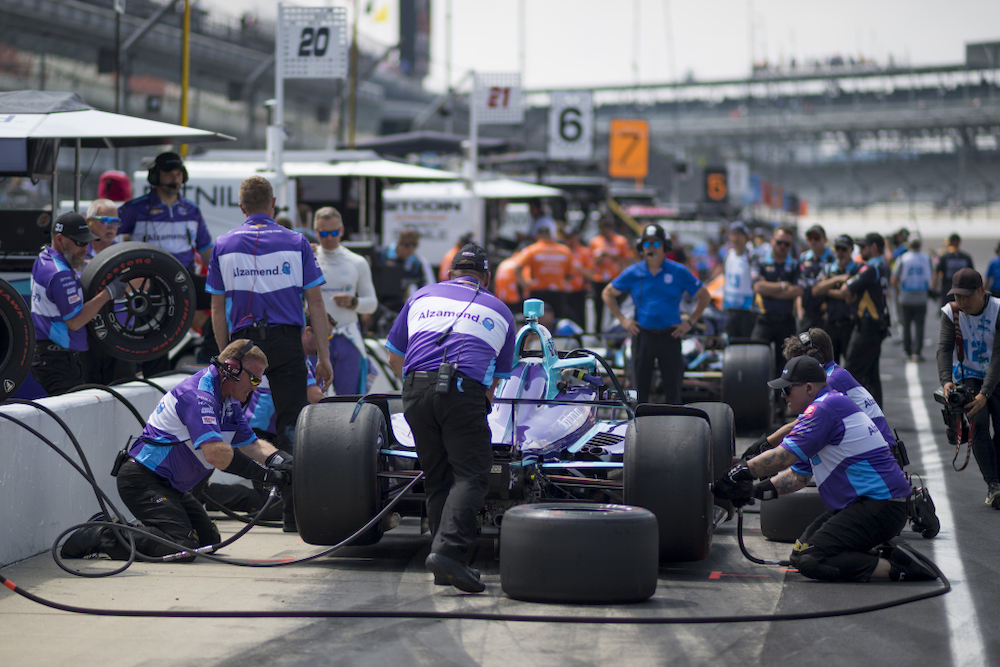
Electric wheel guns are becoming the 2022 Mailbag equivalent to what LED panels were a couple of years ago. Motorsport Images
Q: Two things this week. First, I’ve proposed this in the past, but it has been a few years. My suggestion is, why not add a knowledgeable fan to the broadcast booth sometimes? I think it might add a different perspective and perhaps give some insight into what serious fans want to know about. It could be a contest sort of thing, much like the two-seater program in the IndyCar Series (but these days it seems the celebrities have displaced the regular folks). Often coverage gets diluted somewhat because you don’t want to scare off the novices, but that can leave us diehards in a disappointed state. And by the way, IndyCar, F1, IMSA and NASCAR spoken here (just sayin’).
Second, the pit stop delta. This comes into play in just about every series, albeit in slightly different ways. To me it should be part of the basic pieces of information for every event, along with the other usual pieces of data: weather conditions, track length, track temperature, track records, etc. With so many series offering live timing and scoring information, the delta time should be part of the information. Instead, what often happens is that commentators tend to mention it in this sort of context: “Well, if they pit John Doe now, given the pit stop delta of about XX seconds, he’ll come out between Jim Smith and Tom Jones.” If you didn’t hear it, you will have missed it because you won’t see it in print anywhere. What’s the big secret?
Don Hopings, Cathedral City, CA
MP: The first topic is one I’d never considered, Don, and probably because I’ve never seen fans brought into the booth in any other sport and I’m not sure IndyCar would be the ones to set that trend. Isn’t what you’re referring to -- fan media with blogs/vlogs -- what social media is for? I prefer my professional sports to be presented by professionals. The basic premise of inviting someone with no professional experience into one’s workplace just isn’t done, right? A passionate fan of construction equipment isn’t handed the keys to the crane at the job site, right? That’s what pros are for.
You present a great question on the second topic, and I’ll raise my hand and admit to being part of the problem. I had intentions of doing a standard pre-race video before every IndyCar race last season that laid out the expected number of pit stops, the pit stop windows, and the time spent for a standard pit stop, but for reasons I don’t recall, it failed to launch. I’ll do my best to not fail when the new season arrives.
Q: Have you heard about any discussions or could you ask around to ascertain if there are any future plans to introduce betting on the grounds of the Indianapolis Motor Speedway? I think I remember hearing they did some totally obscure and limited deal with Caesars for this last race -- or am I dreaming? Who can remember -- or who even heard about -- that deal? Another IndyCar marketing gem.
Gambling is legal in Indiana. It would not only generate a new source of revenue (and potentially add more $$$ to that paltry purse) but should generate more interest in IndyCar's crown jewel and, if done right, potentially grow the fan base. Seems like a no-brainer, IMO. Surely we're long past the "family entertainment" argument days. So what's the downside?
Jim, Indy
MP: Yes, we wrote about it in May. Have you tried using Google and a search for "Gambling at the Indianapolis Motor Speedway" to help rediscover the details? That’s what I usually do when I forget such things.
I’d imagine IMS isn’t wanting to start things off big by taking on the building of new betting stations around the property, staffing them with knowledgeable personnel, and handling all of the regulatory and compliance aspects on their own. Much easier to sign a deal with a company like Caesars to do the heavy lifting -- even if it’s in a restricted capacity -- and take a percentage. I’d also guess that once someone is able to convince IMS that big dollars could be generated from a large onsite betting program, it will happen. As I interpreted it, the Caesars deal was a safe baby step to take before potentially going bigger.
Q: I seem to remember that IndyCar teams would get an extra team test if they had an Indy Lights team. If that was true, is that still the case today?
Dan, NE Indiana
MP: Yes, it’s Rule 6.5.5: Indy Lights Series Driver Tests Full-Season Entrants in the NTT INDYCAR SERIES have an additional one (1) Test Day for the purpose of Testing a Current Indy Lights Series Driver(s) in a Car. Participating Current Indy Lights Driver(s) must receive prior INDYCAR approval. If a Team participates with two (2) or fewer Full-Season Entrant(s) in the Indy Lights Series, the Team may use a maximum of two (2) Cars during the Test.
Another thing I recently learned: Along with the $720,000 cut in the new Indy Lights champions’ advancement prize, the previous award of single-day IndyCar tests being given to the winner and second and third in the standings has also been scrapped. I’d heard Linus Lundqvist was due to test with Juncos Hollinger Racing today, but that was shelved when, I’ve heard, no funds were offered to run him. With test days costing in the region of $85,000 to $125,000, that’s another prize-based blow to Indy Lights’ incentive package.
Q: With Robin's unfortunate passing more than a year ago, you were hesitant to take over the Mailbag. With one full IndyCar season under your belt, what are your thoughts and opinions regarding the Mailbag? Has it gone better than expected? Worse? I know it's very time-consuming and I thank you for your commitment every week.
Steve K, Winston, GA
MP: Kind of you to ask, Steve. I think Miller’s somewhere in the universe laughing his ass off at me every week. I was the Mailbag’s editor for the last few years Robin and I were at the SPEED TV network, and trust me, although it wasn’t shared with the audience, Robin’s calls and emails about the submissions that rankled him, confused him, or led him into hilarious rants were what made the time-consuming slog of piecing it together a little bit easier. He enjoyed it because he got to connect with a lot of passionate IndyCar fans, but also accepted that each edition would have some submissions that were either mean, weird, or from another planet. Let’s just say that I’m having the same exact experience as our man Miller…
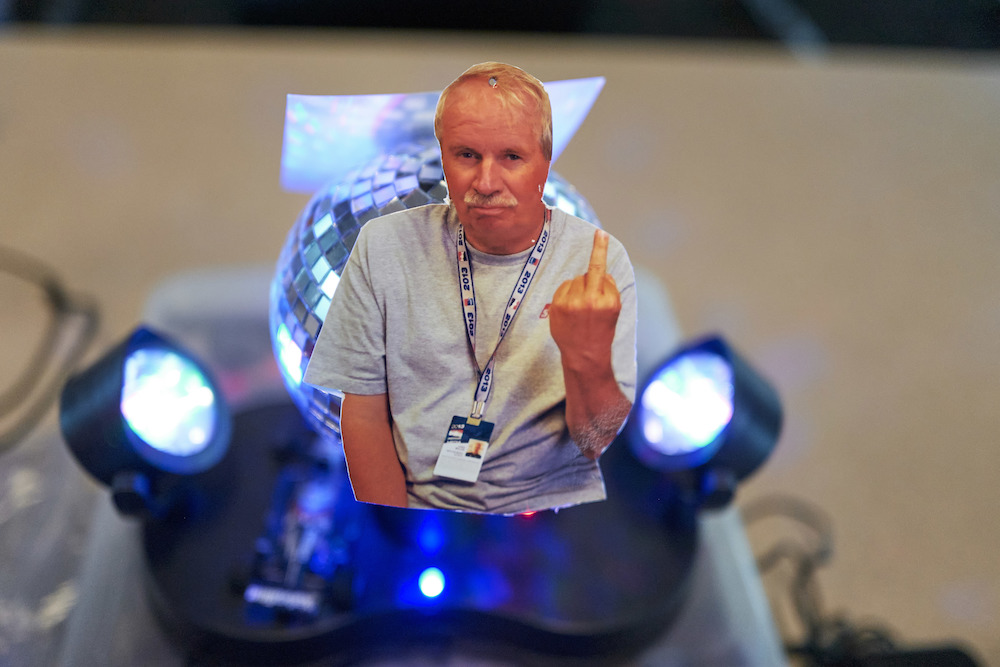
Forever in our hearts. Michael Levitt/Motorsport Images
Q: Seeing Daniel Suarez struggle without his power steering made me wonder how it compares to an IndyCar? I know that IndyCars are lighter and don’t have power steering, but the downforce has to make it difficult as well. Are they similar when a NASCAR loses its power steering, or is one harder to drive than the other? Also, why all the hate for other forms of racing in this Mailbag?
Joe
MP: Hard to answer this one Joe, since I’d need to find a driver who’s raced NASCAR with a power steering failure on a road course and raced in IndyCar without power steering to get a comparison to offer. Conor Daly had his steering fail last weekend and crashed as a result, so he didn’t get a chance to try and do a lap.
But yes, whether it’s the physical weight of the car or weight being loaded onto the car through negative air pressure, it’s weight that needs to be dealt with through the steering wheel.
Best I can offer, though, is how IndyCar drivers train in a much different manner than IMSA or NASCAR drivers who do have power steering. The IndyCar driver works heavily on upper body strength and stamina to deal with 4500-plus pounds of downforce for an entire road or street course race in ways that other drivers do not.
An example: New AlphaTauri F1 driver Nyck de Vries, who tested a MSR IndyCar last year, is said to have been super quick, but also had to do short runs because as a smallish and narrowish guy, he didn’t have the arm and shoulder strength to last more than a handful of laps before the steering wore him out. Given time and changes to his training, I’m sure he’d have been fine, but unless there’s a reason to pack on a bunch of upper body muscle, drivers won’t add the extra weight to their frame.
Q: I believe it was May 2016 and the PWC was at Lime Rock. Bentley factory driver Andrew Palmer had a serious crash and since that day seemingly disappeared. I had the pleasure of meeting him at Barber and was a fan of his and always hoped he would return to racing. Do you have any information on how he has progressed since that moment in May?
Matt Russell, Birmingham, AL
MP: Matt, that’s a great question for which I have no answers. I attempted to do an update on Andrew four or five years ago and learned that his family will go to exceptional lengths to prevent such things from happening.
Q: Tell us something about Robin that none of us knows, but that everyone should know about Mr. Miller.
Steve Coe, Vancouver, WA
MP: In the time since we lost him, I’ve heard from a number of reporters -- mostly outside of racing -- who’ve shared stories of Robin giving advice, trying to help them with connections, etc., and credited him with being an instrumental figure in giving them a push or pointing them in the right direction while launching their careers. I’ve heard that from folks in their early 20s to early 40s, which tells us he was doing this for a long time.
I know how helpful and encouraging he was when I was adding IndyCar coverage to my primary work in sports cars for SPEED, so while it doesn’t come as a surprise to me, his efforts behind the scenes to ensure more sports reporters were being created might not be a thing that folks know about.
I wrote about a number of the other things he did that few knew about in a column I filed on the day he died, so I’m struggling to think of others -- because there are many that shouldn’t since they’d make everybody blush -- that fit the criteria, but I’m sure more will come to mind.
Q: While NASCAR is only my fourth-favorite form of motorsports, I do find it interesting. Many think Richard Petty was the greatest driver in NASCAR history with 200 wins and seven championships, but I strongly disagree. Not taking away from Petty's greatness, but he ran in an era when NASCAR ran as many as 62 races in a season. Petty's father Lee, himself a three-time champion, was the first one to turn NASCAR racing into a full-time team operation. Many of Richard's victories in the first part of his career were against good old boys who worked regular jobs during the week and went racing on the weekends.
I would argue that David Pearson is the greatest of all time. While Petty's victories came in 1,184 races, Pearson's 105 wins came in just 574 races. Pearson won three championships, and most importantly, he never ran a full schedule in any season during his career! Can you imagine any driver in IndyCar, Formula 1, or IMSA winning a championship while running a part-time schedule?
Bob Isabella, Mentor, OH
MARSHALL PRUETT: My father was a huge Pearson fan. Got to meet him once when he was out for the Winston West race at Sears Point; I was five or six, and I swear Pearson was as tall as a mountain as I looked up at him. One of the most vivid racing memories from my childhood, which led to our shared fandom.
No doubt his achievements were mercurial, and no, the idea of a part-time driver winning a championship is unfathomable today.
KELLY CRANDALL: Richard Petty is idolized for many reasons, and one of those is because 200 is a big number. It’s why that statistic is one that drivers like Kyle Busch chase or Jimmie Johnson and Jeff Gordon respect against their own numbers. But there is a case, as you mentioned, that Petty raced a ton, and there were certainly many more races on the schedule. David Pearson also accomplished a tremendous amount in the time he spent on the racetrack.
Trying to compare drivers across generations, formats, depth of field, etc., has never interested me because I don’t think there is an accurate way to say who is the greatest of all time. Every driver competed under a different set of variables. But when you’re looking at what Petty did in his era, it’s impressive. When you look at what Pearson did in his era, it’s impressive. The fact that Pearson never ran a full season and still won championships should certainly give his accomplishments even more respect. There is no way anything like that would ever happen again.
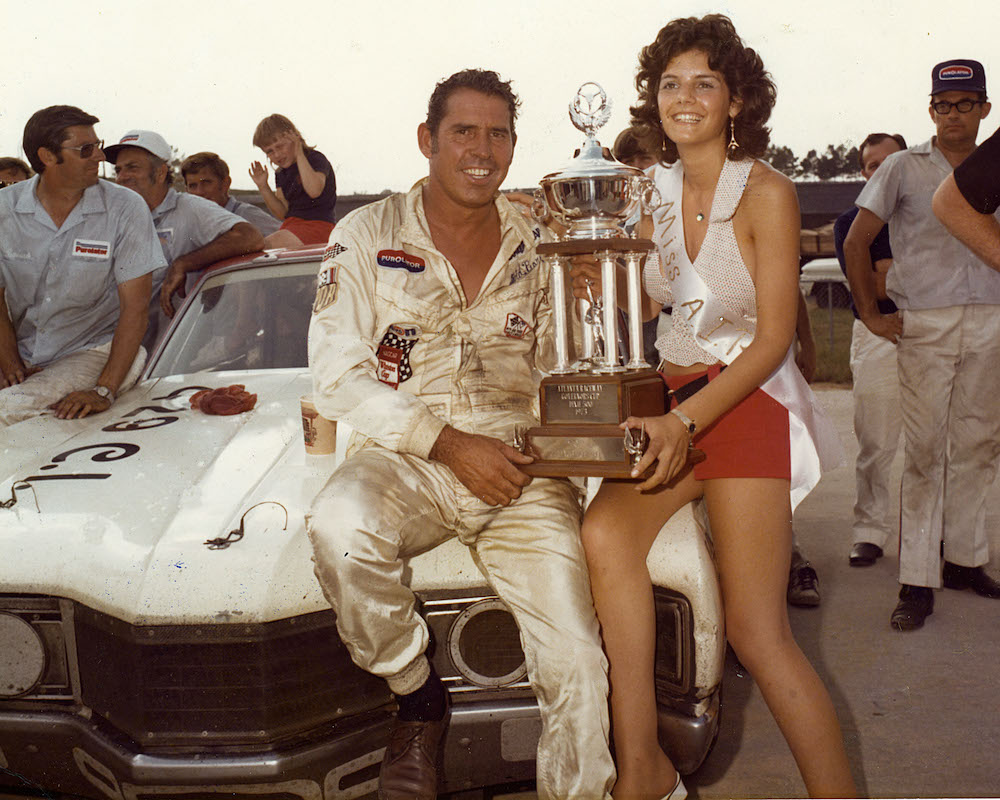
Pearson did a whole lot of winning, including the 1973 Dixie 500. Image by ISC Images & Archives via Getty Images
Q: Let me start out by saying I am not one of the guys who love to dump on NASCAR. Some of my fondest childhood memories are going to Atlanta Motor Speedway with my Dad in the late ’80s and early ’90s. But NASCAR has a really big problem. It isn't that the Next Gen car isn't protecting the drivers the way it should (though that is a serious problem). Nor is it drivers like Denny Hamlin or Kevin Harvick laying blistering criticism on the governing body. NASCAR's biggest problem is that it has been steadily losing its credibility in the eyes of the fans for almost two decades.
Let me lay out what I believe to be the primary causes of this problem:
1) A North Korean level of secrecy. NASCAR keeps its rules and regulations under lock and key. It is literally easier to find information on how an atomic bomb works that it is to find a full copy of the NASCAR Cup Series rule book. Most other racing series including NASCAR-owned IMSA make it as easy as an internet search to find out the rules and regulations. Fans being able to see and understand the rules would greatly help with the frustration fans feel when NASCAR states that driver Crash Enburn and the No. 68 Yaya Mortorsports Team have been fine $50K and 25 drivers’ and owners’ Points for violating NASCAR Rule 14.1265A as noted in the internal TPS Report.
2) Uneven enforcement of the rules. Justin Clements was found to have an illegal intake at Daytona this year and was fined money and points. Denny Hamlin, on the other hand, was DQ'ed and stripped of a win for having several pieces of tape on the front of his car. No explanation was given for the difference in penalties even though they were both considered Level 2 at the time (Clements later won an appeal), but race fans were quick to point out that Hamlin was a vocal critic of the Next Gen Car and how NASCAR has handled the situation.
3) Intimidation tactics with all of the subtlety of a brick through the window. No critique of NASCAR would be complete without mentioning Rule 12.1; Actions Detrimental to Stock Car Racing. This vaguely worded rule is used to punish anyone who draws NASCAR's ire. Another example would be Jeremy Mayfield failing a NASCAR-administered drug test for methamphetamine and 40 minutes later taking another drug test at a certified laboratory that stated his system was free of any drugs. Or more recently, Denny Hamlin backpedaling after having a closed meeting with NASCAR President Steve Phelps days after calling for new leadership in NASCAR.
Which brings us to NASCAR's latest magnum opus of how not to handle a situation when your entire business model is dependent on the goodwill of your audience. According to NASCAR, after the race at Talladega the No. 4 car was randomly chosen to be taken back to NASCAR's tech center for further inspection. During the inspection NASCAR found unapproved modifications to the body of the car and issued a L2 penalty.
Could this be true? Yes, it absolutely could be true. I will even go further and say that it is probably true. Stewart-Hass has been caught doing monkeying with the car before. (Except for the random part. I am completely convinced that NASCAR was looking for something to smack down Harvick with.)
The problem is that I am not certain that it is true, and NASCAR's lack of clarity is giving the tinfoil hat brigade a field day pushing various conspiracies. NASCAR needs to explain exactly what happened and how it happened with a detailed presentation of all of the evidence, and the longer it draws this situation out, the worse this will become.
Rome, Lehman Brothers, and CART/IRL didn't fall because of one huge mistake. They fell because a series of bad decisions snowballed into disaster. NASCAR's ratings have dropped over 60% (losing an average of 5.9 million viewers per race) since the peak in 2005 and the fandom's lost faith in 1 Daytona Blvd is one of the biggest causes.
HB
KC: I’m glad you got all of that off your chest, HB. And since I know NASCAR reads RACER, I’m sure your thoughts will be seen by the appropriate people.
Q: Formula 1 has proven once again that it has no idea how to deal with wet race conditions. In my day the Clerk of the Course would declare that a race would officially be a wet event, mandating that all participants start on rain tires (this, of course, being before the advent of intermediates). No fuss. No muss.
Now, teams are given free rein to start on whatever tires they desire, leading them to make decisions that are sketchy at best for conditions in the early laps. The argument is that starting on inters makes the most strategic sense because drivers will be pitting for them after only a lap or two anyway. Perhaps, but not if the race is stopped due to costly, potentially life-threatening, carnage caused by running inappropriate tires.
Here’s an idea: Race control declares the race wet, thereby mandating all competitors start the race of full wets, keeping them on until such time that RC determines conditions to be safe to switch to intermediates. This would be no different from the officials determining if and when to enable DRS (see Singapore). This would eliminate teams making a mad dash to the pits to change tires after a lap or two.
The race would also commence with the field circulating behind the safety car for a few laps to pump away the heaviest water and dissipate spray.
This proposal certainly can’t be any worse than the fiascos we’ve seen in recent times.
Your thoughts?
John A. Koniak, Staunton, IL
CHRIS MEDLAND: The thing is John, half of that is still in the protocol. race control can declare a race start wet enough that full wet tires must be used by all teams -- exactly as they did to restart the race at Suzuka behind the safety car. They just didn’t deem it wet enough to make that call on the grid, and it was actually the rain getting heavier just before the race start that triggered the issues.
It’s a fine line, because while I agree that you can save the teams from themselves a little, they’re also meant to be the best in the world and balancing the risk-reward. Go quickly but crash and you don’t score any points… Remove the ability for someone to make a smart call and be a hero (see Vettel and Latifi in Suzuka once we got going again) and the racing can get a bit stale.
That said, it’s not a bad idea to state teams can’t switch from the full wet until race control deems it safe enough in certain scenarios. RC should at least have the power to make that call.
I think the big error on Sunday was not aborting the original start and running an extra formation lap or two to understand how bad conditions were. In the end, even if they did follow your suggestion they’d have ended up saying "the spray and visibility is too bad" and red flagging it anyway.
Starting races earlier would certainly help, too. Give them a bigger window to be run in. There are enough TV channels to switch to back-ups or other platforms when there are huge delays, but starting a race 3.5 hours before sunset and being surprised that rain then meant it was gloomy and put everyone under pressure to try and get something going before it gets too dark is counterproductive to me.
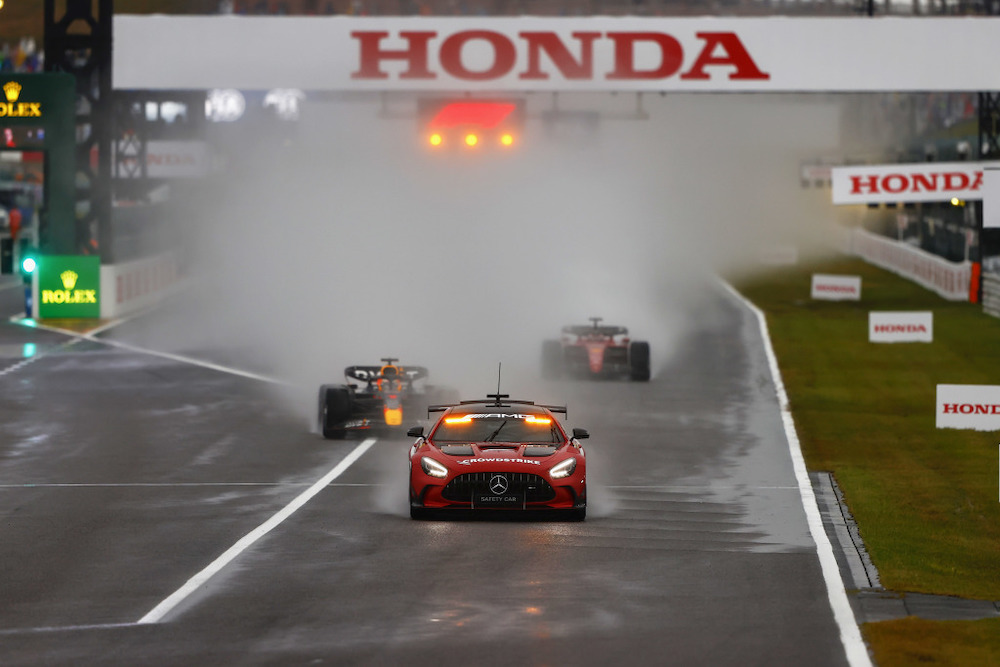
They'll figure it out eventually. Andy Hone/Motorsport Images
Q: So once again a failure of F1's safety system caused an incredibly dangerous situation to occur in Japan whereby Pierre Gasly drove quickly and closely past a recovery vehicle during the first safety car period. Questions I think are worth asking are the following:
Was race control in direct communications with the safety crew performing the recovery so they could be appraised of their progress?
Was race control being apprised of the progress through communications with the responsible marshal stand as a backup so they could be sure of what equipment was deployed and where it was?
If race control had this information, was it being passed on to drivers either directly or to the teams so the drivers knew what equipment was deployed to the track surface?
Do the safety and medical vehicles have GPS locators so their locations can be seen on the moving map by race control and/or the teams themselves?
Do other vehicles like the flatbeds and tractors have GPS locators that can be seen on the moving maps?
Do drivers/teams receive a safety briefing prior to the event giving them insight on where there might be safety vehicles deployed besides the safety and medical car from the pits or other locations such as flatbeds or tractors where large cranes cannot be used to pick up and move vehicles?
Finally, the million dollar question. Will F1 come off their flimsy plywood soapbox where they insist they are the pinnacle of motorsport long enough to visit and learn from a racing series that does all the above? Will they decide its finally time to write a series of regulations that puts safety above the show and implement a complete safety system that protects the drivers, track workers, and fans, even if it is perceived as a detriment to their precious "pinnacle?" There isn't a Senna or Lauda figure around to spearhead this from the driver’s side.
Appreciate your insight. Keep up the good work.
Eric Lawrence
CM: Eric, I put these questions to the FIA who confirmed: “The recovery crews are always in contact with race control -- there are coordinators in charge of the different areas of the track who report back to the Clerk of the Course, who reports to the race director.”
So it goes through a process, because otherwise there would be too many voices speaking at once. And information such as a vehicle on track is usually relayed to teams for them to inform drivers.
There aren’t any GPS locators on the recovery vehicles, but there are on the safety car and medical car, as these can actually trigger the timing loops. Where safety and recovery vehicles are located and might be used is the sort of information that is gathered by teams on track walks to help them be aware of incidents that might lead to Safety cars versus yellow flags etc. They will see where the escape roads are and the recovery locations are marked on the trackside barriers with painted sections. The FIA says they are also reminded of these safety elements every weekend during the drivers' briefing.
As worrying as Sunday’s situation was, however, I’d suggest F1’s safety record is excellent. There are obvious areas that need improving -- particularly when it comes to the standard of marshaling at some newer venues given you can’t realistically have the same set of track workers at every venue around the world (there are hundreds and hundreds) -- but for the number of races that take place and scale of some accidents, I don’t think you can say safety isn’t taken seriously.
Yes it can always be better, and I’m sure there are things F1 could learn from IndyCar (it does look -- SAFER barriers have become more widely used in F1 on newer tracks), but I think the main thing it needs to do is make decisions more quickly. It feels like it has developed a tendency to take too long to throw a red flag or call on the safety car when it’s obvious one will be needed.
Q: There has been a lot of noise about how Super License points are awarded and in particular, how they are awarded to IndyCar drivers. With 40 points awarded to the IndyCar champion and points accrual over three seasons, there is a clear path to F1 from IndyCar. However, the points drop off quickly down the order. What role does the lack of standing starts in IndyCar have in the FIA's perceived value of IndyCar drivers' experience and abilities on the road to Formula 1?
IndyCar tried to implement standing starts on selected road courses at one time, but what ensued was mostly just a bunch of wrecked race cars. Standing starts ended with the public relations statement that there were issues with the "launch." There certainly were, as the drivers couldn't seem to keep from having large and expensive wrecks with each other and the owners quickly said no more as the costs of damage and insurance soared for the teams. So how does this inability to successfully have standing starts like the most or all of other F1 feeder series weigh when it comes to awarding Super License points?
Irving Frankfort, Merrillville, IN
CM: I’ll admit, I can’t tell you how heavily it weighs, but I do think it’s an aspect. The most heavily awarded championships are those that the FIA have specifically designed to prepare drivers for Formula 1, predominantly to ensure a driver knows the best way to chase a career in F1 given how expensive motorsport is.
Your point also just highlights the fact that IndyCar is not FIA-run, and while that’s certainly not a bad thing, you can understand how they need to then distance Super License points slightly from the championships they have full control over, because they can’t guarantee consistency.
The big question would be, if the FIA did have items such as standing starts that it wanted championships to have, would IndyCar be better or worse for doing it? I think IndyCar needs to focus on being the best series it can be, and not adapt to try and help with Super License points if it’s not in its best interests.
Q: Has there ever been any discussions about F1 doing what IndyCar does for qualifying, which is to generally move the timing line back before pit in, thereby reducing the number of laps required for a qualifying run and providing opportunity for additional runs? Always felt what F1 does is old school in this area.
Jeff Smith, State College, PA
CM: I think we had this question recently and I wasn’t aware of it ever being discussed, partly because there’s a feeling the current qualifying format works well. I remember all the changes from an hour long to 12 laps to single-lap shootouts and when it came up with Q1-Q2-Q3 it has worked pretty much everywhere, so if it ain’t broke…
That said, I also don’t think there’s anything that would prevent this being considered.
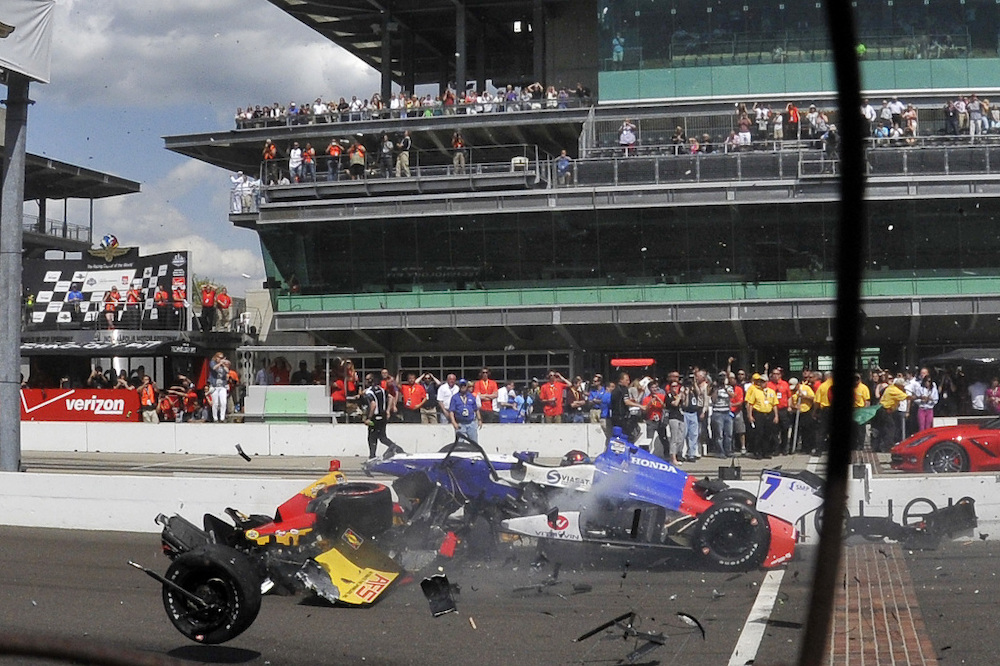
IndyCar killed off standing starts because the launch systems needed further development, but incidents like the pile-up at the start of the 2014 Indy GP helped speed the decision along. Geoffrey Miller/Motorsport Images
Q: Whatever they are paying Ocon, they should double it.
Doug in Coronado, CA
CM: Ha ha, well said Doug. I admire Fernando Alonso a lot and his comments in Singapore were partly pointed at Esteban, because Fernando is regularly much quicker at the start of a weekend just like Max Verstappen always seems to be fastest of the field right from the first lap of FP1.
But you don’t get points for that -- in fact, you don’t get anything for that except pride -- and with the way a weekend builds, I’m always impressed at how calmly someone like Esteban pieces it all together to be so quick by Q3 and in the race. He’s finding some excellent consistency and to be this closely matched with Fernando is very impressive.
THE FINAL WORD
From Robin Miller's Mailbag, October 12, 2016
Q: Tony Adamowicz passed away earlier this week. Just wondered if you knew him or had any stories?
M. Strebbin, Los Angeles
ROBIN MILLER: I did have the pleasure of knowing Tony A to Z, and there was no finer person. He was a damn fine road racer who also competed in the inaugural Cannonball Baker Sea-to-Shining Sea Memorial Trophy Dash. But he was victimized in one of the worst flim-flams ever at the Indianapolis 500. As a rookie in 1970 and teammate to Johnny Rutherford, he raised his hand (as per protocol back then) to begin his qualifying run on Pole Day but saw the yellow light still on as he roared into Turn 1 so he backed off. Then USAC, which hadn’t seen him raise his hand, realized he had started his run so the green light came back on as he coasted through the short chute. He got back in the throttle and completed his first lap at 160.8 before reeling off the next three at 165.8, 166.4 and 166.3 to give him an average of 164.820mph. Afterwards, USAC claimed it was a “racing situation” and since nobody filed a protest, Adamowicz wasn’t given another shot to requalify. He got bumped on the third day of time trials and never came back.
Presented by:

Marshall Pruett
The 2026 season marks Marshall Pruett's 40th year working in the sport. In his role today for RACER, Pruett covers open-wheel and sports car racing as a writer, reporter, photographer, and filmmaker. In his previous career, he served as a mechanic, engineer, and team manager in a variety of series, including IndyCar, IMSA, and World Challenge.
Read Marshall Pruett's articles
Latest News
Comments
Comments are disabled until you accept Social Networking Cookies. Update cookie preferences
If the dialog doesn't appear, ad-blockers are often the cause; try disabling yours or see our Social Features Support.