Michael Levitt/Lumen
PRUETT: IndyCar 2022, driver-by-driver, part 1
I hate season previews. I hate top 10 lists. And I hate making predictions because who the hell knows which driver is going to win the Indy 500, much less Round 2 at Iowa?
Instead, I figured it was time to turn a yearly conversation I had with Robin Miller into the basis of a column. We’d spend hours during the offseason pontificating about what each driver needed to hold onto their jobs, change their fortunes, break through to stardom, or keep kicking ass.
So starting with the defending champ and working down the finishing order of the 2021 standings with newcomers added in at the bottom, here’s a look at the various needs of the IndyCar field ahead of a new season.
What Alex Palou needs this season is to prove 2021 wasn’t a fluke.
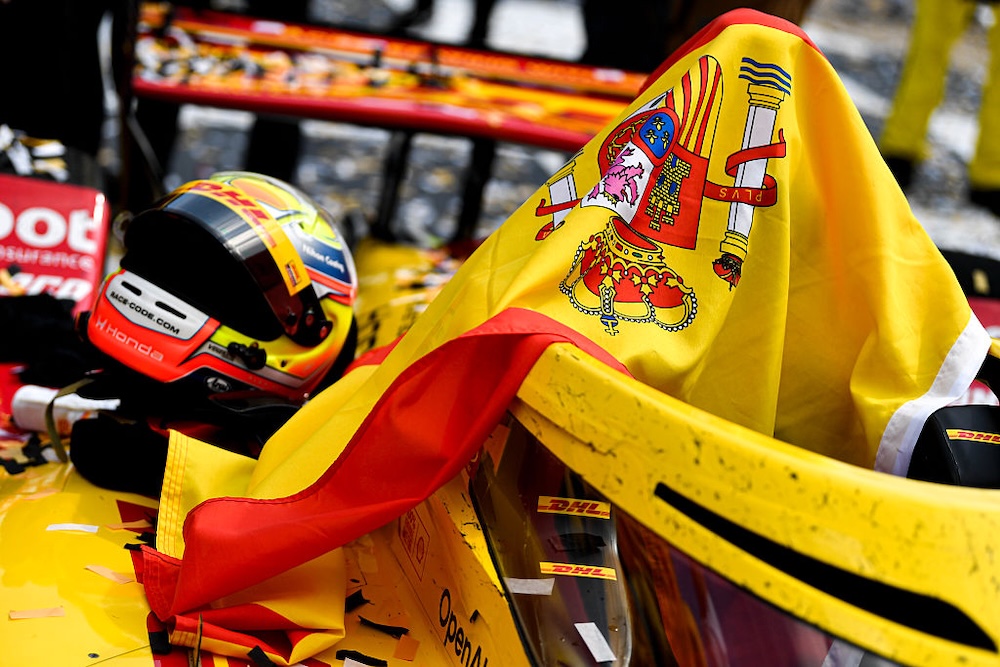
Who predicted the Spaniard would win races, much less the championship in his first season with Chip Ganassi Racing? Nobody. Not even his team. And yet on his debut as Scott Dixon’s teammate, the soft-spoken racer proved he was up to the mental challenge in going head-to-head with the imposing six-time champ. We knew Palou had speed, but the rest of his game was largely unproven. That’s no longer the case.
Palou won more races, earned more podiums, and on average, had better qualifying performances than IndyCar’s standard-bearer. But can Palou’s wild breakthrough year be repeated? That’s his mission. He’s done it once and become a one-time champion like 40 others since the dawn of IndyCar racing. It’s a wonderful thing, but not exactly unique. Is Palou capable of breaking free from the pack of one-timers? And if a second championship isn’t in the offering, can he maintain his new place atop Ganassi’s IndyCar driver rotation? Or will 2022 deliver a market correction of sorts, with Dixon reclaiming his status as CGR’s top dog?
As much as the new season will confirm where Palou belongs on Ganassi’s depth chart, his upcoming performances will also tell us whether he’s ready to lead the organization into the future. Palou’s either going to establish himself as the new and unmovable P1 within the program or fall behind Dixon. One way or the other, something significant will be changing by the end of the season.
What Josef Newgarden needs this season is to find chemistry with his new race engineer.
Team Penske’s main title contender welcomes his third race engineer since joining the team in 2017 and has the esteemed Eric Leichtle as the new person in charge of dialing speed and drivability into the No. 2 Chevy. Wiith IndyCar’s highly restrictive testing policies, the two-time champ and his engineer – who’s never engineered an IndyCar in a race-– have no alternative other than trying to form a bond as the season gets under way.
The good thing is that prior to Penske, Newgarden worked with a few different IndyCar engineers at Sarah Fisher Hartman Racing and Ed Carpenter Racing. So while a change of race engineers isn’t always optimal, Newgarden’s been through the routine many times and he and Leichtle should find their stride early in the season. But, and here’s the part that could be problematic, if it does take a few rounds to get the most out of each other, will Newgarden be playing from behind in the championship once again, just as he did last year after crashing out in the first race?
Newgarden’s status as one of IndyCar’s best of the best hasn’t changed. But the theme to follow for his season is how quickly he and Leichtle can form a race-winning combination. It could happen at St Pete, or it might not happen until later in the year. But Newgarden’s chances of winning his third title rest upon the speed at which this relationship develops.
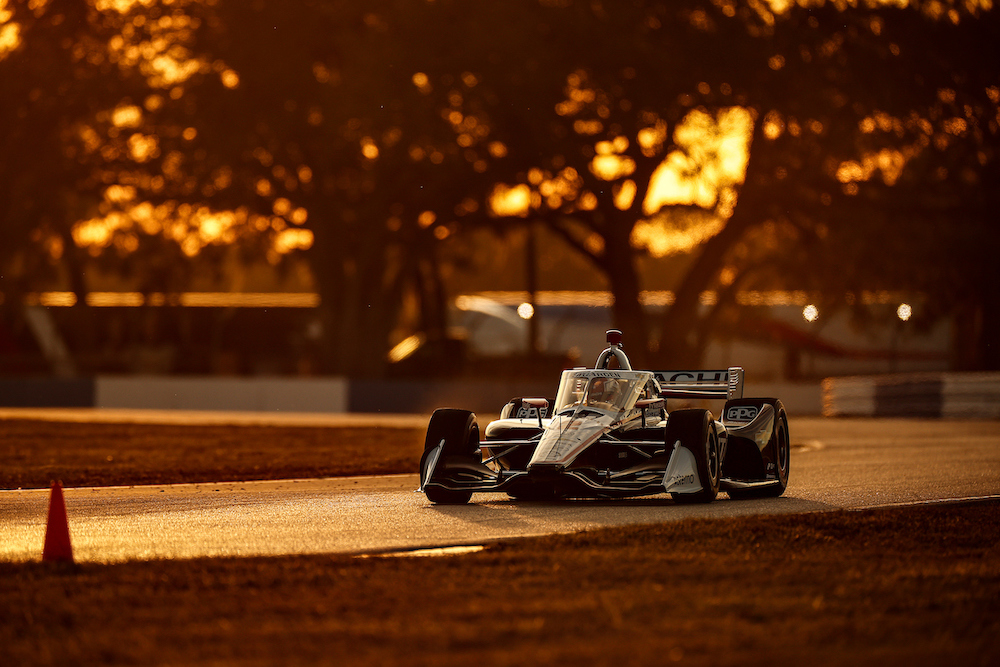
New year, new engineer for Josef Newgarden. But the two-time champion has been down this road before. Mike Levitt/Lumen
What Pato O’Ward needs this season is to make friends with 99.9 percent.
The thing that makes the Arrow McLaren SP driver so spectacular to watch is often the same thing that limits his race results. It would be easy to believe O’Ward took Ricky Bobby’s advice to heart, but as his team is hoping to impart upon the mercurial talent, you aren’t last if you aren’t first.
The piece of advice that would go a long way for the IndyCar star is that less is often more. O’Ward’s relentless aggression is an amazing thing to witness, and when he has a car that’s capable of decimating the field, that’s precisely what the young Mexican uses to distinguish himself from everyone else in IndyCar. Oversteer is an ally, and with some of the fastest hands in the series, O’Ward keeps his No. 5 Chevy dancing through the corners in ways that most cannot fathom.
And that’s where dialing the intensity back to 99.9 percent would do wonders for O’Ward whenever his car lacks the ability to win. He knows it’s not always in his best interest to be in maximum-attack mode, and made improvements here last season, but there are more gains to be made. Embracing the occasional need for less will bring more points, and with more points comes a stronger championship run and less of a need to drive beyond 100 percent in every race.
A related need for O’Ward can be found in joining the other frontrunners who are borderline obsessive-compulsive when it comes to spending time in the engineering office at the events. There’s a direct correlation between the drivers who are found in the front of the transporters pouring over data with their engineers long after the sun has gone down, and those who have earned championships.
What Scott Dixon needs this season is to prove the last was a fluke.
Dixon set an impossible standard to follow after leading the 2020 championship from start to finish on the way to his sixth title. He led the 2021 championship for three races, from Texas 1 through the Indy GP, but fell to second, then third, and took a hit from behind at Gateway that left him in fourth for the remainder of the season.
In a normal year, Dixon and the Chip Ganassi Racing team would be disappointed to have the No. 9 Honda lead the team to fourth, but it wasn’t a normal season as Palou won the opening round, never fell below third in the standings — in fact, he led the standings 10 times throughout the year — and did something rare by displacing Dixon and winning the title for CGR.
It’s often hard to pinpoint the moment when a changing of the guard happens among established stars and their understudies. Did we see the first signs of this in 2021, or is Dixon primed to claim his seventh championship and put that notion to rest?
What Colton Herta’s needs this season is to break free from his binary results.
When he wins, which he’s done six times in three seasons, it tends to happen in bold and spectacular fashion. But when Herta isn’t winning, he’s rarely close to the podium and raking in handfuls of points. For Herta, the binary output must stop; big wins can’t be followed by distant finishes that conspire against winning the title.
From the 16 races in 2021, Herta placed inside the top five at seven events, with three coming via victory. And while some of the poor finishes certainly weren’t his fault — he opened the year with a P22 after being taken out on the first lap by Josef Newgarden — it’s hard to ignore the other nine rounds where his best result was an eigth and the other eight were well outside the top 10.
The need is similar in some way to that of O’Ward, but Herta isn’t punishing his car at all times. The fix here is somewhat intangible; armed with one of the best race engineers in the paddock, Herta and Nathan O’Rourke are a formidable duo, and when they land upon the right setup, they can’t be topped. The key to a championship lies in getting more out of the car — and strategy — when winning isn’t on the cards.
In a growing trend for CGR drivers, what Marcus Ericsson needs this season is to prove 2021 wasn’t a fluke.
Many of the same things said about Palou apply to Ericsson, who wasn’t satisfied with one win last year and went on to capture a second. And in both instances, something weird or wild was involved, with Detroit race leader Will Power tripping his ECU into an endless loop that left his car sitting stationary while the Swede led the field away from the red flag and won in his absence. And then we had the bizarre collision with Sebastien Bourdais to open Nashville that sent Ericsson flying, broke his nose free from the car, and seemingly ended his day with a DNF until the wings dislodged from beneath his front tires which allowed him to drive back to pit lane for repairs. And if that wasn’t enough, he cycled to the lead, had Herta in hot pursuit, and watched in his mirrors as the former race leader stuffed it into the wall and guaranteed his second win would happen.
If last year is a guide, whenever something strange happens in a race, look for Ericsson to come out on top. But since he can’t rely on the misfortune of others to reach victory lane, the need here is to get his next win the old-fashioned way. Entering his fourth IndyCar season, Ericsson has made significant improvements each year: he earned 10 top 10 finishes on the way to sixth in the championship, which is impressive. What he hasn’t done, though, is earn a pole, or carve through the leaders to stand atop the podium without the assistance of adversity. To hold onto sixth, or move a few notches higher in the standings, Ericsson will need to continue living in the top 10 and take charge of a few events this season.
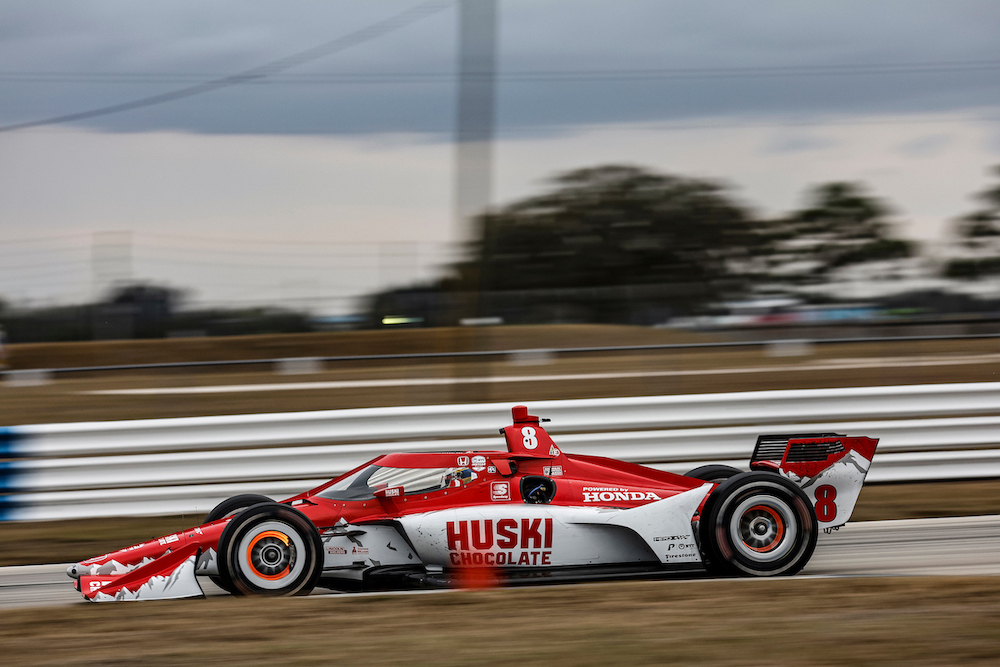
Ericsson will be looking to build on a stout 2021. Mike Levitt/Lumen
What Graham Rahal needs this season is the same thing he’s needed in previous seasons, and that’s to slay whatever’s keeping him from achieving better qualifying positions.
On average, he’s one of IndyCar’s biggest movers on race day. Starts 18th, finishes seventh. Starts 13th, finishes fifth. Starts 20th, finishes fifth. Starts 12th, finishes fourth. Those are actual stats from last season, and there are more like them that confirm how much of an animal Rahal has become between the green and checkered flags.
And just as he’s said numerous times and we’ve written plenty of times, imagine if Rahal had less work to do in the races to make up for the routine failings in qualifying? From 16 races, he started outside the top 10 a stunning 10 times last year, and despite the self-induced difficulties, Rahal fired his No. 15 Honda forward to finish inside the top 10… 10 times last year. No leading driver covers more distance than Rahal, and that’s not a good thing.
He made the Firestone Fast Six just once in 2021; how many wins he could earn if passing half the field was not required at most events? Whether it’s a mental thing or an engineering thing or a combination of the two, fixing qualifying would transform Rahal into an immediate championship player.
Looking down the road, as he enters his 16th IndyCar season, how many years does Rahal have left to improve the one aspect of his game that continually limits his ultimate potential?
What Simon Pagenaud needs this season is to rediscover 2012.
IndyCar’s 2016 champion and 2019 Indy 500 is everything the Meyer Shank Racing team needs as it expands to two full-time cars. What it doesn’t need, though, is the 2016 or 2019 versions of the Frenchman: MSR needs the guy who turned the little Schmidt Hamilton Motorsports team into an instant contender upon his arrival in 2012.
As a one-car team, SHM — now Arrow McLaren SP — came into 2012 as an unheralded operation that lived in the midfield. All that changed with Pagenaud installed for his rookie season. Teamed with race engineer Ben Bretzman, the two transformed the program, set new standards for engineering excellence, demanded more from the mechanical side, the race strategy side, and shaped the modest outfit into a giant-killing machine. From 2012-2014, Pagenaud placed fifth, third, and fifth.
Now, MSR needs the Pagenaud from a decade ago to perform the same root-and-branch improvements with the defending Indy 500 winners. He’ll work with the accomplished Garrett Mothersead on the engineering side, and the two are already on the same page. That bodes well for MSR as it looks to join Ganassi, Penske, Andretti, and AMSP at the sharp end of the grid.
Even if they get off to a good start, the best thing Pagenaud can do for his new team is to be a disruptor, to challenge every aspect of how they make decisions and go racing and keep pushing until its full potential is achieved. He did it with SHM. Can he do it with MSR, and without Bretzman at his side?
What Will Power needs this season is to rediscover 2014.
Like his former Team Penske teammate Pagenaud, Power would also benefit from channeling the mindset and performances from years ago. In his case, it’s the approach and output that delivered his lone IndyCar championship back in 2014, which was built around consistency.
In 2021, Power experienced his worst year since joining Penske in 2009. It was the wrong kind of consistency that ruined his season: half of the races resulted in terrible finishing positions. A win and four podiums did salvage ninth in the championship, but prior to 2021, his worst output as a Penske full-timer was fifth.
With two years left on his contract with Team Penske, how many chances does Power have to insert himself into the championship conversation? The answer is obvious, and yes, technically, there is another ‘tomorrow’ for Power in 2023, but for his sake, the swift return of effective consistency is where the twilight of his IndyCar career reaches a fulfilling conclusion.
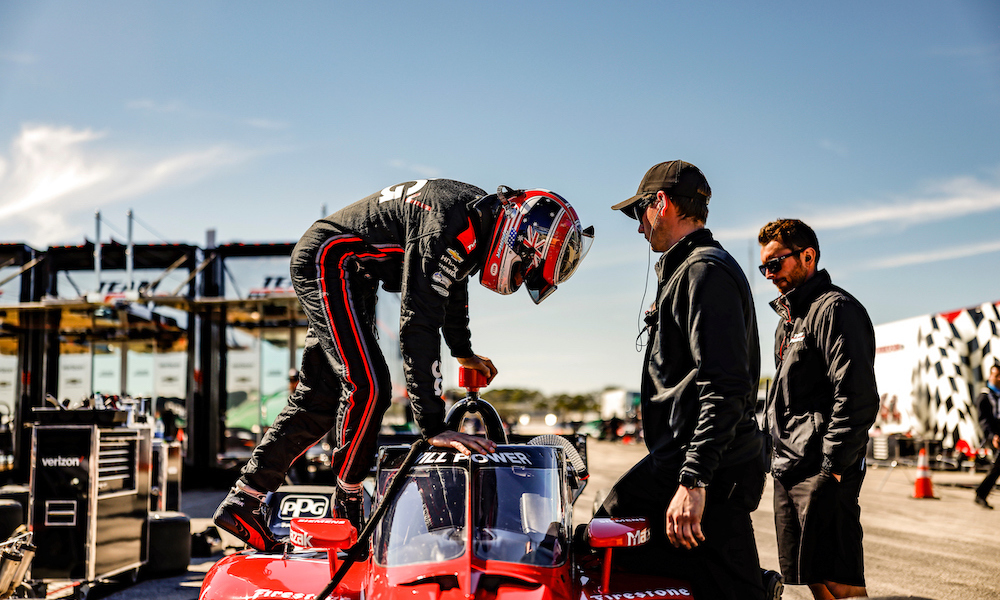
Power needs to party like its 2014. Mike Levitt/Motorsport Images
What Alexander Rossi needs this season is to use the ‘neuralyzer’ from the Men In Black movies.
Wipe his recent memories clear, go out and drive like 2020-2021 never took place, and be the same guy who took second in the 2018 championship and third in 2019.
Pecking orders matter. Since Colton Herta arrived at Andretti Autosport two years ago, the depth chart changed with Rossi falling to second in the team, and the new challenge is to keep Romain Grosjean from asserting himself at Rossi’s expense. I can’t say if the 30-year-old has the extra tenth of a second or two that Herta pulls out on a regular basis, but I’m confident Rossi remains capable of winning races and contending for titles.
It’s a pivotal year in Rossi’s IndyCar career as he completes his current contract with Andretti. Other teams are interested in his services and being second behind Herta hasn’t lowered his value. If he can change that back to being first, he’ll have all the major teams engaged in a bidding war. But if that becomes third behind Herta and Grosjean by midseason, it could have dire consequences on Rossi’s options and value on the free agent market. Based on all he demonstrated in 2018-2019, it’s hard to fathom how Rossi would experience another lost year.
What Takuma Sato needs this season is to enjoy his extended IndyCar career.
At 45 years old, the two-time Indy 500 winner has come full circle. He arrived in the series in 2010 with a solid midfield program at KV Racing, moved to Rahal Letterman Lanigan Racing for a season and nearly won his first Indy 500, then switched to A.J. Foyt Racing in 2013 where he won at Long Beach but rarely factored in the final standings. Seven years in, his best championship position was 13th, and with a one-year deal at Andretti Autosport, he finally landed with one of the Big 3 IndyCar teams, scored big at Indy, and took eighth in the 2017 points.
The last four years were with RLL, where he won at least one race per season in the first three tours, captured another Indy 500 in 2020, and secured a career best of seventh in the standings the same year.
His time with RLL ended last year with a winless slide to 11th, and despite it looking like Sato might be done in IndyCar, he was thrown a lifeline at Dale Coyne Racing with Rick Ware Racing to backfill Romain Grosjean’s seat. At present, DCR is a long way from Andretti and RLL, which he knows, but taking on some of the big teams he once drove and won for is just the type of challenge that fits Sato’s character.
He’s done one test with the DCR team and his new race engineer before St. Pete, so he’s one of a few drivers who are short on time with the people who directly influence their ability to succeed. DCR tends to have good cars at the Indy 500, and Sato can certainly help get the team straightened out there if it’s needed. He’s still as popular as ever, and IndyCar is better for having him in the series. But having risen up the through the paddock, Sato’s crested the hill and started back down the other side. Where does his story go from here?
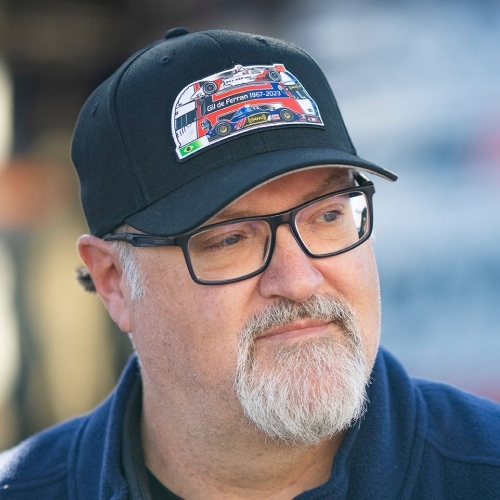
Marshall Pruett
The 2026 season marks Marshall Pruett's 40th year working in the sport. In his role today for RACER, Pruett covers open-wheel and sports car racing as a writer, reporter, photographer, and filmmaker. In his previous career, he served as a mechanic, engineer, and team manager in a variety of series, including IndyCar, IMSA, and World Challenge.
Read Marshall Pruett's articles
Latest News
Comments
Comments are disabled until you accept Social Networking Cookies. Update cookie preferences
If the dialog doesn't appear, ad-blockers are often the cause; try disabling yours or see our Social Features Support.