The RACER Mailbag, February 2
Welcome to the RACER Mailbag. Questions for any of RACER’s writers can be sent to mailbag@racer.com. Due to the high volume of questions received, we can’t guarantee that every letter will be published, but we’ll answer as many as we can. Published questions may be edited for style or clarity.
Q: Does it get any better than watching this Meyer Shank Racing team just put their head down and win? They look like they have a lot of fun doing it as well.
Rick Riva
MARSHALL PRUETT: No, Rick, It does not! Shank is every one of us, living the dream we’ve had for as long as we’ve loved racing. Along with Bryan Herta, Shank’s the realest team owner you’ll meet; a total next-door neighbor type who can’t wait for the weekends to open up the grill and barbeque for friends and family in the backyard and crack open a few (OK, a lot) of his favorite beer and celebrate life.
No disrespect to the other team owners to trek around the globe in their private jets and eat at five-star restaurants for breakfast, but I’m more at home with a blue-collar type like Shank who just wants to crank his Van Halen records up to 11 and play air guitar until he passes out.
Q: Hello! First time sending in a Mailbag question. Kind of exciting. With the Super Bowl airing on NBC this year (can’t be sure whether the NBC connection will necessarily matter), do we know if IndyCar will have a commercial spot for either the series, the 500, or the season opening race in St. Pete?
Bryant in Indianapolis
MARSHALL PRUETT: Thanks for joining 20-plus years of Mailbag contributors, Bryant! I asked IndyCar, but didn't get a reply before we went to press.
Q: Thanks for taking my question in the Mailbag and thanks for pointing me to last week's Mailbag. I did see that post, but wasn't clear on one detail (and am still not clear on it) -- specifically, the ads. I should have stated my question more clearly.
Peacock offers a "Plus" tier that they advertise to be "ad-free" with a little asterisk next to it. Has NBC or IndyCar said whether or not race streams with the "Plus" (or even "Premium" for the matter) subscription will in fact be ad-free?
Ryan
Q: I haven’t written the Mailbag since Robin passed. Loved him. My kind of guy. Classy dresser, and lover of the finest in State Fair cuisine.
I’ll make my question quick. What can we do to convince NBC/Peacock to cover the Indianapolis 500 like they are doing with the Daytona 24 Hour? I have attended 44 Indy 500 races, but unfortunately am not able to travel to Indianapolis to attend these days. I hate missing huge chunks of the race due to commercials. I understand business and commerce, but would gladly pay twice the Peacock price for non-stop coverage.
Jim from Phoenix
MP: I asked NBC, and here's the reply: "As it relates to practices, qualifying, and Indy Lights, yes, what you saw on the Rolex with the ambient sights and sounds is what you’ll have for IndyCar. As it relates to race coverage, those will be simulcasts of the races airing on TV and will still have ads."
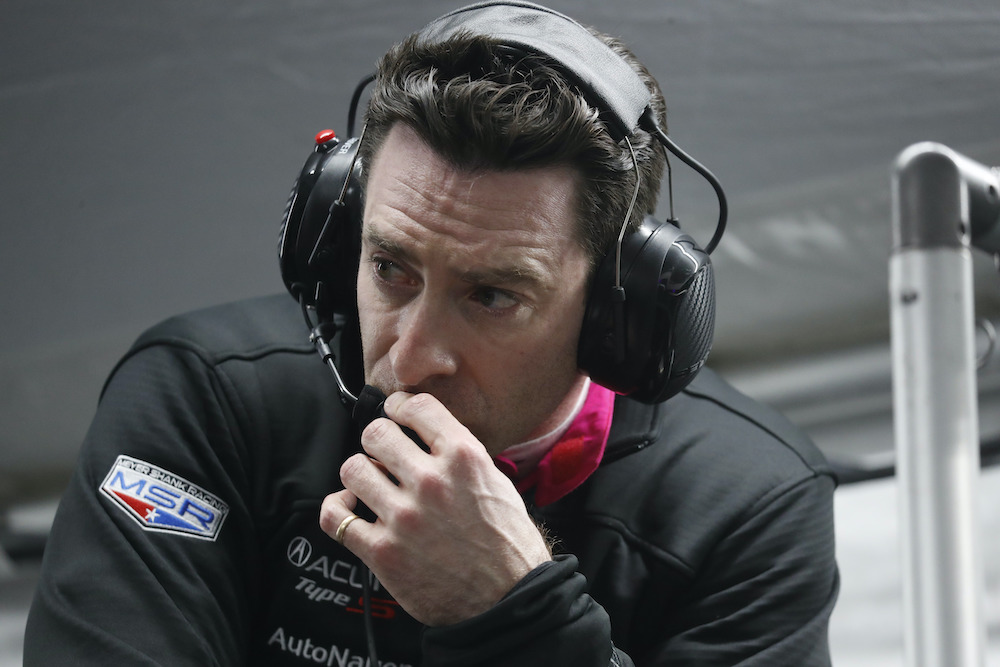
The look of a man who really wants to win a Rolex, but doesn't know if he'll survive his boss's victory celebrations. Michael Levitt/Motorsport Images
Q: I consider myself a serious IndyCar enthusiast and quite familiar with its history back to the very start of this fantastic sport. I'm no Donald Davidson, but I know enough. At least, I thought I did. A while back I ran into a documentary (streaming) on PBS titled For Gold and Glory. It chronicles the formation of an Indy-type racing league and the premier race for black drivers who were prohibited from participating in the open-wheel series for white drivers. Much focus is placed upon Mr. Charlie Wiggins, who built and raced his own creations.
I had no idea – not being a baseball fan, even I have heard of the Negro Leagues. But being a hard-core Indy, and racing fan in general, I had never heard of this league, nor any of the captivating history of this race. I encourage all Indy 500/open-wheel fans to find and watch this fascinating documentary of a time long gone. These men were true racers, and it makes me sad to think of what might have been. Had Charlie Wiggins been given the same opportunities and had access to the same resources, IndyCar history might laud his name along with the likes of Offenhauser, Bignotti, Meyer, Foyt and similar luminaries.
Bill P., Wautoma, WI
MP: The book it’s based on by Todd Gould is well worth buying, and if you haven’t seen it, the great Pat Sullivan penned an excellent book on Joie Ray which is both readily available and inexpensive. I bought a few last year as gifts for friends.
Q: I'm sure I am not the only one who is delighted that Robert Wickens kicked off his return to racing with a third in the TCR category in the first race of the 2022 IMSA Michelin Pilot Challenge. Do you have any read on whether or not his ultimate goal is to return to IndyCar in a modified car with the same kind of hand controls as he has for his car in this series at some point, or has he ruled that out?
I know that IndyCar is introducing its new hybrid engines for 2023, and have heard 2024 at earliest for a new chassis. While the DW12 has produced some high-quality racing, it's not exactly the sexiest of cars to look at – especially with the 2015 kits. I'm glad it looks like a late '90s vehicle now. Do you know anything about the design and what it might look like yet, or is it too far down the road for that? While the ship has long sailed, I think IndyCar made a mistake by making Dallara the exclusive chassis back in 2012. I wish they had approved the Lola, Swift and others except for the DeltaWing for more variety, but understand one chassis cuts a lot of costs for teams.
David Colquitt
MP: Robert’s told me on numerous occasions that he’d be racing in IndyCar right now if someone was willing to come forward with a budget to develop the custom hand controls he’d need to fit in a smaller DW12 cockpit. I’ve also asked IndyCar president Jay Frye about whether the series would allow Robby to race with hand controls, and he said he was open to the topic, but would obviously want to see the system and what extricating himself in the event of an accident would look like.
I hear what you’re saying on Dallara, and having worked on a million Swifts in the junior formulas and a Lola in CART, I wish they all received a green light to build cars — including the DeltaWing. But, the market always weeds out the less successful, and I have no doubt that within a year or two, it would have been a single-make series, with the only exception being if one of the less favored models showed an advantage on a certain type of track. Although my heart cries for the CART-era variety, my head knows Dallara was the right choice at the time.
Q: So I have had this idea for a new generation of IndyCar. First off, IndyCar will have a standard tub/safety cell which all teams must use. Also, it will mandate the tire used in the series. Finally a maximum and minimum budget per car would be put in place and enforced! From there, teams are free to “race what they bring.” They can design everything around the safety tub. Engines, aero, dampers, springs, etc., are all on their own design, but for the year a team cannot exceed the max budget. Safety standards would have to be established.
I think this would be fun. You could have someone move the tub back to be over the rear wheels then stick a bi-turbo Porsche flat six in front and go. The team could elect to use wings and plates to generate downforce, they could design the undertray for it or they could stick a fan on the back and suck it down but so long as the budget is not busted.
Severe penalties would have to be in place for those who go over the budget limit. Penalties would range from dollar amounts to lose of wins to lose of championship.
For multiple car teams the budget for each additional care is reduced by $750,000 from the previous car’s budget. The development of the first car is the most expensive. Everything after that is built on the findings of the first one and would be cheaper to build.
I think that would bring creativity and ingenuity back to the series.
What do you think?
Steven Brewer
MP: It would bring creativity, ingenuity, acid-reflux, night sweats, hyperventilation, panic attacks, and fainting, Steve. And I love it.
Only problem here is, no joke, IndyCar teams have been using spec cars for so long, it isn’t like the old days where each team has a number of people on staff who know how to design bodywork, suspension, wings, engines, transmissions, etc. There are far too many crew members who, because of the timing of when they made it to IndyCar, have done nothing other than bolt spec parts on and off the cars.
The ingrained culture of creativity isn’t completely lost, but the days of mechanics, crew chiefs, and engineers knowing how to turn an idea into a prototype piece they’ve made by hand are largely in the past. No doubt this could be jump started and fixed with some new staffers hired from the various Formula SAE college programs.
Q: Longtime IndyCar fan here, but relatively new to the sports car endurance racing. I'm wondering at the Daytona 24 Hours, what do the teams do to balance the setup of the car, given the vast difference between the high-speed banked speedway section, then the flat, tight corners of the infield section?
Steve, MI
MP: All about compromise. At Daytona, most of the lap is spent on the banking and straights, so reducing downforce and drag is where most teams focus their setups. You’ll find a few who prefer to go with a bit more downforce to help their drivers under braking and in the faster corners, but that’s rarely the winning move. Since the start/finish line is at the end of a long straight, and not the infield, the setup priority is clear. There’s also a fair amount of crashing hard over a few curbs, so teams will avoid going for super stiff suspension settings; that’s why we got to see a lot of wiggles and catching of oversteer coming out of the Bus Stop.
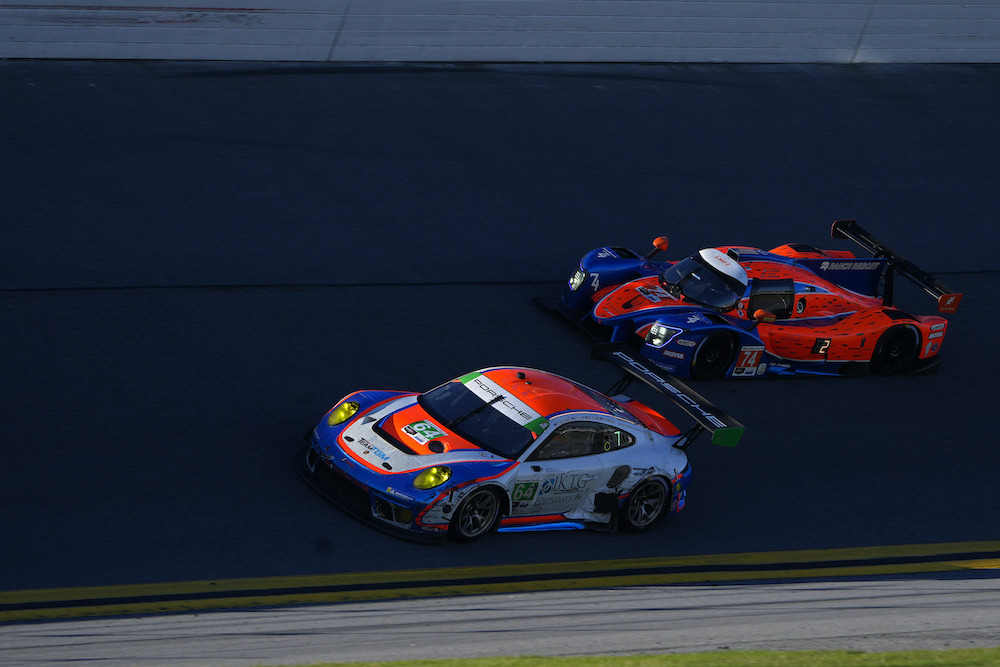
Rolex setup secrets: Get the car working well on these bits, and deal with the twisty stuff as best you can. Richard Dole/Motorsport Images
Q: I've just finished watching the end of the Rolex 24 from Daytona. A riveting finish and a good, full field, but I question the number of drivers per car and the number of classes racing. How many is too many? I'd think sharing a car with three others, driving perhaps six hours of the 24, standing watching for 18, would devalue the satisfaction. And are five confusing classes – three for prototypes which, from the stands and on television look pretty similar – necessary?
Anthony Jenkins, Canada
MP: The one thing almost every driver who competes in the Rolex 24 says afterwards is how exhausted they are and how they want to sleep for a week. At most IMSA races, they get an hour, maybe two, behind the wheel. There’s no dissatisfaction. Multi-class racing has been the norm in endurance racing forever. The weird thing is, I don’t recall a lot of complaints about having too many categories when IMSA’s four-class series (GTP, GTP Lights, GTO and GTU) was a raging success in the 1980s and early 1990s, or with the ALMS during its golden years during the 2000s with four classes.
Q: I’d say that IndyCar has the best-defined open-wheel racing ladder system, while Formula 1 has compensated with its F4-F3-F2-F1 ladder system. Where I get confused is, how does the U.S. Honda-powered F4 and FR Americas (F3) feeder series factor into American open-wheel racing? And were they supposed to lead to another OWR series like Formula Atlantic, or just be another option to get to Indy Lights?
And how does the U.S. Formula Juniors work in all of this? Is it intended to compete against U.S. Formula 4?
Also, the Mailbag reference to Foyt struggling to find staff for its third IndyCar entry makes me wonder where the third car will be based, since I believe the No. 14 is based in Houston and the second No. 4 entry is based in Indianapolis. And isn’t Foyt at a disadvantage by continuing to run out of two shops?
Also, as a blind racing fan who relies on screen readers, could you please post the second part of the Beth Paretta podcast on RACER.com so I can access it? It seems to be hidden on the MP Podcast page with no accessible way for my screen reader to easily find and click the play button! I really enjoyed Part 1 and would like to listen to Part 2.
Tom Harader, Florence, OR
MP: The Honda-powered junior open-wheel series are creations of the SCCA Pro Racing division and are run by Parella Motorsports Holdings, the company behind Trans Am and the SVRA, and exist in isolation from Andersen Promotions’ Road to Indy Ladder and Penske Entertainment’s Indy Lights series. We’ve seen some quality crossover from the PMH series to RTI, with Linus Lundqvist, Benjamin Petersen, and Kyffin Simpson coming to mind. Honda’s advancement prize for winning in FRA is the reason for Simpson joining Indy Lights this year.
Andersen’s new USF Juniors series is indeed meant to rival F4 and give interested young drivers and their families no reason to go anywhere else but the RTI.
On the Foyt location question, I guess the easiest thing to say is if splitting a team into two separate locations was an advantage, every team would do it. So far, the Foyt team is the only one with this approach.
Glad you enjoyed the My Racing Life and Career visit with Beth. Here’s links to Part 1 and Part 2.
Q: With Tatiana Calderon signed to drive for A.J. Foyt Racing for the road courses, is she solidly done with trying to go for a Formula 1 ride? Also, with quite a few drivers in IndyCar who tried and failed going up the F1 ladder, are they open to going back to F1 should the right opportunity arise, or are they content with racing in America?
Brandon Karsten
MP: The only way a Calderon or O’Ward or Herta is headed to F1 is with their current teams, or with a bank vault full of cash. I recently read Tatiana’s sponsor lost a court case in the UK and has been ordered to pay almost $36 million to Williams for back sponsorship, so it makes me question as to whether they would pony up the money for her to race there. Herta was on deck with Michael Andretti’s F1 ownership bid but we know that fell through, and that leaves Pato as the only one with a semi-realistic shot of making it to F1 with McLaren. O’Ward would be racing in F1 tomorrow if Zak Brown gave him the opportunity. If Pato wins an IndyCar championship this year or next, I can’t imagine he’d stay to defend the title.
Q: I can’t believe that I have to write this again. I used to complain often to Robin, and he was sympathetic, but unable to do anything about this problem --American racing on Canadian TV.
Go back a few years before NBC made American racing just a national series, I was able to watch IndyCar practice, qualifying, and races on YouTube and cable TV. I could tape it on my PVR watch it live, that night, the next day, or next Wednesday. It was always there and complete. When IndyCar went to NBC, us Canadians had to shell out 25 bucks a month to see two IndyCar races a month – no practice, no qualifying, just the race. I know you say that, well, this year we will have some 12 of 17 races on NBC which I can see, and that is great, but still no practice, no qualifying. Just the race.
Go back to last year, I was able to watch every lap of every IMSA race by taping it on my PVR, I could watch it live, that night, the next day, or next Wednesday, it was always there and complete. I could binge watch two or three hours every day for a week if I wanted. Now, IMSA is on the NBC specialty channels too, channels that Canadians cannot get. TV coverage of the recent Daytona 24 Hours in Canada was just three hours. Three hours of a 24-hour race. I was able to catch more than that at IMSA.com, but as a shift worker, I was just lucky to be able to see six more hours. If I don’t stream it live I don’t see it, because it is not repeated anywhere. Yes, it may be on YouTube in a month or so, but am I going to watch 24 hours of a race when I already know the results.
In the meantime, I am able to watch practice, qualifying, and races for every Formula 1, Formula 2, Formula E event, and every second of every WEC race, including Le Mans. I can’t believe that the IMSA sponsors, teams, and drivers can be happy about showing their product less and less to us, while every non-NBC series shows me all of their product that I can take. America will never become a world player in motorsports with this backward protectionist thinking.
Paul Sturmey, Ontario, Canada
MP: You have my sympathies as well, Paul. I have a friend who lives in British Columbia who keeps me abreast of the yearly changes, issues, and roadblocks with watching the Rolex 24 At Daytona. He said this year’s race was the easiest to consume, by far, since the entire 24 hours were available on IMSA.tv without any cost or geoblocks. As an aside, America has been a world player in motorsports for more than a century.
Q: The No. 19 Lambo is stopped on track at about 53 minutes to go in the Rolex 24 and the yellow comes out at about 51 minutes to go. Green comes out at about 29 minutes to go. Tell me why it took 22 minutes to retrieve that race car. Seems like a lot of green racing went missing when things were getting interesting at the end. Did they sweep the track -- which is wrong in my opinion because marbles are part of the racing surface, and it’s the same for everyone -- or was it the network getting in the last of the commercials?
Jeff, Florida
MP: My guess is IMSA, just like we’ve seen IndyCar do on many occasions, wanted to give its teams a chance to race to the checkered flag without going into major fuel-conservation mode, so they kept the pace car out there for long enough to ensure it was an all-out sprint to the checkered flag. Also, by my rough estimate, half of the cautions at the Rolex 24 were caused by the No. 19 Lambo, right? Yikes.
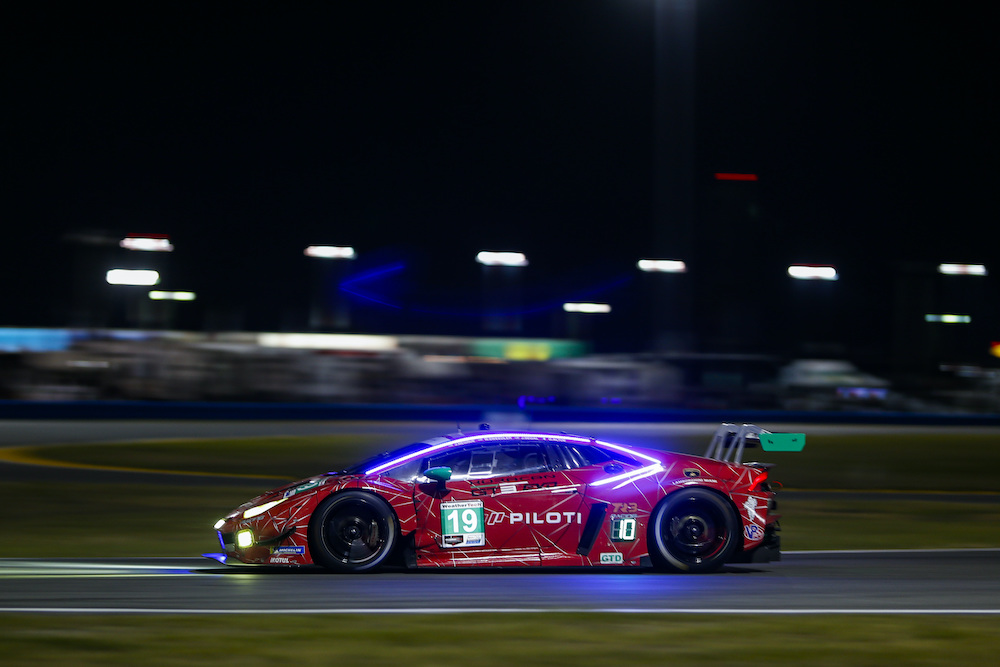
Pretty sure this just appeared on the entry list as "The No. 19 Lambo." Jake Galstad/Motorsport Images
Q: What are the biggest reasons for not putting onboard starters into IndyCars? Is the additional weight really that much? Considering almost everyone sooner or later gets a stalled car -- usually in a far corner of the track -- having an onboard starter would reduce time and positions lost and yellow laps as a whole.
J Ollinger
MP: Weight and tight packaging concerns have been the main reasons given for keeping onboard starters off the cars. The new ERS system coming in 2023 is meant to solve that problem and perform as an onboard starter in addition to giving drivers 100hp or so through push-to-pass.
Q: Will we ever hear the words “it’s a new track record!” again during Indy qualifying? Will the advent of the new hybrid engine make that more or less possible to achieve? I love the new qualifying format, and I think attendance would make a big comeback if a new track record is attainable.
Joe Stieglitz, Shelbyville, IN
MP: I’ve got to imagine we will, but I don’t know what to expect once we go hybrid. There’s a lot of new mass that’s coming to control in the corners that makes me wonder if the cars will be able to go flat-out like we’re accustomed to these days. Makes me wonder if IndyCar will need to make more aero changes -- more downforce -- to keep the heavier cars glued to the track in search of new speed records. Most folks love to witness history, so if the overall hybrid package is ready to perform next year, a big crowd for qualifying weekend would be a delight to behold.
Q: In response to the question of IndyCar fuel mileage in the 1970s, it has been a while but as I recall the fuel tank volume was reduced from tanks on both sides to a single side, and then they limited the boost to (I think) 80 inches. At that time, we went to 40 gallons max, but I don't remember if it was mandated at 40 or that is just what we could do.
Then they put the 80-inch pop off valve on us, and somewhere in that timeframe we had to make 1.8 mpg. I remember that well because we (McLaren) could qualify at 80 inches but had to race at 76 inches to make the mileage.
I don't remember this bit for sure from a timeline standpoint, but then the boost went from 80 to 76 inches, then to 60, then to 48 inches with the fuel tankage staying at 40 gallons.
Steve Roby (McLaren Chaparral IAM MMR)
MP: Thanks, Steve. With turbo power soaring in the 1970s, all I’ve been told by folks like yourself and others who were in the middle of the cat-and-mouse game of USAC trying to keep things under control with pop-off valves and fuel capacity changes is it was one of the more intriguing themes going on behind the scenes.
Q: It’s great to see Juan Pablo Montoya back for another shot at the 500. However, I see he’s taken Wickens’ old No. 6, meaning with Pagenaud’s MSR entry, we’ll have No. 06 on the grid as well. Nope, don’t like that.
Can you ask Pag and Monty to decide between them who gets to be No. 6, because they can’t both have it.
Rikki, UK
MP: No disrespect to Robert, but he used the number for one season; I wouldn’t attach theft to the team’s continued use of it with another driver. JR Hildebrand used it from 2015-16 at Ed Carpenter’s team, and before that, Townsend Bell had it for the 2014 Indy 500 with KVSH Racing, etc.
Simon’s in the No. 60 MSR car and defending Indy winner Helio Castroneves is in the No. 06 MSR car.
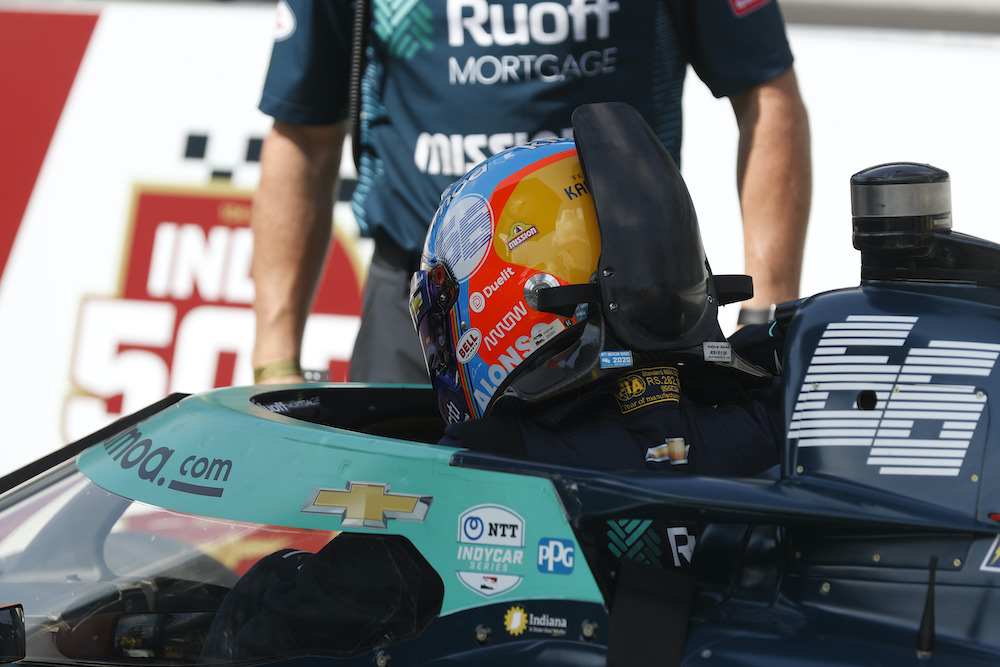
So at this year's Indy 500 we'll have No. 6, No. 06, and No. 60. Shame Alonso's not coming back... Phillip Abbott/Motorsport Images
Q: Let's pretend for a minute that you were given the job by IndyCar to draft the design requirements for the new chassis. We know that the DW12 has been a great success in its various iterations, but it has gotten pretty heavy, some of its fundamental issues were never fully resolved (like weight distribution), etc. What would your design requirements look like, and why?
Richard, Flower Mound, TX
MP: That’s the stuff of nightmares. But if we’re going to wander down this rabbit hole, I’d have a basic requirement that starts with weight distribution. Ask Simon Pagenaud, Will Power, Sebastien Bourdais, and any of the drivers who raced the 2007 Panoz DP01 Champ Car, and they will tell you it’s their all-time favorite because it handled like a dream.
The chassis balance is what gets referenced over and over again as what made the DP01 darn near perfect, and since it wasn’t overly heavy, and had good power, they fell in love with it.
We don’t think about it as much in IndyCar design as much as, say, a GT design, but since our future is loaded with aeroscreen weight (60 pounds up front) and ERS weight (120 pounds out back), IndyCar and Dallara might need to consider moving some items systems forward just for the sake of improving the weight distribution. It’s pretty common when building a front-engine race car to take heavier items like the battery and cooling systems and move them to the trunk for no reason other than to move weight rearward to improve the weight distribution percentage.
Since IndyCar isn’t able to make the new weight disappear, it just might need to task Dallara with getting creative with where it might relocate some things to keep the DW25 from popping wheelies on the straights.
Q: Not sure if you have ever watched this on YouTube, but it is a very cool watch and probably something Robin Miller would have enjoyed as well. It has audio from the TV crew during what would have been the commercials, and it is funny to listen to Paul Page, Bobby Unser, Sam Posey, Jack Arute, Gary Gerould and Dr Jerry Punch’s interaction during the TV breaks. You get a better idea of their true personalities and the chaos that happens with coverage of a live sporting event. I miss the cars and engines from this era!
Sean from Cincinnati
MP: Thanks for the share, Sean. While I haven’t done a ton of TV, I can confirm the banter between commercials is some of the truly fun stuff that takes place. Also worth noting that the private interactions here, while the cameras are off, is what it’s like when we see each other in the paddock, over the phone, etc. Glad you got a taste of what it’s like from the YouTube video.
Q: Long time reader, first time writer here. I see questions about whether IndyCar will ever go electric popping up regularly in the Mailbag. Here's an idea – how about a separate "Electric 500" that runs as a support race to Indy, maybe on qualifying weekend? This could be an open development event in which the only rule is that the cars have to be fully electric, and whoever crosses the finish line first wins. A marathon race on a big oval with no regenerative braking is a mountain of a technical challenge for electric cars, and that could be used to market this as a major tech prestige event.
The first few years would be chaotic for sure (slower speeds than IndyCars, charging delays, weird strategies, etc.) but there's an element of intrigue in that, and I think the racing would get better as technology develops. Cars could be fielded by manufacturers, current IndyCar teams, tech-focused universities, privateers, or whoever.
This sort of event would seem to have a lot going for it. Formula E has had a ton of investment from manufacturers, but only has a tiny following in the U.S. An Indy event would give EV manufacturers a marquee showcase in front of American consumers that is currently lacking. You also get open development for those who long for the pre-spec days of Indy, or who think Formula E is too locked down. It gives the speedway another event with great growth potential and relevance to current automakers, and any attention it grabs would raise the profile of the traditional 500 in the process. What's not to like?
Jimmy from Ypsilanti, MI
MP: I grew up in an era of IndyCar racing and Indy 500s where innovations were still allowed, so my first thought isn’t to create an electric sideshow, but to see IndyCar allow it to happen again with all manner of technology, not just EV. Creating a dynamic where all of the cool, new developments are seen in one Indy race, and the comparatively tame and far less remarkable developments are seen in the "traditional" 500 is where manufacturers step away from the old-timey race and invest their money and resources in the high-tech race. Easier to make them one and the same with IndyCar allowing more freedom for all EV manufacturers -- Chevy and Honda included -- to push the boundaries with new tech.
Q: Last week Bob Smith from Phoenix asked a question about the fabled Copper World Classic at Phoenix International Raceway. You answered that the history of its demise would have to be told by readers in a future Mailbag edition. In response to his query as to whether NASCAR would have an appetite for reviving an old event name/format for their championship weekend in November, you correctly opined, “As for NASCAR looking to add a really cool outlaw event that takes away from its championship finale, that would be outside the company’s playbook.” “Outside the company’s playbook” is the exact reason the Copper World Classic went away.
No need to delve too deeply into the history of what was once known as "the world’s fastest one-mile paved oval" so we will just go back to 1977, the first year of the Copper World Classic – although there were two "Copper State Classic" races held in ’75 and ’76.
All credit for the event, often referred to as "the little guy’s Indy 500" goes to former track owner and longtime PIR general manager Dennis Wood. Wood raced modified stock cars at Manzanita Speedway while working as a sportswriter for Arizona’s two largest newspapers prior to his tenure at PIR.
The first Copper World Classic featured four races; two on the old road course that ventured outside the oval plus a stock car and sprint car race. Joe Ruttman (stock cars) and Chuck Gurney (sprint cars) won the roundy-round contests. Sammy Bell won the sports car race and a young David Bruns, who later founded Swift Racing Cars, won the Formula Ford race.
In 1978 they abandoned the road course and raced stock cars, sprint cars and Formula Fords on the oval. Two years later, midgets would replace FFs and in 1984 the event added a supermodified race, thus establishing the most common and revered four-class Copper World Classic format.
For the next 13 years the CWC was a winter staple for racers all over America, but especially those who lived in cold country. Phoenix’s balmy winter weather and the chance to compete for a decent purse lured drivers and teams from everywhere. It drew crowds and sponsorship and media attention.
The class menu changed over the years to also include USAC Silver Crown cars, Featherlite Southwest cars, Winston West cars, NASCAR Trucks and even IndyCars. But there were always two "for sure" spectacles at the CWC: the midgets would thrill fans by lifting their left front wheels through the turns and the supermods would rarely finish their 25-lap event due to crashes.
Back to the question of what caused its demise. In 1997 International Speedway Corporation bought the track and anything that was not NASCAR was deemed a parasite. They even showed Dennis Wood the door after his 30+ year investment of blood, sweat and tears in the track; a facility that was built primarily for open-wheel cars, to replace the dangerous dirt oval at the Arizona State Fairgrounds.
Yes, ISC gladly welcomed the IRL because it represented the best way to surreptitiously thwart the rising popularity of CART and then Champ Car, which had grown to threaten NASCAR in the mid-'90s.
The Copper World Classic thrived as an annual, stand-alone event in late January or early February. Young up-and-comers like Ken Schrader, Ryan Newman, Tony Stewart, and Jeff Gordon used CWC wins to get noticed and advance their careers.
The last few races, which were Copper World Classics in name only, were Thursday night support events for PIR’s November NASCAR weekends with just Silver Crown cars and midgets.
That exercise in futility mercifully ended in 2009. NASCAR did its job.
Bill Tybur, Tempe AZ
MP: And that’s why you rock, Bill.
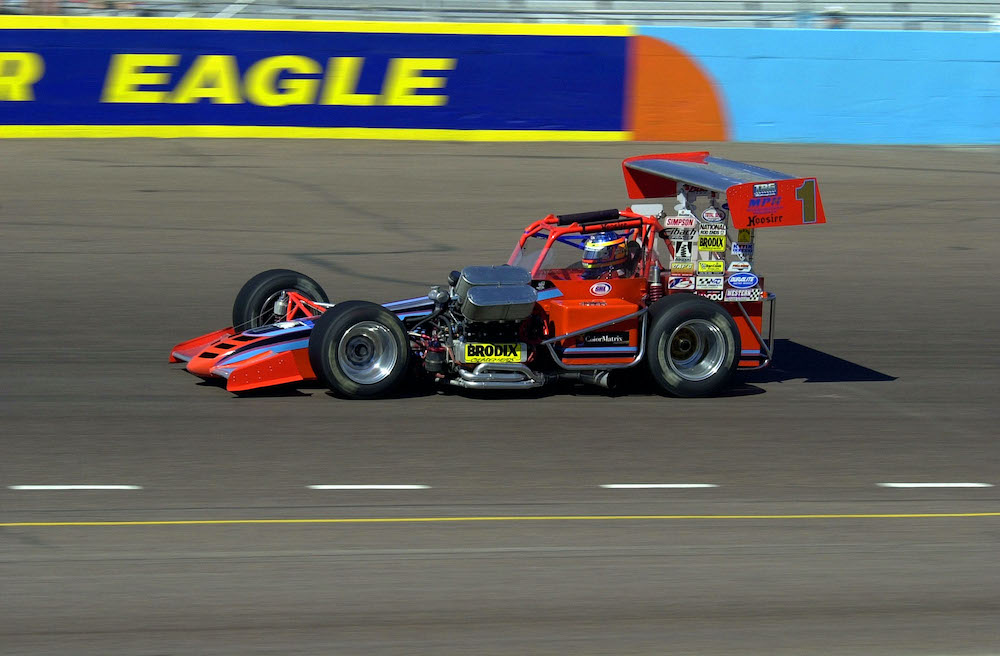
WORLD EXCLUSIVE SPY SHOT: The next-generation IndyCar breaks cover in secret test. OK fine, it's actually Davey Hamilton cruising to a Supermodified win at the Copper World 200 in 1991. But you can bet that Dallara, Jay Frye etc., are looking at this thing and taking notes. F. Peirce Williams/Motorsport Images
Q: I watched as much as I could of the Rolex 24 last weekend. First off, it was a great race! I especially applaud IMSA for replacing GTLM with GTD Pro. There was a lot of participation in the new class (not to mention a barn-burner of a finish!) and it was great to see all-pro driver lineups mix it up with pro-am teams in GTD in equal equipment.
That said, is it time for IMSA to drop LMP3 from the WeatherTech Sportscar Championship? We had over 60 cars take the green this year and IMSA President John Doonan even mentioned during his interview that they had to turn teams away because of a lack of room on pit road.
LMP3 was introduced in the WeatherTech series last year to get the overall car count up after fewer than 40 cars showed up for the Rolex 24 the year before. But now that the LMP2, GTD Pro, and GTD classes are doing better and DPi (as GTP) is set for a big increase next year, I don’t see a compelling case for keeping LMP3 in the WeatherTech championship. The class has never really been that competitive since it was introduced and has kind of been regarded as an afterthought by fans.
I personally think in this case IMSA would be better off letting LMP3 drive into the sunset to make room for expanded participation in other classes.
Garrick, Huntsville, AL
MP: Turning small businesses away right after inviting them to participate in a new WeatherTech Championship class would be a heck of a signal to send to the paddock. I’d argue that DPi and GTD Pro are for the fans, and the Pro-Am classes are more for the participants, so I’m not sure I’d ever expect a training category like LMP3 to be a fan favorite. If we get to a point where the other prototype classes are oversubscribed, it might be worth considering whether LMP3 should continue in the top series, but we are nowhere close to that being a problem. GTP should have a strong opening next year, but LMP2 is far from overflowing, so the timing isn’t right to wind LMP3 down.
Q: In the Jan. 26 Mailbag about Jimmie Johnson testing, you said: Testing rules are very clear, and while I’m sure IndyCar would let the Ganassi team burn one of its four private test days on a skid pad with Jimmie’s No. 48 car, it would be an epic waste of time and resources, which is why I suggested pulling out one of the dozens of old CART/Champ Car/IRL machines CGR has in its inventory for Johnson to wheel.
The question is, over the last 20 years, and the various Split era series, there hasn't been a lot of chassis changeover on a year to year basis since the glory days. But to your point, any insight on what the teams do with these old cars? I see a few "crapwagons" show up as show cars around town, but other than historic/significant wins a team might keep on display at the offices in the lobby, what do they do with them? I can't imagine keeping shop space around for CART/IRL/CCWS cars that have long outlived usefulness. Any info about what most of the teams do with these sleek paperweights?
PS: Great job with the RM stickers. Got mine from TO Motorsports, and they are on the shelf right behind my Greg Moore Reynard model.
Ed in Westfield, IN
MP: Thanks for the kind note, Ed. We raised $20,000 for St. Jude’s Hospital for Children with the stickers. Softened the blow of Robin’s loss just a little bit. Most teams that are still active from the CART/Champ Car/IRL days hold onto them, preserve them for museum displays, have them sitting in shops, front lobbies of their shops or businesses, and/or dress them up in the colors and liveries of their current sponsors and use them for promotional purposes. In rare instances, the cars are kept in turnkey condition, ready to fire up and go whenever needed.
Q: Will Ryan Hunter-Reay be chosen to drive the ovals at A.J. Foyt Racing in the No. 11 that Tatiana Calderon does not want to run? He would be exactly what his young teammates need! Does he want the seat? Would he need to bring money? Is he on the short list at Foyt? There isn't much time remaining before St. Petersburg.
Mark Zac, Long Beach, CA
MP: If RHR wants to drive that car, I’m sure he’ll be in it. The question is, after the team was highly uncompetitive at last year’s Indy 500 and failed to qualify with one of its cars, whether the 2014 Indy 500 winner would want to be in the team’s third car on the ovals. If there’s a strong engineering group attached to the No. 11 Chevy and he can be guaranteed it will be just as capable of succeeding as any other Chevy-powered car in the field, I bet he’d consider an offer.
Q: My Mailbag reading cup. Thanks for keeping it going, but I sure do miss him.
Matt from Lansing
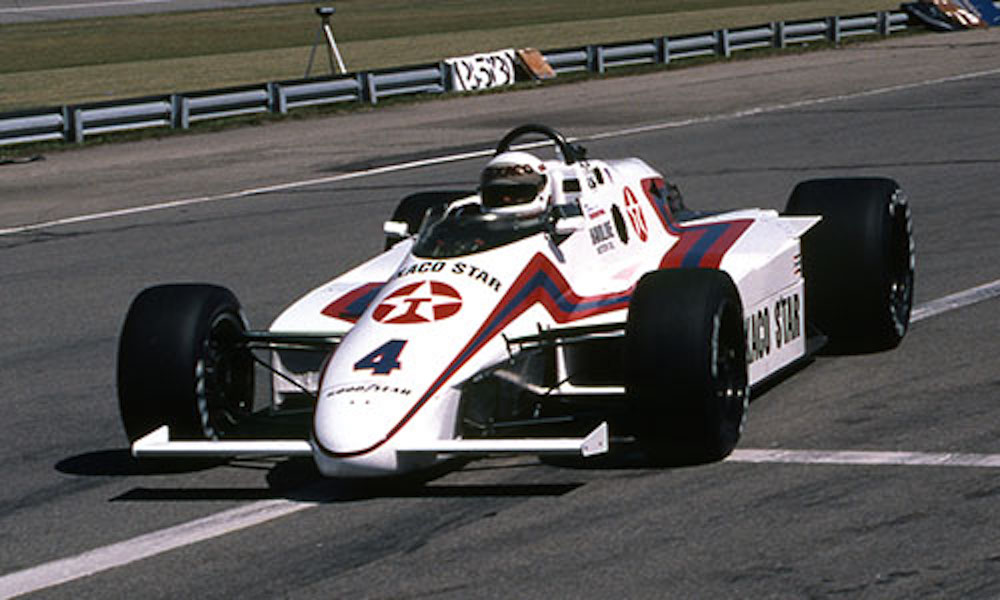
MP: Thanks, Matt. I have a few of those saved in our cupboard. I have the same thought about Robin on a regular basis as well. Maybe one of these days the messages will evolve from "Thanks, but" to "Thanks, and."
Q: Hey Marshall and Chris, I wanted to ask a follow-up question to Marshall's response in the January 19 Mailbag about Formula 1 passing with race control, commentators, and fans via social media adjudicating each pass and it's turned itself into an uncontrollable virus that is nauseating.
Do you think part of the issue is around these drivers relates to properly learning the race craft? I say that because it seems with these younger drivers in both IndyCar and F1 that they don't how to make passes properly, set up for a pass/repass, or have respect for the veterans. It just seems like their mindset is, "I'm just going to shove it into a corner so deep that the corner is mine and I'm ahead; so what that I pushed you wide, the corner was mine and you have to 'respect' that." Is there any way to fix it, or are we just stuck with this crappy driving?
Keep up the good work with the Mailbag.
Chris Damato
MP: I can’t say I agree with the premise you’ve offered, Chris. Every generation of new drivers I’ve seen since I started following the sport has become more aggressive than the last. I can say the same about all of the stick and ball sports I follow, as well. If the top cops in F1 or IndyCar want to police driving standards at a harsher level, they’re certainly empowered to do so. It did feel like F1 lost control of its series more often that was comfortable last year, but that can be fixed quite easily with clear expectations and penalties outlined in every drivers meeting. I don’t recall feeling IndyCar lost control of its series. Also, there’s no single and accepted way to pass. It’s constantly evolving, just like throwing, shooting, hitting, running, kicking, punching, or catching in every other sport.
CHRIS MEDLAND: I think we actually see some great racing from younger drivers and I admire their tenacity, but if you feel there's an issue then I'd say in F1, it actually would stem from a desire to allow more robust racing like in IndyCar, because it was something the F1 paddock felt was over-regulated. But the problem for me is inconsistency. Some moves go unpunished and others are heavily penalized, when they were very similar moves. It's true Max Verstappen appeared to get away with a lot, but then he would always keep doing what he was allowed to, and the blame if it was crossing the line shouldn't be aimed at the driver but at the stewards.
The best example I have is Charles Leclerc in Austria in 2019 -- he felt Verstappen went too far overtaking him late for the win, but the stewards explained why it was acceptable and in the next race at Silverstone the two had an epic battle pushing to those new limits. They're talented enough to respond to the rules they're given, so if it needs fixing it will come from what the rulemakers say they're allowed to do.
Q: Maybe it is me, but if an American kid shines in IndyCar, F1 interest is muted or doubtful. But if a kid from say, Spain, does well, he gets a lot of attention and maybe a test/ride the American kid never gets. Is it training, sponsorship or something else? I am talking to you, Bernie.
David Fahey
CM: I'd disagree with that one, David! I think if you look at Colton Herta's near-move last year, there's a recognition that young American drivers should get a shot in F1 too. It's more about the doors that are open to them in terms of their teams. But really, we haven't seen any IndyCar drivers make the crossover for a long time, regardless of nationality.
Sponsorship would certainly play a part, but for example Pato O'Ward is more heavily touted than Alex Palou because of his McLaren place, even though Palou took the title. Another issue is for American drivers it would be a big move away from home to chase an F1 seat, but some other European drivers have strong roots to return to that maybe lead to more opportunities and a stronger desire to return.
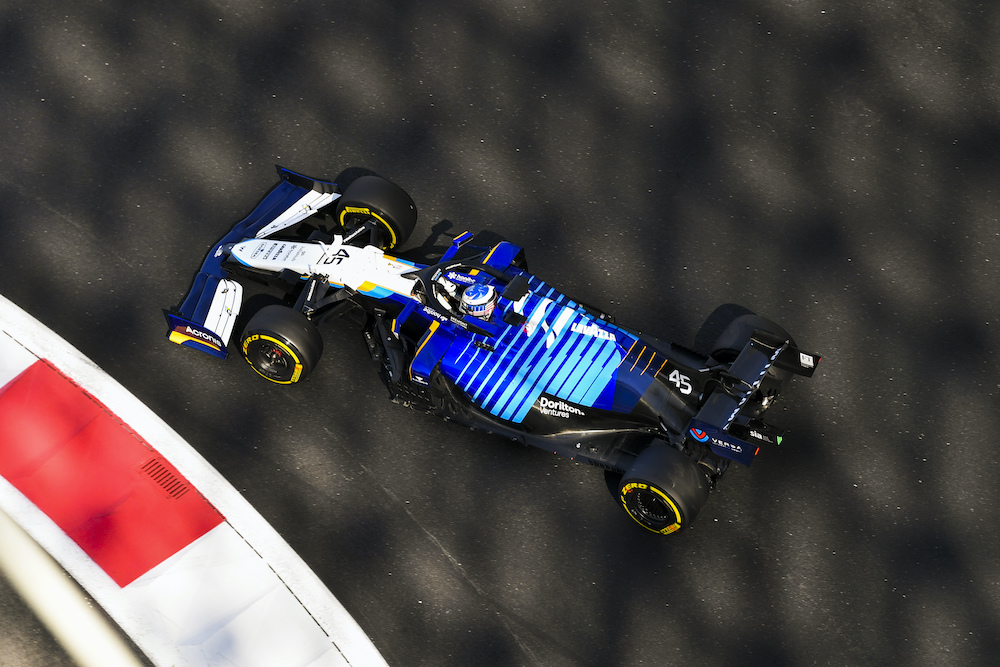
Logan Sargeant from Spain Florida puts the Williams through its paces in testing at Abu Dhabi last year. Take that, um... Bernie. Mark Sutton/Motorsport Images
Q: Wondering at the lack of NASCAR drivers in this year's Rolex 24. As I recall, last year there were several NASCAR drivers; this year there were none. What is the reason for this?
Rob
KELLY CRANDALL: I think there are few reasons. First, you need to consider the amount of time needed to commit to the Rolex 24 -- this off-season is one of the busiest NASCAR teams and drivers have had because of the Next Gen car. There have been multiple test sessions, and teams are wearing out simulators and every other resource to prepare for a new car and new season. So that needs to be the priority for drivers.
Second, I imagine there are plenty of drivers from across the motorsports landscape who want to run the Rolex 24 and that means tough decisions for teams when it comes to giving themselves the best line-up to chase a victory. And that leads to the third thing in another way of tough decisions. I think teams need to weigh whether they want to put a NASCAR driver in the line-up when they are there to win and might have a better chance with a more experienced line-up. It’s not to say NASCAR drivers can’t help get the job done, but they aren’t going to be as experienced or perhaps as fast as those who run sports cars or other road racing-based series for a living.
THE FINAL WORD
From Robin Miller's Mailbag, February 5, 2014
Q: You have mentioned a desire to see Wayne Taylor Racing in IndyCar some day. Whatever happened to the possibility of Michael Shank starting a team? I recall that he did not want to accept a Lotus engine, and Chevy and Honda couldn't commit. Still, that team is a class act, and it seems it should be courted and encouraged to join the IndyCar series. We need increased car count. Is this another case of IndyCar shooting itself in the foot (again)?
Bill P., WI
ROBIN MILLER: I suppose because he didn't have all his ducks in a row at the start of 2012, Shank wasn't able to secure an engine deal with Honda or GM. But he had a car and IndyCar should have made sure he at least had the opportunity to run Indianapolis. Shank is exactly what IndyCar needs -- new owners with passion for open-wheel -- but he certainly didn't get much encouragement or help. Looking back, I think Randy Bernard wishes he'd have handled that situation better.
Marshall Pruett
The 2026 season marks Marshall Pruett's 40th year working in the sport. In his role today for RACER, Pruett covers open-wheel and sports car racing as a writer, reporter, photographer, and filmmaker. In his previous career, he served as a mechanic, engineer, and team manager in a variety of series, including IndyCar, IMSA, and World Challenge.
Read Marshall Pruett's articles
Latest News
Comments
Comments are disabled until you accept Social Networking Cookies. Update cookie preferences
If the dialog doesn't appear, ad-blockers are often the cause; try disabling yours or see our Social Features Support.