The RACER Mailbag, December 15
Welcome to the RACER Mailbag. Questions for Marshall Pruett or any of RACER’s other writers can be sent to mailbag@racer.com. Due to the high volume of questions received, we can’t guarantee that every letter will be published, but we’ll answer as many as we can. Published questions may be edited for style or clarity.
Q: What are the decision-makers at IndyCar thinking? Huge mistake to drop Paul Tracy! IndyCar needs some history, humor and plain speaking from the commentators in the booth. No one offers all of this better than Paul. He knows the drivers; he knows the tracks; he knows the owners; and he injects humor and clarity into his responses. With Robin Miller gone, IndyCar sorely needs someone who tells it like it is. Very, very poor choice. Is this because Penske and Tracy have a "checkered past"?
Cheryl Schwartz
MARSHALL PRUETT: The sentiments in your letter have definitely been echoed in a number of responses I’ve seen since Paul made the news public. Couple of things worth clarifying: IndyCar doesn’t select the broadcast team; they’re hired and paid by NBC Sports. I know it’s easiest to blame IndyCar for such things, but this is one instance where it doesn’t fit.
Paul definitely had some fun and spicy comments to offer on occasion, but I’ll admit I’ve never seen the big "he tells it like it is" with his work on NBC. I wonder if his body of social media posts sometimes gets confused with his racing commentary, because I just can’t recall many instances -- other than the Marco Andretti/Uber driver line -- that stood out in the "tells it like it is" persona he’s credited with bringing to NBC Sports.
Regardless, if Paul’s upcoming absence from IndyCar’s broadcasts has delivered a message, it’s how many of the series’ more tenured fans aren’t happy with his loss. It’s also revealed how many of IndyCar’s newer fans are thankful for the change. Like PT’s life and career, everything is polarizing, as two camps have emerged with very different takes on this news.
I’ve probably texted with PT a dozen times since the news broke, and he seems to be incredibly happy and has rediscovered a passion for racing that’s grown stronger since he did the SRX series last summer. As I wrote last week, he’s wanting to do SRX again and add in some IMSA racing, said they couldn’t come with a workable schedule for him to continue, and said the split with NBC Sports wasn’t ugly or negative.
According to PT, he isn’t a victim of a vendetta by RP, cancel culture, censorship, etc. If NBC wanted to fire him, it had all kinds of ammo to use years ago, and even leading into 2021, but they did not. And since he’s celebrated for telling it like it is, we should believe what he said about the reason behind split with NBC. He has nothing to lose by telling the truth. And as a closing aside, FOX, CBS, and ABC/ESPN all air motor races. If you want PT back whenever he might be free, let those networks know.
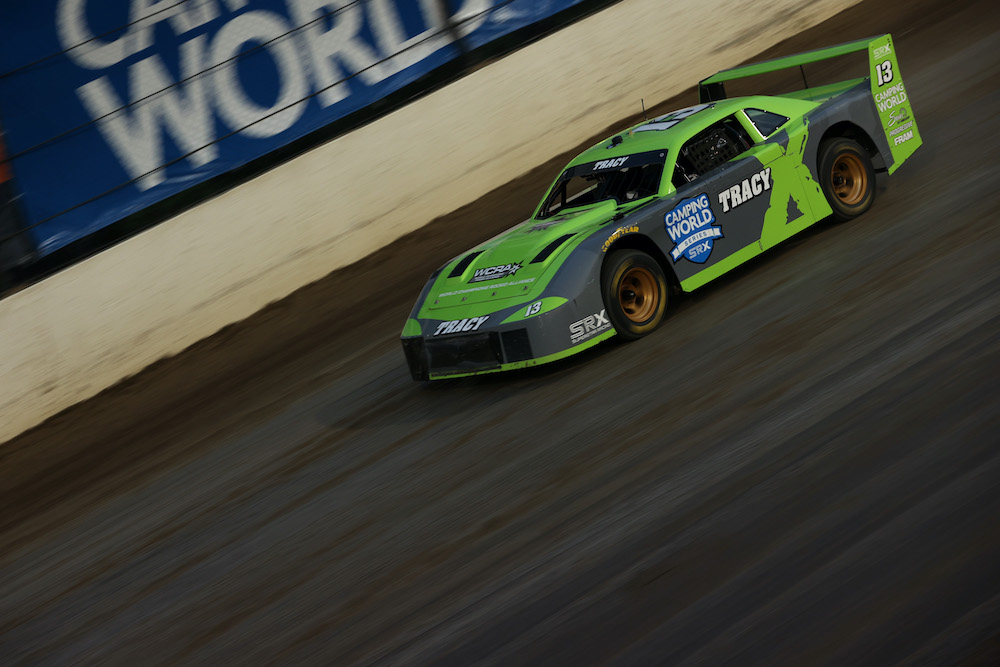
Tracy's 2022 will involve a lot less blazer-wearing, and probably a lot more of this sort of thing. Dylan Buell/SRX via Getty Images
Q: Just read your article about Paul Tracy not returning to IndyCar broadcasts this year. Any possibility that NBC might bring Jon Beekhuis back? Fans would love it, and I really think he would be great in the booth with Townsend. I think Hinch would also be really good, and also RHR if he doesn't get a full-time ride.
Also, now that IndyCar has run a simulation of the hybrid power plant, are there any thoughts on how they will handle it on ovals? I can think about six different ways they could control it (always available, never available, limited by reduced battery size, straights only, DRS-like, or last ‘n’ laps). My concern is the dangerous combination of higher speeds and pack racing, which can lead to crashes, reds and yellows, and extended race times cutting off TV race coverage. Even though it’s part of racing, I hate it when they bring out the ambulances. (I still remember Las Vegas among other incidents).
John from Madison
MP: I’ve always appreciated Jon Beekhuis as a driver and as a pit reporter, John, and want him back, ASAP. But not as a booth commentator. His low-energy style might not be the thing the average network producer is looking for as a primary voice these days. As I’ve said many times in recent years, though, his loss from the IndyCar broadcasts has been to NBC’s and IndyCar’s detriment.
Diffey, PT, and Towney weren’t the ones to track the strategy side of the races, and no disrespect to the other pit reporters, but in Jon’s absence, nobody emerged with much of an eye for seeing and delivering the race taking place within the race. For the sake of our fans, I’d fully support a #BringBackBeekhuis Twitter campaign to get Jon back where he belongs on pit lane.
Q: NBC’s loss. PT, we will miss you. The knowledge, the insight, the jokes the verbiage, the back and forth with TB and the “been there done that” swagger. Keep it with the Canadians. Bring on Hinch.
Jeff, FL
MP: For those who were around in the Champ Car days, an extra-young Hinch was doing commentary with Jeremy Shaw, and The Mayor was excellent way back then. He’s just as excellent now, but if there’s a knock against him that I’ve read from fans, it’s his bubbly personality and non-threatening humor. Trust me, he’s got spicy opinions to share, so for those who want to see The Mean Mayor, he’s capable of delivering.
What I’d like to see more of from Hinch is the superb car and driving analysis that, due to the growing distance from their last IndyCar races, PT and Towney can’t or couldn’t deliver. Towney’s also more than capable of getting the knife out and carving up teams and drivers with sharp opinions, so if Hinch is headed for the booth, maybe Towney takes on more of PT’s freer role and Hinch dives in with tack-sharp on-track analysis. Also, and I know he’s super busy racing in two different series and raising his 437 kids, but Tony Kanaan is brilliant as well in the booth.
Q: Paul Tracy was the only one that made the commentary interesting. IndyCar champion, raced at most of the race courses, was controversial and historically interesting. I could go on and on.
This really pisses me off.
Bruce McLeod
MP: PT was definitely controversial, but again, I think we’re confusing PT the guns-blazing social media crank and PT the employee of NBC Sports. Two very different people. I thought most of his commentary through 2020 was uninspired and repetitive; lots of "phoning it in" while Towney did most of the solid analysis and commentary.
Last season, I thought PT was the best he’s ever been in the booth. There was real life and effort on display most of the time, and like you, I’ll genuinely miss those contributions. He also seemed to spin more yarns from his CART and Champ Car career, which were enjoyable. Among the possible candidates, only TK can bring that kind of history to NBC Sports to fill that void.
Q: I watched my first F1 race for a while on Sunday and was surprised by the race director at the end of the race, because they didn't do what F1 often seems to, and follow the letter of the law even if it harms the racing. Me and my IndyCar-watching friends said it felt like "an IndyCar decision" where they bent the rules to make sure the championship was decided with a lap of racing. Even though I'm a Hamilton fan, I'm a racing fan first, and it felt like the right thing to do.
What do you think of the call, and would IndyCar make the same call?
Paul Rayner
MP: I’ve got to hope that if IndyCar were presented with the same dilemma, it goes red quickly, gets the race under control, and preserves the battle that had taken the race into its last handful of laps. Beaux Barfield’s ballsy call to red flag the Indy 500 near the checker in 2014 was an inspired move, and he did it to preserve everything that led up to that point and give the drivers – and fans – the most laps for something as grand as the 500 to be settled properly.
F1 race director Michael Masi had zero balls last Sunday and thrust the race – and the season – into a bizarre single-lap shootout that placed insane stress on the series.
For those who didn’t watch, Nicolas Latifi crashed on lap 53 of 58 while Hamilton held a 12.1s lead over Verstappen. Latifi’s car was left sitting broadside on the track, blocking a lot of the circuit, and it was clear that a quick extrication was not going to happen. Red Bull wisely pitted Verstappen for new soft tires as the race ticked over to 54 laps while Mercedes kept Hamilton out on highly worn rubber. Under F1’s red flag rules, all could have changed to fresh tires, but Masi’s decision to let the laps count down under the safety car instead of thinking big picture with a red, sacrificed a proper multi-lap shootout.
On lap 56, race control said it would not allow the lapped cars between Hamilton and Verstappen on overtake the pace car and move to the back of the field. Red Bull asked Masi to clear the lapped cars on lap 57, Masi changes his mind, acquiesces, directs the lapped cars to overtake the safety car, Verstappen restarts on Hamilton’s gearbox – 0.4s behind – and passes Hamilton with ease due to the mismatch in rubber quality. Max wins his first F1 title.
Those who know me know that I’m not a big Verstappen fan, but my thoughts here have nothing to do with who I like or dislike. Have some balls, throw the red right away, give Lewis and Max an equal chance to fight for the title over three or four laps, and on equal rubber. In that scenario, which would have left Masi’s name out of everyone’s mouth since Sunday, I’d bet Verstappen – F1’s version of Pato O’Ward, the kid who makes all the unbelievable passes – gets by Hamilton and takes the win and title without race control’s nonsense.
That’s the thing that makes me sad. Masi should have played no role in Verstappen’s ability to take the lead with ease. Max, with a few laps to work his magic, would have cleared the backmarkers, if Masi left them there, and even if they’d been sent around, we’d have been gifted a titanic fight between the two best drivers instead of a one-lap farce where the leader was a sitting duck. I’ve no doubt Max would have done something otherworldly to pass Hamilton and win without the dark cloud brought by race control. Verstappen deserved better.
The real concern here, if we take Masi’s approach to Abu Dhabi and carry it into 2022, is where and when will he decide next to go freestyle and screw things up? Granted, I can’t see how he’s still working in F1 by the time the new year arrives. Not only would I love to see Barfield dropped into F1’s race control, but hell, I know of a certain Thrill From West Hill by the name of Paul Tracy who gives zero Fs and would rule from race control with an iron hand. Since he’s got some free weekends coming up, PT-to-F1 race control is my nomination.
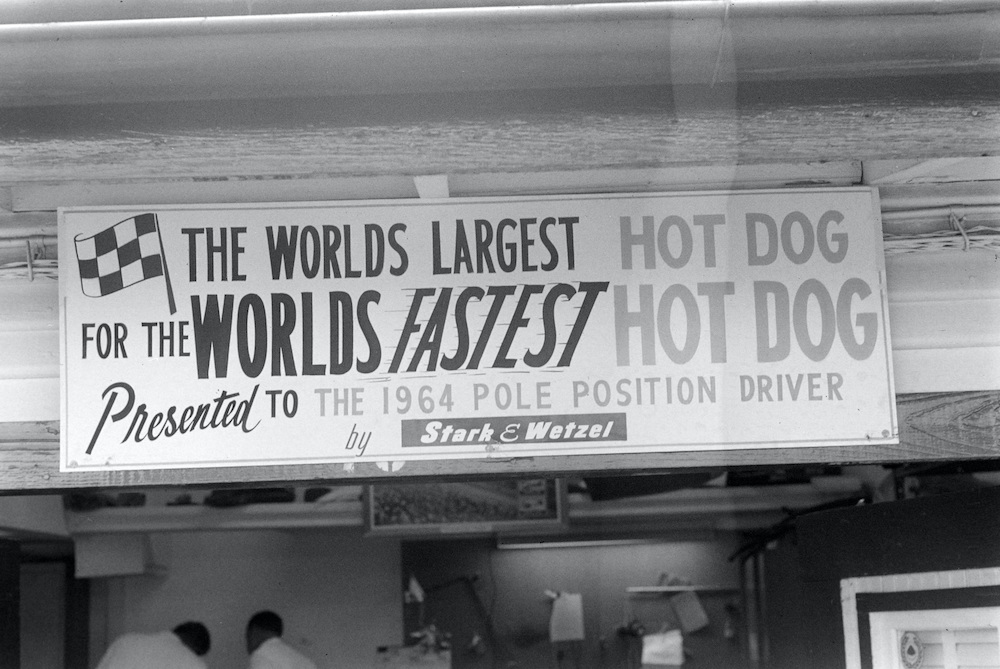
We could run a shot of Michael Masi, but since that would probably make a bunch of people mad, here's something we can all get behind: a shot of a hotdog stand at IMS in 1964. Eventual polesitter Jim Clark's thoughts on being awarded the 'worlds largest hot dog' are apparently lost to history. David Phipps/Motorsport Images
Q: I was watching the Jeddah F2 race and my wife commented that the podium celebrations were better than the IndyCar celebrations – particularly the St Pete GP that we attend every year. It made me think that if you don’t make a big deal of something, then no one will think it is a big deal. Do you think the series (promoters) will put any effort in this direction?
Rollin, Hollywood, FL
MP: Doubtful. F1 has undergone a heavy transformation into a sports and entertainment property where every aspect of what it does – from podium celebrations to its social media game – has been reviewed and improved to maximize style and reach. I’d like to think IndyCar will get to the same place someday, but right now, it’s very much a racing series without real presentational style or grasp of how to transform itself into a wide-reaching form of entertainment.
The racing is great – truly, there’s nothing I can think of that’s as enjoyable as the average IndyCar race. But, and here’s the obvious overstatement part, IndyCar would help itself a ton by hiring a company like Live Nation (or similar) to help re-imagine every aspect of its events like they’re big concerts. As F1 continues to win the hearts and minds of American open-wheel racing fans, I’ve heard we’re in store for another season of the "Defy Everything" marketing campaign the drivers hate, and teams have been asked to make sure they use THE NTT INDYCAR SERIES in print and on social media, not The NTT IndyCar Series because, you know, well, actually, I have no idea.
I root for IndyCar every day, hoping it figures out how to bring its incredible racing and drivers to the masses. I’m hoping that we have more than all-caps series names and defying things as our big response to the audience F1’s luring away.
Q: What are the chances Sebastien Bourdais and Charlie Kimball could share the third Foyt entry? Sebastien has 12 races that doesn’t interfere with his IMSA schedule and Charlie seems to have, or had, a budget for possibly five or six races.
Tim Little
MP: All things become possible when someone places approximately $6 million in the Foyt team’s bank account for Chuck and the French Fry to share a third Chevy-powered entry.
Q: Why do the Indy oval's Turn 2 and 4 SAFER Barriers start later in the corner? With some unfortunate luck, a car could strike bare concrete there. Also, on superspeedways, how do the teams generally set the radiator opening, since on superspeedways the cars are getting more air while sustaining rpms in a high range? Are they allowed to run asymmetric radiator nowadays?
Axel Putra
MP: That’s where IMS has decided they should be located. Teams can place blocking panels at the sidepod radiator inlets, or install shutters on the backside of the radiators to limit through-flow, based on ambient temperature and how much downforce they do or do not want to make.
Q: After the tire fire of driver etiquette we witnessed in Jeddah, is there an issue in general when it comes to driver etiquette? It seems like the ladder series are allowing the younger drivers to push the envelope as it relates to how they engage in close racing. The "older" generation in both IndyCar and F1 seemed to have a respect for each other, but more and more of the younger drivers are tending to go full send-it mode, which leads to brain fades and dangerous driving. Sure, there were the dust ups: Senna/Prost, Schumacher/Hill, Schumacher/JV, and PT/Bourdais, but for the most part what I remember was clean, hard racing, and when you watch the "veterans," they tend to race hard but fair.
Is it something that the governing bodies and stewards need to do a better job of "coaching," or are we just going to be stuck with guys going full send-it mode with little to no repercussions outside of their team being pissed off about spare parts? I'm not one for the stewards and governing bodies (especially the FIA) trying to legislate it away, but the interpretations as to what's hard racing and what's just crap seems to be getting very muddled, and leads us to focusing more on the bad of these race weekends versus the good. Thoughts?
Chris
MP: Lots of items here, so let’s focus on two. Young kids going maximum attack in smaller, slower open-wheel cars is nothing new; they can hurt themselves, of course, but there’s a huge difference in speed and impact force when you get to F1 or IndyCar. For the most part, the no-fear kids on the Road to Indy or on the European ladder tend to realize – quickly – that bringing the same level of aggression in the big cars comes extreme risks. So, kids and crazy driving is nothing new while on the way to the top. At least for what I’ve seen on the RTI for many years, the reckless and dangerous ones tend not to graduate to IndyCar.
As for the role race controls play in setting standards for fair and safe play at the top in the hope that it filters down to the junior categories, I’m never sure if such things are actually considered.
Q: Good to see a large number of IndyCar drivers helping out various teams with the Rolex 24 At Daytona in January, and I always saw six or eight at Sebring for the 12 Hours. There was never a scheduling conflict in years past. How did Texas end up on the Sebring weekend? Bummer!
Jeff in Florida
MP: IndyCar was offered a live broadcast slot on the big NBC network on Sunday, and despite having a friendly understanding with IMSA that neither series would drop events on each other’s major race weekends, IndyCar scheduled an event on one of IMSA’s biggest events to get the network ratings bump. IMSA, to the surprise of no one, isn’t happy with IndyCar.
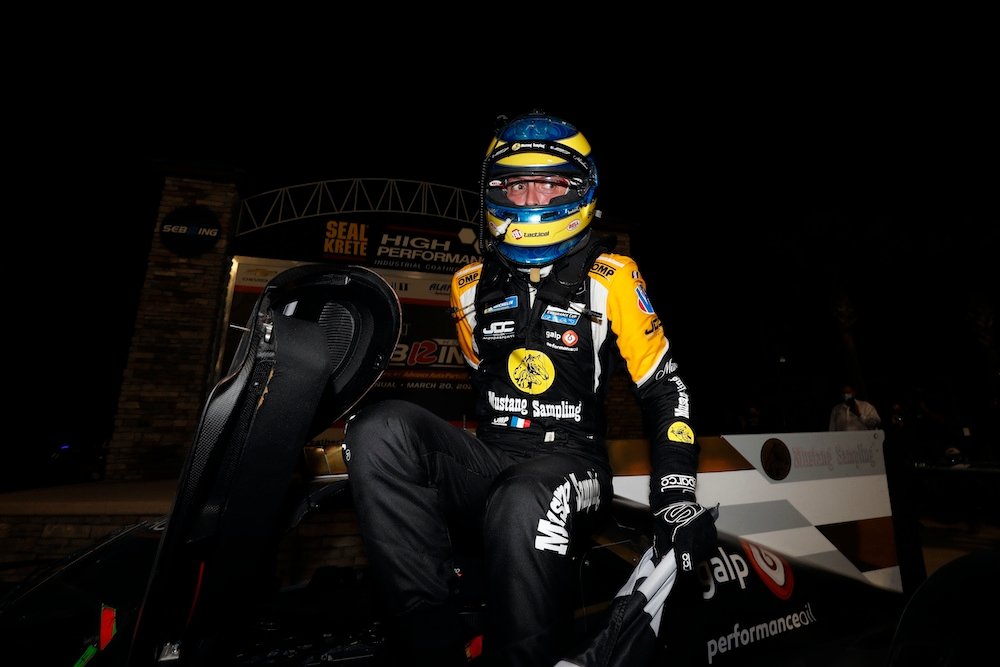
Then IndyCar full-timer Sebastien Bourdais' extraordinary performance in the JDC-Miller Cadillac at Sebring this year was arguably one of the best drives of the Frenchman's career. But had 2022's schedule been in play, he wouldn't have been in Florida in the first place. Michael Levitt/Motorsport Images
Q: With the short offseason upon us and looking to book a few race weekends in 2022, what outside of the Indy 500 would be your top three choices if you were to attend an IndyCar race as a fan? Thank you in advance, love all the great racing content.
Martin West
MP: If your budget allows, I’d book trips to Long Beach, Calif., Elkhart Lake, Wis., and Newton, Iowa. Long Beach is a cultural happening each year – IndyCar, IMSA, concerts, great foods, lots of local sightseeing – to experience. Road America is the best of high-speed racing where we get to see Indy cars in their natural road course habitat (plus, great food, amazing brother and sisterhood of fans), and the little Iowa bullring oval is wickedly cool with insane speeds. Plus, we need all the fans we can pack into that facility to ensure it stays on the calendar.
Q: I heard a rumor the other day that the BMW facility being built in Turn 3 at IMS is foreshadowing it entering the series as a third OEM. Any potential truth to this? Thanks!
Tim, Fishers, IN
MP: As much as I love the idea of BMW becoming the third, its big investment is being made in new, dual IMSA programs with a factory GTD Pro effort run by BMW Team RLL starting in 2022, and an even bigger hybrid LMDh prototype effort with RLL starting in 2023. These are serious spends, focused 100 percent in North America, and with LMDh, it ticks the box of being involved in electrified racing. It makes spending $10 million a year for five years on an electrified American open-wheel racing engines an extremely remote proposition.
Q: In further answer to Spike’s email last week, I too read that "98 F1 car faster than modern IndyCar" article and groaned and prepared for my buddy’s inevitable text message about the two series. But I found solace in the fact that while the O’Ward-piloted '98 McLaren was 0.5s faster than Colton Herta’s 2021 pole, in 1998, the original Hertamania claimed pole for the Grand Prix of Monterey in the Reynard 98I with a Ford XB engine and Firestone tires at… wait for it…1m08.146s, or 2.2s faster than the 1998 McLaren.
Trevor Bohay
MP: Well, as Pato told me after the run, the F1 car was nowhere near to being set up for Laguna, and with a little bit of time and tuning, he thought multiple seconds would be carved away. Regardless, a proper CART IndyCar from the late 1990s/early 2000s was an explosion of speed like nothing else we’ve seen here. Minus the popoff valve, I’m confident old Bryan Herta would have set a marker back then that F1 cars would have struggled to match. We placed limits on our cars’ maximum power and potential back then, while F1 did not.
Q: After Fernando’s 2017 Indy drive, do you think Max Verstappen would make the field in a Penske? My guess is that Roger would think so. My question is rhetorical, but brought about by the whiff of contempt I sense you have for F1. It’s a different game. Very different.
Jack Woodruff
MP: I’ve loved F1 since I was seven or eight years old (a few years after falling in love with IndyCar), so the contempt I share these days is for the Karen Horner/Karen Wolff routine, and Max and Lewis complaining about everything on earth.
If Max wasn’t in the Fast Nine at Indy and a threat for the win as a rookie, I’d be shocked. And if he doesn’t retire with the records for most F1 wins, titles, poles, etc., I’ll be shocked once more. As much as I love the idea of Max competing at the Speedway, his F1 driving aggression would need some detuning to survive 500 miles of oval racing.
Q: In recent years we’ve seen a lot of drivers have college degrees in engineering, etc. My question is, can a driver over-engineer the car into poor handling? We’ve long heard of drivers go by how the car feels. I’m just curious to know if being too smart can hinder a driver’s setup.
Kris, Kokomo, Indiana
MP: Trying to think of how many drivers have engineering degrees, and I’m sure a few do, but not a lot. Unless the driver is also acting as the engineer, which is a rarity, the only way for the driver to mess up the handling is by giving the engineer poor feedback.
The engineer can be like a detective, interrogating the driver to get the best feedback possible while weeding out the information that’s false or exaggerated. With most IndyCar drivers, there’s no need for the engineer to act like a detective, but in a few instances, especially with drivers who aren’t very good at relaying what was happening out on track, the intelligence or engineering education held by that driver really doesn’t matter.
Being too smart isn’t a hindrance in the driver/engineer relationship, but for the drivers who let those smarts interfere with their driving, we have seen the results fluctuate. Simon Pagenaud is a perfect example of someone who knows a ton about the car and the engineering, and can help the engineer to find fantastic setups, but as Simon readily admits, his worst races come when he’s thinking too much instead of turning off his brain and letting the animalistic side of himself take control of the steering wheel. That’s not so much an engineering thing, but rather, a case of someone who is hyper-analytical who can struggle at times to quiet his mind and find that zone where everything flows naturally.
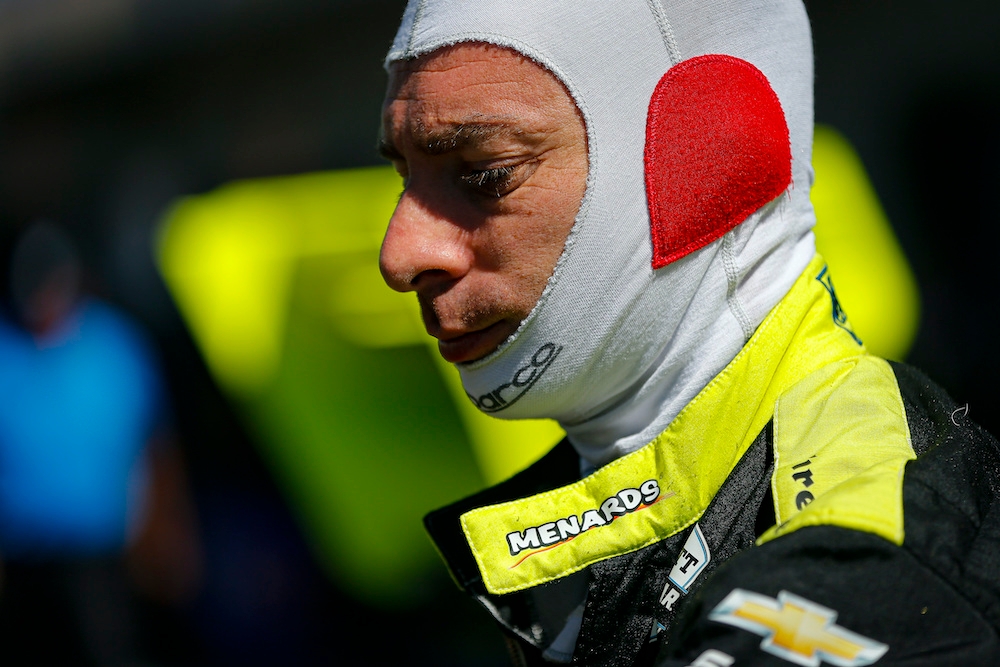
Pagenaud channeling his animalistic side. Barry Cantrell/Motorsport Images
Q: First question. Why does IndyCar use coil-over-damper front suspension? I believe the current Dallara DPi uses a torsion bar front suspension, so why not the DW12? I know the DPi was designed after the DW12, so my guess is that it was just too expensive to redesign the chassis.
Second question. Are the legendary Penske dampers a variation of the McLaren-developed J-damper? I went down a rabbit hole the other night regarding the Renault F1 "mass damper" -- the infamous movable aerodynamic device (that wasn't). The FIA banned the mass damper, then McLaren created the J-damper in response (which the FIA deemed legal). I've read where the Penske damper is patented (and highly sought after). I'm curious if the McLaren and Penske designs utilize the same technology.
Jonathan and Cleide Morris, Ventura, CA
MP: Great questions. Dallara DW12: Designed in 2010-11 and testing by mid-2011. Dallara P217/Cadillac DPi-V.R: Designed in 2015-16 and testing in the second half of 2016. So, as you noted, there was a decent gap in their birthdates, but there was also a desire by IndyCar’s ICONIC committee to avoid reinventing the proverbial wheel with the DW12. Torsion bars have been around forever in open-wheel racing, but so have traditional shocks and coilover springs, of which IndyCar teams had many when the chassis changeover happened from 2011 to 2012.
Team owners wouldn't want to pay for a new torsion-bar tub and bellhousing just for the sake of it over the last 10 years as it would be a wasted expense. I wouldn’t be surprised to see the next Dallara go torsion, but dampers are also needed, so what happens there from a front and rear packaging standpoint?
IndyCar allowed the use of J-dampers/inerters with the DW12, and every damper vendor in IndyCar makes or sells a licensed kit; more than a few teams outright manufacture their own inerters and pretty much everything else inside the dampers.
Q: What a busy couple of days! First we get upgrades at Laguna and Tracy being furloughed. I’m curious -- is the replacing and repaving the only upgrades being done? From watching on TV it looks like there is quite a bit more work that could be done. How will the new pavement affect the racing?
Tracy being let go seems to be a poorly-kept secret with his initially reduced role for this past year. Conventional wisdom has Hinch being the frontrunner. Who would be a dark horse candidate to be put in the mix?
Sato to Coyne looks like a good move on the surface… but didn’t Coyne lose Romain’s engineer as well? Do they still have the staff to keep that car at the sharp edge of the field?
And just a comment… DRR’s signing of Sage and Santino… well that will be fun watching them…
Rick
MP: The Monterey County Board of Supervisors approved the top-priority facility upgrades, which account for roughly $10 million to come out of Monterey’s bank account. Track manager John Narigi has outlined $66 million in total renovations and modernizations to get Laguna Seca up to date.
Dark horse to replace PT? Let’s go for Danica Patrick. And if it’s not Danica, how about team owner Beth Paretta? Since change is coming, why don’t we step into the 2010s and bring an end to the sausage party in the commentary booth?
The only major engineering carryover at DCR is the young and talented Ross Bunnell, who did his first season as race engineer in 2021 with Ed Jones. Not sure who will fill Olivier Boisson’s void, but Coyne’s looking.
I love the move by Dennis Reinbold to pair Ferrucci with Karam. With capable cars, we know they’re capable of running towards the front, and if we’re fortunate, Santino will need to carve through the field at least once and give us another incredible show while doing so.
Q: Will we see the United States Grand Prix racing on the same weekend as the Echopark Texas Grand Prix someday since they are both at COTA in Austin, Texas?
Chris Fiegler, Latham, NY
MP: No! Major racing series tend to want exclusivity when they turn up at a track, and when we do have mash-ups like IndyCar joining the Brickyard 400 weekend, or IMSA on IndyCar’s Long Beach card, one series stands as the headliner and the other is the warm-up act.
It makes placing the world’s biggest racing series and America’s biggest racing series on the same bill as one where both would never consider bending the knee and bowing to the other.
Q: I wanted to share love and prayers with the Unser family. Like many others, I grew up watching Big Al and Uncle Bobby run at Indy and Mid-Ohio. They were true heroes. I worked for Thermo King in the ’70s and was able to visit the garage at Indy because they sponsored a car driven by Tom Bigelow. I was standing in the garage after Tom's first qualifying laps. He spun the car in Turn 1 and after they brought the car back, several drivers including Big Al stopped by to check on Tom. Big Al and I exchanged hellos, but to an 18-year-old that grew up watching him, it was amazing. RIP Big Al, and watch out for Miller and Uncle Bobby. I'm sure they will have something planned for your arrival.
John Furnis, Austin, Texas
MP: Big Al was one of the Indy legends who’s spoken of with plain and simple respect by his friends and rivals alike. Trust me, there are some who can’t stand each other or are by no means worthy of our adulation, and with Unser, we had someone who was exceptionally decent and "good people," as my dad was fond of saying.
Q: Was sad to wake up to the news that Al Unser had passed. Made me miss Robin Miller even more, as I was wondering how Miller would have remembered Big Al. Sad day losing another legend and boyhood hero. Heck, he was still my hero as an adult! I was at Daytona in 1985 when he won the 24 Hours, which may have been the only time I saw him race in person. Need to go into my albums, think I have a picture of him in the paddock.
Jim Wilson, St. Augustine FL
MP: Thanks for sharing, Jim.
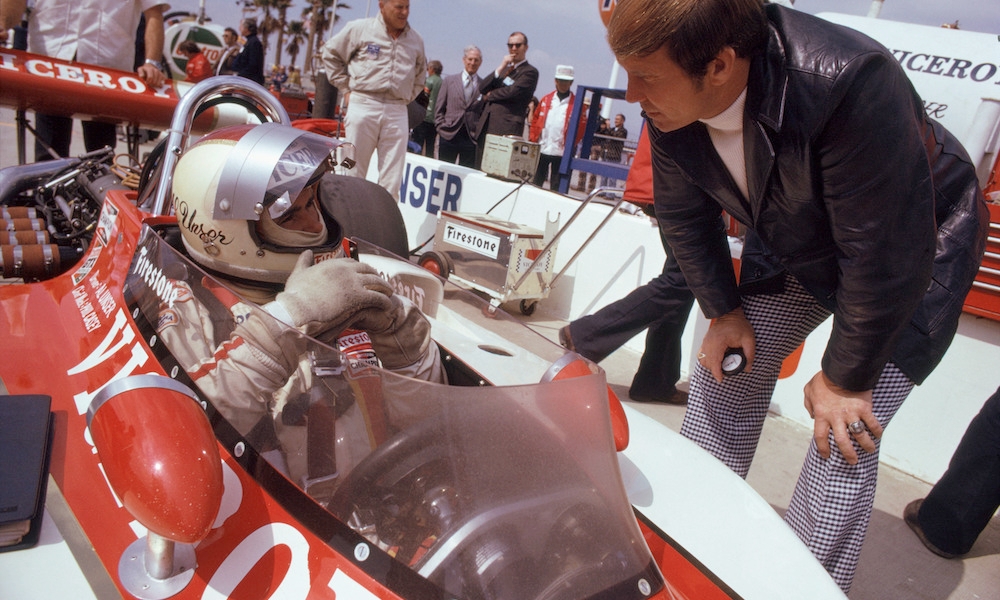
One of the best, on and off the track. Murenbeeld/Motorsport Images
Q: Don't think I've seen what to me seems an obvious question in previous Mailbags. After reading about Palou's test in Ganassi's DPi and commenting how power steering was an advantage in handling, why have we not seen power steering in IndyCar? It has to be the last major series without it. I'm no engineer, but if it is mandated by IndyCar, the weight penalty would be the same for all teams and along with the obvious handling control improvement, with the rough surfaces on many of our road and street courses, the kickback factor on the driver's wrists would not be nearly as punishing.
#indybacktowatkinsglen
Greg Lane, Rochester, NY
MP: There’s a little bit of history to walk though on the way to an answer. On average, an IndyCar in the modern era -- CART, Champ Car, IRL, and even the last generation of IndyCar Series Dallara that ran through 2011 -- weighed somewhere around 1500-1600 pounds. Some of those cars made similar downforce to what we have today, and some also had stickier tires. And, as their drivers said, they could be tough to turn on road and street courses, but they weren’t too tough.
Moving to the DW12 in 2012, the goal was to fall in a similar weight range, and therefore, there was no need to design and build power steering into the chassis. Also, as I recall, when the topic was raised as an option, IndyCar and its engine manufacturers said they weren’t interested in going to power steering because of the added weight and packaging complexities it would bring. Fast forward to 2021, with the aeroscreen and all the other add-on safety items that have been attached to the DW12, and we have a hefty open-wheeler that takes a lot of muscles to turn for an afternoon.
Once we get to 2023 with the new hybrid engine and ERS formula, the DW12 could be tipping the scales – with driver – at 2000 pounds or more. There just might be a need to devise a power steering solution if the number creeps that high.
Q: I know digital tickets are a convenience, but IMS/Penske knows that the physical ticket to the 500 is a collectible, right? They still make a big deal about revealing the tickets from last year’s winner, so the physical ticket isn’t going away any time soon like most other sporting events, right?
Ryan in West Michigan
MP: IMS President Doug Boles shared this response from his post as IMS president:
“Easiest way to answer this, I 100% understand and 1000% agree that a hard stock, specialty ticket is part of the Indy 500 experience. And, not just an ‘option’ to get a souvenir ticket after the race. People want to keep the ticket they actually used to get into the gate. Me too!
“So, at this point (and for the foreseeable future), we will keep the hard ticket for Indy 500 race day. We will likely offer digital tickets for those that want it – and will use digital for other event days in some cases. Bottom line, we agree with Ryan and will keep the hard ticket!”
INDYCAR UNIVERSITY
ED’s note: A few weeks back, reader Jack Cook sent the Mailbag a letter explaining that he is new to IndyCar and trying to learn about the series. Marshall invited him to send further questions, and Jack responded this week with no fewer than 10 in one email. Rather than taking over the entire Mailbag by hitting them all at once, we’re going to answer one per week for the next 10 weeks. By the time the 2022 field assembles in St. Pete, Jack, and any other new fans, will be primed and ready. (We’ll know we’ve really done our jobs if they’ve also taken sides in The Split, and staked out a position with regard to the 2002 Indy 500).
Q: For the groups that own multiple teams (Andretti, Penske, etc.), are those teams working together to win, or is it every team for themselves?
Cook family, MI
MP: All depends on the teams and crossover possibilities. Penske’s IndyCar and NASCAR teams don’t have much that relates, other than in select staffing situations, but his IndyCar and sports car teams certainly do, where the disciplines are super similar. But when it comes to season-long championship runs, you won’t find much that brings them together once things get rolling.
Same with Ganassi with its IndyCar and IMSA programs, where drivers and personnel regularly swap back and forth for, say, January’s Rolex 24 At Daytona where some of the IndyCar crew help out as extra bodies because it’s early in the year, and the Indy 500 when IMSA crew members often come to run an extra car, and maybe Petit Le Mans with the IndyCar crew again if it’s after the open-wheel season ends.
You’ll have lots of cheering and support across the various teams functioning under the same roof, but in general, they tend to operate in their own competitive bubbles.
Q: Chris – great opinion article on the Abu Dhabi GP. You made the astute points that it's a shame that the officials influenced the championship, but also that they were not biased and that the competitors did no wrong. Great to hear the shades of gray in this increasingly binary world. What needs to come out of this is clarification of the rules for the future. But, whatever... epic race and championship!
What I want to understand is, what was going through Max's mind on that final restart? What's it like to be thinking, "OK, I've got one lap to win a world championship"?
Robert Keith, Washoe Valley, NV
CHRIS MEDLAND: Thanks, Robert! So, Max was mainly thinking about taking his chance at the first opportunity, because he knew he had a significant tire advantage that would help him pull away. And he duly did it. Getting in front would also mean Hamilton had to take risks, and if it all went wrong then Max would be champion anyway. But he actually didn't get long to think. The lapped cars ahead of him were allowed to overtake on the run to Turn 9, then out of Turn 9 the message 'Safety car in this lap' came, so he probably had about 10 seconds of realizing what was about to happen before he was then focused on Hamilton and when he would accelerate away to restart. Max did admit he felt nervous during the day though, and it showed because he got cramp in his right leg when he was full throttle down the straights on the last lap!
Q: Chris: Regarding your response about SAFER Barriers in F1. Montreal added SAFER Barriers between T4 & T6 in 2017 or 2018 – I think '18. Specifically after Post 4A and just after Post 5. It’s not a particularly visible section of track, but, as marshals we are up close and personal.
Brian Pitts
CM: Thanks for the correction! Of all the places on the calendar, Montreal makes a lot of sense as a North American venue with fast corners that exit close to a wall. It's certainly good that they were added in places there but that sections like the "Wall of Champions" remain concrete, because the little bits of history are what make some of these venues special. And thanks for the work you and all the marshals do to let racing happen safely.
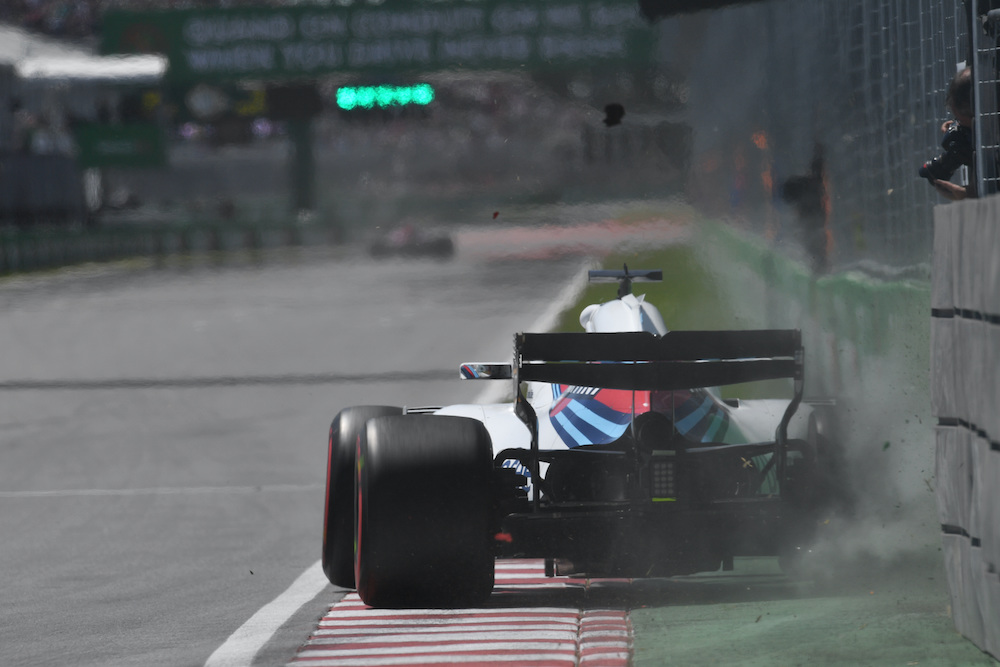
Montreal led the way in introducing the SAFER Barrier to F1, but bare concrete remains the preferred option at the famed Wall of Champions. Jerry Andre/Motorsport Images
Q: Are F1 teams profitable under the new budget cap? Had a conversation with a friend and told him my understanding was the finances in F1 aren’t as screwed up as they have been in the past. The fact that it costs $250m to buy in raises the value of existing teams as an “asset” if someone wants to fold their team. So are these teams losing nine figures still?
Ryan in West Michigan
CM: You're spot-on that the finances are far better now, especially the value of the teams. As you say, the buy-in just increased their value instantly, so you have something lucrative to sell if you ever need to. In theory the budget cap should make the bigger teams profitable, but in reality the profit just goes back into any potential avenue that might lead to increased performance (such as facilities development or top salaries). There are also some teams that are not hitting the cap yet, but what's important to remember is that F1 is still a global marketing exercise for the teams, and they're now getting the same exposure -- or even more with extra races and such a tight championship -- for less financial outlay. Before, all teams ever did is spend what they could find and try and find ever-bigger budgets. There was no point at which they could become profitable, whereas now there is.
THE FINAL WORD
From Robin Miller's Mailbag, December 17, 2014
Q: Greetings from Indonesia! Thanks for the wonderful job that you do each week keeping us informed! Too bad the internet was only in its infancy in the mid-’90s for CART’s heydays. Had your column been around back then, I think the owners would have seen what asses they were being before The Split ever came to be!
Here’s my bit for the Mailbag…if you care to publish: I have found the solution for Indy’s 2015 season. It has everything for both the powers that be and us racing fans… it’s a road course and an oval — a true roval, with non-stop passing every lap. A real bullring that favors a bold and aggressive strategy, and would be thrilling from start to finish. The track layout strongly favors double-file restarts and pretty much ensures that the whole field would be at the same speed when the green flag falls.
Seating would be very limited so a sellout is guaranteed, which totally eliminates the need for any promotion. Every seat would have a view of the whole track, and it’s currently being built in Indy, so the hospitality and season-ending banquet facilities would be perfect. It’s easy to find too, all Mr. Miles has to do is look out his window -- it’s the 16th & Georgetown roundabout.
As an added suggestion, quadruple points should be offered to guarantee that even a back marker would still have a chance at the championship. I only wish this track was around when PT was still driving!
Randy Madiun, Indonesia
ROBIN MILLER: Damn Randy, I hate it when somebody is more sarcastic than me but I like your idea. Can you imagine P.T. starting at the back of the Roundabout 300? They could either auction off sitting on the park bench inside the roundabout (there really is one) or make a death row inmate sit there for two hours, and if he survives, he walks. But as for your first statement, car owners never listen to anyone and certainly nobody that gave them as much grief (they earned it) as I did.
Presented by:
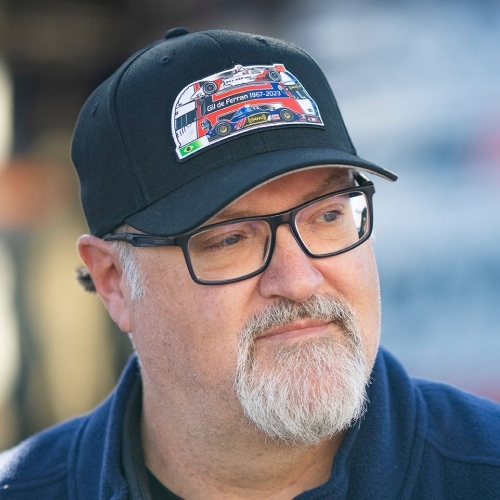
Marshall Pruett
The 2026 season marks Marshall Pruett's 40th year working in the sport. In his role today for RACER, Pruett covers open-wheel and sports car racing as a writer, reporter, photographer, and filmmaker. In his previous career, he served as a mechanic, engineer, and team manager in a variety of series, including IndyCar, IMSA, and World Challenge.
Read Marshall Pruett's articles
Latest News
Comments
Comments are disabled until you accept Social Networking Cookies. Update cookie preferences
If the dialog doesn't appear, ad-blockers are often the cause; try disabling yours or see our Social Features Support.