The RACER Mailbag, November 3
Welcome to the RACER Mailbag. Questions for Marshall Pruett or any of RACER's other writers can be sent to mailbag@racer.com. Due to the high volume of questions received, we can’t guarantee that every letter will be printed, but we'll answer as many as we can. Published questions may be edited for style or clarity.
EDITOR'S NOTE: The response to the news that we were reviving a version of the weekly Mailbag made famous by our much-missed friend and colleague Robin Miller was enormous -- and so was the volume of questions that we received for this inaugural edition. We've saved all of the questions that we didn't manage to get to this time around, and will answer as many of them as we can next week.
Q: Best first question for Mailbag post-Robin Miller era! What if they start the race at one track, and finish it at the other track? Think they could get enough folks at both tracks on consecutive days to justify the effort? And it could be a hellava pit stop! Stop car, crew loads it on flatbed tow truck, tow trucks race to pit exit, then follow each other to other track, where they line up till pit entrance opens, rush to pit, unload car, fire it off, off they go for finish! I suppose the fuel rig and tires should be transported with car! Maybe it will bring fans to Milwaukee and Cleveland! Call it the Robin Miller 1000, including the tow truck travel!
Johnnie Crean
MARSHALL PRUETT: Make that the Pain In The Ass 1000, Johnnie. Which, now that I think about it, would be the perfect thing to piss off Miller. The idea of settling into one track, doing half the race, and then moving the party to an entirely different track far away sounds like a wonderful idea for an iRacing event, because I can’t think of any promoter that would sign up to earn half the money.
Now, what I would love to see is for IndyCar to strike a deal with Road Atlanta, settle in for a good, long two-hour race on that crazy-fast road course, throw the checkered flag, and have drivers motor across the two-lane Highway 53 and roll into the little 0.375-mile bullring Lanier Speedway oval adjacent to Road Atlanta.
We’d call it the Robin Miller Powered by Pepsi 250. No setup changes, just a switch from road course to oval tires, and fire the field off -- in reverse finishing order from Road Atlanta -- for 250 laps. I mean, if we’re going to go crazy, let’s at least keep it within walking distance…
Q: When will the LED panels on IndyCars return?
Lance Snyder
MP: In the spirit of silliness that it was asked, I’m proud to report the new Dallara IndyCar chassis, due in 2024 or so, will be made entirely from LED panels. The whole car will be like one big Lite Brite.
Q: It has been obvious for a while that the engineering team and mechanics at Meyer Shank were getting the job done, as were the full-time and part-time drivers. But the race strategy during the events has varied from mundane to bizarre.
What has Mr. Shank got planned for this off-season to upgrade the positions on the pit wall timing stand to make this team a race winner instead of a race mystery? They seemingly have the cars. Now they have proven winners in both cars with a wealth of knowledge to share (especially with Pagenaud). So now what? Can you -- or Mike -- shed some light on this?
P.S. I really, really am rooting for Mike to succeed!
Royal M. Richardson
MP: Royal, all I can say is watch your tone with Mike Shank:
"It's always easy to be the rock star after the race. Across both of our IMSA and IndyCar programs there have been tough calls this year that did not work out. BTW if we are not running great on any given day, we will ALWAYS go for a risky strategy. P18 really does nothing for anyone. There are considerations that the fans will never know about happening in the background in both series. We're constantly rethinking our strategy as the race goes on and the unexpected happens.
“Oh, and one more thing: This team that does mystery strategies won the Indy 500, Rolex 24 overall, Petit Le Mans overall, Watkins Glen 6 Hour, and two IMSA championships, but who's counting?" – Mike Shank
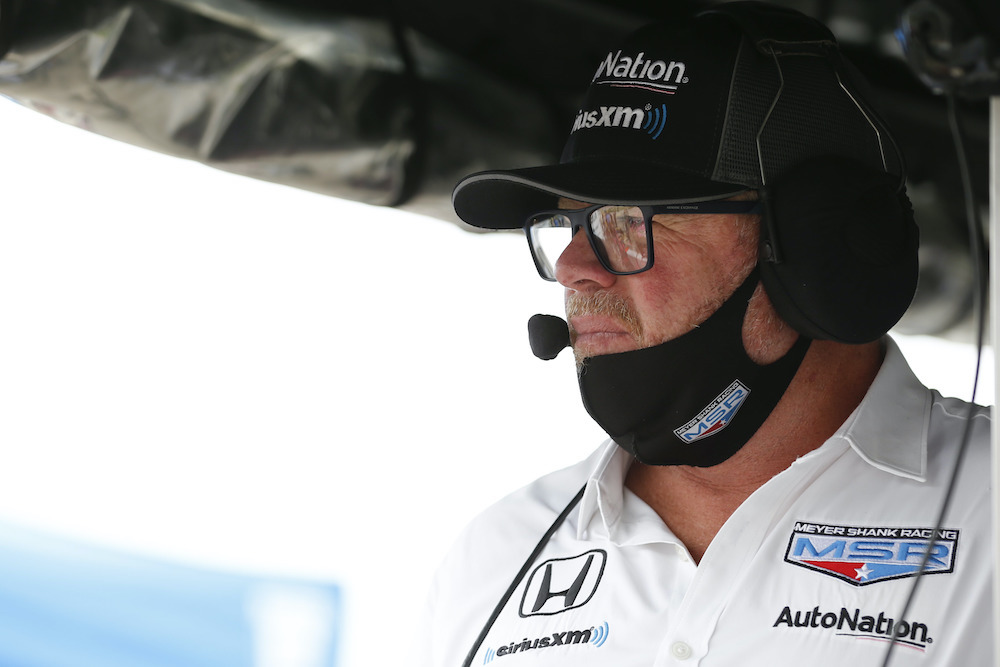
Hard to tell what's going on just from his expression. He might be planning his next "mystery strategy". Or, he might also be figuring out how to reinforce the MSR trophy case so that can handle all of that silverware. Barry Cantrell/Motorsport Images
Q: Aside from the ECR test, are there any potential suitors for Ryan Hunter-Reay's talents?
Via email
MP: I know Juncos Hollinger Racing has some interest in RHR if a second car comes together and the budget is found to pair Callum Ilott with a veteran during his rookie season, and there was at least one strong voice within the Rahal Letterman Lanigan team that wanted him in the third car that ultimately went to Christian Lundgaard. I’ve also heard the Foyt team could be open to RHR being in the No. 14, but like the JHR situation, it’s all about getting that $6-8 million budget secured before a driver like RHR -- or any driver -- would be signed.
The big questions to solve here for ECR and RHR is whether the Air Force will return, and whether a new deal with the Air Force is tied to Conor Daly driving the car. Once we get those items answered, we’ll know whether one of the popular American drivers will be sharing the No. 20 Chevy with Ed. If the Air Force doesn’t return, the stampede will be on to find a budgeted driver to fill the road and street course void.
Q: I welcome The Mailbag with open arms! What are the chances of Santino finding a ride?
Janis V.
MP: Right now, Ferrucci’s chances appear to be slim. RLL co-owner Mike Lanigan was a big fan and wanted him to take the third seat, but with Renault/Alpine rumored to be sending $3-$3.5 million along with Lundgaard, that’s a lot of money to turn down. It’s the team owner’s dream to have a guy like Lundgaard who is extremely fast and brings a happy sponsor who wants to support the team with real money.
Makes it tough for someone like Santino, who was once rumored to have about $2 million to bring, but going into 2022, and provided he can still get his hands on that kind of money, it’s not enough to step into one of the open seats that need anywhere from half to a full budget. Outside of RLL, it’s hard to see where he might land in IndyCar with a regular drive. But someone smart will sign him up for the Indy 500.
Q: Do you think IndyCar has finally made it back to the levels we all loved in the early '90s? Grid size is way up and the new drivers coming up seem like a draw for the TV.
Nathan Gray
MP: There are definitely a few things that feel familiar to CART’s golden era, and having been there for all of it, trust me, there’s nothing that I’d love to say more than yes, we’re all the way back, but we aren’t.
We don’t have anything close to the amount of money coming into the paddock like we once did. That’s the biggest difference. And Dog The Bounty Hunter couldn’t find most of our drivers if $1 million was at stake. I’m not saying today’s driver lack support from passionate IndyCar fans, but the average sports fan just doesn’t know an Alex Palou or Josef Newgarden any more than they do the reigning American Cornhole League champion.
The bigger IndyCar names in the 1990s were legitimate sports stars with some form of mainstream crossover appeal. And with those names came heavy sponsors who wanted to be associated with IndyCar stars.
I’ll save the deep dive into The Split and all the other icebergs the USS IndyCar hit back then for some point in the future when I want to be depressed. But for now, there’s no mistaking how today’s series is rising, and has a lot of positive things taking place. But things were so good in CART’s golden era, that I wonder if it’s unfair to compare where we are at the moment in this perennial rebuilding process to the unbelievable heights we achieved back in the day.
Once upon a time, IndyCar was a big deal on a national level. Everything Penske Entertainment needs to do with the series revolves around bringing IndyCar out of the shadows and back to the kind of coast-to-coast awareness we once had.
Q: This isn't much of a question but more of a story, and I think that speaks directly to Robin's love of a good story. Thinking of the recent 10-year anniversary of Dan Wheldon’s death, I will always remember Nashville. Several friends and myself drove down to attend the race at the Nashville Speedway, which ended up getting rained out. So the only logical thing was to find drivers and bug them for autographs, pictures etc.
After sneaking into the Patron tent and enjoying some free beverages, we headed out to find some more drivers. We stumbled upon Dan Wheldon. After a few minutes of talking about the rainout, we asked for some pictures, which he gladly agreed to. After the pictures were done, I was almost walking away and he reached out and shook my hand, looked me in the eyes, and said, ‘Thank you for being a fan.’ And he meant it. I'll never forget it. I don't think I've ever heard something like that from a driver, and it still resonates with me to this day. That guy was one in a billion. And as a fan, I miss him dearly.
Jason Morrison, Terre Haute
MP: I’m with you here, Jason. People don’t really change their personalities on the fly, so I’ve never expected other IndyCar drivers to magically start acting like Dan, but man, his need to treat fans, track workers, restaurant servers, and anyone else he came in contact with like they were important to him and mattered to the world was so unique. And important.
Some drivers make a great effort to be present and available to fans, and others still prefer to hide in the transporter or their motor coach and give their fans the bare minimum of personal connection time. As IndyCar tries to reconnect with returning fans and build a bunch of new ones, it’s going to need all of our drivers to help solve our awareness problem.
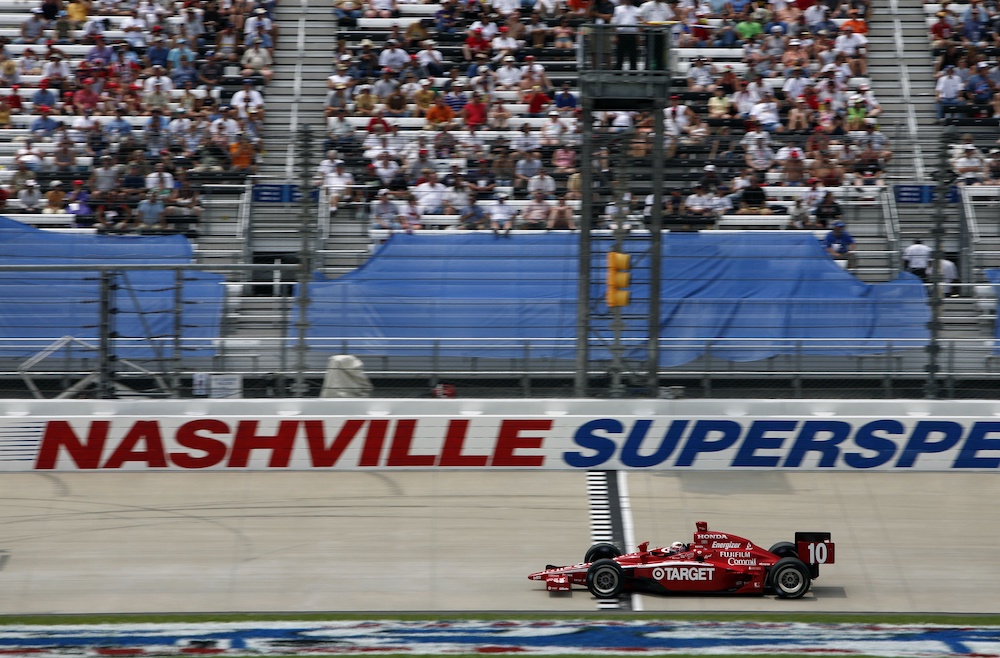
At least one Dan Wheldon-supporting Mailbagger made good use of the rain delay at Nashville in 2007. Dan Streck/Motorsport Images
Q: For both your forgetful and new readers, please give us a rundown of the names of the various sanctions that presided over Indy-type racers, and the years they were in control. I volunteered as flagger or emergency services at a few events and was a rare spectator (1970-2008), and I'm not sure I remember who was in charge.
Wayne Hill, Houston
MARK GLENDENNING: AAA from 1905-1955 (with a few little gaps and asterisks along the way), USAC from 1956-1995, CART/Champ Car from 1979-2008, and the IRL/IndyCar from 1996 onwards.
Q: What would it really take to get IndyCar back at COTA?
Jared Roberts
MP: After the explosively popular USGP at COTA we just had, I can’t imagine the track would hold the slightest interest in bringing IndyCar back. Nobody showed up when we gave it a try in 2019, and even if 50,000 turned out for us at a future race, we’d look both lame and silly compared to the 150,000 or more F1 just drew at COTA. The last thing IndyCar needs is to go to places where the grandstands are barely half-full and the series looks small and unimportant.
Q: I love that IndyCar is gaining so many young talented drivers, but like any long-term fan, I have some favorites among the older drivers. How much is the signing of the Lundgaards and Kirkwoods about talent, and how much is due to sponsorship they can bring for a season or two? And are the Hunter-Reays and Bourdais at a big disadvantage only due to age, or are they perceived as having lost their competitive edge? With the fields being so closely bunched for time, it seems that on any given week any driver in a solid team can earn a top 12 starting spot and finish. Thoughts?
Mark Savage, Milwaukee
MP: As I mentioned earlier in reference to Lundgaard, he’s the unicorn that every team owner chases, but he’s also a rarity. A kid like Kirkwood is the more normal scenario where he’s faster than a bullet but doesn’t bring money to the relationship. Winning the $1.3 million that comes with the Indy Lights title is a huge help, but that will only get him a couple of races in IndyCar, and it’s a one-off prize.
The answer here, in most instances, is about how much a team covets someone like Kirkwood, and how much they are willing to chase sponsors for months and months to see if they can find the rest of the budget required for a full season. Even if they find the other $4.7 million, what happens in Year 2 when the one-time Indy Lights money is gone? It’s a struggle when new money needs to be found.
That’s why prime vacancies, like what Andretti created with the decision to end their relationship with RHR, is where a Romain Grosjean or a Kirkwood gets a shot when a paying seat opens up. Andretti had one paying seat to offer and chose Romain, leaving Kirkwood on the sidelines with his $1.3 million and no immediate answer on where he’ll take it.
On the age question, it’s all about what a team needs. Drop an RHR or Bourdais into a seat where the team needs immediate results, and they’ll get it done. And if it’s a team like Arrow McLaren SP, where they are more interested in grooming young talent, having a long runway ahead, and making their own stars, those veterans aren’t getting calls.
Q: I’ve been an IndyCar fan for 50-plus years and enjoyed the antics of Robin for many of those years. With help of his sister, Marshall or others, maybe they could give some insight on what events in IndyCar affected Robin the most? (Good, bad, happy, sad). Here’s a pic of Robin at Mid-Ohio 2019. I think he’s cussing me out.
Rick Schutte
"You're holding it backwards, you *******."
MP: Hi Rick, your use of ‘antics’ to describe Robin made me chuckle. Perfect word! Our close friend Steve Shunck has some great memories to share below, and before he does, I’ll add that while Robin obviously lived for the Indy 500, and wasn’t necessarily motivated by some of the other events on the calendar, he never lost the fire to report on mundane things. Writing reports year after year on the second practice session at Track X gets old, quickly. And yet, he was always raising his hand -- after having written a million of those reports -- to help with penning yet another. That always stood out to me. Robin had the clout to say he’d only file big stories, but he never shied away from the boring or laborious ones, which spoke to his passion and professionalism that spanned every event of the year. And now to Shunck:
STEVE SHUNCK, long-time and close friend to Robin Miller:
"The death of Art Pollard in 1973 in the morning practice session before the first day of qualifying for the Indy 500 was his saddest moment. Robin was 23 and Art was 46 at the time. They were very close friends, and Art pretty much put Robin under his wing and looked out for him for the three years they were friends. They went to movies and concerts along with Art's wife. Robin and Art also worked out together at Indianapolis Athletic Club, played basketball and played poker. In Robin's words, "Art Pollard actually cared, gave a damn if you please, about a bunch of people in this world. Whether you raced against him, dined with him, laughed with him or just barely knew him, Art came across as more than an autograph, handshake or wave. He tried to become a part of your world for at least a couple minutes." Art also helped Robin buy his Formula Ford.
"When Roger Penske bought IMS, Robin was thrilled. Not so much that RP was buying it from Tony George, but because Roger has passion and love for IMS like few others. Robin knew Roger would invest the money and time needed to make it event bigger and better. It's hard to go back in time, but Robin knew Roger was probably the only person that could get Indianapolis 500 close to "what it once was." I know for a fact that many times Robin and Roger would exchange emails well into the early morning, with Robin running his thoughts and ideas past Roger and receiving an almost immediate – if not immediate – response at 2:30 a.m.
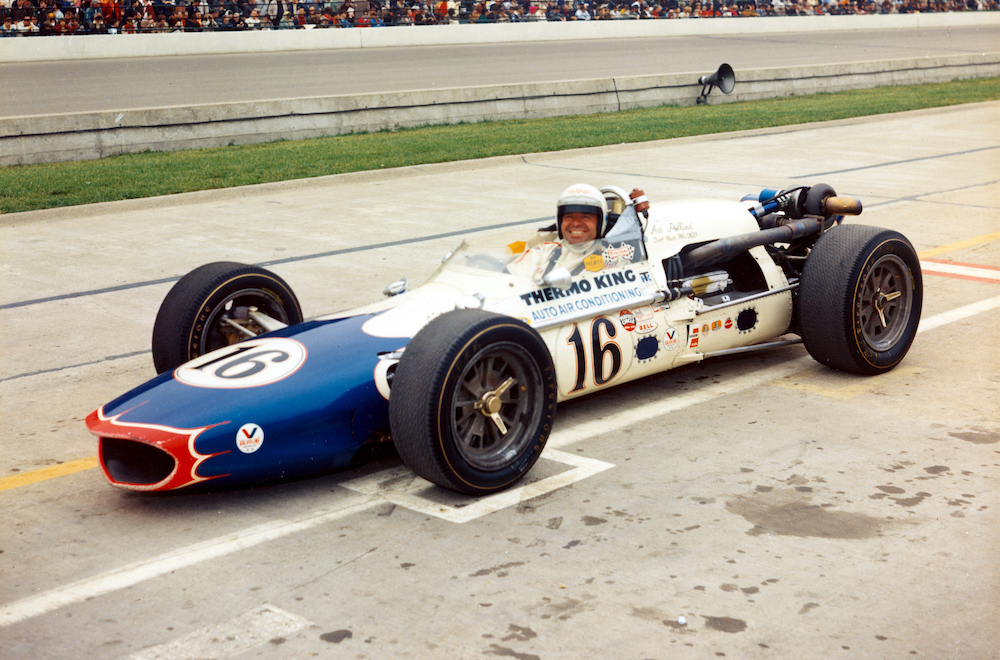
Art Pollard at Indy in 1967. Robin's presumably just out of shot and checking the newspaper to see what time the local cinema is showing Casino Royale. Image via IMS
"Moving on, Robin had nothing against foreign drivers. Robin simply wanted the best drivers to race at the Indy 500 and IndyCar. But NOTHING made him happier than when a young deserving American was given a chance, and especially when it was an American with a top-flight team. Josef Newgarden comes to mind -- Robin was happy when Sarah Fisher and Ed Carpenter gave Newgarden a ride, but thrilled when Penske signed him. He was so happy when Brian Clauson was given a chance; same with Conor Daly and Sage Karam. No one was a bigger cheerleader for Graham Rahal than Robin. When Ryan Hunter-Reay was given a chance with Bobby Rahal which lead to Ryan going to Andretti Autosport with IZOD and then winning Indy in 2014, that made Robin happy. Robin was also happy to see the best international drivers race and succeed at Indy -- Dario, Dixon, Sato, Helio, Montoya, Power, Pagenaud and Kanaan. And boy till the bitter end he was pushing for Kyle Larson to get a shot at Indy.
"I could write tons more, but for Robin, but nothing was better than a phone call on a random Tuesday afternoon with Dan Gurney, A.J., Mario, Mears or Uncle Bobby. He’d usually call to get just one or two quotes for a RACER magazine or RACER.com story, and instead of just a quote or two the call could sometimes last up to 90 minutes (Uncle Bobby…). None were less than 30 minutes as Robin and whoever he called took care of business first, then it was time for gossip, followed by some tales from the past and "good old days" before it wrapped with badmouthing some current situation or other and how it could be solved Robin's or the legends way, which would then make IndyCar racing or the 500 bigger, better, stronger or faster. He loved, loved those calls!
Q: Thanks for reviving the Mailbag! Robin would be very proud, and we all appreciate it.
Many of us are familiar with the sagas of the Whittington brothers, Randy Lanier and John Paul Jr. My question is whether the fellow drivers on the grid were onto what was going on (to the extent we may know), and if so, how did it affect the trust and respect they were given (or not) on the track? If fellow drivers were angry at the disrepute they were bringing to the sport, how did this manifest itself? Any behind-the-scenes tension that came to light years later? Did A.J. smack anybody upside the head? Did Roger dress anybody down for besmirching the corporate image? As disappointing as these shenanigans were at the time, in retrospect it is a fascinating era that’s gotta be an unending gift for good storytellers.
Peter in NJ
MP: Even today, the topic is a sensitive one when I’ve broached it with some of the owners and drivers who were there in CART and IMSA, where Lanier and the Pauls and Whittingtons got their pro racing start. Not sure if you’re a fan of pro wrestling or have seen the docuseries ‘Dark Side of the Ring’ on the Vice channel, but it offers a fascinating look inside the biggest scandals and craziest characters from the WWE and regional promotions. It’s told by the main characters or those who were deeply involved, and I dream of something similar being developed for racing to tell the full stories of the aforementioned drivers, and more.
At the time, Mario was vocal about anyone doing drugs or selling drugs needing to be kicked out of the sport, and it was an important line for IndyCar’s biggest name to draw. But since our sport is driven by sponsorship dollars and thrives on a clean reputation to find and keep those corporate partners, it’s a struggle to get the bigger names who are still involved with racing back then to give honest and detailed answers. If you caught the new Netflix series ‘Bad Sport,’ there’s a good episode on Lanier, and he’s the main storyteller in it, but what won’t you find? The Penskes and Foyts anywhere near it. I’ve heard tons of great stories about the driver/smuggler times, but they’ve all come from mechanics, reporters, and folks who weren’t in the spotlight.
Q: Thanks for bringing the Mailbag back. Robin is smiling. Curious to know who or what is driving the sudden desire to move the Detroit Grand Prix back downtown. Belle Isle is a great location, and despite some annual squawking from a few locals, it seemed like a good arrangement for both parties.
JP from Motown
MP: The big response to the new downtown Nashville race made an impact on this decision, for sure. The Belle Isle race has been a decent performer most of the time, but it’s been a long time since the place was packed with full grandstands and fans lining the fences throughout the property. I’m not saying the return to downtown Motown is going to double or triple ticket and corporate hospitality sales, but it’s worth a try to see if some of the buzz that Nashville generated can be recreated by going back to downtown Detroit. I figure that if the move doesn’t deliver as they’d hope, going back to Belle Isle is a decent fallback position. Let’s give it a try and see if it brings some excitement back to IndyCar’s annual visit to Michigan.
Q: I will admit that I sided with much of what Robin had to say about IndyCar, from heyday to the Split, through CART, etc. I will miss his passion for this sport! Hopeful we will get a Saturday night slot for the first Iowa Speedway event on July 23rd and then Sunday afternoon on 24th. Looks like both are on NBC; any idea if the night race Saturday is being considered?
Doug Postel
MP: I asked IndyCar CEO Mark Miles, and here’s what he sent back: “We aren’t in a position to finalize and announce times yet. But we are pleased that both races will be on NBC.”
Q: First time, long time. Does anyone know what Robin Miller thought of Tomas Scheckter? He was my favorite driver as a kid and teen. And maybe even still. Reckless abandon. I’ve always told my new Indy 500 rookie fans over the years that every once in a while you can see a difference in driving style, especially on restarts. Like TK and Tomas. I always felt he was a unique talent that swung and missed.
Mitch Phegley
MP: In the few times we discussed Scheckter, Robin expressed lots of love for the guy, but that shouldn’t come as a surprise. Big balls, totally fearless, and gave zero ***** about what his rivals thought about him… kind of like a certain Texan who Robin loved when he wasn’t getting smacked upside the head.
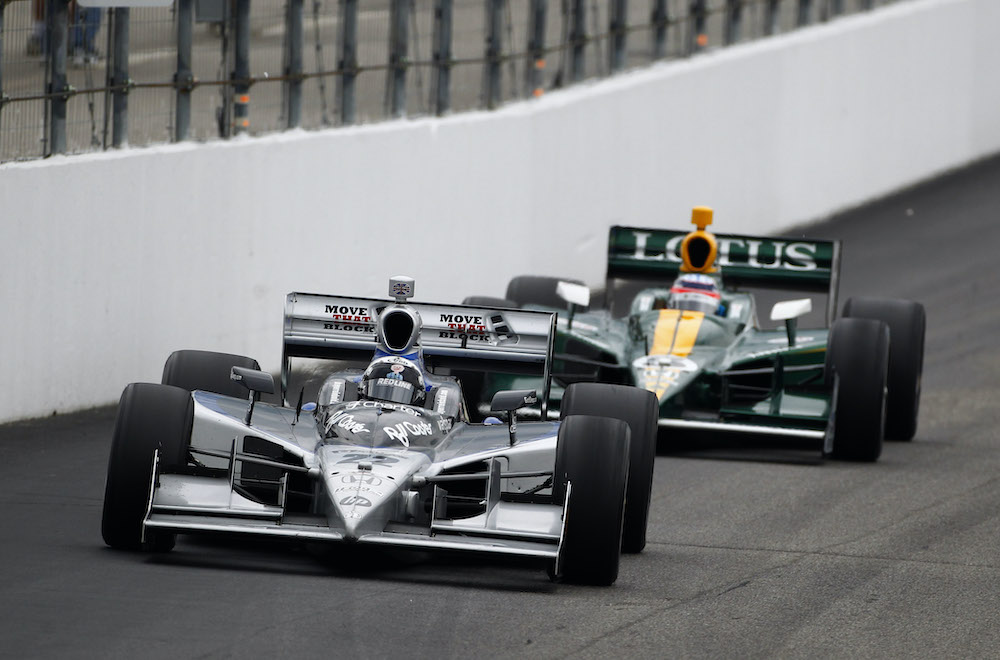
Scheckter channeling his inner A.J. to stay ahead of Takuma Sato at New Hampshire in 2011. Motorsport Images
Q: There is always the question of how to grow IndyCar further than we have seen. I know there is always the talk of a new manufacturer joining the series, more oval races, new speed records, locations, etc., to bring back old fans and get new ones. I was always one to want a third or fourth manufacturer, but I have come to believe that it is a unicorn and I will believe it when I see it. Generally, the younger generation is not as enthused by just cars or speed records. Teenagers nowadays do not seem to be as enthused about getting that first car the way that previous generations were. They seem more enthusiastic about internet personalities and streaming shows.
Therefore, I think a Netflix-type "Drive To Survive" show (I would suggest the name "A Different Breed," used for the 2020 marketing) to get the general public interested about the drivers, tracks, and IndyCar experience. What are the odds that this will actually happen? Which is more likely to happen first -- a streaming show or a third manufacturer?
Arvind Mahadevan
MP: Let’s take a longer look at this. First, I know there are a lot of stereotypes out there about younger generations and what they do or don’t like, but as we’ve seen with soccer and F1 in the U.S., if it’s compelling and interesting sport, there’s a possibility of gaining a new audience.
"Drive To Survive" has been a global revelation for F1, and while the racing is part of the appeal, it’s the hardcore depiction of what goes on behind the scenes with all the politics and rivalries and hopes and dreams being met or dashed that has drawn a big following. F1’s underbelly is being exposed, and while some in the sport don’t care for DTS and say it’s far too contrived, it isn’t made for them. It’s for those who want to be taken inside a sport that’s new to them in amazing ways. And herein lies IndyCar’s truly bizarre lack of response to DTS.
From the moment DTS debuted, IndyCar has been hammered by drivers, team owners, and sponsors to create something similar -- hell, just straight-up copy the format -- to create a similar lift through streaming. I’ve heard and written for two seasons now about how the series is going to do something, but it feels like the power of DTS hasn’t been taken as seriously as it should.
Maybe the big success of the recent USGP at COTA and the wave of articles on RACER, ESPN, and countless other outlets about how DTS built a big new audience that didn’t previously exist will be the thing to make IndyCar accept that wasting money on catchy marketing campaigns like "Defy Everything" is doing nothing to gain new fans.
How’s this: If F1 developed a new fire extinguisher system that made its cars safer, I have no doubt IndyCar would jump to adopt it for our cars ASAP. F1, and Netflix, developed a new marketing plan that has been a global phenomenon for three straight years, and yet, we’ve decided to slow-walk this one and watch as F1 has created a sizable audience in America with TV ratings that rival or exceed your average IndyCar race. The years-long lack of urgency here is alarming.
And I’d put the odds on an IndyCar DTS happening at the same time, or possibly one year before a third manufacturer is on track.
Q: While the ban on questions about Milwaukee and Cleveland still stands, is Michigan going to be added to the schedule in the future? OK, a serious question! If Autodromo Hermanos Rodriguez in Mexico City is added to the schedule, could it be a unique doubleheader; Saturday on the road course and Sunday on the oval? Is the oval still usable? Could that be a model for some rovals?
Jon, Bemus Point, NY
MP: If it were to happen, it would be on the road course. And as much as I love the idea of returning to the Autodromo in response to Pato’s star power, I wouldn’t say it’s as much of a no-brainer as it seems. F1 races at the same track and has a much bigger star in Sergio Perez to promote as Mexico’s national talent. Pato paid out of his own pocket to stream the last few races at home, and by comparison, the popularity of Perez and F1 dwarf Pato and IndyCar in Mexico. IndyCar needs to do a much better job of getting its series seen in Pato’s country before a race in Mexico City would make sense.
Q: What happened to the chances of Andretti (and possibly Colton Herta) going to F1? Mario was interviewed on Tom Clarkson’s “Beyond the Grid” podcast and was quite coy about Andretti F1, but extolled the virtues of Colton as a once-in-a-generation talent.
Pete Kruszon (cruise on), Annapolis, MD
MP: Mario knows a thing or two about generational talent, and he’s spot-on with Colton. I bet a book could be written on all that went down and ultimately fell apart with Michael’s attempt to take control of an F1 team. Here’s one nugget I can share: Back when I first heard about it in late July/early August, I also heard a big dollar figure was attached to the Sauber takeover price. I threw that number at someone involved on the Andretti side and was told that it was far off -- way too high.
In some of what I’ve read and heard since the negotiations ended, the suggested cost that led Andretti to walk away is nearly identical to that number I’d heard months ago. Makes me wonder if I heard the real cost, by chance, and that scary figure had yet to be put in front of Michael, or if it was just a coincidence that both numbers were so close. Regardless, it’s a shame as I know Michael really wants to be in F1, but since it means we get to hold onto Colton for a few more years -- or forever -- I can’t be mad.
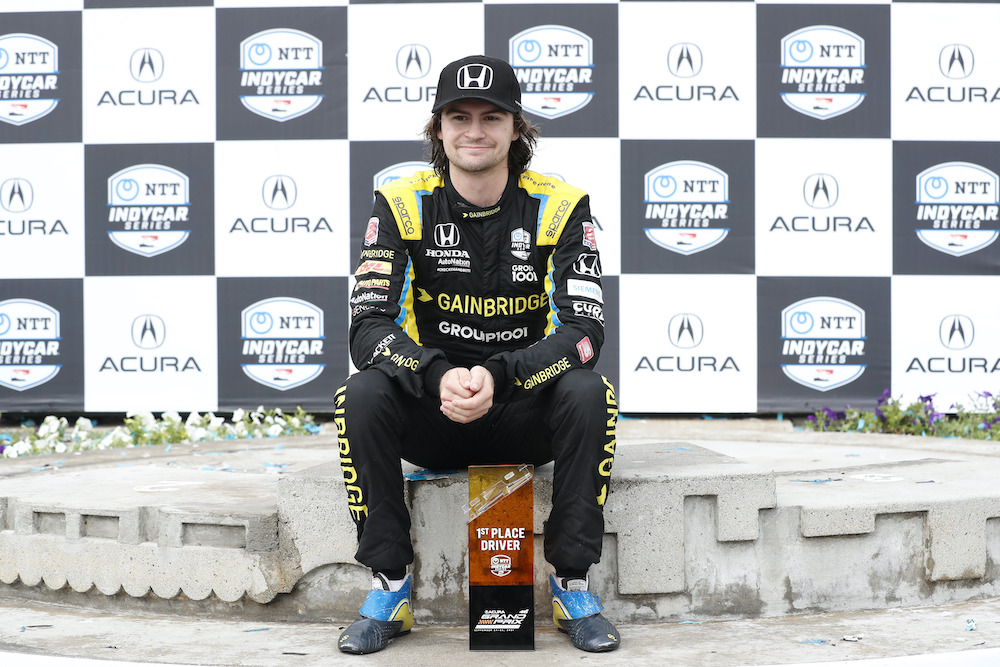
The wait continues. Abbott/Motorsport Images
Q: Where do you see us in the grand scheme of things for the next IndyCar body type? I know that we are supposed to see a new car in 2023. Personally, I think it will be exciting to see a car with the enclosed cockpit being a part of the design, rather than an afterthought. It could be a shockingly good improvement. But I wondered if COVID is slowing that down? With the increased interest in IndyCar worldwide, a change could mean a huge surge in interest…
Gary Nelson, Flagstaff, AZ
MP: Other than creating a new tub with the aeroscreen as part of the original design, I don’t think the next car is going to look radically different than today’s car with the UAK18 bodywork. It will look different, but don’t expect anything wild.
The only way I see a new car creating a surge of new interest for IndyCar is if the series decides to go radical and come up with something that looks like it’s a jet fighter from a 500 years into the future. That’s the big decision for IndyCar to make. They can play it safe, have a pretty new car, but not one that anyone beyond those of us here care about, or they can go and consult with digital artists who create imaginary items for "Star Wars," Marvel, and other big properties to see what they come up with that takes IndyCar into new territory.
Here’s one thing I do know: Warming over the same open-wheel concept we have in use today won’t have waves of new fans and sponsors rushing to be part of our universe.
Q: What are the chances of a season-ending IndyCar test for the champions of Super Formula, W Series, USAC Silver Crown champions?
Bob in So. Calif.
MP: There are none at the moment, but this is something I’ve been urging IndyCar to arrange at the end of the season. If we keep in mind that many series often run past the end of our calendar, a road course test at IMS would likely need to be packaged with the Chris Griffis Memorial test in late October/early November to avoid as many conflicts as possible.
Overall, the idea would be to give IndyCar teams an extra "evaluation" test day for talent that would be new to the series, and I’d love to see the two series you’ve mentioned, the W Series, Australian Supercars, Trans Am, and more on the list to choose from. Let’s see how some of those young F1 reserve drivers fare, and the best F2 drivers of the year. IMSA and the WEC are loaded with talent; let’s see how they get on, etc. And we’d make them all eat lunch from the Mug n’ Bun just to see how badly they really want to be in IndyCar. Anyone who can be fast with a half-gallon of old French fry oil in their stomach is worth hiring.
Q: It's pretty clear that IndyCar's chosen marketing agency in 2021 failed more spectacularly than Rinus VeeKay's or Ed Jones' judgment did at WWTR and Long Beach, respectively. It's hard to see where IndyCar gained any fans or TV/streaming eyeballs as a result of the mindless and perplexing marketing campaign. When you look at modern America, media and popular culture love stars, and often "stars" that are famous simply by creating a name for themselves, not necessarily for true talent (see: Paris Hilton, Kim Kardashian, etc.).
We all know IndyCar has a bunch of engaging, and in some cases even magnetic, personalities. Is there any chance IndyCar will ever be smart enough to take the Paris/Kim route and just create a star via a media campaign? Recognizable names in popular culture are going to grow the attention on the series faster than anything else. There are really good agencies out there, and if done correctly, it shouldn't be as difficult as it might initially seem. Our marketing campaigns haven't moved the needle for a long time. Do you think there's any chance of an aggressive, outside-the-box approach to build on the slow, steady momentum the series has had for a handful of years? Or are we just going to "defy" logic and stick with the definition of insanity again in 2022?
Bobby R, Chicago
MP: It looks like we wonder about similar things. Do I think we’re going to see a giant change in strategy between now and the start of the new season in February? I do not. Do I ask myself if it might be time for IndyCar to hand the keys to marketing its series and drivers to an outside agency? I do. It’s been done in the past and wasn’t necessarily a success, but it feels like a change is needed. Catchy slogans and paying for social media influencers to vlog about our events isn’t working. IndyCar’s the best racing series in North America that nobody knows about. It’s a crime.
Q: With Austin Cindric performing rather well in the Xfinity Series this year, would he and/or Team Penske consider putting him in a fourth car for the Indianapolis 500 and attempt the double? Given his experience on all kinds of tracks, this could be good.
Yannick, Cologne, Germany
MP: Roger told me recently that he has no plans to put a fourth car on track next season -- Indy 500 included -- so I doubt Austin would be in the team’s short-term plans. But I do love the idea; I know he’s not the most popular driver in NASCAR, but Austin’s a scrappy driver who makes me think he’d be a ball of fun to watch in a Dallara-Chevy.
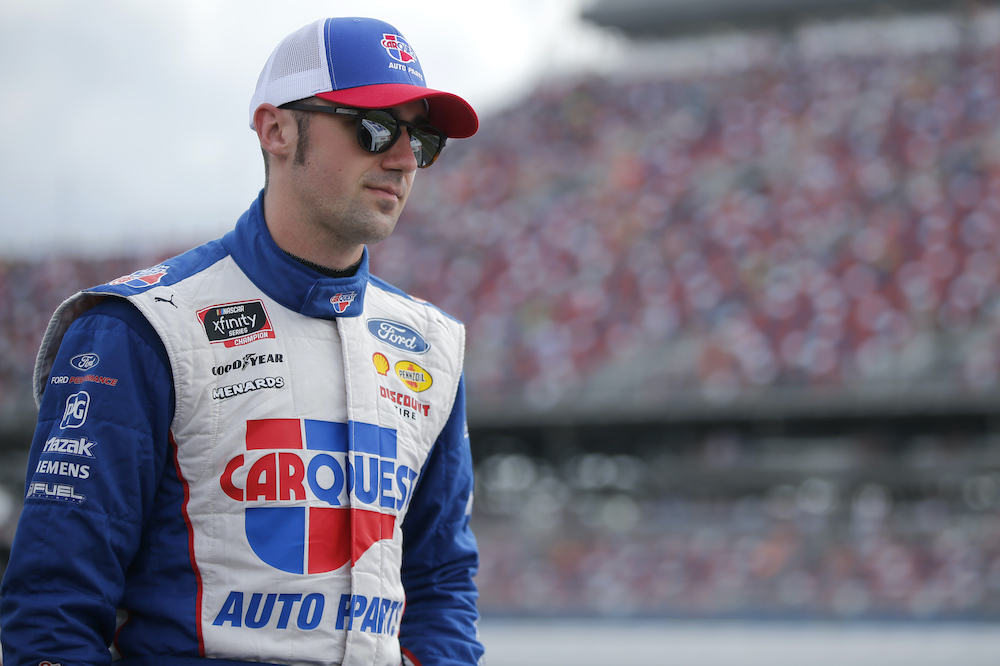
Cindric doing the Indy double would be cool. Plus, it puts a whole new spin on the notion of asking your Dad if you can borrow the car. Matt Thacker/Motorsport Images
Q: AMSP says it is not yet looking for a third driver, and that the Barber test was for Nico Hulkenberg to see if he likes IndyCar. So does that mean that Nico was paying to test? Now, maybe with a name driver like Hulkenberg Zak Brown is doing it as a courtesy, and also for his own info bank for the future.
But what about a lot of other tests we hear about where the drivers are not yet established talents? Is it often that the driver has to pay to test? And does the driver have to pay for any crash damage? How does all that work?
RIP, Robin.
Dean
MP: AMSP is looking for a third driver, just not as a full-timer next season. Hulkenberg wanted to see if he liked the car and might want to restart his career in IndyCar, and if I was Zak, I’d have done the same and spent the money to evaluate Nico. I’ve heard the test went well, but only well -- nothing special. If Hulkenberg ends up in IndyCar, I’d put money on it being with another team. There’s no real formula for how testing works; it could be the team paying, the driver paying, and if crash damage is part of the deal for the driver, it’s usually a test with a rookie or someone who’s known for paying to drive.
Q: As I've understood it, high-banked ovals are too dangerous because IndyCars have too much downforce and go too fast. Thus, regardless of if the France family would ever allow it, we would never see IndyCar on the Daytona oval or Talladega.
Would it really be that hard to have IndyCar run on a high-banked oval like Daytona or Talledega? Is there no way to reduce the wing enough so that you are only really relying on mechanical grip and ground effects?
Doug, Stafford, VA
MP: According to IndyCar the cars could race around the big, banked NASCAR ovals with almost no downforce, and they’d likely be able to go hard in the corners thanks to the grip generated by compressing into the banking, but the increased speed on the straights would cause everyone to make massive lifts entering the corners.
The only way to realistically race at a Daytona or Talladega would be to cut power or increase drag -- two methods to bring the top speed down. IndyCar has used a low-boost turbo speedway formula since 2012, and since that formula is what Chevy and Honda have perfected for almost a decade, there’s no way they’d agree to a low-low-boost formula which would cost a fortune to develop on their ends. Plus, IndyCar’s new direction in 2023 is about more power, so cutting ponies isn’t the way forward.
That leaves dialing up the aero drag, like CART used to do with the Hanford Device, but that would turn the race into a cartoonish affair where a stupid plate bolted onto the back of the rear wing was responsible for passing, not the drivers’ skills and racecraft. I was amused after watching the first Hanford race, but it got old, quickly. For now, I don’t see how the current or future IndyCar formulas fit at the two signature NASCAR ovals.
Q: Now that Team Penske is fielding only three cars for next year’s IndyCar campaign, would it still be open to having a one-off team for the Indy 500 or possibly some select races if the funding was there?
Brandon Karsten
MP: It’s a staffing thing. When Roger Penske took on the Acura IMSA DPi program from 2018-2020, he ran three IndyCar entries, and used the extra staff to run those two IMSA prototypes. For what he’s doing with the new Porsche Penske Motorsports IMSA and WEC LMDh program, he’s doing four total cars -- two in each series – which requires a ton of employees here in North Carolina and at a new base in Germany.
Another thing to consider is the size of the contract and who the contract is with. Team Penske is administering an F1-level contract with Porsche; huge pressure and expectations from the most famous brand in the history of sports car racing. For that reason alone, there’s no reason to risk the proper setup of that PPM team and proper testing and development of the new Porsche LMDh just to run an extra Indy 500 entry or part-time car.
Q: When the new hybrid cars arrive in 2023 for IndyCar, will the Xtrac six-speed transmissions be carried over? Will there be any other major components carried over to the new chassis? And thanks for keeping the Mailbag!
Rob Peterson, Rochester, NY
MP: Great questions with no immediate answers. The current Xtracs have been strong and reliable, but they were also targeted to handle 550-750hp. With where IndyCar says it’s going with the next engine package, something like 900hp is meant to be fired through the gearbox, with 100 of the 900hp meant to come from hard-hitting electric torque from the KERS system.
I’m curious to learn about whether the existing transmission can be uprated to handle the extra power and torque, or if something new -- maybe with 7 or 8 speeds -- will be commissioned by IndyCar for 2023. The other questions fall along a similar line of strength and durability; with the extra power/torque, plus all that extra weight from the KERS units, will bigger brakes, beefier drive shafts, stronger suspension components, and more be needed to handle all the speed and increased forces? I’ve heard conflicting notions here, so when I get firm answers, we’ll have some fun items to discuss.
Q: What’s up with Foyt for next year? I assume Kellett is out. (Nice guy, but just not fast enough?) Seb in part-time while picking up young driver? Sponsors will be…?
Bill Cantwell
MP: Why would Kellett be out? Like hundreds before him, his family’s highly successful business makes it possible to pay for him to race in IndyCar, and at the moment, he’s the only one willing and committed to fund a Foyt entry next year.
The rest of the puzzle is missing important pieces. If ROKIT comes back, the company will have a big voice in who drives the No. 14 Chevy. Is it my French Fry, Sebastien Bourdais? Is it Tatiana Calderon, who ROKIT loves and helped to get a test day in the 14 car? Is it RHR? Kyle Kirkwood? The team got better with Seb in the car, but he hasn’t been re-signed, and when things that make too much sense to not happen… haven’t happened, I begin to worry.
The team also has an interest in adding a car, but that that seems like a distraction until the primary car’s business gets sorted out. The new season feels like it’s right around the corner.
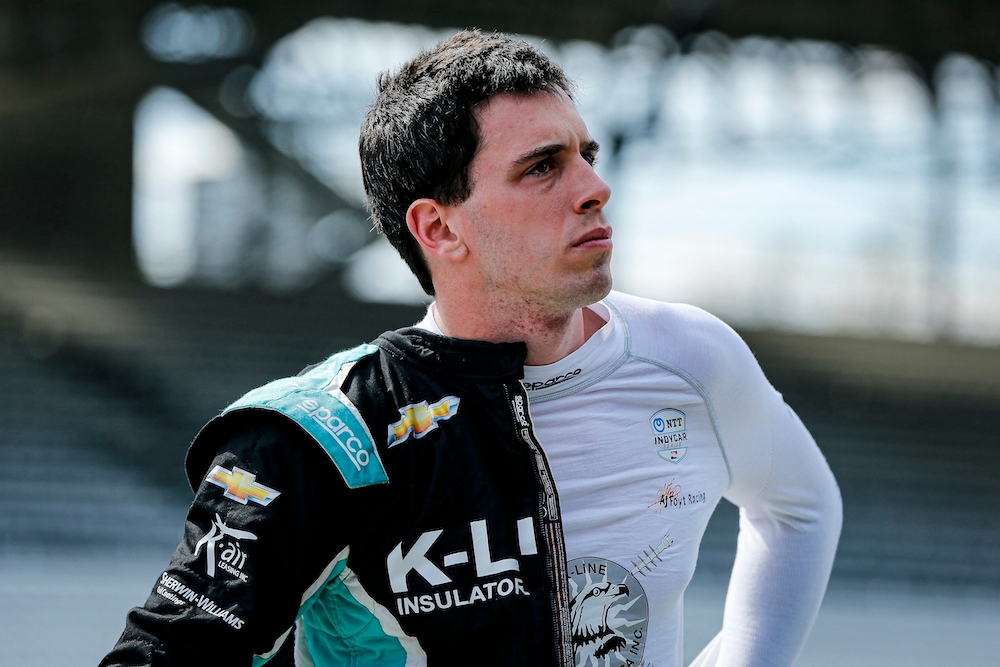
Don't be surprised to see Kellett back in action next year with Foyt. Barry Cantrell/Motorsport Images
Q: If you had to guess how IndyCar was going to progress to fully electric, what do you see as the phases? Looks like we have the first phase coming; what comes next?
Ken
MP: I’d say that if we look at the 2.2-liter twin-turbo V6 engine formula we’ve had since 2012, there’s a good reason to believe what’s coming in 2023 with the 2.4L TTV6 hybrid will be around longer than the five-year duration that’s spoken of. I’d assume it’ll be here into the next decade, and if there’s anything new that comes along, I’d expect it to be with changes to the KERS units and increasing the power they contribute to the total output number.
If the new package is meant to have 800hp coming from the combustion engine and 100 electric horsepower, could we see the 800/100 numbers tilt in the direction of electric when we get to the end of the decade and into the next? That’s what I’m expecting.
Are we talking 500/500 by 2030? Hard to say, but keep in mind that not so long ago, the LMP1 Hybrid prototypes were making something like 500/700 at Le Mans, with the KERS units being the most powerful motors in those amazing machines. IndyCar as a fully electric series? Only if our engine manufacturers demand it.
Q: We will be attending the upcoming IndyCar race at Barber for the first time. Can you recommend a race fan friendly bar in the area?
JRW, Maricopa County, Arizona
MG: It’s not a bar, but you’d asked Robin he’d have recommended Rusty’s Bar-B-Q in Leeds, just a few minutes from the circuit. I haven’t been to any bars close to the track, but there are some good ones in downtown Birmingham. Try Back Forty.
Q: How about someone put a bug in IndyCar's ear to name the Indy 500 pole award after Robin?
Joe Z in Naperville
MP: I love the sentiment, but you might need to help me understand why a journalist’s name would be attached to a driver’s award? Why not ask IMS to name a new veggie burger after Miller? Plus, Miller hated what Pole Day has become for the last decade-plus as prize money for the biggest risk takers and crowd sizes plummeted. All that being said, it would piss him off to no end, so for that reason alone, it has my full endorsement!
Q: Sooner or later the internet will blanket IndyCar live race coverage. What innovations does NBC plan next year in terms of race coverage such as in car cams, drone footage and pit area coverage? The days of fixed camera shots seem doomed.
Pete Jenkins, Upper Sandusky, Ohio
MP: Our friend John Barnes (no, not the former Panther Racing co-owner) who serves as the coordinating producer of NBC Sports’ IndyCar broadcasts helps with an answer:
“We have planning calls scheduled with our partners at IndyCar to review and preview 2021 and 2022. We added new cameras around tracks this year and hope to keep adding more drone cameras at select tracks besides the Indy 500.”
Q: Right now we have Indianapolis, Iowa, WWTR, and Texas as ovals. Indianapolis is obviously not going anywhere, I know HyVee has big plans with Iowa, and WWTR appears safe for now. But it's completely clear that Texas Motor Speedway is completely ruined since they, a) re-did the track after 2016 when it was perfectly fine to begin with, and b) put the slime on the track to help the stock car sleds turn left. It's clear TMS is ruined for good, and the fans will no longer show up. I flew down there for the 2021 "races" and I'll never give TMS another dime.
I have three questions. Is 2022 finally the last year TMS will be on the calendar? What, if any, ovals are left out there that IndyCar could go race on? I'd like to see in a perfect world, any three of these six tracks return: Richmond, New Hampshire, Homestead, Michigan, Pocono, and Kansas. And finally, are any of these realistic possibilities?
BAP
MP: Here’s an Amen for you right out of the gate. Texas has been a bore in recent years, made worse by the track’s slavish devotion to NASCAR’s demands for the PJ1 traction goo that doesn’t play nicely with our cars or tires.
We all understand why they give NASCAR whatever they want -- stock cars bring in the most money -- but with Cup’s crowd size declining there as well, it makes me wonder if the new track president will change their approach and stop treating IndyCar like a second-class citizen. If it wasn’t for Pato O’Ward being young and the right kind of crazy with some of his high-risk passes, this year’s doubleheader would have been a total snoozer.
So, my hope is for the new TMS leadership team to give IndyCar a reason to keep coming back. Crappy single-groove racing and light fan turnout are two perfect reasons to bid farewell; maybe if they fix one of the two glaring issues, we won’t have much to worry about.
As for the other tracks, Richmond sure seemed like it was going to be something special until COVID-19 took it off the schedule. All the other ovals you mentioned make me think of the old IRL days when I and many others watched great races go on in front of thousands upon thousands of shiny and empty aluminum seats.
Q: First, thanks for doing this. I followed and read Robin Miller since his days at the Indy Star, so racing fans (and I) need a place to read and chat about those all-important speed-related questions.
I read that the F1 deal is off for Michael Andretti. How does this news affect Silly Season? And any 2022 Indy hopes for Ferrucci?
Jim Bryan, St. Louis, MO
MP: The main person it affects is Kyle Kirkwood. As I wrote in our new silly season update, he was meant to drive Colton Herta’s No. 26 Honda if the Andretti F1 deal came together and sent Colton on whatever F1-related journey he’d go on next year. With that door closed for Kirkwood, he’s become a hot commodity for other teams to pursue.
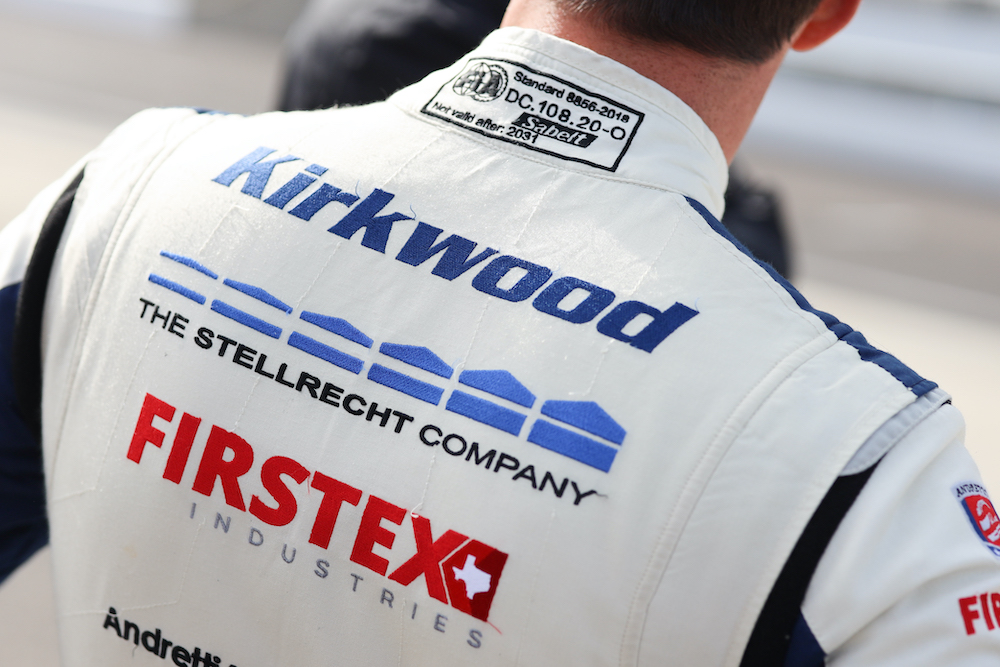
Kirkwood's name is unlikely to change between now and the new season, but everything else about that race suit could look very different by the time he find a spot on the IndyCar grid. Chris Owens/IndyCar
Q: Long-time Robin question-asker here. This whole F1 team purchase thing has been very exciting to say the least. Especially involving Colton Herta. What is Michael’s next move to own an F1 team? Save money to start one from scratch? He has to get one and they need to run on the best configuration possible on the road course at IMS!
Dan, Lima, Ohio
CHRIS MEDLAND: The sensible move remains to purchase an existing team, because of the infrastructure that would already be in place. As Haas has shown, it takes years to build up a team from scratch, would require a huge amount of investment, but now also comes with a $200 million buy-in fee just to get an entry. So the amount needed now is the cost of building an F1 team PLUS $200m up front. If you want people with F1 experience as part of your team too, then it can take years for them to be free of "gardening leave" from their previous team, whereas if you buy a team you get all of those experienced personnel immediately. It makes the timelines very different, and is less complex.
I'd imagine the first thing Michael needs to do is find more money, because all of the above reasons make an existing team much more valuable. Essentially they're franchises now, and just because Andretti Autosport wants in doesn't mean it's automatically entitled to a spot on the cheap.
Q: As a fan of both IndyCar and Formula 1, I get tired of the European fans blasting IndyCar for being a “lesser” series, especially when it comes to driver talent. So if Herta goes to a bottom-tier Alfa Romeo program, wouldn’t he just be reaffirming that opinion in the eyes of F1 fans? Obviously, he could prove the naysayers wrong, but realistically, will the new Andretti venture stand a chance against the Mercedes powerhouse? (ED: This question was submitted before the Andretti/Sauber negotiations collapsed).
Also, why is Haas so hung up on staying in F1? They obviously struggle on the track, but they struggle even more when it comes to accumulating funding. I don’t know who it is at Haas that needs to hear it, but they could have a blast in IndyCar at a discount compared to the ridiculous F1 budget. I mean, they are an American company with American racing experience… it just makes sense.
Ian Craddock
CM: Yes and no. I do believe that IndyCar drivers deserve more Super License points to make an F1 switch easier, but don't forget the F1 drivers have followed a trajectory preparing them for that series their whole careers, and for many that involved getting in with a midfield/back of the grid F1 team and then proving themselves. Look at Charles Leclerc -- he won F2 and had to go into Alfa Romeo first -- and similar for George Russell with Williams. For a relatively unknown quantity in F1 terms to walk into a top seat would be a massive gamble for all involved, and Michael himself knows all about that with McLaren...
If Andretti’s F1 plans had happened, then you're right that the team likely wouldn't have stood a chance in 2022 even with the rules reset, but it would have given Colton plenty of opportunity to show his talent and earn a top seat. I'd expect Alfa to be solidly in the midfield next year, but even if it's struggling, Herta would have been paired with Valtteri Bottas, who is a very good benchmark after the one-lap pace he has shown alongside Lewis Hamilton at Mercedes.
I think the "lesser" series bit comes because all the movement is one-way -- from F1 to IndyCar -- so it looks like a fallback option, especially when it is drivers deemed not good enough for the best seats in F1 who are moving over. But that's often an unfair take, and it only takes one successful move the other way to change that. That's why I say the Super License situation needs addressing to make it a little more viable.
The Haas answer is quite a simple one: exposure. Haas was already a well-known entity in terms of machine tooling in the U.S., but Formula 1 takes that company out to a global audience. Now, when Gene takes his core product out to market in other countries, they are far more likely to have heard of the name. Plus, they've got enough funding now under the budget cap rules to be a very solid team, with Gene getting a fair return on his investment. And as one of 10 teams with an F1 entry, the Haas team has become much more valuable as any new entrants need to pay $200m just to buy a spot on the grid, let alone build up a team. It's a very good business investment for him now, even while it's struggling, and will only go up in value if and when the team becomes more competitive.
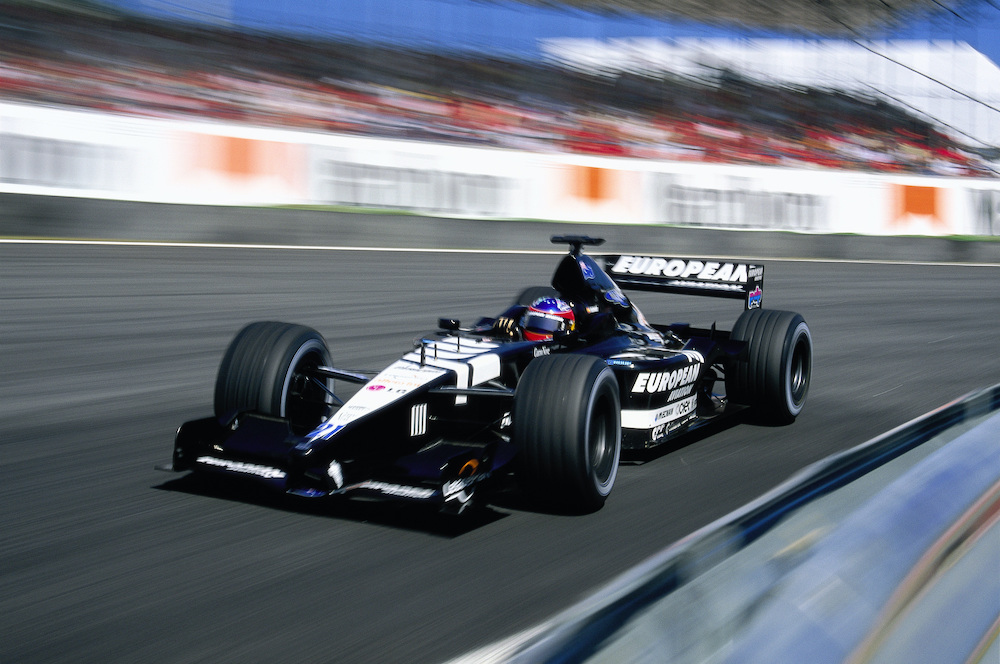
Fernando Alonso won two world championships and has driven for some of the biggest teams in F1, but the likes of Renault, Ferrari and McLaren only came knocking after he’d showcased his talent in the lowly (but lovable) Minardi. Rainer Schlegelmilch/Motorsport Images
Q: I, like most people, like NASCAR’s choose rule, but it is broken. After seeing it in person, you see that the cars are going super-slow then have issues seeing the line. I was wondering what you think is the more possible answer: 1. Moving the line to the finish line and setting a minimum speed limit or 2. Having an official place a cone like at short tracks, then set a lower minimum and add a maximum?
Curtis Chase
KELLY CRANDALL: You bring up a good point about the choose rule in that it can be hard to see. NASCAR did make an adjustment a while back by moving it further past the start/finish line, so it doesn’t creep up on drivers. But don’t be fooled – drivers aren’t going slow because they can’t see it. They’re going slow because their spotter is counting the lines of how many drivers are taking the top versus the bottom so that they can then pick which is better for them. Just like they used to do with cars after pit stops coming off pit road (where some drivers would flat out stop before the timing line), which led to the choose rule being created. Last year, NASCAR started penalizing teams if drivers slowed down too much coming to the line because it was stacking the field up. So, given all that, I would be fine if they added a cone or something on the fence that is a bit more visible for the drivers to see, but I don’t think we need to overthink this too much with maximum and minimum speed. The drivers know when they need to choose the lane they want, the issues stem from teams, as always, trying to science out which lane to be in.
Q: Here’s a Haiku to honor the occasion of the Mailbag's return.
While it’s not the same,
the tradition is revived.
Welcome back, Mailbag.
Jim Kayser, Merced, CA
MG: Technically not a question, but the second-best possible way to end this week's Mailbag.
THE FINAL WORD
From Robin Miller’s Mailbag, November 6, 2013:
Q: I was a Raul Boesel fan. Can you remind me when this was:
There was an Indy 500 during the CART era when, if I remember correctly, Boesel (I think he was driving for Dick Simon) basically had the race in hand until some penny-ante penalty was called on him and he got robbed. What year was that? I'd like to look up that race.
What did you think of Boesel as a driver? Where do you think he ranked versus his contemporaries? And what is Raul doing nowadays?
Dean Abramson, Raymond, ME
ROBIN MILLER: It was 1993 and Boesel had qualified third for Simon and was leading when he got a questionable penalty for pitting and working on his car. (USAC claimed the pits were closed, but I recall he was already on pit road). It cost him a shot at victory and he finished fourth. I liked "Stay Cool Raul" and he was a good, solid racer. Last time I heard, he was chasing women in Brazil. That was his favorite sport.
Marshall Pruett
The 2026 season marks Marshall Pruett's 40th year working in the sport. In his role today for RACER, Pruett covers open-wheel and sports car racing as a writer, reporter, photographer, and filmmaker. In his previous career, he served as a mechanic, engineer, and team manager in a variety of series, including IndyCar, IMSA, and World Challenge.
Read Marshall Pruett's articles
Latest News

Comments
Comments are disabled until you accept Social Networking Cookies. Update cookie preferences
If the dialog doesn't appear, ad-blockers are often the cause; try disabling yours or see our Social Features Support.