Michael Levitt/Motorsport Images
RETRO: Jimmy Vasser’s ‘perfect day’ at Laguna, 25 years on
“You know it was life-changing for me, right?” Jimmy Vasser says.
Imagine having your biggest dream come true, at your home track, in front of all the family, friends, and colleagues who made it possible. That was Vasser’s reality on this Laguna Seca race weekend back in 1996 as he produced a trio of firsts.
With a steady drive on September 8, Vasser sealed what would be his first and only CART IndyCar Series championship. And while the title would serve as the Californian’s top achievement in the sport, it had bigger ramifications for his Chip Ganassi Racing team which would use the 1996 title as the foundation to capture 12 more in the decades ahead. Vasser’s championship-clinching drive also brought Honda its first of nine IndyCar manufacturers’ crowns, the most recent coming in 2020 with CGR’s Scott Dixon.
Take all that CGR has come to represent in motor racing across open-wheel, NASCAR, sports cars and even off-road competition, and it was 25 years ago at Laguna Seca where the powerhouse organization truly took flight.
“In ’96, and I didn't know it at the time, but we ended up having ‘The Package,’” Vasser tells RACER. “Reynard chassis. Firestone tires. Honda engine. Right away in early in testing, we could see that machine was fast. And I had a new teammate in Alex Zanardi, who was finding his way early on, but I also could also tell that he was bringing a lot to us. We clicked immediately as teammates. It just happened naturally. That’s when I think Chip would even say it was the beginning of it becoming a real team, to feel really good under the tent, like a team is really supposed to feel like.”
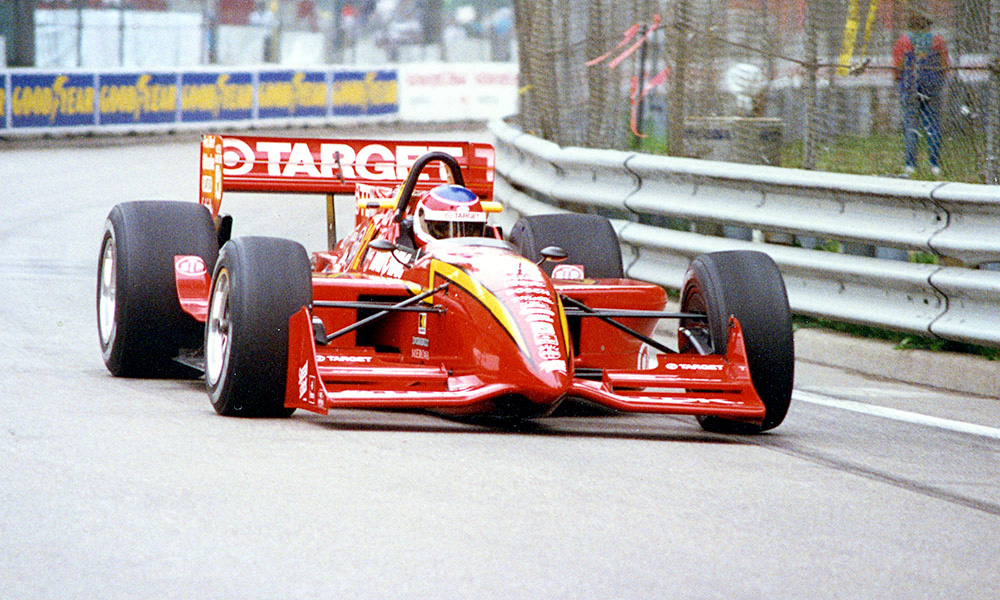
With “The Package” at his disposal, Vasser was fast out of the box in ’96, but then things got more complicated. Image by Marshall Pruett
CGR made its CART debut in 1990 with Eddie Cheever and moved through a number of drivers, including Arie Luyendyk and Michael Andretti before expanding to two cars in 1995 with Bryan Herta as the leader and Vasser as the understudy. A significant overhaul for ’96 saw Herta replaced by Zanardi, Ford-Cosworth engines traded for Hondas and Goodyear tires swapped for Firestones. Only Vasser and the choice of Reynard as chassis supplier carried over. Altogether, "The Package" and the magic pairing of the American and Italian duo transformed the program into the series’ top performer.
The 1996 tour opened on the Miami-Homestead oval where Vasser captured his first win, followed by an eighth on the Rio oval, and another win, this time down under in Australia at the Surfers Paradise street circuit. Vasser’s amazing start to the season continued with a win on the streets of Long Beach; he was batting 0.750 and on a giant roll. A step back to seventh on the Nazareth oval cooled his momentum, but it returned in a big way at Round 6 where Vasser and CGR won CART’s alternative to the Indy 500.
With the U.S. 500 victory, a streaking Vasser had claimed four wins and held a sizable lead in the drivers’ standings as the halfway point of the season approached.
“The ball was in my in my court, and the first four races didn't come easy except for Long Beach; I was going to finish second and then Gil de Ferran loses his turbo with two laps to go,” Vasser says. “We won Homestead, were on pole and won at Surfers, and then Adrian Fernandez crowds me when I’m on pole at [the U.S. 500], and we all look like idiots with that big crash, but we got the backup car out and won with it.
“But then it just stalled, man. From there, we were just not doing well. The year started as a coming-out party for us, right? Domination coming into the midseason, and then the wins stopped. And for me, then it became about just picking up points. I think I scored points in just about every race for the rest of the year.”
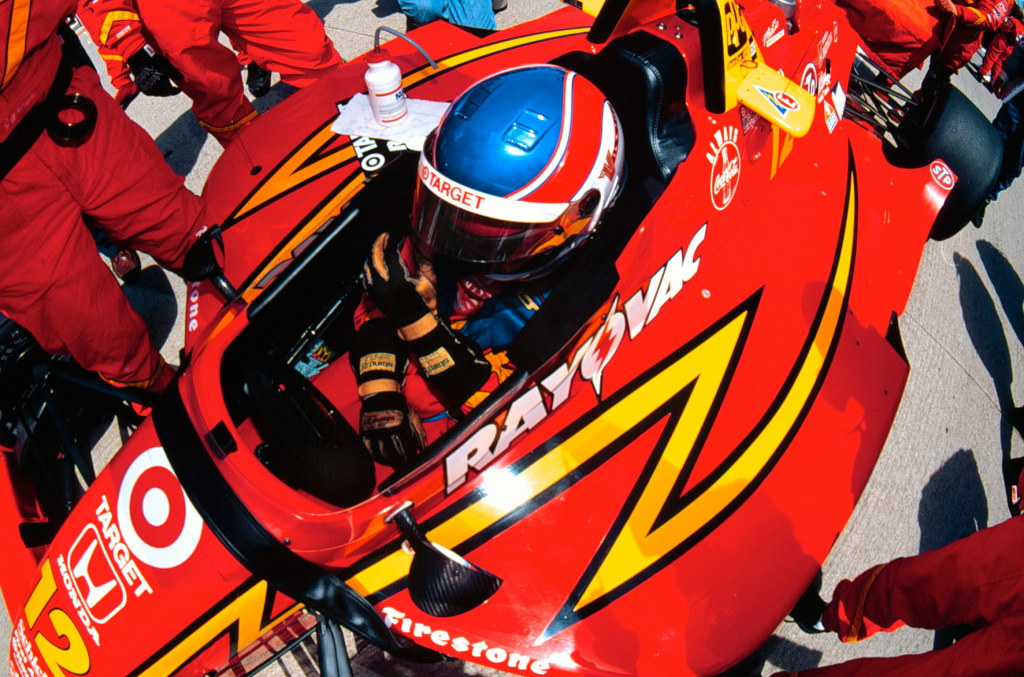
“Teammates like Zanardi and Montoya would walk away from me on a weekend and I didn’t know what the **** happened,” Vasser admits. “But I didn’t throw it at the fence trying to beat them.” Michael Levitt/Motorsport Images
Looking back, Vasser says the dry victory spell in the 10 races that followed the U.S. 500 were emblematic of an issue that hindered the remainder of his IndyCar career.
“If I can be honest, that was kind of the flavor of how my career went; I could be fast and on my game and dominate at times, but there were times in my career that I just didn't know why, but I wasn't on the pace,” he admits. “With the same car as my teammate, and it seemed like Zanardi, and then [Juan Pablo] Montoya, they were just able to be on the pace consistently with the equipment that we had.
“For me, there were the weekends where I'd show up and my teammate’s on pole and I'm pulling 10th. You know, I just couldn't put a finger on that. There were times when, yep, I could beat my teammates, and then you know, the teammates like Zanardi and Montoya would walk away from me on a weekend and I didn’t know what the **** happened. But I didn't throw it at the fence trying to beat them. I'd bring it home fifth or sixth, and that's just the way it was. The midseason of ’96 was like that.”
Vasser recalls a fiery and related exchange with Zanardi when the tour stopped in Cleveland at the Burke Lakefront Airport event.
“We did first practice in Cleveland and I'm off the pace,” he says. “And I go in to see Zanardi who was P1 or something, and I said, ‘What are you doing out there? I think our cars are pretty much the same according to the setup sheets.’ So he says to me, ‘You’re a ******* wanker!’ I was like, ‘What?’ And he says again, ‘You’re a ******* wanker. What do you do wrong with your car? The car should be able to go fast like mine.’ So I was like, ‘**** you!’ But in a happy way, right? Because we were best buddies.
“But I was so mad that I went out in qualifying and put it on pole by a mile. Just because he pissed me off. He was like that. And that was me. I was like, ‘Oh, really, Zanardi?’ Eventually in the race, I think the gearbox failed, but he pissed me off and it woke me up and I put it on him pretty good in qualifying.”
Newman/Haas Racing’s Michael Andretti picked up where Vasser left off, winning twice in a row after the U.S. 500, and Zanardi was up next with his first win. Al Unser Jr. also brought some pressure to the points leader with a steady run of podiums for Roger Penske. Like Unser Jr., Zanardi would also start living on the podium and add a few more wins to his rookie tally.
The heat was rising for Vasser, who went six rounds without a whiff of a top 3 result, and with his downturn in fortunes, Andretti, Zanardi, and Unser Jr. carved into his championship lead. Finally, at Round 13 in Mid-Ohio, Vasser’s No. 12 Reynard-Honda stemmed the bleeding with a strong second-place finish behind his teammate.
Road America delivered another ration of points with a sixth and the penultimate race was more of the same with a small helping of points as Vasser crossed the finish line in seventh as Andretti won both races.
It was a packed house for Vasser’s home race to say farewell to the season with a reported 55,000 fans in attendance to watch the championship get settled around the tight 2.2-mile road course. If the 27 cars set to race this weekend at Laguna Seca sounds like a big number to deal with, the 1996 CART finale had 29 drivers on the grid and a fair number were not particularly talented.
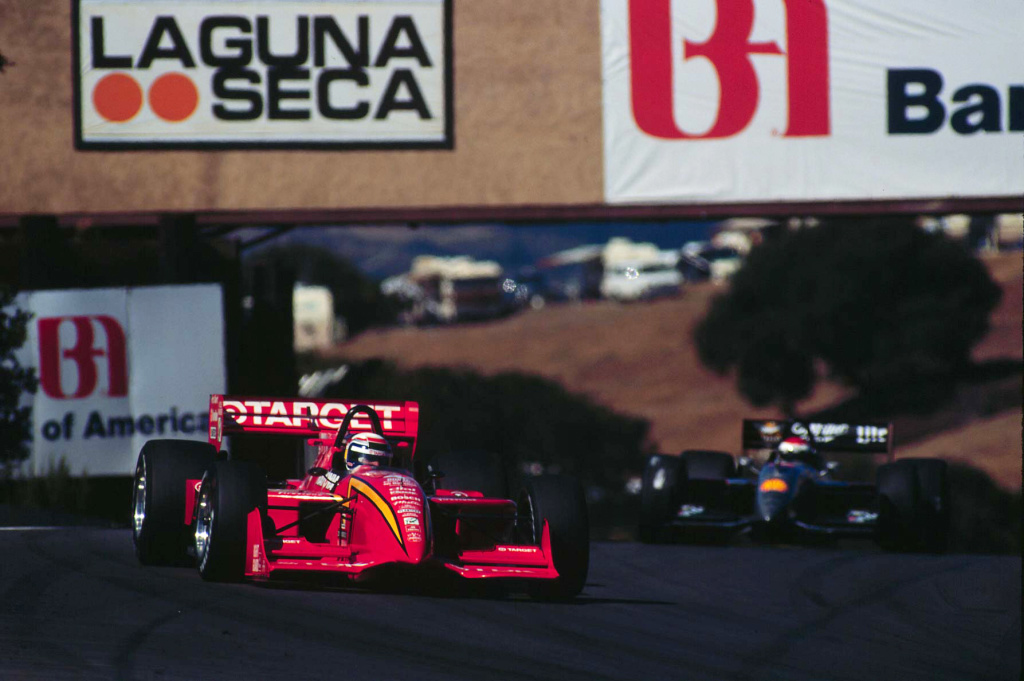
Zanardi delivered a historic moment of his own with his spectacular charge to victory at Laguna Seca. Michael Levitt/Motorsport Images
Despite the congestion and risks, Vasser capped his breakout season with a smart afternoon spent running in third; only a late charge from fellow Northern California product Scott Pruett changed the finishing order as Vasser took fourth at the finish line. His old teammate Bryan Herta was second, and up front, Zanardi authored one of IndyCar’s most famous moments at Laguna’s Turn 6, the Corkscrew, where he fired the No. 4 Reynard-Honda down the inside of Herta and scrambled across the circuit -- and the runoff area -- to make "The Pass."
As fans marveled at what took place atop the hill in Monterey, Vasser, Ganassi, team manager Tom Anderson, San Francisco 49ers legend and CGR investor Joe Montana, and the rest of the team celebrated "The Win."
“It was awesome, man,” Vasser says, his emotions rising. “I just lost my father a little while ago, and that championship win was that was the culmination of everything that we had worked for from the time I was six years old in quarter midgets at Baylands Raceway in Sunnyvale, and Sears Point, and Laguna Seca -- my home tracks. And you know, everybody was there. Angelo and Irma Ferro from Genoa Racing. Bob Lesnett and Riccardo Pineiro from Pfeiffer Ridge Racing. The whole San Francisco Region of the SCCA. Jim Hayhoe and his wife Catherine. Not to mention all my high school people from Live Oak High School in Morgan Hill, right up the road from Laguna.
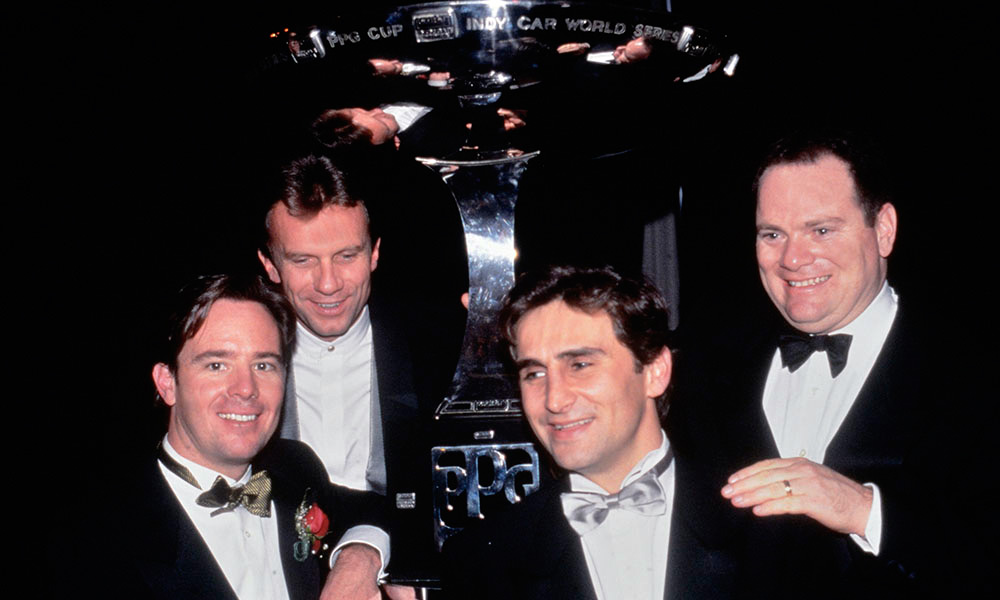
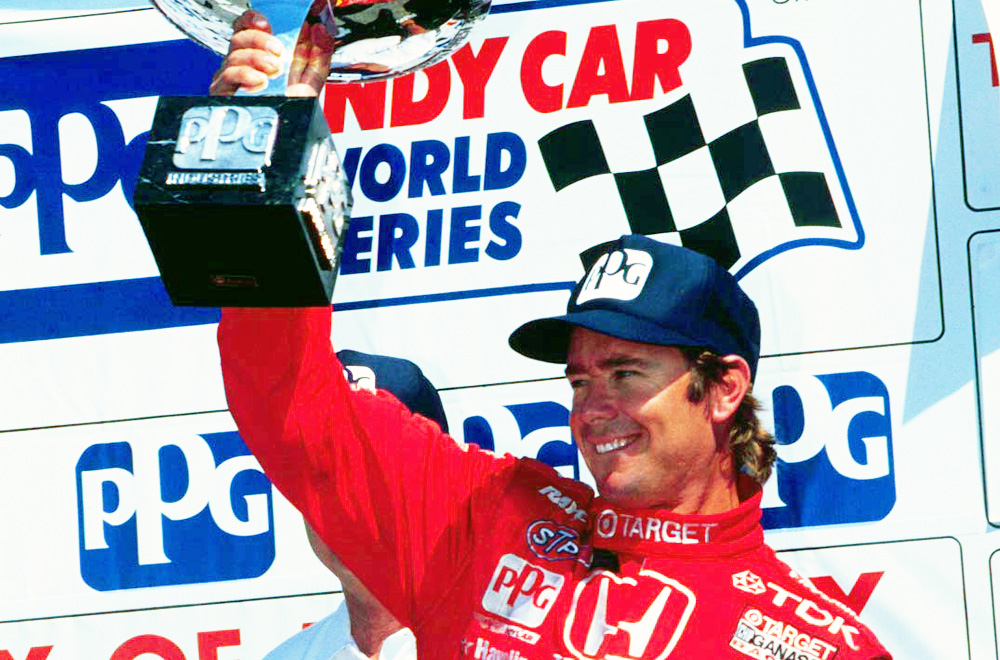
The champions celebrate with the PPG Cup at the post-race season-ending banquet. From left: Vasser, Joe Montana, Zanardi, Chip Ganassi. Image courtesy of CGR
"Chip, Joe Montana, Tom Anderson, Mike Hull, and Zanardi…who was so happy for me. It was total bliss. There was just so much magic for me at Laguna Seca. You know, even before ’96, I won the Nor-Am Pro Formula Ford race in ’85, which was in front of the IndyCar crowd. I won my first SCCA Formula Ford race in my Crossle at Laguna Seca. I won the Atlantic race in ’91 at Laguna Seca. It was the place where magic happened for me.
“That day, though, winning the CART championship at Laguna, it really has never been duplicated. In my racing career, or my life. That was a day that all my family, all my friends, all my racing family, everybody was there. We all got to everybody that had had a hand in me getting there. There was nobody missing. Perfect day.”
Listen to four-time Super Bowl winner Joe Montana recall his time with Vasser and CGR below, or click here.
Marshall Pruett
The 2026 season marks Marshall Pruett's 40th year working in the sport. In his role today for RACER, Pruett covers open-wheel and sports car racing as a writer, reporter, photographer, and filmmaker. In his previous career, he served as a mechanic, engineer, and team manager in a variety of series, including IndyCar, IMSA, and World Challenge.
Read Marshall Pruett's articles
Latest News

Comments
Comments are disabled until you accept Social Networking Cookies. Update cookie preferences
If the dialog doesn't appear, ad-blockers are often the cause; try disabling yours or see our Social Features Support.