Peter Harholdt
REWIND: Miller on Dan Gurney’s Indy-winning Eagles
If I had to pick my favorite RACER magazine story by Robin Miller, this one could well be it, written in 2015 to commemorate the 40th anniversary of Dan Gurney’s one and only Indianapolis 500 win as an owner in 1975. Gurney’s Eagles had earned two before that with customers, but ’75’s monsoon-curtailed 59th running finally ticked the box for “The Big Eagle” and All American Racers.
When it came to the technical side of racing, Robin was happy to admit it was all pretty much over his head and reveled in telling tales of his mechanical ineptitude. But that didn’t stop him from appreciating the envelope-pushing skill, creativity and ingenuity of the folks building the machines that created Brickyard heroes. For him, the engineers, crew chiefs and midnight oil-burning mechanics were as big a part of the story as the guys behind the wheel.
He had a special respect for Gurney. For his driving exploits alone, Dan was up there on Robin’s Mt. Rushmore, but as an innovator, advocate, and all-'round human being, few came close.
That all comes through in this story. It’s not just about a car, it’s about people doing special things – Gurney, Bobby Unser, Roman Slobodynskyj, John Miller – and it’s told in a way only Robin could.
Laurence Foster, RACER Editor-in-chief
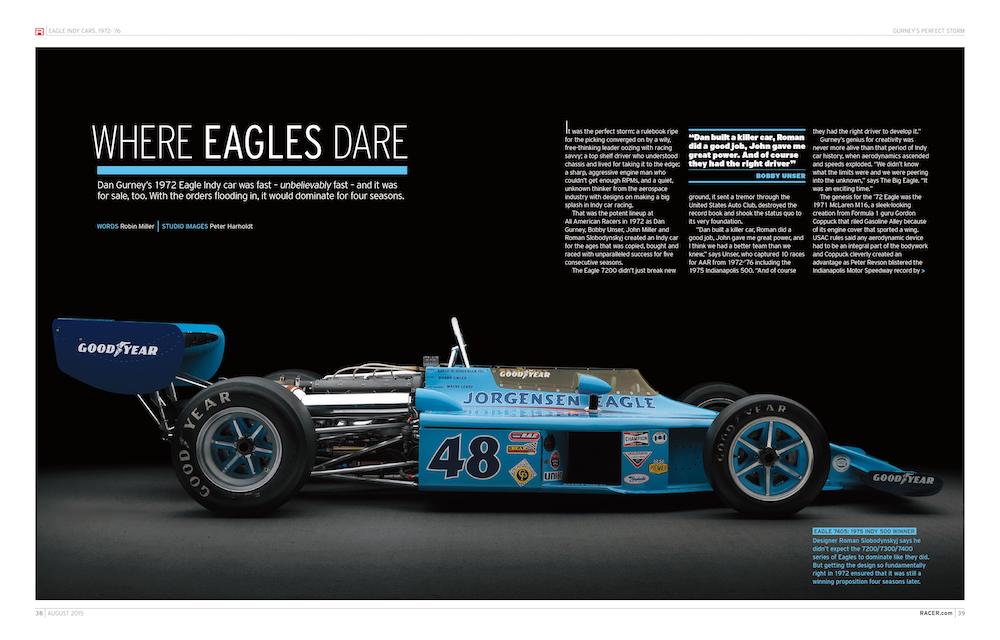
It was the perfect storm: a rulebook ripe for the picking converged on by a wily, free-thinking leader oozing with racing savvy; a top shelf driver who understood chassis and lived for taking it to the edge; a sharp, aggressive engine man who couldn’t get enough RPMs, and a quiet, unknown thinker from the aerospace industry with designs on making a big splash in Indy car racing.
That was the potent lineup at All American Racers in 1972 as Dan Gurney, Bobby Unser, John Miller and Roman Slobodynskyj created an Indy car for the ages that was copied, bought and raced with unparalleled success for five consecutive seasons.
The Eagle 7200 didn’t just break new ground, it sent a tremor through the United States Auto Club, destroyed the record book and shook the status quo to its very foundation.
“Dan built a killer car, Roman did a good job, John gave me great power, and I think we had a better team than we knew,” says Unser, who captured 10 races for AAR from 1972-’76 including the 1975 Indianapolis 500. “And of course, they had the right driver to develop it.”
Gurney’s genius for creativity was never more alive than that period of Indy car history, when aerodynamics ascended and speeds exploded. “We didn’t know what the limits were and we were peering into the unknown,” says The Big Eagle. “It was an exciting time.”
The genesis for the ’72 Eagle was the 1971 McLaren M16, a sleek-looking creation from Formula 1 guru Gordon Coppuck that riled Gasoline Alley because of its engine cover that sported a wing. USAC rules said any aerodynamic device had to be an integral part of the bodywork and Coppuck cleverly created an advantage as Peter Revson blistered the Indianapolis Motor Speedway record by almost 9mph in winning the pole position.
Even though Unser took seven poles and a pair of victories in his ’71 Eagle, Gurney and Co. knew that it was back to the drawing board...
“We were competitive for pole positions and wins because John Miller and Dan were willing to stroke the dickens out of things,” says Unser with a chuckle. “But we knew we needed a new car to try and get ahead of the McLarens.”
During the winter USAC announced that free-standing wings would be allowed for 1972, provided they weren’t attached to the suspension, and Gurney put AAR on the fast track by coming up with a 1/10th scale model for a wind tunnel which produced some beneficial ideas.
Slobodynskyj, who had begun his AAR employment a couple years before as a part-timer doing detail work on gearboxes and cylinder heads, had caught Gurney’s eye in 1971.
“The 1970 Eagle had a lot of problems so I made some suggestions and Dan liked the modifications I made,” recalls Slobodynskyj. “Tony Southgate had left so I was full-time by then and Dan promoted me to head designer.
“McLaren had been a call to arms, and we knew we had to come up with something good if not better. So we pushed the limits where we could and we went for it. Those were the good old days.”
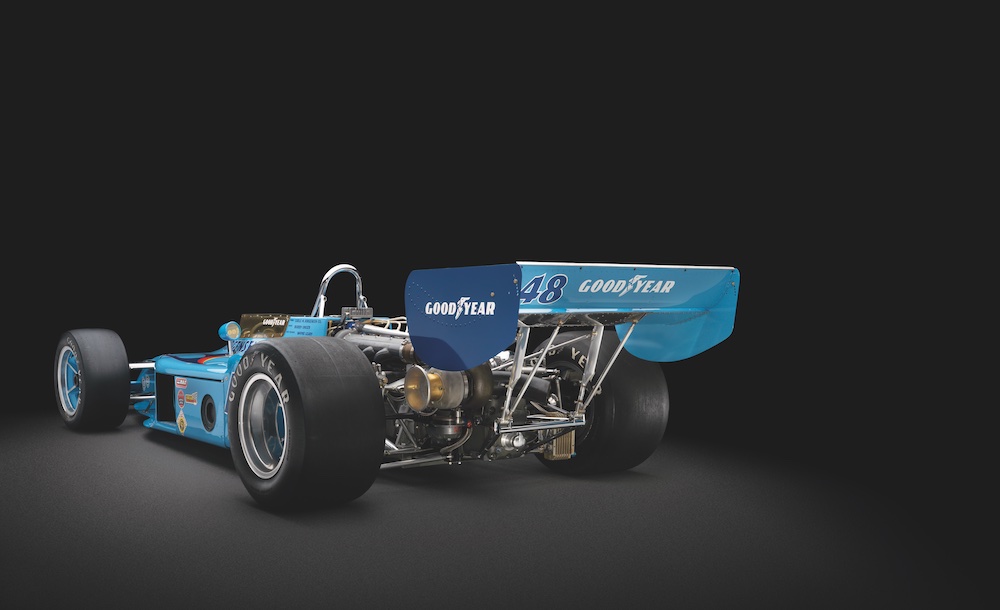
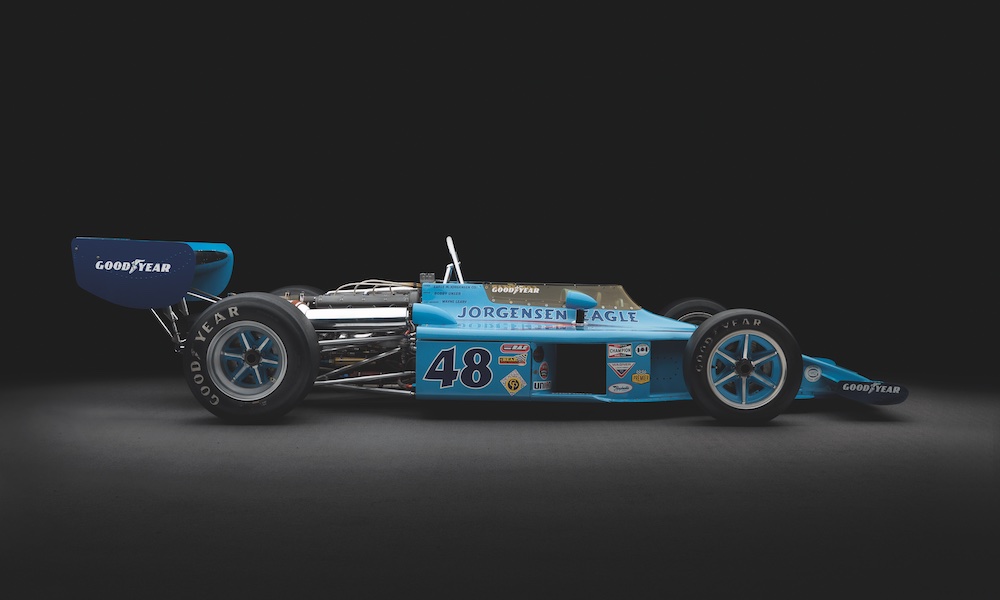
One key to the Eagle’s performance was USAC’s decision to allow rear wings that were non-integral with the bodywork for 1972. Huge leaps in speed caused USAC to reduce boost and wing size in ’74, which cut performance a little, but didn’t alter the status quo – the Eagles still dominated. Image by Peter Harholdt
Indy cars carried 75 gallons of fuel back then and Roman had a couple of major objectives.
“I wanted the polar moment to be as close to CG (center of gravity) as possible, I wanted the fuel low and as close to CG as possible, and I wanted the radiators in front of the fuel,” he explains. “Plus, I wanted to keep the roll center as stable as possible, relative to the CG. And I wanted to feed the wings as much air as possible.”
Adds Gurney: “Roman was very good at packaging things and knew a thing or two about aerodynamics. It was an unknown area, but that’s where Indy car racing was headed. And I also wanted to make sure we provided a friendly spot for the turbocharged Offy.”
Another key component was the infamous Gurney flap, which had come out of its founder’s mind following three days of going nowhere in a test at Phoenix in late 1971. A thin strip of aluminum folded at a 90-degree angle and pop-riveted to the trailing edge of the rear wing was instant magic – and downforce.
Gurney had experimented with wings on his F1 Eagle in 1968 and he struck a friendship with Bob Leibeck of Boeing, who pitched in to help with the ’72 Eagle. “We tried 20 different types of rear wings and Bobby did most of the testing, but we paid attention and found something we liked,” says the AAR founder.
Also collaborating were Champion Spark Plug’s Dick Jones and Art Lamey, along with Fred Carrillo, who built some special rods for the Miller-prepared Offenhauser. Drake Engineering produced lighter pistons for Miller’s short-stroke powerplant, and Leo Goosen developed a pair of oil scavenge pumps that also improved horsepower.
Unser also credits a special turbocharger discovered by Miller as a big boost in the project but, amazingly, the outspoken veteran from Albuquerque had no input in the design of the 7200.
“Dan had forbid me from going into the design room, but that was OK, I shouldn’t have,” he declares. “I didn’t need to because I could pick a hair out of a bowl of soup real quick. I could tell immediately whether things were right or wrong as soon as I got in the car.”
The first test at Ontario Motor Speedway in December of 1971 was either good, disappointing, or somewhere in between – depending on who’s talking.
“I think we realized it was very good before we even hit the track based on what we saw in the wind tunnel,” says Gurney. “And it was good on the track straight away; we just didn’t know how good until we got a little further into it.”
Unser recalls it being “as good a handling car as I ever drove and a keeper, but I couldn’t go quick down the straightaways. So we came back to Ontario and John Miller gave me a real engine with good power. I was hauling that thing so hard into the corners and pushing 200mph. All of the sudden we knew we had a fast racecar.”
Slobodynskyj says: “It was a dog down the straightaway, then we changed engines and the thing woke up. But it was hard to predict it was going to be as fast as it turned out.”
The season opener at Phoenix was a preview of things to come as Unser stomped the track record in qualifying and easily won. He erased the mark at Trenton next, but broke in the race.
In May at Indy, the McLarens of Gary Bettenhausen and Peter Revson topped 190mph, before the Olsonite Eagle flexed its muscle and Unser threw down a lap of 194.721mph three days before time trials. He demolished the IMS record by 17mph with his 195.940mph average that also included two laps of 196-plus. Revson was second fastest, but 3mph behind the ’68 Indy winner, while Mark Donohue completed the front row in his McLaren, 4mph slower than the polesitter.
Unser led the first 30 laps of the race and was cruising along when the ignition rotor failed. “The ‘experts’ said Bobby killed it because he was driving too hard,” says Unser, “but nothing could have been further from the truth. I was driving so easy, backing off in the corners and it was a piece of cake. I lapped my brother Al in 27 laps and it should have been the easiest Indy win ever.”
The totals at the end of ’72 were nine track records, seven pole positions, four wins and 520 laps led out of the 905 he completed. But Unser only finished eighth in the final points because of five DNFs.
“I should have won every race if the engines would have stayed together, but John Miller and I loved horsepower,” says Uncle Bobby, who was miffed because teammate Jerry Grant became the first to officially break 200mph at Ontario that fall after the former’s car broke in qualifying. “Looking back I guess we should have backed it down a bit.”
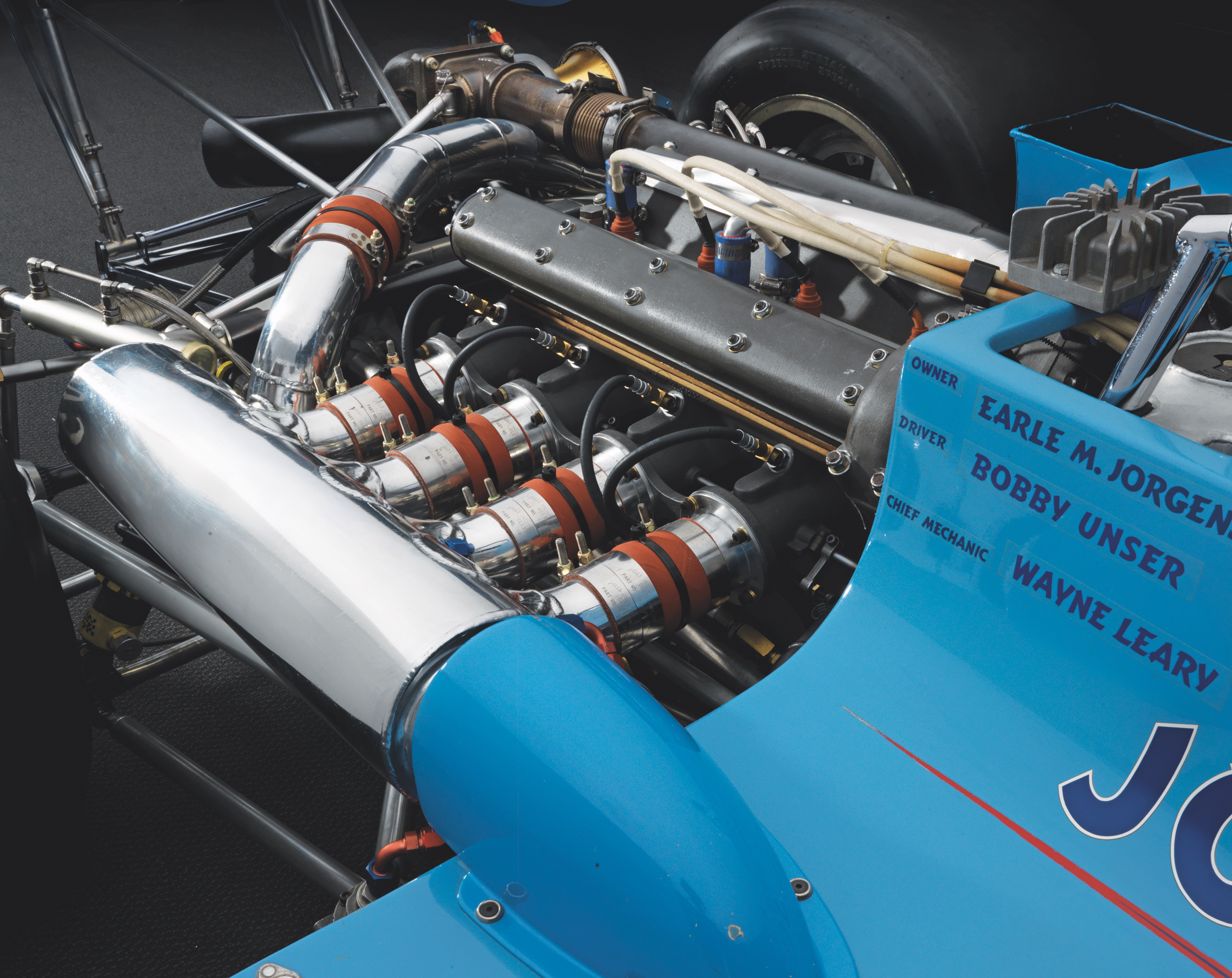
Beating heart of the AAR Eagles were engine wizard John Miller’s short-stroke versions of the venerable turbo Offy, fitted with lightweight Drake Engineering pistons and twin oil scavenge pumps. Image by Peter Harholdt
But Unser and the Eagle had made a huge statement and AAR was flooded with car orders for the 1973 season.
“We were trying to be friendly to the buyers and didn’t want to gouge anybody, but we sold the cars way too cheap and it was my fault for not realizing it,” says Gurney, whose Eagles went for only $15,000, until eventually he raised the price to $36,000.
In 1973, 19 of the 33 starters at Indy were Eagles, including winner Gordon Johncock’s Pat Patrick-entered, STP-backed 7300, and eight of the season’s 16 races were won by Eagles (although only one went to Unser).
In 1974, Unser triumphed four times and earned the National Championship for AAR as 15 new Eagles were constructed that year and comprised over half the field (18 of 33) at Indianapolis.
“That championship was all Dan,” says Unser. “He de-tuned me and we won the championship, but I wasn’t that happy because I was a guy who liked going fast and leading.”
Twice a runner-up as a driver at Indy (in 1968 and ’69), Gurney finally found victory lane in 1975 with Unser and paused long enough to celebrate.
“That was our dream and our goal from the start and it was a terrific day,” says Gurney, who remains one of only three men (with Jack Brabham and Bruce McLaren) to drive his own car to a Formula 1 grand prix victory.
While there were 16 starters in Eagles in 1975 and ’76 at Indianapolis, no new ones had been made since the 15 built in 1974, when USAC changed the specs on fuel capacity (75 gallons down to 40), rear-wing width and boost.
But, incredibly, that original ’72 Eagle (with some small modifications) ran up front for five years – amassing 25 wins with five different drivers, a pair of Indy 500 victories, and USAC’s National Championship in ’74. Only A.J. Watson’s roadster approached Gurney’s Eagle in terms of performance and longevity.
“Nobody ever designed or built a better car that lasted for so many years and sold so many cars,” says Unser. “Everybody wanted an Eagle and everybody liked them.
“There’s never been anything like that car’s history and I know there never will be. It was very special.”
IF DAN HAD TO CHOOSE JUST ONE…
Asking Dan Gurney to name his favorite Eagle Indy car is like asking him to pick his favorite son; it’s nearly impossible because he loves every one of them.
The first one in 1966, the Len Terry-penned, Lotus 38-based Mark 2, is special because, well, it was first.
And Gurney stuck 1967’s Mark 3 in the middle of the front row, before back-to-back runner-up finishes in the ’68 and ’69 Eagles. That ’68 design, Mark 4, also put an Eagle in Indy’s victory lane for the first time, courtesy of Bobby Unser and owner Bob Wilke.
The 1970 version was sentimental since it was Dan’s swansong as a driver and he finished third in his last “500,” while 1972’s 7200 and its subsequent iterations are right up there for what they achieved, including two Indy 500 wins and a national championship.
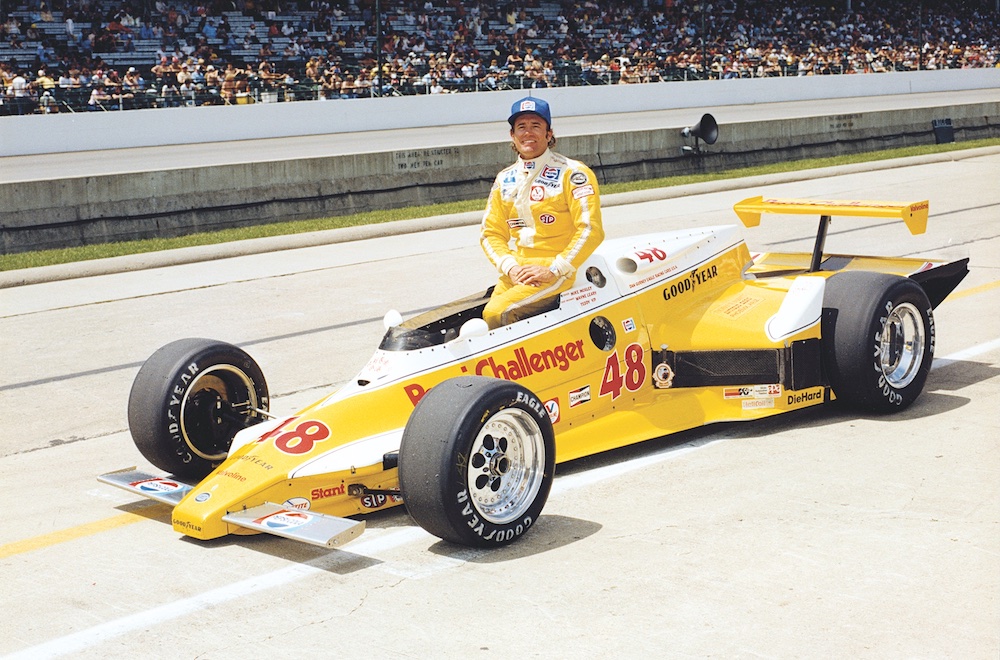
Like its 1980 predecessor, the John Ward-designed Eagle 8100 made downforce from boundary layer adhesion technology (BLAT), harnessing vortex flows underneath the car. Image via IMS Archive
But Gurney’s favorite is one that won a single race, yet ticks all the boxes for his enduring fascination with technology and innovation – the 1981 Pepsi Challenger.
“Yes, it was different and unique from an Eagle, but I’m most proud of that car; it was terrific and it’s my favorite,” he admits.
As an improved version of the 1980 Eagle that was All American Racers’ initial venture into ground effects, designer John Ward came up with a sleek package that was way ahead of its time. It looked space age and ran like a rocket ship.
Unsung Mike Mosley qualified second at Indy with a normally-aspirated engine against all those turbos, but was thwarted by a blocked radiator in the race. Still, the combination came from last to first to win Milwaukee. It also was easily winning Riverside with Geoff Brabham, and Watkins Glen with Rocky Moran, when foiled by bad pit stops.
“It was unique in that it was a great road-race car and equally as potent on ovals, and I was so proud of it because our guys designed it, built it and improved it,” adds Gurney, whose design was legislated out by CART’s kangaroo court that winter.
“And what made it even better was when Ben Bowlby crawled under it a couple years ago here at the shop and digitized the bottom of it. He put it into CFD [computational fluid dynamics] and his eyes bugged out when he realized what they had, so they put it on the DeltaWing two weeks before Le Mans in 2012.
“Something AAR had done 30-some years earlier was still relevant – and that made us all feel good.”
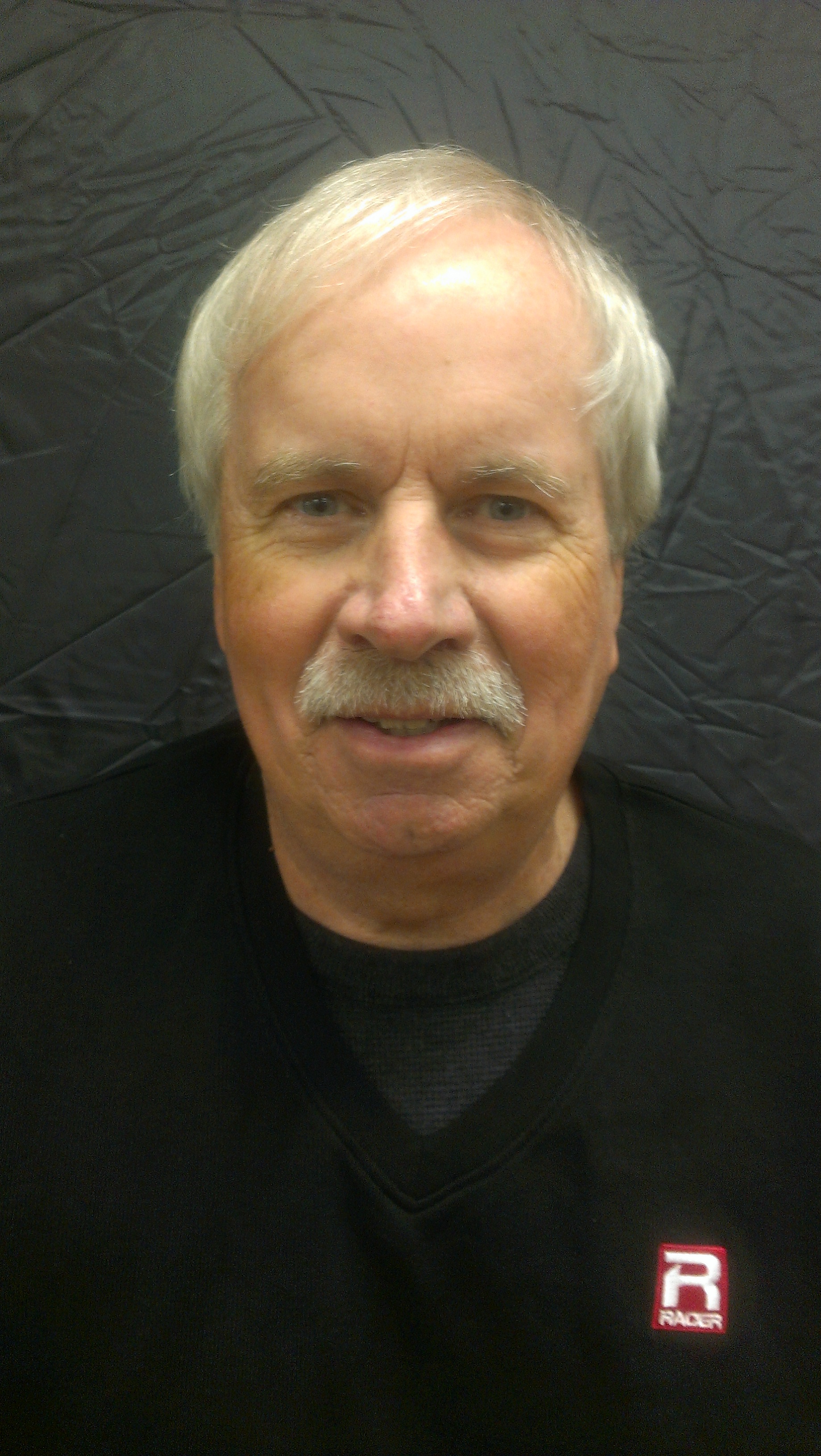
Robin Miller
Robin Miller flunked out of Ball State after two quarters, but got a job stooging for Jim Hurtubise at the 1968 Indianapolis 500 when Herk's was the last roadster to ever make the race. He got hired at The Indianapolis Star a month later and talked his way into the sports department, where he began covering USAC and IndyCar racing. He got fired at The Star for being anti-Tony George, but ESPN hired him to write and do RPM2Nite. Then he went to SPEED and worked on WIND TUNNEL and SPEED REPORT. He started at RACER when SPEED folded, and went on to write for RACER.com and RACER magazine while also working for NBCSN on IndyCar telecasts.
Read Robin Miller's articles
Latest News
Comments
Comments are disabled until you accept Social Networking Cookies. Update cookie preferences
If the dialog doesn't appear, ad-blockers are often the cause; try disabling yours or see our Social Features Support.