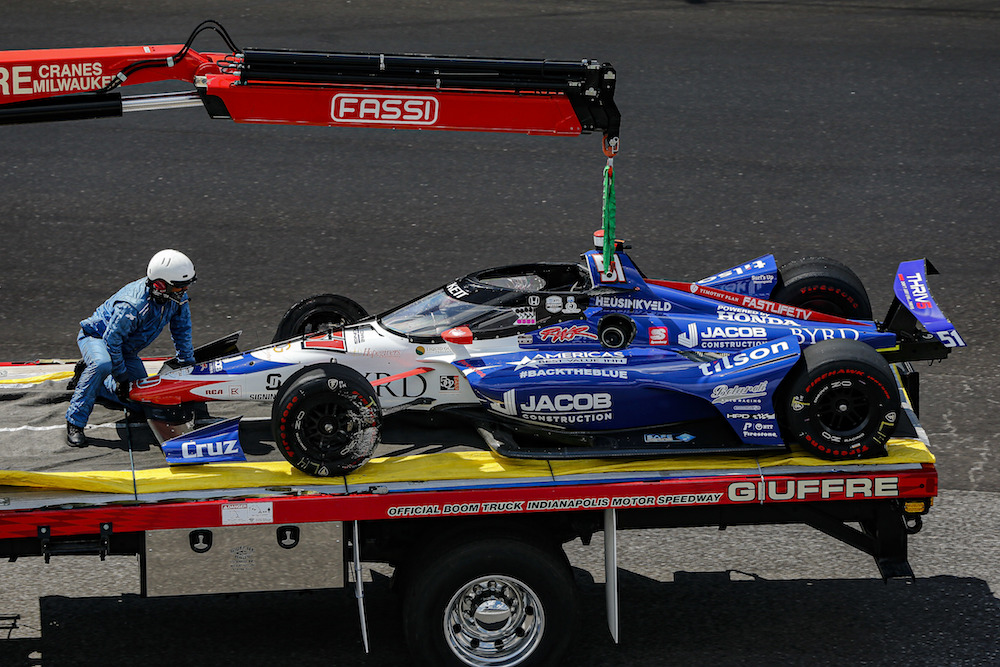
Barry Cantrell / Motorsport Images
Davison's fiery Indy 500 DNF traced to likely brake line issue
The early laps of the 104th Indianapolis 500 turned into a high-speed science experiment as the boiling point of magnesium was reconfirmed to be 1200 degrees Fahrenheit.
The unintended timing of the experiment, as produced by James Davison’s No. 51 Dale Coyne Racing with Rick Ware Racing Byrd Belardi Honda, made for spectacular viewing as the right-front brake and wheel on the Australian’s car exploded as he whistled down the Indianapolis Motor Speedway’s back stretch.
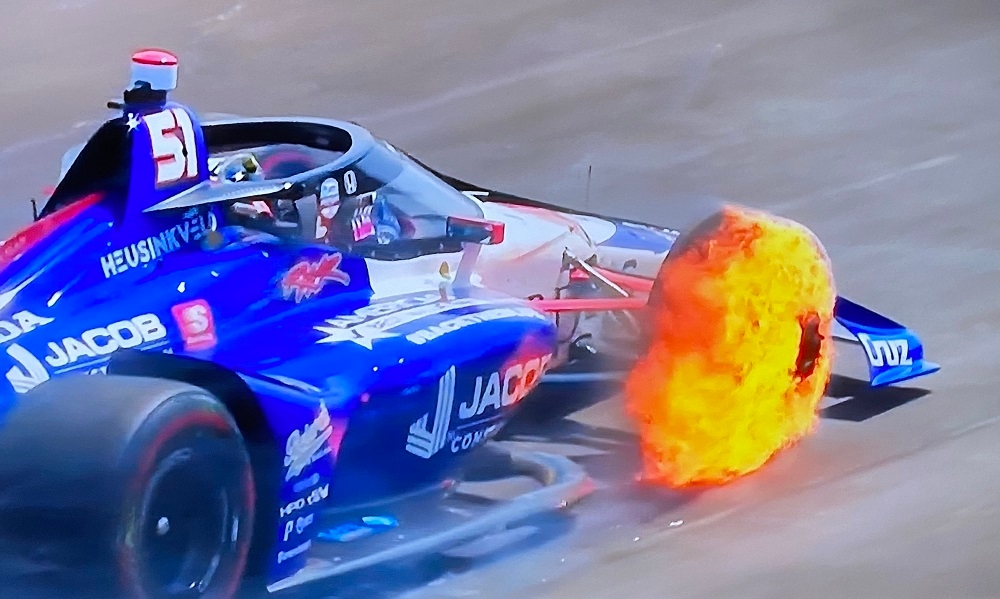
Captured as the remnants of the magnesium wheel and Firestone tire burned bright shades of yellow and orange, the No. 51 entry triggered the first caution period on Lap 4 as emergency crews raced to extinguish the blazing Indy car.
The culprit was friction – extreme friction – as the front brakes on Davison’s car received 279psi of clamping force in the opening laps, all without the driver touching the brake pedal. Although the exact source of the problems is under ongoing investigation, it’s believed a pinched or kinked brake line leaving the front master cylinder was the cause of the unrelenting pressure spike.
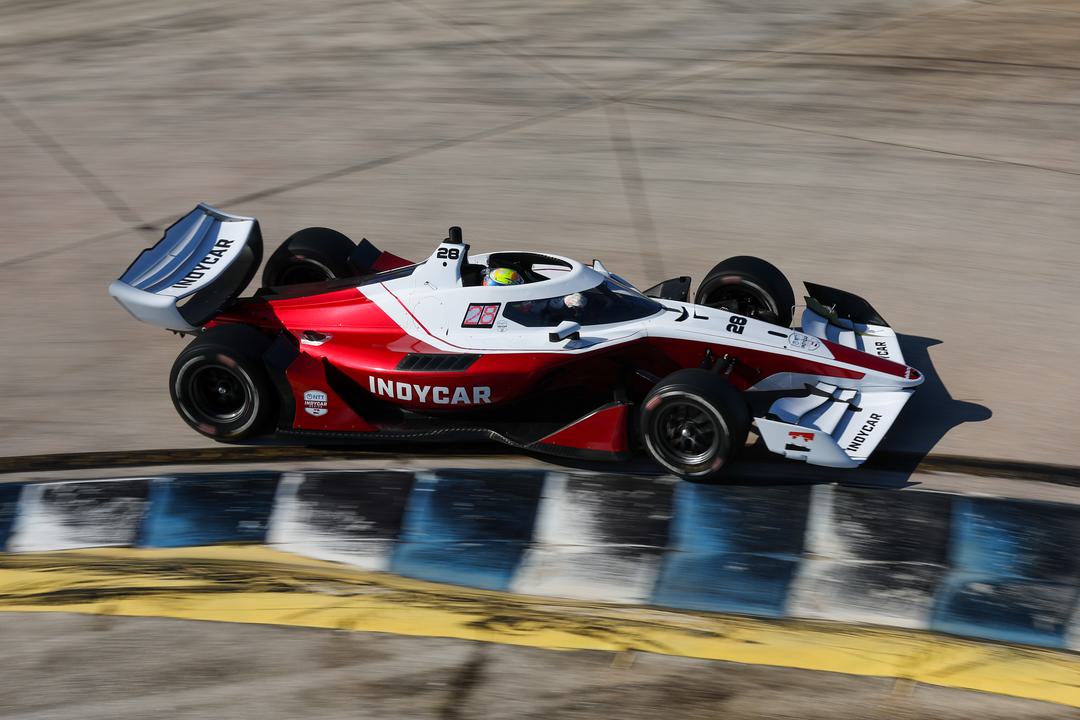
With nearly 300 pounds of pressure up front pushing the carbon fiber brake pads into the carbon fiber discs as Davison completed the parade laps, then posted compromised race laps of 197mph, 207mph, 173mph, and 182mph, temperatures rose to just over 1800F as the melting took place.
“We saw the temperature spike on telemetry. James thought it was the motor and stayed in the gas when it wasn’t accelerating like he expected,” DCR team manager Terry Brown told RACER. “On the brake calipers, the pistons have magnesium caps, and those reached the melting point first. From there, it was pretty spectacular – it exploded the middle of the wheel out. The right side was the one that went first, but the other side was pretty hot, too. It melted some things, but didn’t have a chance to go off like the other one.
"Never seen that happen before at Indy.”
Marshall Pruett
The 2026 season marks Marshall Pruett's 40th year working in the sport. In his role today for RACER, Pruett covers open-wheel and sports car racing as a writer, reporter, photographer, and filmmaker. In his previous career, he served as a mechanic, engineer, and team manager in a variety of series, including IndyCar, IMSA, and World Challenge.
Read Marshall Pruett's articles
Latest News
Comments
Comments are disabled until you accept Social Networking Cookies. Update cookie preferences
If the dialog doesn't appear, ad-blockers are often the cause; try disabling yours or see our Social Features Support.