Image by Burke/Motorsport Images
PRUETT: Notes from Road America
Just when I thought we were going to finally write about a team other than Chip Ganassi Racing, Felix Rosenqvist spoils the first win for Arrow McLaren SP and delivers on the potential that landed him the plum seat alongside Scott Dixon. Having committed plenty of words to CGR in our recent post-race analysis columns, let’s open in a different direction.
Our first major trend to note, while coming out of four races where practice time was limited, is how erratic the season has been for so many teams and entries. It’s to be expected. Without tons of practice sessions to bring each car to a state of near-perfection, drivers and engineers have been forced to make quick and bold decisions on chassis setup. As a result, those big swings have either hit or missed the target. Think of it as having hours, rather than days, to prepare for a big test, and feeling less than confident you’re ready to ace the exam.
Sunday was a prime example, with roughly two hours separating qualifying and the race. Pato O’Ward’s supreme short-burst speed in the No. 5 Arrow McLaren SP Chevy was good enough to take pole position, but as the race revealed, rear tire degradation was too high once he moved to Firestone’s primary compound in the middle of the contest, and again when he finished the race on used alternates. With more track time to develop the car around Sunday’s setup, it’s more than likely the rears could have been better preserved, but in the slam-bang schedule, the team did their best to nail the setup and soon learned that rear-tire limitations were becoming problematic.
O’Ward’s situation was mirrored by most teams. Dale Coyne Racing’s Alex Palou was a beast on Saturday when he took third while in hot pursuit of Will Power and Scott Dixon, and with some chassis tweaks overnight, he improved 11 spots in qualifying from Round 1, lined up third for Round 2, and then spent the afternoon chasing the handling, which went south rather quickly. Expand the reality to the rest of the field (barring Dixon and Rosenqvist), and the results for most drivers over the opening four rounds look like almost nobody has a clue to what they’re doing from week to week.
While that isn’t true, the compressed schedules in reaction to COVID-19 have become IndyCar’s greatest generator of variables. It’s been a podium finish here, missing in action there, average finish the next time out, and a crash to close. If you like surprises, the 2020 season is on pace to be unforgettable in that regard.
Pivoting off this point, the random nature of the IndyCar races to date has played into Dixon’s hands.
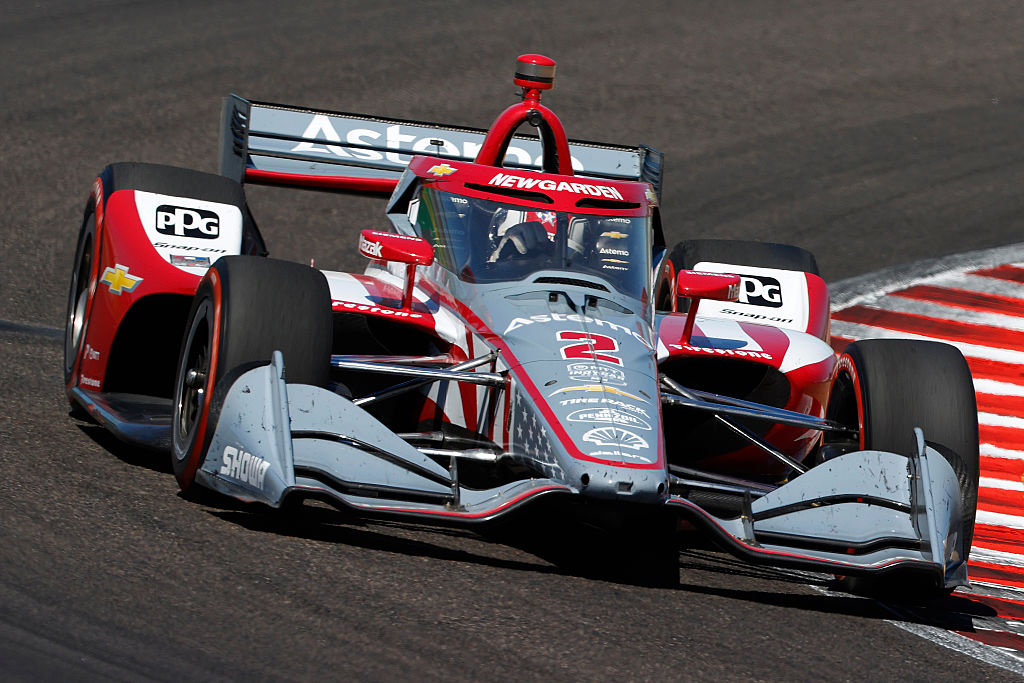
Without a steady rival finishing in his wheel tracks, the five-time champion has amassed a 54-point lead over second place. For the sake of context, that’s one full race (50 points) plus pole (one point), leading a lap (one point) and leading the most laps (two points) worth of an advantage after four races. And that comes after a lowly 12th on Sunday.
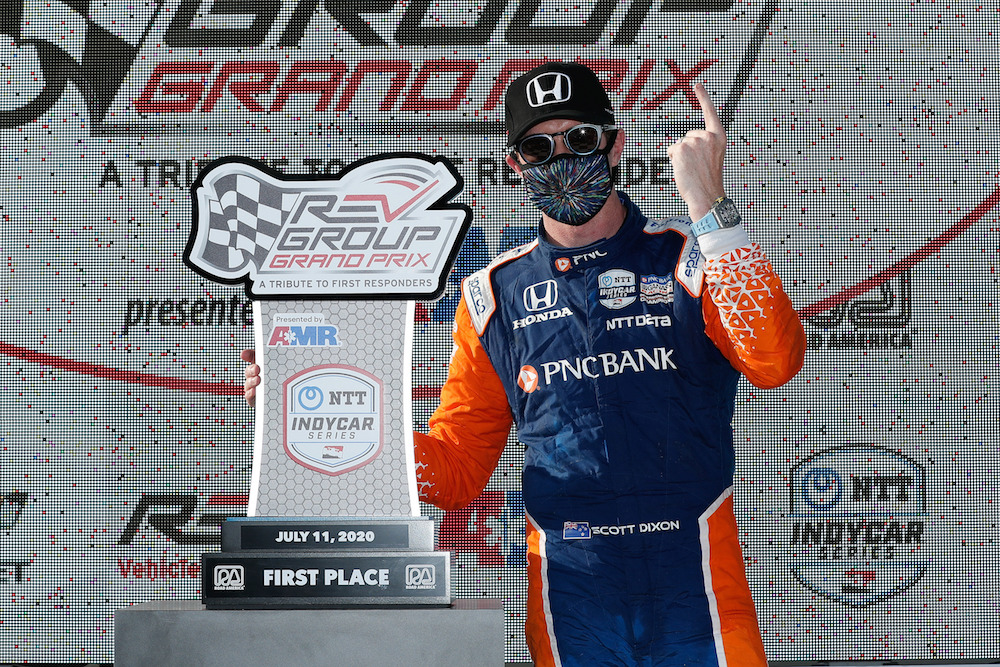
Dixon is making a strong early play for becoming IndyCar's first champion of the social-distancing era. Image by Abbott/Motorsport Images
After Texas, it was Team Penske’s Simon Pagenaud (P2) and Josef Newgarden (P3) on Dixon’s championship heels. After winning the Indy GP, Pagenaud stayed close (P2, -25 points), and while Newgarden held his position, a distant finish of seventh separated him from his teammate and Dixon in the standings (P3, -40 points).
Following Dixon’s Saturday win at Road America and Pagenaud’s 12th-place finish, the Penske driver was able to maintain his runner-up spot in the championship, but the gap exploded, more than doubling (P2, -62 points). For Newgarden, whose Saturday went pear-shaped, his run to 14th came with forfeiting third in the standings (P4, -71 points) as Colton Herta moved in behind Pagenaud (P3, -67 points).
By the end of Sunday, when Dixon’s three-race winning streak came to an end, his 12th-place finish could have been used by the Penske tandem to undo some of their poor finishes. But since we’ve yet to establish a consistent threat to the Ganassi driver, his bad day at the races had minimal influence on the championship. Pagenaud struggled once again, finishing right behind Dixon in 13th, and as a result, he’s been demoted (P3, -63 points). Newgarden, who placed ninth on Sunday, fell even farther (P5, -67 points).
Herta, IndyCar’s current master of consistency, is the only driver so far in 2020 to finish all four races inside the top 10, and he’s been rewarded in the standings (P2, -54 points). Sunday’s second-place man, Pato O’Ward, also received a boost in the standings, splitting Pagenaud and Newgarden (P4, -63 points).
In this season that defies prediction, who knows what Iowa will bring to the constantly rising and falling championship contenders behind Dixon and Herta?
Other thoughts:
- How on earth are we already past the 25 percent mark in the season?
- The 2020 IndyCar engine manufacturer war is a strange thing to behold. Chevy has four poles and zero wins. Honda has zero poles and four wins. Must be some kind of record.
- When was the last time Team Penske went through the first four races without a win? Seven years ago, when it took until the eighth race of 2013 (at Texas) for Helio Castroneves to find victory lane for The Captain.
- And how about the other winless powerhouse team, Andretti Autosport? The last time is was blanked across the four opening races was… not so long ago. Takuma Sato produced the team’s first win at Round 6 in 2017, at a little event known as the Indianapolis 500.
- Sato has yet to feature in one of the three races he’s started, but the Japanese star has been highly efficient since missing Texas with finishes of 10, ninth, and eighth. If he continues improving his finishes by one spot at each race, put your money on Sato’s No. 30 Rahal Letterman Lanigan Honda to win at Round 1 in Laguna Seca.
- Ambient temperatures were down from the steamy GMR Grand Prix at Indy, which helped bring cockpit temperatures down to a place where they were a non-issue. A few drivers made use of the new, second cooling duct on the side of the aeroscreen, but most were fine with one. The most welcome note from drivers involved the relocation of their drinking systems to inside the chassis by their knees. With the drink bladder move away from the radiators, the piping hot liquids at Indy were replaced by cool drinks at Road America.
- This Incognito-Colton-Herta thing is an ongoing oddity. Nothing close to pole- or race-winning pace for him so far, and yet, with finishes of seventh, fourth, fifth, and fifth, he’s become Dixon’s top rival for the title in the early days of the championship.
- Sticking with Herta, if he’s going to reel in Dixon, podiums and wins will be needed, which is known, and while Andretti Autosport’s overall lack of race-winning pace has been a surprise, Herta – an old soul – has clearly taken the lessons from Dixon and Dario Franchitti to heart. As other challengers rise and fall around him, the kid from California continues to put quality points in the bank on the days where spraying champagne isn’t an option. The tactic has worked as the rest of his teammates – often through no fault of their own – have been all over the map. Of the six cars in the Andretti stable (adding in Harvey’s affiliated MSR entry), Herta holds second in the championship while the next closest teammate is Ryan Hunter-Reay in 11!
- Speaking of Harvey. A thought at the end of Saturday: Scott Dixon winning three in a row? Check. Jack Harvey with nothing to show for three races in a row? Check. The Meyer Shank Racing driver was never comfortable at the 1.5-mile Texas oval that opened the season, qualified on the front row at Indy and got hosed by the mid-race yellow, and had his second-place start and fifth-place position in Round 1 vanish when a brake failure caused the No. 60 Honda to spear off the road after 37 of 55 laps. From Indy, finishes of 16, 17, and 23 were more brutal than the team deserved, and with a Round 2 finish of 17 when a rough opening lap saw Harvey plummet from ninth to 19, it’s safe to say MSR’s first experiences with being a full-time IndyCar team has tested its resolve.
- How about that James Hinchcliffe guy on the NBC/NBCSN broadcasts?
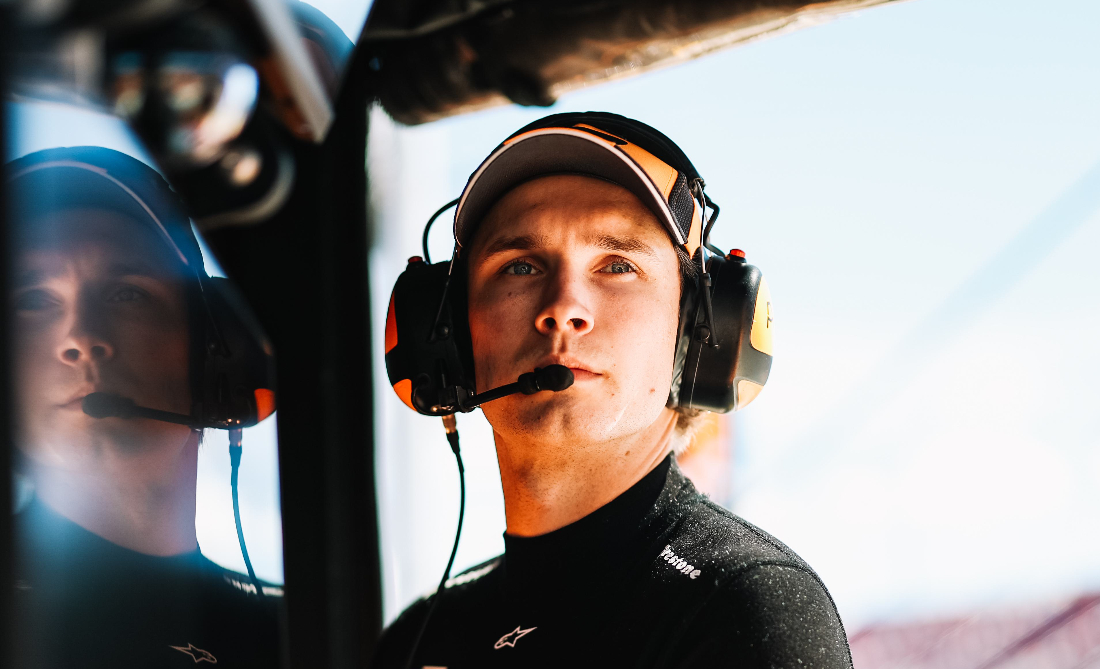
- Had to feel happy for Rosenqvist’s crew chief, Ricky Davis, whose experience and wisdom has been a rock that’s kept Ganassi’s No. 10 Honda entry tethered in times of adversity. And how about CGR’s new performance director, Chris Simmons, who deputized for Rosenqvist’s race engineer (and team technical director) Julian Robertson, who remained at the team’s base and stayed connected via teleconferencing? And team manager Barry Wanser, who calls race strategy for the car, and absolutely nailed every decision on how long to use each set of tires? In the CGR family, Dixon and the No. 9 team are the shiny objects that have gotten the majority of the attention – and they deserve it – but it was nice to see the talented team behind the No. 10 get their first of many days in the sun.
- Every race has its Invisible Driver X. At Round 1, it was Simon Pagenaud. In Round 2, it was…also Simon Pagenaud, which is a rarity. The last time he had bad back-to-back races was in 2017.
- Just as it’s rare for Pagenaud to have two bad races in a row, Graham Rahal must be wondering if he’s allowed to have more than two good races in succession.
- His team is probably asking the folks at Road America and the series why something as simple as bales of tires weren’t placed in front of the concrete barrier he clobbered on the outside of Turn 3. Whatever the cost might be to cushion the blow, it pales in comparison to the $100,000 or more it will take to get Rahal’s No. 15 Honda back in working order.
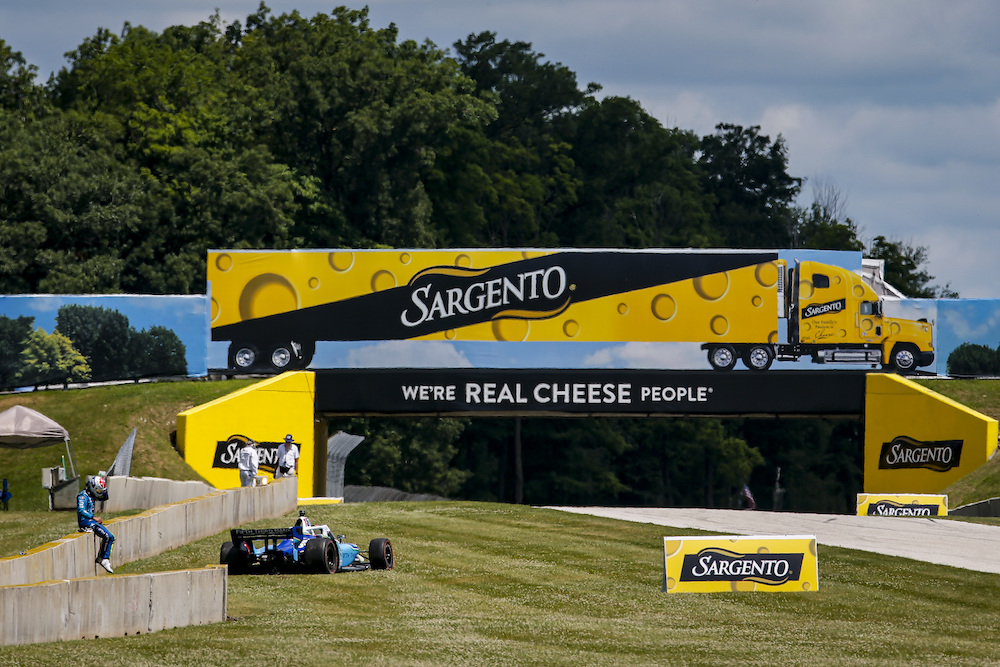
Rahal's crash was costly in more ways than one. Image by Cantrell/Motorsport Images
- Will Power wasn’t playing on Saturday’s first pit stop. Wanting to get after teammate Josef Newgarden in the lead, Power’s lap 12 stop came to an end when he decided it was over; although his crew chief was standing adjacent to the left-front tire with both arms extended towards the cockpit telling him to hold as teammate Simon Pagenaud approached to stop in front of the No. 12 Chevy, the Penske veteran kept an eye on his refueler Quentin Washington and dropped the clutch once he was done. Brassy move.
- Great to hear Ann Bixler, Laguna Seca’s longstanding and universally revered VP of track operations, who was released by its new management team late last year, got the call to fly out and help Road America with its biggest event of the year.
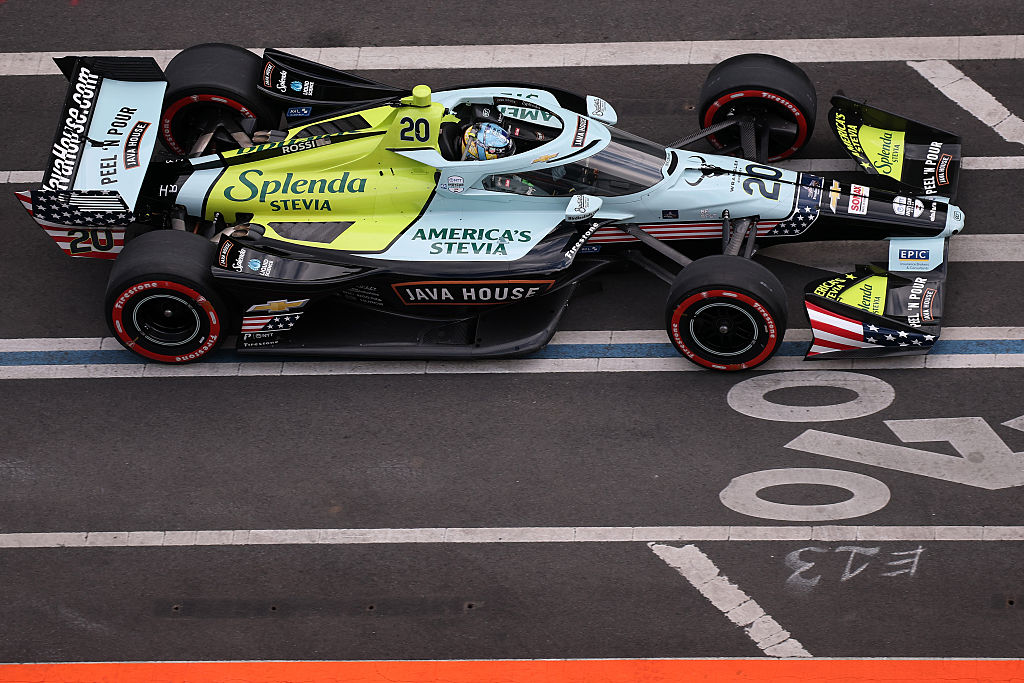
- Saturday’s clash and crash involving Conor Daly and Pato O’Ward gave the Ed Carpenter Racing team a lot of work to do and not much time to do it. The No. 20 Chevy was a mangled mess after it sailed into the barrier on the exit of Turn 7, and according to Daly – a former high school wrestler – his shoulder popped out of the socket in the whipping impact. So, who was at fault for the crash? Meh. Shouldn’t have happened in the first place. When was the last time two IndyCars went side-by-side in Turn 7 and successfully reached the other side fully intact? Never, I’d suggest. Having learned this lesson in Round 1, O’Ward conceded Turn 7 a bit earlier when Rosenqvist attempted and completed the race-winning pass there on Sunday.
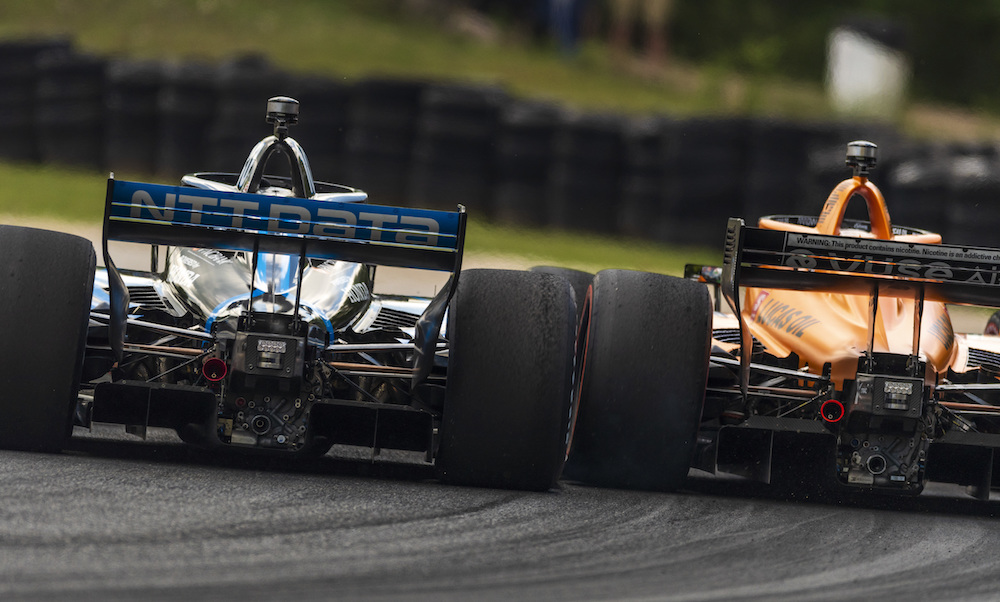
- Did Daly provide a little bit of payback in Round 2 by passing and holding up O’Ward to the benefit of Rosenqvist? I know there were complaints that running in the wake of Daly’s faster car on new Firestone primaries caused O’Ward’s car to torch his used alternates. I also know that on pure pace over the last eight laps of the race, Daly was faster than O’Ward seven times, and in calculating their respective lap times over the eight tours to close the race, Daly went 7.39s faster. As to the question of motive, that can only be answered by the driver in question. As for speed and potential between their old and new tires, the No. 5 AMSP Chevy and the No. 20 ECR Chevy were in different leagues.
- A number of fans have noted how the yellow Liberty Mutual sponsor logo placed atop the NBC Sports graphics on the left of the screen makes it look like the race is under caution.
- I’m told Dixon’s stall during his final pit stop wasn’t a case of the driver fumbling the clutch release. The stall is said to have been a result of the No. 9’s fuel tank being so dry upon entering pit lane, the motor coughed and died as the new fuel attempted to fill the fuel rails.
- Trying to follow the Round 1 lap chart for Josef Newgarden is like tracking a dragonfly in a hurricane. He was first, he was 10, he was sixth, he was eighth, he was 17, and then he was 14. A late, fourth pit stop is what ruined his day as he surrendered sixth with 12 laps to go and didn’t have the time to overcome the loss.
- Welcome to IndyCar, Alex Palou. The Spanish kid who came to IndyCar from racing seriously fast opener-wheelers in Japan wasn’t intimidated on his introduction to ovals at Texas, had a rather silent follow-up weekend at Indy, and found his groove at Road America with a stellar third on Saturday. Qualifying third on Sunday, he overcame major balance problems to finish directly behind teammate Santino Ferrucci. As a whole, it was among Dale Coyne Racing’s finer days in recent years as Palou’s finishes of P3/P7 and Ferrucci’s pair of sixths came at the expense of bigger teams and more experienced drivers.
- Staying with Santino, Ferrucci’s drive on Saturday was among the first of its kind for the Connecticut native outside of IndyCar’s ovals. Hailed for his ballsy oval performances as a rookie, the life-long road racer didn’t make as big of an impression at the type of tracks he grew up on; with the strong effort in qualifying, which carried over into the Round 1 race, we got to see the first glimpse of Ferrucci the all-rounder. It continued on Sunday, which has the DCR with Vasser Sullivan driver holding 10 in the standings.
- Another quick Palou note: He’s leading the rookie standings and holds 12 in the championship.
- The closing laps of Round 2 featured Felix Rosenqvist and Pato O’Ward battling like mad, and behind the scenes, we had another featured competition between driver coaches as Rosenqvist’s man, four-time champion Dario Franchitti, advised remotely from London. O’Ward had IndyCar front-runner Robert Wickens lending his insights from pit lane.
- Marcus Ericsson! Wedged between Josef Newgarden and Will Power in the points on speed and merit!
- It feels like Power’s season has been a rolling disaster, but that second-place result on Saturday has proven to be extraordinarily valuable. Sunday’s opening lap might be the toughest of his career with two points of contact made with rivals and a third with trackside signage, and despite the ensuing penalty for avoidable contact and 11-place finish, he still holds seventh in the standings. Even more remarkable, Power’s only 18 points out of third. A decent doubleheader in Iowa could change everything for the Team Penske veteran.
- ‘Rodeo Rinus’ VeeKay went full Malcolm McLaren with his ‘round the outside’ pass on Simon Pagenaud at the carousel to start the first race. It’s the kind of thing reserved almost exclusively for youth and bravery. Sadly, it might have been the lone highlight of the event for his Ed Carpenter Racing team. From the high of VeeKay’ fifth-place finish at Indy, the Dutchman qualified P16/P15, and finished P13/P14. The targeting system for teammate Conor Daly’s car by the ACME cartoon anvil was spot-on as the Hoosier’s P19/P20 starts were met with the aforementioned crash in Race 1 and the starting line silliness in Race 2 that left him with P21/P18 finishes. Luckily, they’re moving onto Iowa, where ECR always performs.
- A.J. Foyt Racing’s Dalton Kellett did a good job of leaving the front-runners to conduct their business when they came upon the No. 14 Chevy at Road America. To his credit, the Canadian rookie has finished his first three races while demonstrating remarkable consistency with results of 21, 20, and 20.
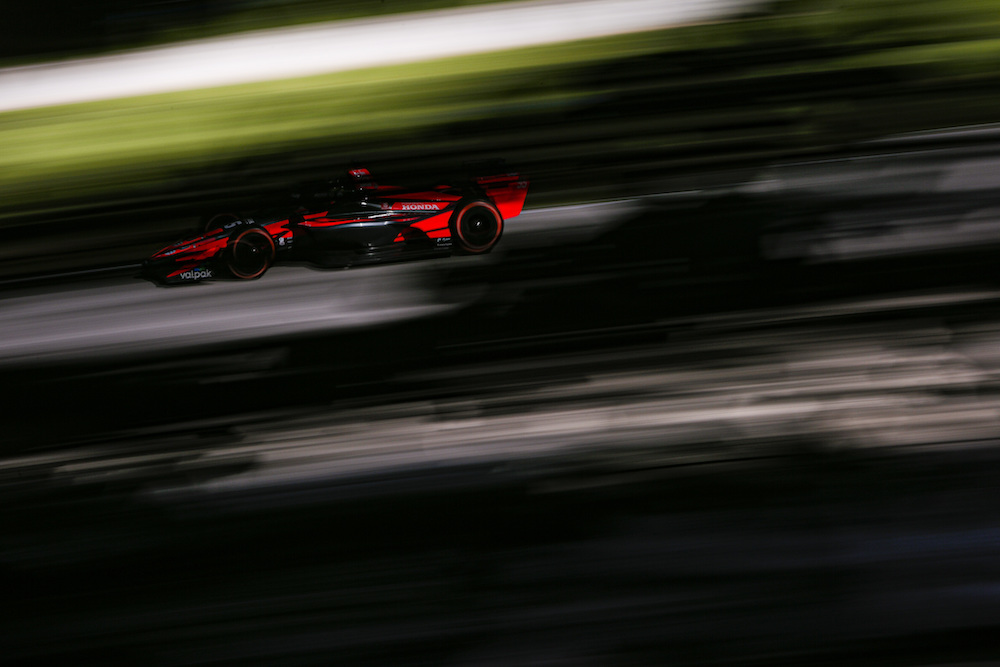
Dale Coyne Racing is finding its sweet spot. Image by Cantrell/Motorsport Images
- The weekend was looking like a write-off for the Foyt team until Charlie Kimball and race engineer Mike Pawlowski found a useful setup for Sunday’s qualifying. Starting 13, Kimball took the No. 4 Chevy to a high of fifth during the final pit stop exchange and finished 10, less than five seconds behind Penske’s Newgarden.
- Until Rosenqvist’s win on Sunday, most of the focus on bad starts to the season had been placed on Alexander Rossi, which made it easy to ignore the Ganassi driver’s terrible start. Having documented his crash while running second at Texas, and the myriad problems on and off the track at Indy, the Swedish sophomore was hit with Honda motor problems in Round 1. Entering Round 2, Rosenqvist was 18 in points, with finishes of 20, 15, and 18. For the sake of comparison, he had four total finishes of 15 or worse throughout the entire 17-race 2019 season. And with his win on Sunday, he jumped 10 championship spots to eighth.
- We had the crazy collision of the Golden Bowling Ball and the Cartoon Anvil in a single corner on Sunday as Will Power and Ryan Hunter-Reay came together. RHR thought Power shouldn’t have been there on his outside, Power was trying to follow Scott Dixon, who used the outside lane to get past RHR, and as the No. 28 Honda crept left to close the express lane, tires met and he was pitched into the barriers. The ensuing contact with Rahal, followed by understeering off the road to close lap 1, left Power as the person his fellow drivers wanted to vote off of IndyCar Island by the end of the episode.
- Fourth in points to start the year in Texas, Andretti Autosport’s Zach Veach is down to 13 after a pair of 16-place results in Wisconsin. He’s another driver who needs to stop the slide in Iowa. Add AMSP’s Oliver Askew to the list, whose rookie campaign has diverged from O’Ward’s steady rise. The Floridian is 19 in points, two markers ahead of Jack Harvey, and eight in front of the misery-laden Marco Andretti, who sits 21 and last in the standings among full-timers.
- Scott Dixon’s string of three consecutive race wins matches a three-race run in 2013 when he won at Pocono and took both Toronto doubleheader rounds. He did it for first time back in 2007, making this his third three-win streak (that’s a lot of three, I know). He joins Ganassi alumni Juan Pablo Montoya, who has a pair of three-race win streaks, but unlike Dixon, there wasn’t a big gap between the feats; JPM took three-in-a-row on two occasions during his title-winning 1999 CART IndyCar Series season. Both Dixie and JPM trail Ganassi legend Alex Zanardi in this department: The pineapple took three on the trot in 1997, then went four-in-a-row in 1998. Both years, Zanardi won the championship. In fact, whenever Chip’s IndyCar drivers have won three or more consecutive races in a year, they’ve won the title, with one exception: 2007, when Dixon finished behind his future teammate Dario Franchitti…
- There wasn’t much time to catch a breath from the start of Saturday’s opening practice session to the final lap of Sunday’s race. If you watch IndyCar for equal parts action and drama, the Road America doubleheader delivered in every way imaginable.
Marshall Pruett
The 2026 season marks Marshall Pruett's 40th year working in the sport. In his role today for RACER, Pruett covers open-wheel and sports car racing as a writer, reporter, photographer, and filmmaker. In his previous career, he served as a mechanic, engineer, and team manager in a variety of series, including IndyCar, IMSA, and World Challenge.
Read Marshall Pruett's articles
Latest News
Comments
Comments are disabled until you accept Social Networking Cookies. Update cookie preferences
If the dialog doesn't appear, ad-blockers are often the cause; try disabling yours or see our Social Features Support.