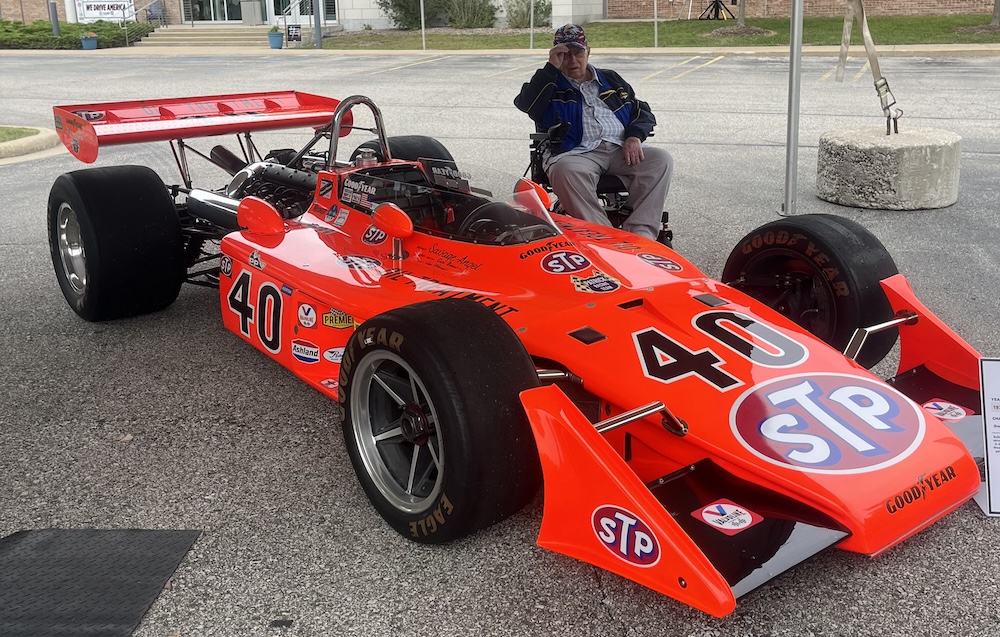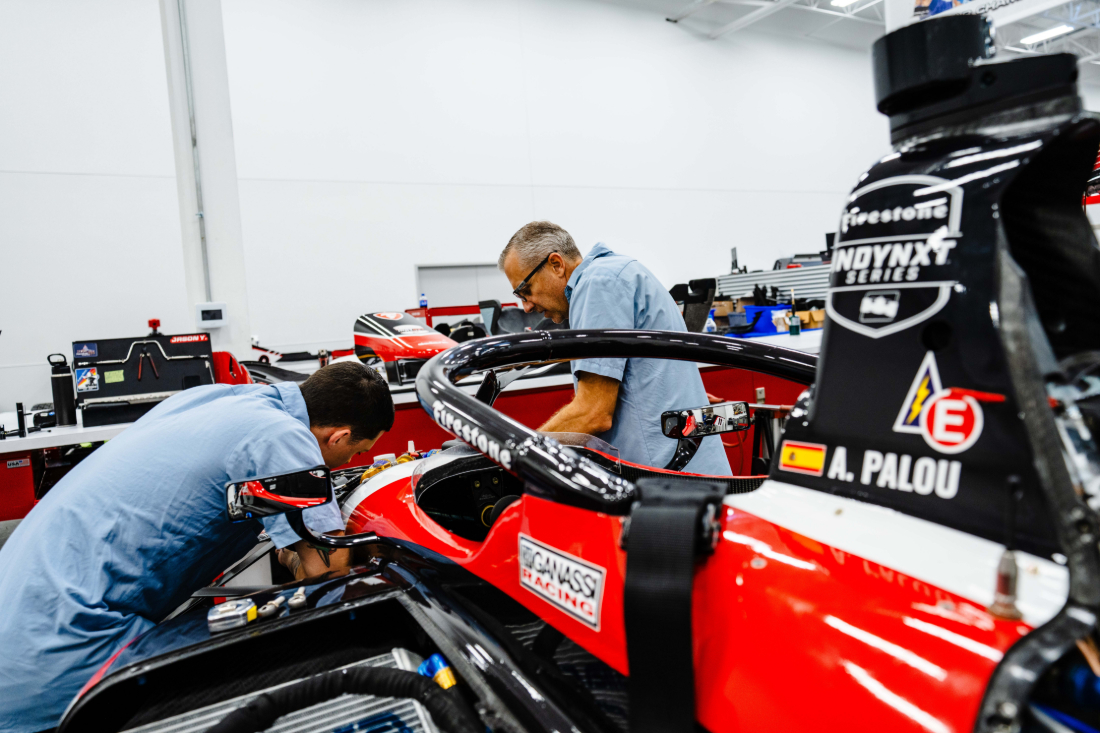
Image by LAT
MILLER: Which driver era was IndyCar's best ever?
Will Power is beyond flattered to find himself sandwiched between the Unser brothers on IndyCar’s all-time list of winners, but the 2018 Indianapolis 500 winner believes his generation of drivers ranks right up there.
Power also thinks people will look back on these past few years as probably “the most competitive era ever”, and when 20 cars are separated by one second on a road course with 14 turns, it’s tough to argue.
In terms of competition, IndyCar has never been closer or had more depth, and with spec cars and very comparable engines, it’s not all that surprising. But that gives the driver, engineer, strategist and pit crews the ability to make a difference, and today’s line-up sports 14 IndyCar winners and a few more on the on-deck circle.
Of course some old-timers were up in arms because they thought the 38-year-old Aussie was saying it was the greatest lineup of talent ever, but that’s not what he meant. His statement: “You've got to look at this generation as one of those generations when you had A.J., Mario, the Unsers as with Dixon and I'm sure [Alexander] Rossi and [Josef] Newgarden – these guys are going to be around for a long time.”
But Willy P.’s declaration got me to thinking: what was the greatest group of racers in IndyCar’s modern history?
It’s a tough call, because the modern IndyCar driver only runs pavement, and as diverse as the NTT series is, it still takes a back seat to the days of mile dirt tracks spliced in with ovals, and road courses, and even Pikes Peak.
So as we head to Laguna Seca for the 2019 finale, let’s take a subjective look at the best fields of each decade of the past 60 years. And for argument’s sake I only counted the victory total once for each driver.
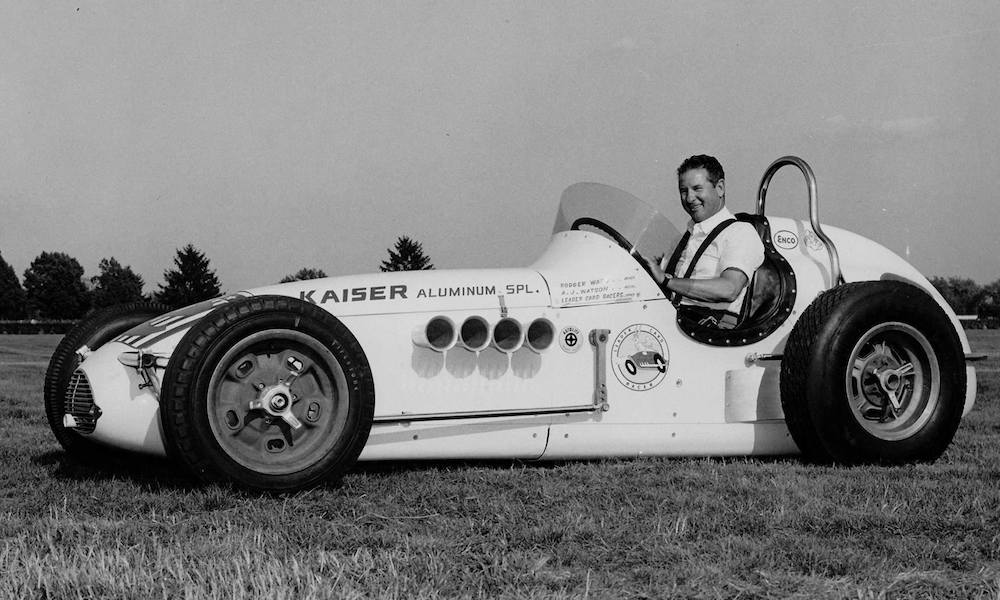
Rodger Ward posted some big numbers, and had to beat some deep fields in order to do so. Image via Robin Miller Collection
In 1955, the last year of Triple A, you had five men destined to pull into Victory Lane at Indy – Bob Sweikert, Pat Flaherty, Jimmy Bryan, Jim Rathmann and Rodger Ward – mixing it up with the likes of Pat O’Connor, Jack McGrath, Tony Bettenhausen, Johnny Thomson, Duane Carter, Jimmy Davies, Jimmy Reece, George Amick, Andy Linden and two-time Indy king Bill Vukovich. Ward was two years away from his initial Champ Car win, but would take Indy twice and roll up 26 victories.
Bettenhausen racked up 22 IndyCar wins and was a two-time national champion, while Thomson scored seven IndyCar victories and a USAC sprint title, Sweikert and McGrath won four IndyCar races apiece, Amick earned a trio of IndyCar triumphs, Davies was a three-time USAC midget king and youngest IndyCar winner at that time (20 years old). Vuky died while comfortably leading what would have been his third Indy win in a row. As a group, they totaled 67 Indy Car wins – including eight Indy 500s – and eight IndyCar titles.
In 1961 it was an onslaught of fresh, fast faces mixed with a few wise old owls. A.J. Foyt won the first of his four Indy 500s and also captured his second straight USAC championship as we were introduced to Parnelli Jones, Bobby Marshman and Roger McCluskey a year after Jim Hurtubise and Lloyd Ruby stormed onto the scene. Jones won everything on four wheels in USAC midgets, sprints and Champ Car, but had to settle for only one Indy win in what could have easily been three or four.
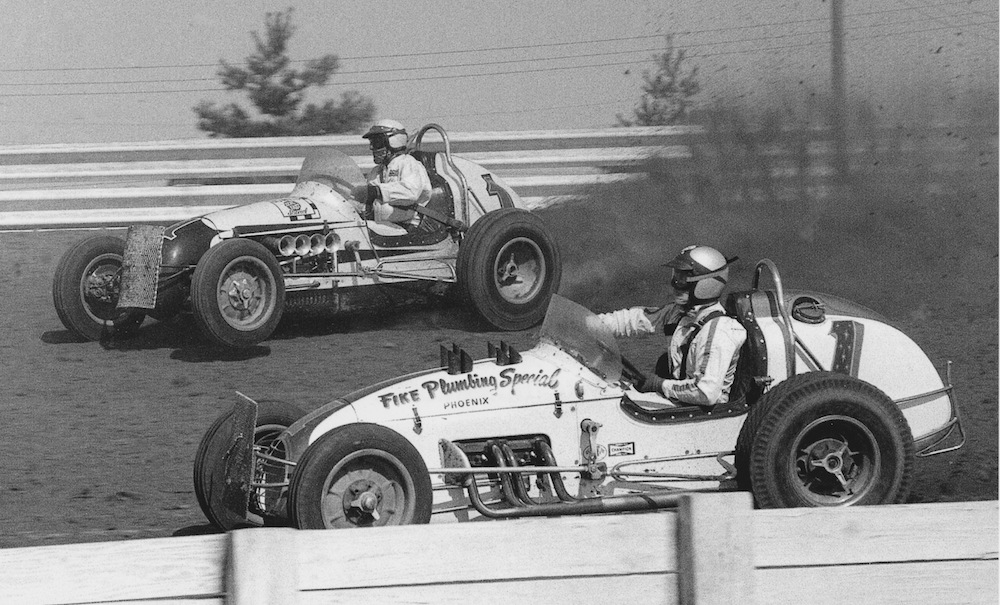
The likes of A.J. Foyt and Parnelli Jones were a handful in 1961, regardless of the track surface. Image by Gene Crucean
Marshman was on the fast-track to stardom before losing his life in a test at Phoenix in 1964, while Ward was a year away from his second Indy win and fighting furiously to hold off the brash kid from Houston. It was a lineup loaded with exceptional talent that would adapt quickly from roadsters to rear-engine cars in the coming years, and were just as fierce on the dirt as they were on the pavement. The career victories of Foyt (67), Eddie Sachs (8), Ruby (7), Don Branson (6), Jones (6), McCluskey (5), McElreath (5), Hurtubise (4), Len Sutton (3) and Marshman (1) total 112 plus 10 IndyCar championships and five Indy 500s.
In 1971 the USAC landscape was changing as Roger Penske and Team McLaren became players, while NASCAR stars began looking north and Mario Andretti was mixing Formula 1 with the Hoosier Hundred. Al Unser and George Bignotti made it back-to-back at Indy, and Penske introduced Mark Donohue to the USAC wars. Peter Revson was McLaren’s chosen son and showed he was up to the task, just like fellow sports car grad Donohue. Cale Yarborough quit stock cars to be Rube’s teammate, and Lee Roy Yarbrough had nearly won the California 500 the year before and was back for more – soon to be followed by the Allison brothers.
We saw the grit of Gary Bettenhausen as he impressed The Captain, while pal Bill Vukovich and the underrated Mike Mosley were gaining speed and attention. Art Pollard was still fast at 44, Dan Gurney’s protege Swede Savage looked like a star in the making and Johnny Rutherford was two years away from making it big with McLaren. Bobby Unser was in between Indy wins and a May away from taming 1,000 horsepower with Gurney’s latest Eagle. Gordon Johncock and Wally Dallenbach were set to go to the front with Pat Patrick’s team.
The Class of ’71 had F1 winners, Can-Am and Trans-Am stars, NASCAR biggies, a flat-track motorcycle god and some of USAC’s finest. Their career win total of 204 wins (we already counted A.J.’s 67 in 1961) – Mario (52), Al Unser (39), Uncle Bobby (34), Rutherford (27), Johncock (25) Joe Leonard (6), Dallenbach (5), Gary B. (4), Mosley (4), Donohue (3), Pollard (2), Vukovich (1), Savage (1) and Revson (1) – isn’t likely to ever be touched, and throw in their 20 national championships and it’s hard to comprehend. And when you consider the prowess of A.J., Mario, Big Al, J.R. and Bettenhausen on the dirt, coupled with Cale’s 83 NASCAR wins and Yarborough’s 14, plus Andretti’s dozen F1 victories and 1978 world title, it’s hard not to label this as most decorated and diverse group of all time.
By 1985 we had ground effect, engineers, street races, a wave of second-generation peddlers and Championship Auto Racing Teams had displaced USAC. Michael Andretti, Al Unser Jr., Pancho Carter, Johnny Parsons Jr. and Geoff Brabham were following their father’s footsteps, while F1 escapees Emerson Fittipaldi and Roberto Guerrero were launching new careers in the States. Mario was coming off a championship, J.R. was slowing down and A.J. was done winning, but Al Unser had just scored an unlikely championship as a backup for Rick Mears.
The new sheriff in Gasoline Alley, Mears was a fast, smooth and calculating desert racer that made Roger Penske look even smarter – instantly. The Rocket already had two of his four Indy wins and three titles in six years before pulverizing his feet in an uncharacteristic crash in Canada that realistically cost him a couple of years at his peak.
Danny Sullivan executed the spin-and-win at IMS and launched his fine five-year run with Penske, while Bobby Rahal had blossomed into a tough customer that the championship eventually had to come through. Tom Sneva was still a master of The Miles, Kevin Cogan was always fast yet somewhat cursed, and Arie Luyendyk had not yet hit his groove. Combined, they amassed 191 IndyCar victories – Michael (42), Little Al (34), Mears (29), Rahal (24), Fittipaldi (22), Sullivan (17), Sneva (13), Luyendyk (7), Guerrero (2), Cogan (1) – by the time they were finished, in addition to 13 trips to Victory Lane at Indy 500 and 13 IndyCar championships.
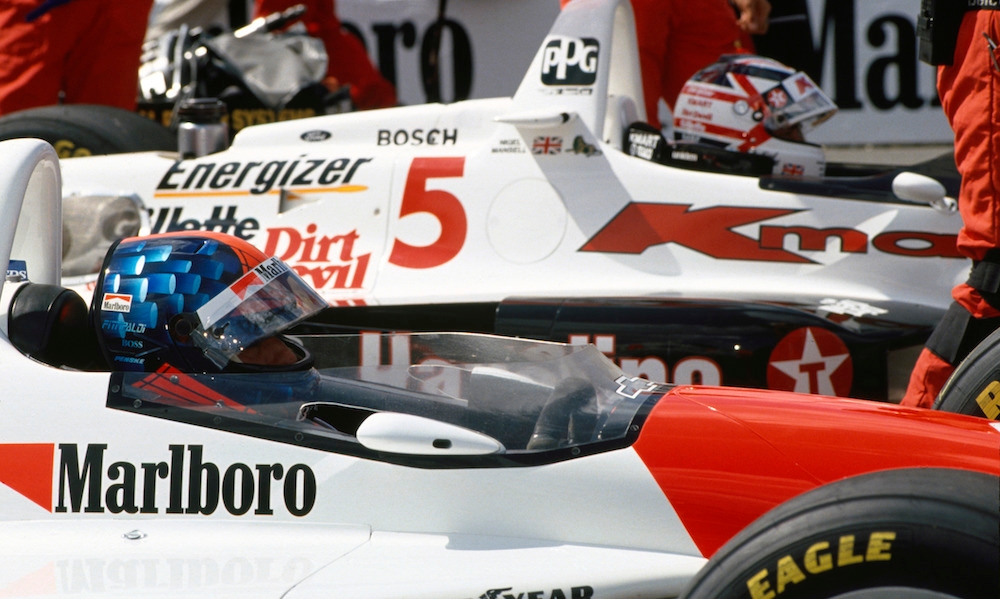
The late 1990s featured the exciting styles of Alex Zanardi and Juan Pablo Montoya, but it’s tough not to give ’93 the nod. Nigel Mansell had bolted to CART after winning the 1992 F1 title, and Bernie Ecclestone was having trouble breathing. Nige took to the ovals like Bobby Unser at a fried chicken buffet, and scored five wins and the championship in a season that saw massive crowds at every track. Fittipaldi chased Mansell to the finish (losing by eight points), and his Penske teammate Paul Tracy matched Mansell’s win total and was third in the standings.
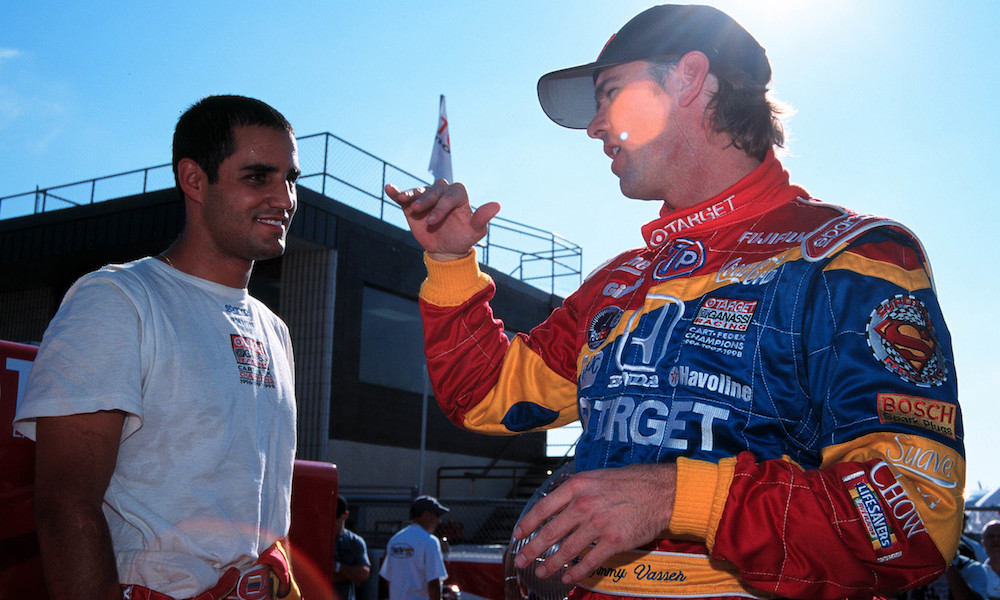
By the 1990s, winning meant beating the likes of Juan Pablo Montoya and Jimmy Vasser. Image by Levitt/LAT
Stefan Johansson, Raul Boesel and Eddie Cheever left F1 for Indy cars to join Teo Fabi, while two-time world champ Nelson Piquet gave Indy a shot but was badly injured during practice. Robby Gordon, Scott Pruett and Jimmy Vasser led the new wave of Americans, while Scott Goodyear, Adrian Fernandez, Buddy Lazier and Willy T. Ribbs all played a part in open-wheel history. As a unit they totaled 84 wins (Tracy 31), Fernandez (11), Vasser (10), Lazier (8), Mansell (5), Goodyear (5), Fabi (5), Cheever (5), Gordon (2), Pruett (2) in their careers.
The Split voids 2000-2007 so we’ll go with 2009 – the second year everyone was back under one roof. Dario Franchitti’s trip to NASCAR was short and not very sweet, but he was back in IndyCar as teammates with Scott Dixon at Chip Ganassi Racing. They each won five times as the Scot edged the Kiwi by 11 points for the second of his four crowns, but there were also strong performances by Ryan Briscoe and Helio Castroneves, while Justin Wilson and Will Power introduced themselves to a broader audience and the youth movement was led by Graham Rahal and Marco Andretti. Tony Kanaan and Dan Wheldon were plenty quick but didn’t make it to the winner’s circle, and Danica Patrick finished fifth in the point standings (and third at Indy) to shush some of her critics.
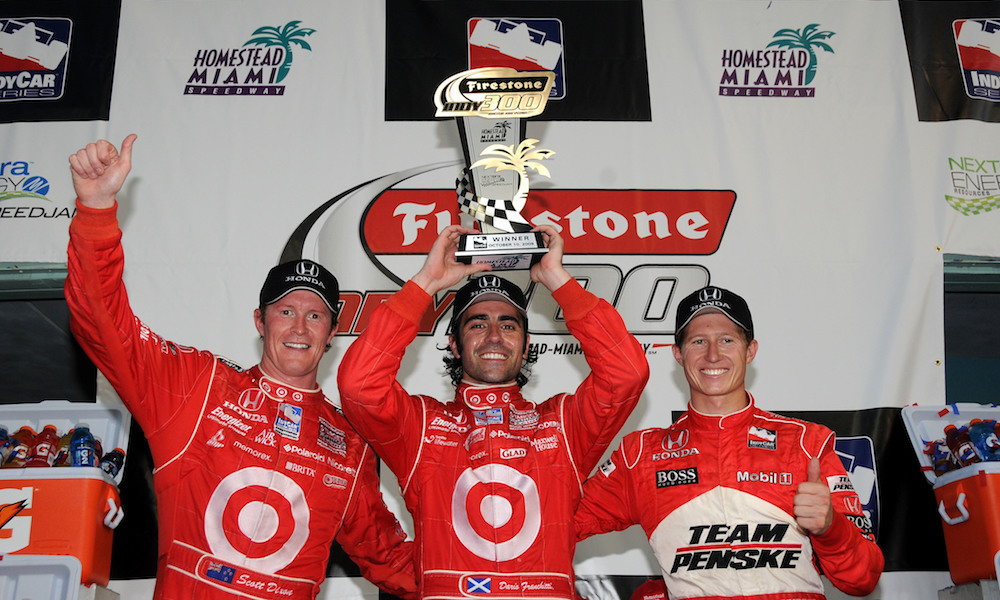
There was plenty of talent in the immediate post-unification era. Image by LAT
Ed Carpenter started his own team and would soon become a threat on every oval. Dixon currently has 46 wins and counting, Power stands at 37 and counting, while Franchitti finished with 31, Castroneves 30, Kanaan has 17 and counting, Wheldon won 16 times, Briscoe 7, Carpenter 3 and counting so that’s 187 plus 10 Indy triumphs and 11 championships.
This year’s lineup is an impressive mix of brains, bravado and babies. Josef Newgarden is trying to hold off teammate Simon Pagenaud and Alexander Rossi after Dixon got kicked in the guts with back-to-back mechanical gremlins. The top three have all looked dominant at times in 2019, but 19-year-old Colton Herta, 20-year-old Pato O’Ward (before he signed a junior deal with Red Bull and left the U.S.) and 21-year-old Santino Ferrucci grabbed everyone’s attention with their wise-beyond-their years driving.
Throw in former champs like Ryan Hunter-Reay and Power, revitalized Takuma Sato, newcomer Felix Rosenvquist, super-sub Conor Daly and usual front-runners like James Hinchcliffe and Graham Rahal and it’s a mixed bag of veterans and kids (aka babies) that keep things interesting. The strokes and posers have been weeded out, and Willy P. may be right – the Newgarden-Rossi-Herta era could be poised to take its place in history.
Robin Miller
Robin Miller flunked out of Ball State after two quarters, but got a job stooging for Jim Hurtubise at the 1968 Indianapolis 500 when Herk's was the last roadster to ever make the race. He got hired at The Indianapolis Star a month later and talked his way into the sports department, where he began covering USAC and IndyCar racing. He got fired at The Star for being anti-Tony George, but ESPN hired him to write and do RPM2Nite. Then he went to SPEED and worked on WIND TUNNEL and SPEED REPORT. He started at RACER when SPEED folded, and went on to write for RACER.com and RACER magazine while also working for NBCSN on IndyCar telecasts.
Read Robin Miller's articles
Latest News
Comments
Comments are disabled until you accept Social Networking Cookies. Update cookie preferences
If the dialog doesn't appear, ad-blockers are often the cause; try disabling yours or see our Social Features Support.