Robin Miller's Mailbag for May 8, presented by Honda Racing / HPD
hpd.honda.com
and on social media at@HondaRacing_HPD
and https://www.facebook.com/HondaRacingHPD.Your questions for Robin should be sent to millersmailbag@racer.com. We cannot guarantee we’ll publish all your questions and answers, but Robin will reply to you. And if you have a question about the technology side of racing, Robin will pass these on to Marshall Pruett and he will also answer here.
Ask, and ye shall receive: that’s the theme of today’s Mailbag. Last week I wrote a column about what makes a good race and asked you readers to give me your thoughts. Well, you responded with the largest Mailbag since I started doing this at the Indianapolis Star in the late ‘90s. And other than a couple of wordy souls, you kept your thoughts concise so we were able to use every letter. There won’t be any Q&A this week, just your thoughts, and as always, I appreciate all of the responses, from the first-time writers to the regulars. It’s your Mailbag, so enjoy it. Thanks, Robin.
Q: What makes a good race? I have been pondering that since you asked that question, and here are a few of my answers. A good race is one that is filled with excitement, drama and action. Large number of different leaders, lead changes, passing all through the field, surprise winners and great comebacks. In your article on the subject, the '92 and '94 500's were mentioned. I thought neither were that great – I am more partial the 1993 500. Now that was a great race – 10 different drivers led. A couple of road course races that get overlooked as great races are Long Beach 1993 (PT coming back from two flat tires to win) and Mid-Ohio 1988 (Mario and Emmo battling it out, in and out of the rain). When it comes to one-sided domination, when your favorite is the one doing the dominating it’s a great race. When your least favorite is dominating, it’s a very boring race. Another reason why there’s all the complaining, moaning and bitching when someone does dominate is that people do in fact have shorter attention spans, than they used to.
Dan in KY
Q: Motorcycles – flat track, road racing, any of it. You haven't seen real racing until you've seen a mile flat track race. The bikes haven't been spoiled by the dependence on aero that cars have come to rely on, and that's what's ruined what used to be some great racing series. The bikes are able to run nose to tail through the fastest corners they don't need some trickery like DRS or push to pass to bring back draft passes.
I don't mind a domination race like Rossi at Long Beach this year as long as there's some good action somewhere in the top 10 Unfortunately Long Beach didn't have that either this year, but I still didn't turn it off – you need to see if that driver that's putting an ass-whipping on the field can pull it off. I totally gave up on NASCAR once they started stage racing, the races are way too long don’t get interesting until the last 50 laps. Don't get me started on green-white-checker, it's worse than the NBA. It could take 45 minutes to run the last 10 laps. That's when I turn it off – if I even turned it on.
Rick Corwine
Q: I thought of your question about what makes a great race while watching sprinters at the Ventura Raceway last night. It depends on the type of race, I think. On a short track, it’s the frenzy of 20+ cars that quickly stretch out over almost the entire track. Cars running wheel-to-wheel for so many positions you don’t know which to watch. Then the leaders start slicing through lapped traffic, enticing involuntary exclamations from the crowd. The race is often decided by who cuts through traffic best. For a longer race, as a spectator, I watch the longer game. Strategy, tire management, yes, even fuel management is fascinating. And the moments of dueling for position – any position – get the heart racing. One thing makes all racing better: no yellows. Go green, man, start to finish, and let’s see how this plays out.
Tom Hinshaw, Santa Barbara, CA
P.S. Oh, and last night, Troy Rutherford won. But everyone will remember Austin Wilson, who started 22nd and finished second.
Q: I’m 53 and have watched racing from the mid-70s through today: IndyCar, NASCAR, F1 and USAC, mainly. Currently, what I consider good racing happens with the USAC midget and sprint cars on dirt. I want to see passing, and the ability to pass and re-pass a competitor. When a driver in second, third or even fourth has a chance to catch and pass the others and then the driver that was first still has an opportunity to get back those positions, that really grabs my full attention as a fan. The different fast lines on dirt tracks, plus navigating traffic on a quarter-mile track… drivers always seem to have a chance to improve positions until the checkered flag. (As an added bonus, most central Indiana dirt tracks are very affordable entertainment.
Currently, in NASCAR and especially F1, once passes are made there is minimal re-passing at the front of the field. All of the series can and have had races where I’ve been glued to the TV and on the edge of my seat, but a lot of the time, something is lacking. I don’t mind an occasional race that is a beat-down, like Rossi at Long Beach, especially when it is your favorite driver delivering the beat-down. For entertainment, the beat-downs can’t be the norm, in my opinion. For me, the best opportunity to see what I consider good racing occurs on an oval track – dirt first, and asphalt second. I appreciate the skill and talent involved in a road course and can understand why it is enticing for the drivers, however, road courses lend themselves to scenarios offering limited passing and a single driver dominated race. We have seen exciting, close, and passing happen at road course races and those are great races, I just feel the potential is better for those things at an oval track. I rarely change the channel when a race is on, but attention wanders in the middle two hours of a NASCAR race or once the Mercedes duo is at the front of a grand prix.
Allen, Brownsburg, Indiana
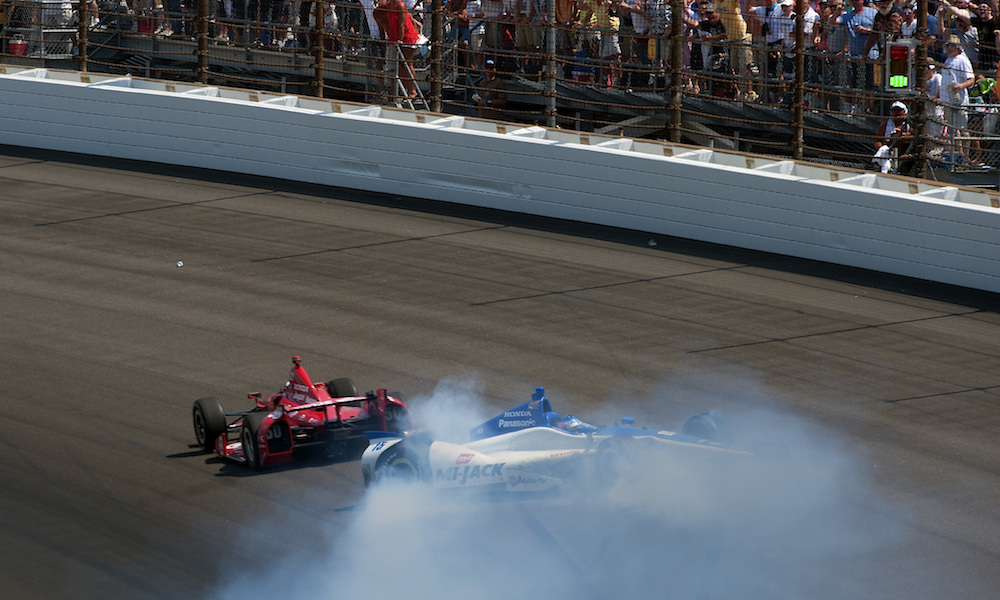
The 2012 Indy 500 didn't have the outcome that reader Deb was hoping for, but nobody can deny that the finish was a nail-biter. Image by Williams/LAT
Q: I have pondered your question all week and am sure I haven't anything profound to stay. First off, how about our Oklahoma kid, Christopher Bell, winning his third race this season on Saturday by just a few feet? He credits his team and their work on his last pit stop for getting him out ahead of the leader for the win. Now, that is good racing in my book.
I enjoy close, clean racing. I am not an advocate for "chaos and crashes", a phrase used by a reporter in the LA Times about NASCAR. I have been on the edge of my seat watching some amazing passes from Rossi at Indy and RHR at Phoenix through my fingers . I would have been thrilled if Sato had managed to pass Dario for the win at Indy [in 2012], but it just wasn't to be that day. I am also a big fan of watching a driver dig him/herself out of a hole not always of their making. Seb comes to mind as one who can carve his way from the back to the front of the field. It does not always mean a win, and that doesn't matter to me that much. I just admire that Bourdais never gives up!
Deb Schaeffer
Q: Number one, there has to be noise. In the early 60s, before even seeing the cars on track, I heard the roar as I walked with my dad through the lot at Williams Grove Speedway to see my very first race. That sound pretty much hooked me! Then the cars (or bikes) have to look fast (or just cool, in a child’s mind). As I aged, and discovered other forms of racing, it was clear that sometimes one car would be dominant. Frankly that was fascinating, be it Mitch Smith or Jan Opperman on dirt, or Hans Stuck or Gilles Villeneuve at a soaked Watkins Glen. Sometimes it simply didn’t matter if a superior car/driver almost (or did) lap the field. If there isn’t a battle for the lead, some action further back can be just as exciting. Yes, second place is just first loser, but some of the more epic duals I’ve seen have been fought over a top-10 spot – that’s the nature of a true racer. I suppose that as long as there is some sort of ‘wow’ element, at the front or deep in the field, and as long as everyone can walk away at the end, it’s been a good race. Sometimes, we who love the sport are fortunate to see a truly great race – a classic – and that’s just a bonus.
John Weaver, Camp Hill PA
Q: I got interested in racing in the late ‘60s. The best thing about being a race fan back then was that you could see your favorite driver in a Formula 1 car one weekend, Can-Am the next, at an Indy car race the next and also at the 24 Hours of Le Mans. The number of races and the schedules (and driver’s contracts) were such that drivers could exhibit their skills in a variety of vehicles and tracks. Plus, probably most important, the money wasn’t as large as it has become today, so the drivers had to be versatile in order to earn a decent living from racing.
It’s probably because of this diversity that I didn’t pick a favorite type of racing – I found I liked all types of racing, from F1 to Indy to sports cars to NASCAR, and still do. Men like Andretti, Gurney and Donohue would run F1, Can-Am, Indy, Trans Am, Le Mans and NASCAR, and be competitive in all. So I suppose great drivers are a key ingredient to a good race. Also, great cars are important. The original, unlimited Can-Am cars were truly magnificent to watch, even though the competitiveness of the field may not have been that great. The first race I attended was the 1969 Watkins Glen Can-Am. When watching those cars driven in anger, I was in awe. They jumped out of a corner under acceleration, often leaving black trails of rubber on the road to show their trajectory. Just awesome! No, not great racing with continuous passes for the lead, but just incredible cars driven by amazing drivers.
I know we don’t have the same awe factor in a lot of today’s cars (or drivers), but I still enjoy seeing F1, Indy Cars, NASCAR and sports cars (IMSA and WEC) being driven at the limit. Watching them accelerate, brake and corner is to realize that they are doing something I can only dream of. I still get chills when I hear “drivers, start your engines.” This summer I will attend IMSA at Watkins Glen, IndyCar at Toronto and Mid-Ohio and NASCAR at Watkins Glen, and will enjoy all of them, regardless of there is constant passing for the lead or a parade. I like watching at various corners to see when the different drivers brake, how they modulate the throttle through the turns and when they hit the loud pedal coming out of the turn. Maybe go along the straight, to just drink in the sensation of speed from these multi-colored rockets. I appreciate the engineering effort that has gone into the design and development of the cars, and just like to get close to soak in the atmosphere. It makes me realize how ordinary my driving experience is and how special these masters are.
PS: If F1 and Indy Car are up against each other, I choose IndyCar first and F1 on DVR.
Paul, Lockport, NY
Q: In short , all the elements of a great race were on display at the MAVTV 500 in Fontana, June 2015. Great passing, wild speeds, drama in the pits, not-quite pack racing, winner in doubt till the end, and me with hands over my eyes at least 20 times during the race.
Gerry Courtney, San Francisco
Q: I want to tune into a race and not have any idea who’s going to win. An F1 race will be a Mercedes, with an outside chance a Ferrari – that’s it. If Rossi has a day like he did at the Beach, so be it. There is a lot of competition up and down the field. Indy has had great races with Sato diving in on Dario in turn one on the last lap. Rossi/Herta out-foxing the entire field to win. Dixon doing his Steady Eddie all day, and you blink and he’s in the lead. Watching the rookies this year is fantastic – who would predict a first-year team with a rookie driver would win! Just write the book!
Harold Linville
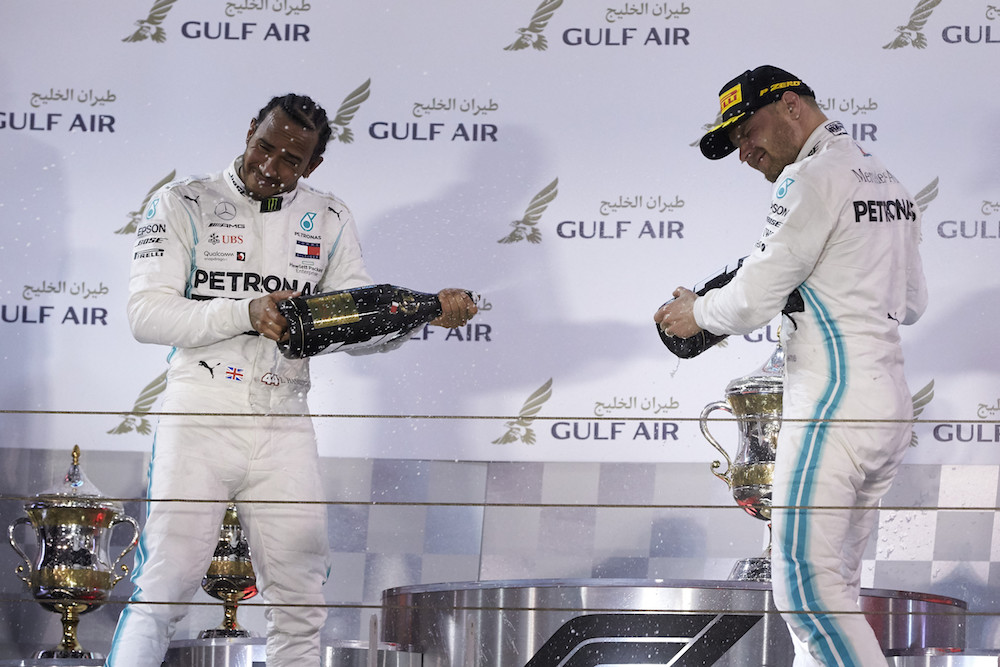
Apparently a few people are getting sick of seeing this at the end of every grand prix. Image by Etherington/LAT
Q: I am a long-time reader and fan. I appreciate everything you do for IndyCar. What makes a great race? The underdog: when Herta/Rossi and Herta/Wheldon take the checkered flag at the 500, that's a great race to me. Strategy: when Dale Coyne or RLL go off-script and end up in the lead with 10-20 laps to go, that's a great race. Weather: the great equalizer. Technology ($) can only do so much. Who guesses right? Fandom: I was always a big fan of Al Jr. Obviously, he was a highly competitive, aggressive, and successful racer. But early on I saw an interview where he spoke about some advice his father gave him. Al Sr. told him to never forget the fans. Without fans, there is no race. Without a race, there are no racers.
I can't remember the last time I watched a F1 or NASCAR race (except the modifieds). I used to get up in the middle of the night to watch a F1 race. I haven’t liked the F1 cars since they raised the nose/front wing design. There is no competition. A change of position in the pits is not a race. I no longer understand NASCAR, and don't have enough interest to figure it out, and plate racing is ridiculous. I read the Mailbag every Wednesday morning, and asking for reader input is another great idea. I look forward to seeing the contributions you receive.
Glenn FL.
Q: I love a close finish. Not like the orchestrated NASCAR races or the F1 Mercedes parades. My favorite finish was the 2014 Indy 500 race between Castroneves and Hunter-Reay. The last several laps were thrilling – we were between Turns 1 and 2, and believe me, I wished I had a seat in Turn 1. The year Buddy Rice won, and correct me if I’m wrong, but wasn’t that the year he made that wild pass on the main straight near the inside wall? I was out of town that year, missed the race, but it was wild to see it on TV. Hopefully with the added downforce the racing will be better. I will not lie, the IRL pack racing was like a drug. I know, it dangerous for the drivers and needed to stopped.
Long Beach was not my kind of race – glad Rossi won, but was kind of boring.
Mike, Cincinnati
Q: When you asked at the beginning of your article on April 29, "What constitutes a good race?" I had an answer in mind. Then at the end of the article, you posed the question from a slightly different angle; "what (do) you consider good racing?"
Good racing? That's fast cars, nimble drivers, good race strategy, cars dialed in, lots of dicing for positions all through the field, an exciting finish... it all makes for good racing.
But a good race? Some have said that street races are like a city-type festival that goes on for days, and occasionally, some cars drive by. Some say road courses are like hillside camping, set up your chairs, and have a hot dog. Oh, and cars drive by occasionally. But if you really want to watch a race, I mean see it, start to finish, all through the field, you have got to come to the Iowa Speedway to watch IndyCars run. How many races do you want to watch at once? Not just for the lead, but, look, there's Tony going after Marco! Hinch on the outside of Dixon. Wow! The fans in the stands don't miss anything, because you can see everything! That's what makes a good race. Love ovals!
Marty Jorgensen, Des Moines, IA.
Q: I live in the center of Colorado ski country. We have a saying that any day you are skiing is better than any day at work. That same mindset applies. Going to or watching any race is better than working.
Mark Beer, Summit County, CO
Q: For me, it falls under two categories. First, the on-track, or personal results-oriented focus. Both times I attended the Singapore GP in '15 and '18 a Red Bull driver finished on the podium. Now, most races around that tight track aren't good, but I will fondly remember them both because I had a vested interest in that team.
Conversely, the '17 San Marino MotoGP race was spent in pouring rain and getting soaked but loving every second of it, and watching a last-lap pass for the win, in an amazingly difficult race, in which I had no favorite riders going into the event.
Second, the overall experience: I've been to Sonoma NASCAR twice and Sonoma Indy in '14, and can't really say the racing was good, but the overall experience and the beautiful scenery have lasted in my memories, and I think it's a shame Sonoma and Laguna Seca couldn't have been bookends on the schedule. The overall experience of going to Long Beach in '09 and '14 was much better than any singular moment of on-track action. Same with Monza in '17. And although it's always cool to see Takuma win, in Portland last year the yellow falling the way it did put a dampener on it as an overall race. But I still loved that weekend, and can't wait to be back there this year. Had the pleasure to meet you in the pitlane at Vegas '11 and am glad you're still ticking after the health issues. Would definitely like to celebrate with a post Portland GP drink at the end of the summer while I'm there with my father.
Andrew from Seattle
Q: I loved your piece, and have not stopped thinking about the question since reading it. What makes a good race? As a recent radio broadcasting grad who just took a job calling open-wheel racing at his local short track in southern Ontario, Canada, I feel like I could write a thesis on the topic. But instead, I'm going to let 20+ years of racing fandom take over. What makes a great race? Well hell, that may just vary from series to series. But in particular, I want the feeling that no lead is safe, that no position is safe, whether my guy is out front or not... That anxiety is infectious.
Take NASCAR, if Kyle Busch is leading (I'm not a fan of his but also not a hater either), I want to feel like the two or three drivers behind him have a legitimate chance to get to him. They don't necessarily have to, there just has to be that threat. That reason to cheer. Whether you’re urging someone to get to the leader or urging that leader to hang on. Passing ability is important. I can appreciate F1, and certainly Liberty has stepped up to the plate in terms of presentation of the sport. But until I get that legitimate feeling that maybe 10-12 – or even seven or eight – guys have a chance to win each week, it won't be must-watch TV.
IndyCar straddles the line just right. I love Hinchliffe. I know he's not on a big team. But I still go into each weekend believing he has a chance. But if he settles into seventh spot and is 10s behind sixth and 10s ahead of eighth, I lose that anxiety, and then if the battle for the lead or podium isn’t tight, I find myself tuning out. The best races will make you feel something for the competitors at the front of the pack, whether you’re actually fans of them or not. Unpredictability is appreciated, but I would never want safety or integrity of the sport affected to give me that unpredictability. And obviously, fuel and tire strategies can make races unpredictable, but the reality is that nothing replaces the chase on the track. If Sato uses a fuel strategy to jump to the lead, I want a legitimate chance that Rossi can run him down. That chase, and the corresponding anxiety that I feel in my chest… that's the thrill of racing to me. That's the kind of race where after the checkered flag I can sit down and say, "wow that was entertaining".
Jonathon Howe, Radio Broadcasting Student, Mohawk College
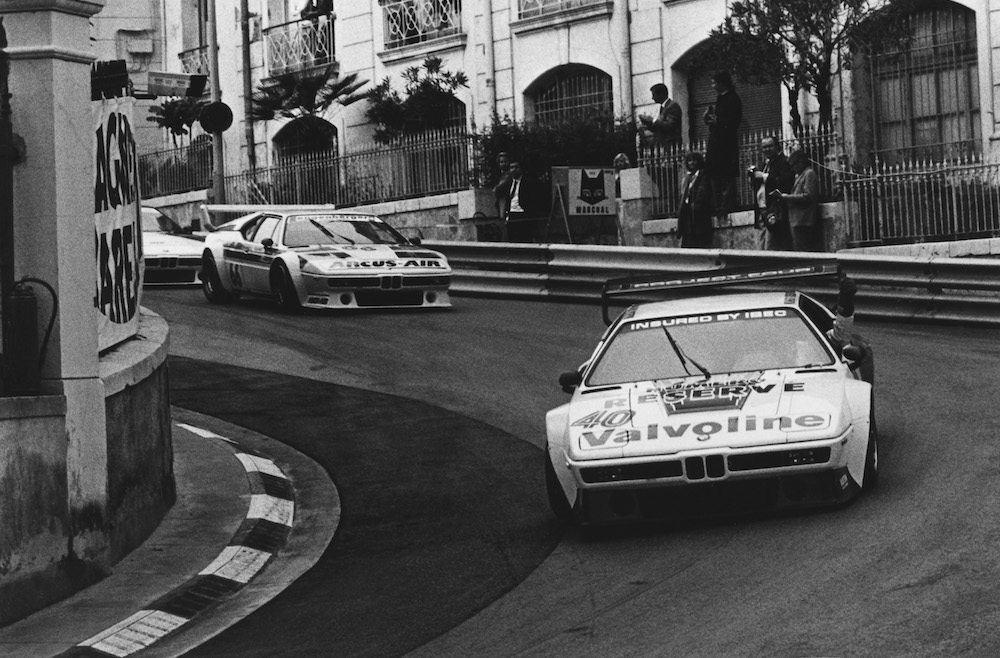
Bob from Milton, WI says: Spec cars are boring. We say: BMW M1 Procar championship. *mic drop* Image by LAT
Q: Spec cars is what I don’t like. I liked the various engines and chassis. It was exciting to wonder what the Lotus would do in ’63, and the turbine. Sameness is boring, and that’s what we have today.
Bob, Milton WI.
Q: I think my description of a good race may be completely different than most. I want to see the racers race with absolutely zero interference from the sanctioning body to influence the outcome. If Billy has a better setup and drives away, so be it. If a team chooses to pit late or early and it doesn’t work out, oh well.
So Willy whined about pit closures, so what do we see at the next race? A yellow comes out, cars pit and there is some concern that some may not have enough fuel to finish the race without pitting again. So IndyCar ran the caution period for an extra three or four laps to make sure all would make it to the end, and the fans loved that they “let them race.” No they did exactly opposite of letting them race, and it was BS. We see way too much interference and whining that the fast cars need to be slowed down so others could win. It’s called racing – if you want a participation trophy, go somewhere else.
I am tired of fans saying they need spec cars, and even that Roger Penske should build the shocks for everyone. People who say that have no idea what the shocks do and how customized they are. For those who don’t know, go to your local short track – many of those late model teams have shock dynos in the trailer and build custom shocks as needed. Even Mr. Johansson wants spec F1 cars. With spec cars, Ferrari wouldn’t exist – he should check history. Oh and if we wanted spec cars then IROC would still be going on. Wow, how exciting to see the NASCAR boys beat drag racers in stock cars at Talladega.
Oh BTW, this same crap happens at local quarter-mile tracks – constant rule changes so their buddies may have a better chance of winning. And how many times did NASCAR change the ‘NASCAR hates Matt Kenseth’, I mean the chase rules, trying to help Dale Jr. win a championship? Ye,s some may need to check history to see how the chase came about – in short, a damn northerner won the championship quite easily, and NASCAR started making changes to make sure that never happened again and championships would be won by the good ol’ boys from the south. And it has worked out great… oh wait, actually it didn’t.
Mike, Northern CA
Q: Back in the day, you had guys winning by a lap or two, and we applauded and didn’t complain. I think the biggest reason for that was, the cars were the show. 1000hp, absolute beasts to drive, with a dozen different combinations of chassis, motors and tires. Yes, you had some all time greats driving, but, that hasn’t changed. We have some all time greats driving now. What changed was the car! They’re not as exciting, they’re all the exact same, minus the motor. There’s no innovation, there’s just “here, this what you are all driving.” So, the car isn’t the show, and the drivers are great, but you can’t see personality behind the helmet.
Keith Schmitz
Q: You and I aren't getting any younger...and not just guys our age, but everyone needs to focus on what's important, enjoying what we have while we're here. Front-engined roadster vs rear engines, turbines, aero packages, IRL/CART... strip all that away, and we still get to see amazing, brave men do some pretty incredible things in these crazy fast racing machines. I've seen Gordy hold off Rick, Rick and Michael swap passes, Al, Jr nip Scott, Arie hit 237, AJ's last ride, Helio climb the fence, JR in the wall and on and on...and someone will do something at this years 500 that will make me go "wow"!
Every time I meet a driver, the first thing I do is say "thank you." I've had a lot of thrills watching these guys do insane things behind the wheel while I sit on my butt and get entertained. And I'll continue to be entertained. Is it perfect? No. Could there be changes that might make things better? Probably, but it's still great fun, and why waste what time us old-timers have left missing the point? Just enjoy the show we have. It's still pretty darn entertaining.
Tim Shipp, Evansville
Q: I enjoy watching the IndyCar races, but I grimace every time I hear a driver slowing down to conserve fuel. Fuel economy is admirable for the family vehicle, but not race cars. Races should be won by the fastest car driven by most competent driver, not by a computer decision in the pits. Could we have just one oval race without fuel restrictions?
Kevin, Wheaton, IL
Q: What do you consider good racing? What are the prerequisites? For me, great racing (and any great sport) has to have uncertainty. In F1, I know one of the Mercedes, Ferraris or Red Bulls will win. If you get something like a Ferrari stuck behind a slower car, you know they'll just breeze past with DRS – it's passing, but it's not racing. In times gone by, unreliable cars used to add to the uncertainty, but this aspect has largely been taken away from us now. I also think you need cars competing closely, as it creates uncertainty. I recently watched the last five laps of the '92 Monaco Grand Prix on YouTube, and even though Mansell had no hope of getting past Senna, it looked fantastic because at every corner he was right up the McLaren's gearbox, at risk of losing his nose. We have uncertainty and close racing at nearly every IndyCar race, and Formula E has also shown this at every race this season, so I'm hooked on both championships.
When do you change the channel? I change the channel when I know what’s going to happen. I keep trying to watch F1 but usually give up after five laps of nothing happening, or when there's a boring DRS pass. I actually fell asleep during the recent Long Beach GP. I also stopped watching one F1 race when they showed a replay of a driver running wide; he literally drove over a painted white line and then back over it again, and they thought this was worth replaying!
Q: What if F1 and IndyCar are up against each other? With F1 vs IndyCar, there is no contest. IndyCar is motor racing, F1 is just motor sport. I’d love for F1 to make real changes in 2021 which make this a closer contest and which would bring me back as a fan. Until then, I’d love more people to embrace IndyCar or Formula E instead of dismissing them for the smallest of reasons. I think they’re the two greatest racing championships in the world.
Paul Rayner, Yorkshire, UK
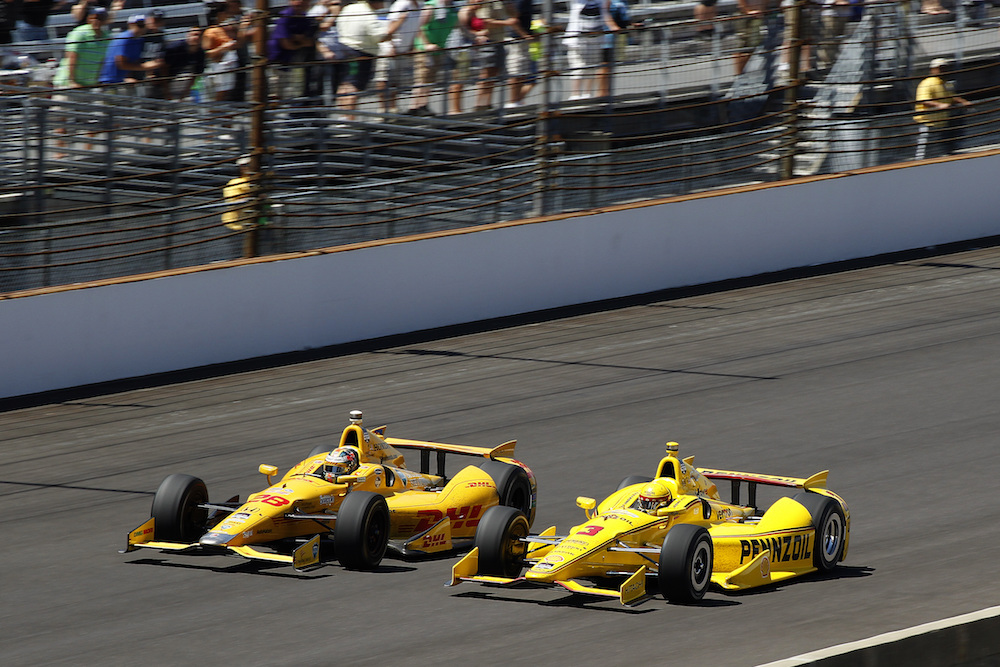
You have to imagine a very happy David from Dowagiac just over the fence. Image by Davis/LAT
Q: In my opinion, a good race must have at least one of the following:
Competitive racing, and great drivers battling each other for the win. Examples: Fittipaldi vs Unser Jr. in 1989; Mears vs Andretti in 1991; Hunter-Reay vs Castroneves in 2015.
Total domination. It is good to see a driver [or team] outclass the rest of the field. At times, you might not like the driver or team, you might not like the outcome, but you still respect them for being at the very top of their game. Examples: Penske in 1994; Juan Pablo Montoya in 2000; Scott Dixon in 2008; Dario Franchitti in 2010.
The unexpected, which makes for something dramatic and worth watching. Examples: AJ Foyt comes through the smoke in 1967; Danny Sullivan’s spin and win in 1985; Penske misses the Indy 500 and Jacques Villeneuve comes back from two laps down to win in 1995; Robby Gordon runs out of fuel in 1999; JR Hildebrand crashes on the last lap and Dan Wheldon wins in 2011; Stefan Wilson and Jack Harvey pit late and Power takes the lead in 2018.
A great finish. (When you are watching on the edge of your seat) Examples: 1982, 1992, 2006, 2011.
A wonderful storyline (The stories that tug at your heart strings years later) Bobby Rahal in 1986; Al Unser Jr.’s “You just don’t know what Indy means” quote from victory lane in 1992; Al Unser Sr. wins his fourth Indy 500 as an underdog in 1987
Did I have a great time with the people I was with? The last one is an X-factor. It has nothing to do with the on-track action, and is totally subjective. The race can be lousy, but if you are watching with the right people and have a blast, it can still be called a “good” race (even if only by that group). The prime example is the Snake Pit. The more of these points a race can claim, the better it is.
David from Dowagiac, MI
Q: Several of the things that make a motor race, football game, or other sports programming more watchable: Lead changes, drama, close finishes, come-from-behind victories, rivalries and low number of penalties (yellow flags). Not every race will have those features, and I guess you can't please all of the people all of the time. One race I love to point to as a classic 'good race' was the 2002 Indy 500 (apologies to Paul Tracy). That race had Bruno leading from the pole, then dropping out. CART vs IRL. Different engines with different performance. Long stretches of green flag racing punctuated by some yellows and bad pit stops. Scheckter and Kanaan leading as rookies – and both crashing out. It had a close, controversial finish that will forever be debated. It should also be noted that it seems cars don't fail at the rate they used to, but that does add to the entertainment value, and gives the impression that a motor race is still a test of man and machine. No one will ever forget Alonso's engine blowing at Indy. And Will Power's car dying in the pits at COTA was gut-wrenching for sure, but it finally opened up the race lead. Lastly, the races are always better live!
Nick Hewitt
Q: In my view, two factors are paramount, and there's something of a sliding scale between them: (1) high-quality, organic (i.e., not manufactured) competition, and (2) entry variety and ingenuity. Back in the days of more open rulebooks and "run what you brung" ethos, entry variety and ingenuity was a huge selling point in pretty much all series. As you noted in your piece, races themselves weren't necessarily all that competitive, but the novelty and inventiveness of the different cars was a huge point of interest for the fans. Occasionally someone would run away and win by two laps, but there was always a sense that the winning driver, team and manufacturers accomplished something special by designing/engineering/building/procuring a superior chassis/engine despite competing against other highly intelligent, innovative, motivated people who were all pursuing the same goal.
Though attrition might have thinned fields and spoiled the endgame on occasion, it added an element of drama because it was a byproduct of teams pushing the envelope and taking risks in pursuit of an advantage. Would the Mercedes last 500 miles? Nobody knew, and that was the point! Escalating costs, and the need to contain them, pretty much eliminated the novelty/variety aspect, at least in NASCAR and IndyCar. NASCAR jumped the shark in that respect with that hideous "Car of Tomorrow," and subsequent tweaks haven't done much to establish any real distinction between makes and models. NASCAR has also apparently decided to criminalize what used to be known as "working on one's race car" - hence the laser templates and ridiculous number of inspection-related penalties that do nothing except leave the fans with the impression that the governing body wants to turn the series into a de facto IROC.
As for IndyCar, Chevy and Honda are basically indistinguishable to the IndyCar viewer (aero kits were a uniquely crappy way of establishing brand identity). Both series have tried to compensate for the lack of innovation and entry variety with closer, more consistent competition on race day. The risk here is that if a series tries too hard or too transparently to juice up the show, the racing can start to look artificial, gimmicky, and out-of-touch with the history of the sport. NASCAR epitomizes this problem, and has ever since the beginning of the Chase era, but it's gotten really bad lately with stage racing and the God-awful playoff system.
IndyCar is better by comparison because it has kept gimmicks to a relative minimum (a notable exception being the first couple of years of the new Dallara at Indy, when drafting was too predominant), and has allowed relatively equal cars and drivers to produce competitive racing that generally emerges organically. The general consensus seems to be that the racing in IndyCar is pretty good these days, and that's an opinion that I share.
John, Denver, CO
Q: I’m a fan of IndyCar, IMSA, F1 and watch every practice, quali and race I can every year. I watch because you never know when that moment is going to happen in a race, even though three-quarters of it it may be a parade. It just keeps me on the edge of my seat, hoping a rival car crashes or brakes too late or catches fire, allowing your team/ driver to make a place or have the opportunity to win. Yes, sometimes those moments don’t happen and the race may have a boring ending, but while watching, anything is possible. I will still watch the next race, no matter how much of a parade the previous one was. That moment is like a drug, and I just love fast cars and the technology that is behind them, no matter the series. I don’t understand NASCAR, but will even watch those races when the season hasn’t started for the other three. Racing was instilled in my blood when my dad took me to Mid-Ohio and Indianapolis as a kid, and I couldn’t be happier. My son will be going to his first race next year at Mid-Ohio, and I couldn’t be more excited.
Jon from Cleveland
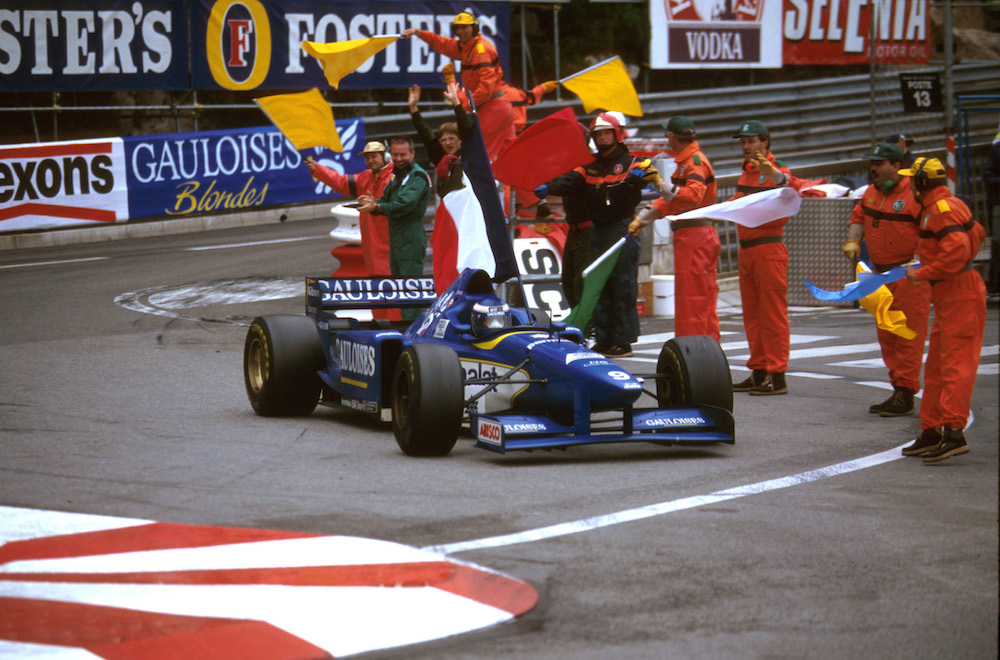
As tempting as an Alesi/Canada '95 photo was, how often do we get to run a shot of Olivier Panis in the Mailbag? Image by LAT
Q: Interesting challenge. For me, a good race is once with some decent on-track passing. Couple that with a good compelling storyline worked into the fabric by well-informed commentators, and I am riveted to my seat. A road course race where a front runner messes up qualifying and charges from back to front, an oval race wherein title protagonists trade the lead (as long as it doesn’t end under yellow), or an unexpected win by a small team or underfunded driver all make a great race for me.
In F1, I still vividly remember Alesi’s sole victory and him riding back to parc ferme on Schumi’s wing as ecstatic Montreal fans dismantled his car. Panis’s victory in Monaco was nice to see. Wilson winning for Coyne. I loved seeing Allmendinger’s dominance after being fired by RuSport and give a lifeline by Forsythe. And hate…you have to have hate…Tracy/Bourdais, Schumi/Senna/Prost, Schumi/Villeneuve, or if not hate, at least sparks (Rossi/Wickens, Power/Franchitti). So for me, it’s not just the track, the car, the engine choice, it’s the personalities behind the visor and skill in which the commentators use to weave the story.
Trevor Bohay, Kamloops, Canada
Q: I think the complaints you hear are from bitter, jaded fans who are still hurting over the Split and have hardened their hearts against enjoying the sport for what it is because they are so focused on what it was. It’s not right, but on some level, I understand. We lost all that great momentum of the late 90s, and have not seen that spark of light until the last few years. But it’s coming back. We all need to give it time. I think some of the best racing is yet to come.
With that said, for me it’s a great race if (outside of something spectacular) a few things happen. If there is tension from a previous race or qualifying that are built up before the race, so when the race begins, I have a story of sorts to follow. Rivalry action on-track, especially if it’s with someone I follow. A few good passes on track, or at least, a few good battles. A well-earned finish. I am OK with one leader for the whole race if there was action behind him, not a parade. Bonus: A good broadcast team makes a big difference in helping a ho-hum race at least sound like a good one. I love when anyone gets animated or opinionated. I think the first two can be helped by the broadcasting team. I’m not asking you guys to start fights between drivers and/or teams, but when you find cracks and expose them, it sure helps during a broadcast.
Erik in Oswego, IL
Q: I've been watching motor sports as long as I can remember. While I'm too young to remember the 60s and 70s, I have seen my share of eras and formulas. I think every really good race must have one or two of the following: a great finish, close racing, historic significance, changes in strategy, and yes, some wrecks. Truly great races have it all. When you watch this stuff on YouTube, one difference you'll notice is that in the old days the cars were much less reliable, and the skill level of drivers and especially pit crews varied a lot more than today. A two-lap lead at the halfway point could vanish in no time. The race truly wasn't over until the checkered flag waved. I also differentiate between races I see in person, vs watching on TV. I've left many racetracks thoroughly entertained by something that would be considered boring from the couch. Maybe the ultimate answer to what makes a good race is like some other things I won't mention: "I'll know it when I see it."
John, Minneapolis
Q: Whether it’s passing, storylines, or drama, it’s the edge of the seat, non-stop action that I enjoy. In terms of priorities, if all are on at the same time, IndyCar ( DVR set for all televised action), F1( DVR set for all televised action), IMSA, MotoGP, NASCAR. As a spectator, I love IndyCar and IMSA! The accessibility to fans is amazing. Last year we attended the Portland GP and it was my son’s first IndyCar race. He loved it and cannot wait for this year’s race, and we are going to Laguna Seca as well.
Eric J., Hayward, CA
Q: What makes a good race? A race that keeps my interest. I want to see something happen. That "something" can be anything, though. In the 1994 Indy 500, that was watching the Beast and seeing if RP could pull it off. Are these ground effects cars really going to be faster? When Sullivan spun, I watched to see just how much of a comeback he could make from that incident. Pretty much every year Mario was on the track, the "something" was to see if the Andretti curse would ever lift. In 2017, it was to see if Fred could hang with the experts.
The great races are the ones in which multiple "somethings" happen – close finishes, incredible passes, crazy innovations, fierce rivalries. Since the days of crazy innovations are gone, we've lost the "something" potential from those, and I think we're compensating by demanding more "something" satisfaction from the other categories. If the cars are all the same, then I want a tasty rivalry, more passing, or close finishes. If there is something we are missing right now, it’s a good, old-fashioned rivalry.
Rivalries don't require you to change the on-track product. They just require a little freedom to talk smack, bump tires, and maybe a well-timed block now and again (and of course, a couple of cameras to capture the moment). I don't want to change the character of the paddock and how close a family everyone is, but I think we have lots of room for a few more Will Power comments like, "No one in the paddock likes racing him... He's the most dangerous guy on the track."
Chris in Bowdon, GA
Q: This is a very subjective question. When I was young, for me, it was the close finish. 1982 was my first Indy. As I've grown older, I watch so many different facets of the race. Mid-pack duals, a driver with a lesser team pounding out laps with top teams, or simply watching a master dominate the field. People say last year’s 500 was awful. I would argue, just look at Will Power's face after he won. That said it all, and conveyed how much it meant to him. On his victory lap a fan was waving the Aussie flag, and he was all over it and gave the fan a huge thumbs-up.
Chip Stetson
Q: For me, it all begins with a great start. At some tracks, a strung-out field is inevitable, but the front three or four rows have to line up properly. If they don’t, then have a do-over, or go to standing starts. As for the race itself, a constant series of yellow flags spoils a race for me. Sure, we get a bunch of restarts, but how often does the starter get a good one? Not nearly enough times for me. A lucky dog winner due to bad luck with yellows spoils a race for me. I don’t like closed pits during yellows. Yes, I know we can’t do anything about them, but I detest that rule. There has to be a better solution. Good dicing and pressure on opponents throughout the field makes a good race, even if there are no passes. The pressure is still interesting. In short, a great race has to have a good start, close racing throughout the field, the outcome in doubt until the checker, and finally an outcome that isn’t affected by stupid rules or bad officiating. One more thing – no horrific accidents!
Doug Mayer
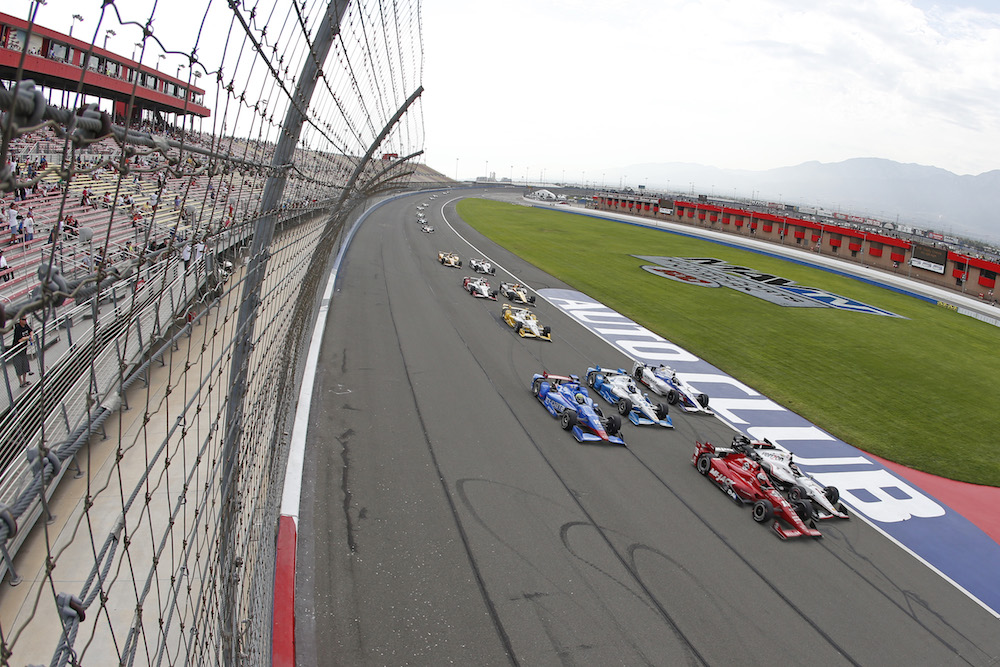
In fairness, Fontana 2015 was pretty crazy. Image by Ellman/LAT
Q: A good race is what the Indy 500 was last year. I was in the stands and very happy to watch how it all played out. There were some incredible passes where it was tough to pass, and the winner really wasn't determined (though we were pretty sure) until Harvey and Wilson had to pit. It was a good race, and fun to watch.
A great race was Fontana in 2015. Man, that race had you on the edge of your seat from start to finish. I know a few of the drivers were not happy with the style of racing, but it certainly looked like everyone had enough room to make some moves. Watching that on TV and having Steve Matchett's mind blown during the commentary was just spectacular. Luckily Briscoe's accident was just that – man, what a finish!
I was a fan when Newgarden schooled everyone in Iowa, and when Rossi drove away from everyone at Long Beach. The races need to be diverse as well – we can't always have a Fontana, as it would get old quick. Overall, I'm happy with changes for the lead on the track, and if we get a few of those during a race, I'm very happy. On the whole, IndyCar has the best product, and hits the mark more often then not.
Jake Murray
Q: Being a lifelong drag racing fan, someone winning by 0.003s on a holeshot is my optimal awesome race scenario. TV does not do it justice. The NHRA has been making its events more about the pros, and sportsmen car counts are down. If you have never seen the nitro cars run in person, please attend a drag race and whiff some nitro. I have found that as I aged I became a road-racing fan. I have attended at least one race a year at the Glen for 20 years straight. I also became a NASCAR fan watching Inside Winston Cup on Speed. I still find ovals boring, but was lucky enough to see Junior win at Talladega in 2015.
Formula 1 is a favorite way to spend Sunday mornings. Unfortunately, I cannot recall any grand prix ending with anyone within a second of the leader, but watching their races from faraway lands is better than anything else that is happening Sunday morning. I watch Supercross faithfully during the void of the winter, and it ends just as most tracks in the northeast are opening for the season. I know this comment will cause a commotion on the comment section. Supercross is great racing. There are no pit stops, and track conditions change every lap which causes riders to make mistakes. Seeing a driver win his or her first or last race also ranks right up there in my book.
Bob, the world’s fastest fan
Q: A good race starts by not being predictable. A good race leaves the fans cheering for someone that is making a charge from behind, like in 1982 when Mears was chasing down Johncock, or Hornish catching Marco and winning at the line in 2006.
All of those races ,including 2014,15,16 and 17 were the result of being able to use a wider range of downforce levels than what we're currently seeing with the new aero spec. I'm a fan of the teams having more options, as that typically results in better racing, and I believe that would be true in all forms of motorsports as there aren't enough options for teams to make changes to either run a higher or lower downforce level.
I say, bring back the 2017 aero kit for Indy only, as the teams had so many different options to choose from, or at least add more options to the latest spec aero kit. And for the other races, whether it's a road course or the high banks of Texas, the teams need more freedom of choice on wing configurations etc. The freedom they have on dampers costs a ridiculous amount of money that adds nothing to the racing, but yet teams are limited on aero configurations that could really spice up the show.
Best Regards, TK
Q: I want to see excellence. That could mean a few different things. It could mean an all-out dogfight, 68 lead changes. It's a photo finish first, second and third are hair-widths apart, like at Portland all those years ago. Or 1982, 1992, 2006 at Indy. Who doesn't want to see racing like that? When I say excellence, I also mean absolute mastery. Al Jr. at Long Beach, 1992 Indy with Michael running away from the field. That, to me, is great racing. If someone is so on his game, his car is so well set-up and his team has done such an amazing job, that is something to be admired, not looked at as boring.
We live in a culture that is so into excitement that sometimes we don't appreciate greatness when we see it. I think what Mercedes has done in F1 is amazing. Granted, it does get repetitive, but shame on their competitors for not rising to the challenge and knocking them off. And good on F1 for not changing the rules, a la the Chase, to manufacture drama. If someone is that good, their team is that good, car is that good that they win the title with three races left, so be it. They deserve it! That is excellence. Great racing is in the eye of the beholder. In my mind it can be a great battle with an amazing finish. But it can also mean saying, man they kicked everyone's butt today because they were on a level beyond, and that's going to be remembered!
Jack Pallett
Q: In my mind, the No.1 thing that brings eyes to the TV or butts to the race tracks are the drivers. These young drivers buying rides don’t do it for me, I just can’t get excited for them. Back in the day it was a driver’s skill coming up through the ranks, and the dues they paid, that allowed them to develop into the legends you were name-dropping in your article. How do you think the audience would be if Mario and A.J. decided to dust off their driving suits?
I was at the F1 race in Indy back in 2000, and Mario was racing in one of the Porsche races that weekend. I watched and cheered, but I have no idea who won, how Mario finished, or the name of any other driver in the field. I just remember that I got to watch Mario race. I just can’t stress enough the importance of developing the drivers and personalities so we have someone to cheer for, because the on-track product is No.2.
Brandon Thorvilson
Q: Ultimately, it's unpredictability. I'm sure you'll get a lot of different answers to the question, but if you really analyze the answers, I'm sure most of them will have unpredictability as a common denominator. When people don't know who's going to win, it makes things more exciting. Many, myself included, actually didn't like the IRL pack racing because more often than not, every time they came around it was the same person leading at the line, making the procession predictable and in the process excessively dangerous for no real benefit.
More recent forms of pack racing, where they can only hold for a few laps before having to reshuffle, have been far more interesting. This issue of unpredictability even extends back to the old days. Those multiple-lap victory margins you spoke of were often the result of other competitors having trouble and spending too much time in the pits, making it entirely possible that the leader could also suffer a problem. But in modern times we no longer enjoy this thanks to the advent of near-bulletproof reliability. Runaway victories no longer have that element of uncertainty, thus making close racing – where there's a chance that the guy behind will be able to make an attempt – the simplest way to add uncertainty to the equation. Somebody in the comments section stated, "if I know who is going to win after qualifying, I don't watch." This sums up the modern race fan quite nicely. After all, just because a lot of people tune into something, doesn't mean that the racing is good – and some of them will admit to this flat-out. There are many reasons race fans tune into their chosen series, and "good racing" isn't the only one.
Formula Fox
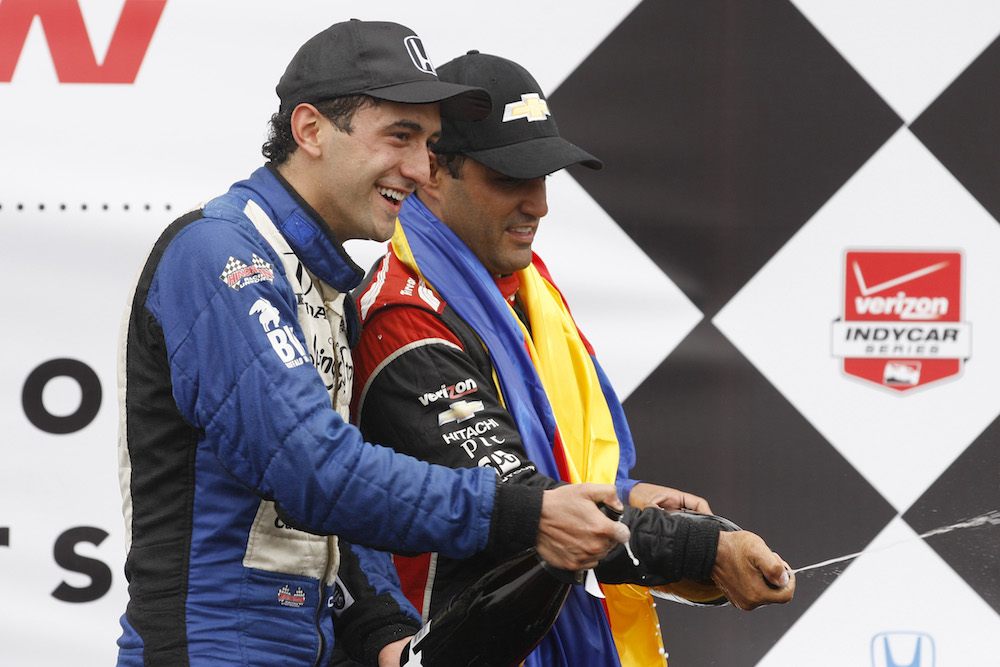
Unpredictability seems to be a popular ingredient for good racing, so on that basis, here's a photo of Carlos Huertas celebrating his win in Houston in 2014. Image by Abbott/LAT
Q: Interesting question, and nice way to steer us away from a boring bitchfest!
Recently I was going through a stack of racing car books from my childhood from the 70s, and I realized that the first thing that drew me into racing were the cars. It was nearly impossible to find racing anywhere live on TV at that time. Forget about online, it didn’t exist. Also, forget about local racing, it basically didn’t exist in my hometown of New Orleans. I got nearly all my racing info a month later from magazines. So during my formative years, it was simple. Unique cars = good racing. Fast-forward to the 90s, and the cars were much more similar, yet still not spec. Strategy became the name of the game. When the cars were so wildly different it was almost impossible to separate strategy from the particular dynamics of a car. Now it was possible. Unique cars + strategy = good racing.
Fast-forward again, and all the cars are nearly identical, even in series where they aren’t supposed to be. With the cars being so similar, their differences no longer excite me. Strategies are almost always identical now, too, owing to the above. That leaves one thing to make things exciting. Unpredictability = good racing. Now if I had my wish, we could take all the things above, drop roughly the same amounts of each into a mixer, and get a finished formula. Unique cars + strategy + unpredictability = great racing.
Tim Elder
Q: To me a good race features cars moving up and down through the field, and lots of passing. This passing happens at the front and the back. Like most, I watch most of my races on TV. We want to see passing up front, because that is where most of the passing is. When I am at the track, I want to see passing throughout the field. This is one reason why I love the qualifying procedure that Indy car uses on the twisties. It seems like there is always a good team or two messing up strategy and starting at the back. The good drivers charge there way back to a respectable finish.
Storylines that help make races better: The underdog winning or stealing a great finish. Driver overcoming adversity. What makes a great race? To me, a great race has me setting on my seat to the very end. Normally this is the result of a good battle up front. In your article, you reference the 500 with record number of passes. Why were those great races? You had no idea what was going to happen. I don't have to have the final corner pass and drag race to the line for it to be great. I need to know when that white flag drops, that last lap matters. Most races, there are not many positions changing the last few laps.
J.R., Turn 3
Q: I was introduced to racing with Can-Am at Laguna Seca in the late 60s. By some people’s definitions of “great racing”, Can-Am would have failed because we knew the three or four people/teams capable of winning. So it was not a manipulated event designed to ensure a “close finish.” That said, Can-Am (1966-1974) is one of the best – or the best – series ever in North America, with the greatest drivers from all over the world, and machines that were simply the fastest on earth. That combination gave us sensory/visual thrills rarely duplicated.
Given that as a basis, great racing delivers outcomes that are not manipulated by ad hoc rules to nullify the greatness of a particular driver/team on a particular day. (Read: “debris flags”). Racing that is challenging to the drivers/teams enough so that you earn your place at the end of the event. That is, passing is not “easy” or set in such a way through the rule book as to take driver and team skill out of the equation. I was at COTA, and I agree that IndyCar put on a race for the ages. The track and rules package created an environment that rewarded proper risk-taking all over the track. By the way, we were tracking lap times, and believed that had there not been that yellow flag, Rossi was going to catch Power – or at least, the two of them were going to have a reckoning.
Emmett, Dallas
Q: To be honest. I have no idea what makes a great race. I just know one when I see one. But, to give and answer. I would say passing. Lots of passing.
Jeff Loveland.
Q: Loved your article on what makes a great race! For my part, I think the best races are ones with enough storylines to keep you engaged even when the racing is not close. This could be any kind of storylines – drivers, teams, technological/mechanical storylines, etc. To your point, a dominating win should be looked at as a great achievement/story, not cause for being called a snoozefest. The 1994 500 had many levels of intrigue – not just the power of the Mercedes, but the question of whether it would last the distance. Even with the field being lapped, there were questions that kept you on the edge of your seat. While mechanical diversity and even unreliability don't produce consistent barn-burners of races, they do give you something to talk about or be engaged by when the racing on track isn't fantastic. By contrast, when everything is the same and reliable (er, predictable) the race damn well better be good! If it isn't, you're not left with much to talk about.
Lyle James, Dayton, OH
Q: A good race is clean. Personally, I don’t like to see yellow and red flags during a race; they slow down the action. As a paying customer, I want to see cars mix it up under green, not cruise around the track under yellow or sit idly under red. Now, I know that NASCAR uses frequent yellow flags to keep their races competitive, and doing so has served their form of racing well in the past. However, a good, competitive series shouldn’t need artificial stoppages to remain entertaining, which brings me to my next point.
A good race is competitive. Simply put, a race is a competition, and as such, the competition needs to be good for the race to be good. I know in your article you cited examples of historical races that weren’t exactly barn-burners (to put it mildly) and yet they still got the crowd roaring. However, I would argue that racing in those days was more of a spectacle. Today, racing is seen as being more of a sport. Racing is now expected to be competitive, and if it isn’t, then it isn’t good racing. Now, you don’t exactly need a thrilling, last-lap battle for the win in order to have a good race (though it certainly helps, and can even make up for a boring race up to that point. See CART at Laguna Seca in 1996). However, there needs to be some close competition somewhere on the track. Look at the recent IndyCar race at COTA: People raved about the on-track racing action, but little changed at the front throughout the race (save for an untimely yellow). Still, the racing through the field was spectacular, with cars slicing and dicing from the first lap to the last. That said, the race at COTA also had my third point for a good race…
A good race has a popular winner. People want to see their favorite drivers win, like they want to see their favorite teams win in stick-and-ball sports. It’s human nature. People tend to remember racing more fondly when a driver they like wins, and less fondly when a driver they dislike wins, regardless of the overall quality of the competition. For example, in NASCAR, when Kyle Busch wins a race, you’ll hear a lot of complaining from fans about “how terrible the racing is”. However, make Chase Elliott the winner of that same race, and you won’t hear a peep from fans about the quality of the racing. Likewise, if Will Power had cruised to the win at COTA like it seemed he would, the race may have received mixed reviews from fans. However, throw in a surprise yellow flag that gives the win to Colton Herta, and now you’ve got a classic!
To summarize, if you’re a race series, there’s a lot you can do to help keep the racing clean and competitive, which gets you most of the way to ensuring a good racing product for the fans. As for the popularity of the winners? Well, that’s between the fans and the drivers (and the luck of the draw).
Garrick Aube
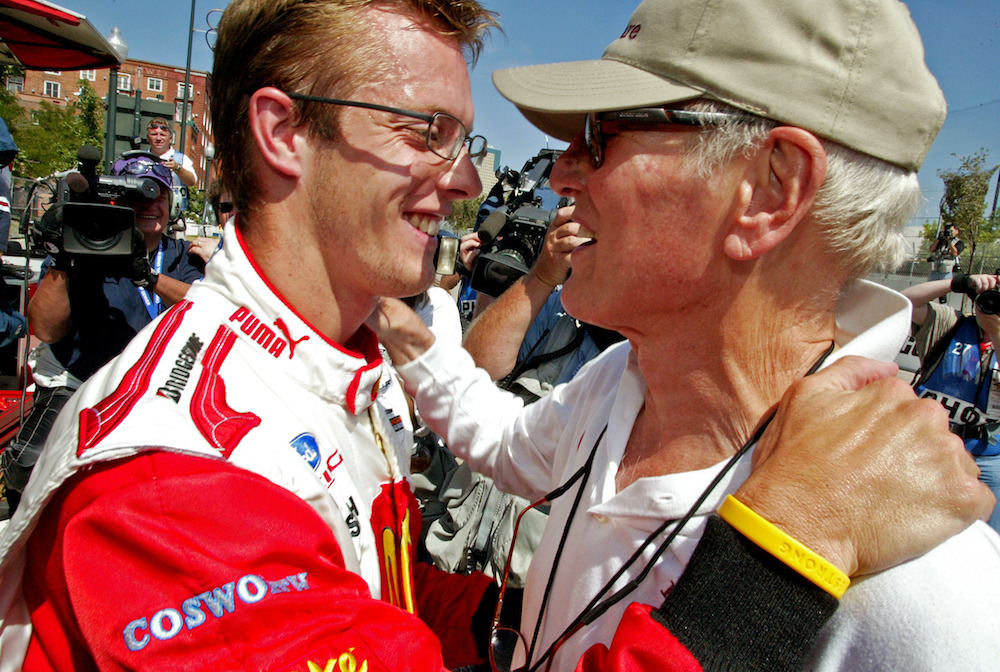
It wasn't just Paul Newman who was impressed by Bourdais' first-to-last-to-first heroics in Denver, 2004. Image by LAT
Q: Having grown up in a sports car racing family (my father raced a Healy 100-4, with an uncle in a speedster) I'm drawn to a good, "get knocked down and pick yourself back up" battle, so often seen at Le Mans, Daytona, Sebring, etc. Jackie Ickx, coming back from gearbox issues at Le Mans, the Penske RS Spyder winning Sebring overall, etc., etc., etc...
But my favorite – and close to our family's heart – is still the Sebastien Bourdais / Newman-Haas win at Denver in 2004! Knocked out at Turn 1, then climbing back through the field, the McDonald's car kept getting bigger in the background without the TV commentators ever really noticing..Then, seemingly out of nowhere, he was there at the front! Our son was part of that team then, and the whole package showed great driving, pit work, strategy, and a "don't give up - stay focused" attitude! It's races like that, that I think are the best! There's more to the whole story, but you asked us not to write a book, so I'll leave it at that!
Bill Vincent IV
Q: My perspective as a fan roughly between 1975 and now: Drivers who are characters. The drivers now are great, the new TV coverage is really showing them off. They've come into their own over the last 10 years, and now there is a great group of new ones who drive fast and challenge. Owners and team members who are characters. Hull, Ganassi, Cindric, Penske, Rahal, Coyne are interesting to follow, they really care about racing, and put their all into it.
Sponsors who activate around the racing. People used to cheer for the Target car or the Valvoline car, even if they didn't know the driver or race series. The sponsors make the race exciting when they pack the grandstands and fire people up. Coupons, discounts and giveaways get everyone involved, not just the gearheads. Ford. Send Roger Penske to get Edsel B. back into the IndyCar fold. Ford was one of the greatest casualties of the split. Mazda has been mostly cut loose from Ford, and they are now gone as well. I follow Ford, it's not fun watching Ford drivers racing Hondas and Chevys. The GT is cool, but it's always been a European thing. IndyCar and Cosworth with Ford bridged the gap for U.S. and European fans.
Cosworth would be fun to have back as well, I'd hate to see them in Indycar with a different brand. While they're at it, bring a few Ford drivers from other top tier formulas to race at the 500 or in IndyCar like they did with the GT program.
Eric Gackenbach, Dearborn, MI
Q: I'm just here to not bitch! I've been an IndyCar fan since Uncle Bobby sloshed to victory in the 1975 Indy 500. I'm enjoying racing now as much as ever! You can argue there have been better days, but the racing is still great. IMSA/WEC too for that matter. Information for the rabid fan has never been more accessible or in-depth. NASCAR and F1 have lost their luster with the gimmicks (NASCAR) and private team strangling budgets and tech (F1). But I'm having a blast as always! You're right, name the book "Bitch, Bitch, Bitch".
Daniel Tripp, Boaz Alabama
Q: What makes for exciting racing? First, being able to see it. But you told us Canadians we are not allowed to complain about our dismal access to IndyCar broadcasts because we don't matter, so I'll move on. I have never found pack racing like old IRL or restrictor plate NASCAR appealing. To me that's not racing, it’s just a lottery. Stage racing is an even bigger abomination. For your question about why NASCAR is so popular, I have no idea. Waiting for wrecks? I don't mind at all the odd dominant race like Rossi in Long Beach. In the context of a contested championship, there's nothing wrong with a good runaway once in a while.
When it's Lewis Hamilton doing it for the 12th time in 20 races for the fifth straight year though, it gets very, very old. You can say that F1 is prone to domination, but we are now in a period of unprecedented dominance by one team, and into the sixth year of this. Even Schumacher had a couple of close-run championships that went to the wire during his four in a row. (Let's forget Rosberg even happened in 2016).
No Netflix documentary over-dramatizing the "intense battle" for ninth between McLaren and Renault can compensate for more than one car/team being able to win regularly. They need to fix it, and Liberty would be wise to take a sweeping brush. IndyCar has the best on-track package right now, but it is restricted to a single chassis/two engines, so you lose out on the technical side. IMSA has the best variance in machinery, but BoP takes away the ability to make that machinery count. (For my money the IMSA 'three races in one' is the best value and entertainment if you're attending a race in person, while it doesn't always make great TV).
I think the problem is that as racing has become more professional the costs have skyrocketed, but the revenues have also decreased, meaning each series has had to double down on what it considers its "core strength", leaving behind the secondary things that provided additional interest. So when IndyCar has a snoozer, there's nothing else to fall back on and everyone complains. When IMSA messes up BoP and a manufacturer gets unfairly punished, that is an affront because that variance is their "value proposition." And when F1 lost the screaming V8s in favor of the faster but pedestrian sounding turbo hybrids, it very much lost its wow factor.
This has resulted in a decreasing pool of fans factionalizing themselves into camps of the type of racing they want that offers them what they think is important, rather than fans accepting motor racing as a whole and the uniqueness of each series as a plus. The side effect has been intense complaining when a particular series doesn't deliver on that single thing that the fans are following it for. Keep on doing what you do, and I'll see you on TV when the races are on NBC network up here in Canada.
Marshall in Toronto
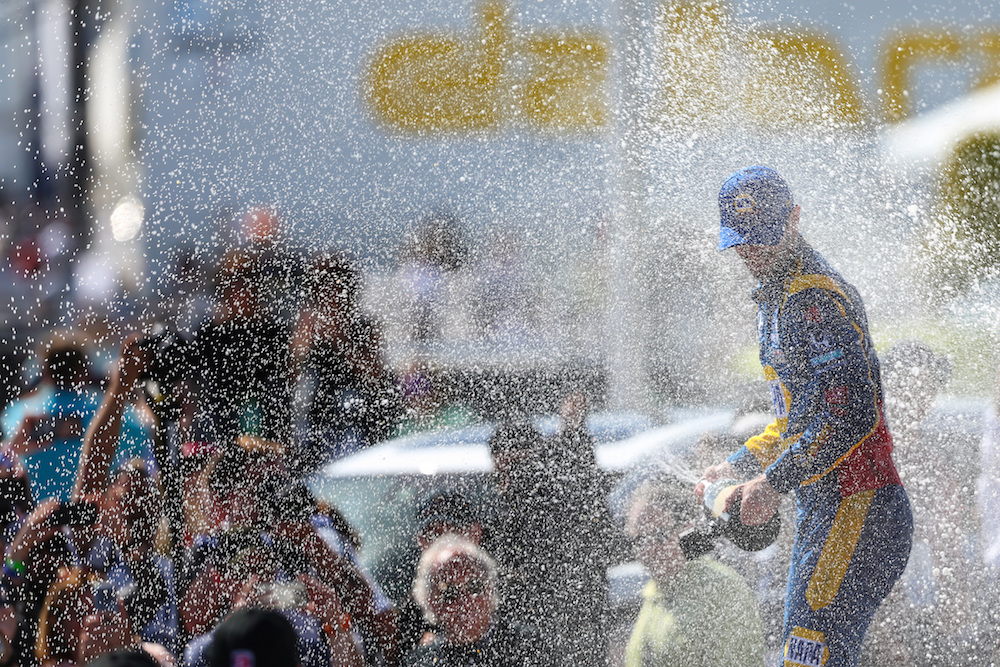
Rossi's solo act at Long Beach was referenced quite a lot this week. Image by Galstad/LAT
Q: The problem with posing the question in this manner is that "what makes a good race?" has changed significantly over time, as spec racing series have become the norm. When team budgets and resources varied widely, and cars/engine combinations varied more than at present, someone winning by a lap or so was relatively commonplace, and we, as fans, recognized that inequality between the teams was a given.
We applauded the achievement – the best drivers naturally got the best rides (with some exceptions, certainly), and if they won by a ton, so be it. Now, after over two decades of spec-series parity, we fans have become accustomed to the "nose-to-nose" finishes on ovals, and close finishes on road courses, and a dominating performance like Rossi at Long Beach gets panned as a "boring parade."
Circumstances change over time, and how we assess things changes as well. A "good race" 30 years ago isn't a good race to today's fan. I enjoy both types of races. It's sort of like being a baseball fan – you can appreciate your home team winning in a 15-run rout, but you can also appreciate the 1-1 pitcher's duel. Both can qualify as "good games." But to answer your question Robin, for me, a good race would be one where the top three all come out of the final corner side-by-side, three wide, with checkered flag in sight. All three then run out of fuel, and the fourth, fifth, and sixth place cars all pass for the podium positions. But, hey, I'm just being a selfish race fan . . .
Paul from Ohio
Q: It is the personalities – the Michael Jordan, Tiger Woods effect. I used to attend all of the races at Milwaukee. The excitement was Foyt, Parnelli, Mario, Ward, Norm Nelson, McCluskey, Don White coming to town. That's what got us to the track. Whatever happened at the race, happened. There are no stars, no-one but the avid fan knows any of the drivers (NASCAR has the same problem). All the media talked all week long about the race. When Alan Kulwicki was driving my USAC stock car, the media came to the shop to interview us before every race at Milwaukee. I think it is called promotion and publicity. The only way the young people will get back to the track is to develop software that can allow the teams be heard over the cell phones. Then the young people can develop a relationship with the teams. Have a camera in the car, showing the driver and the gages, hear the communications with the team. See what the driver is going through. You can't even see the drivers in the cars anymore.
Thomas Hanley
Q: I prefer to watch IndyCar because it is the better total package. In 2019, Aussie fans are switched off from live racing, but I wait in hope for its return 2020. I do not watch sedan racing because it just looks boring: with apologies to Supercars, NASCAR, BTCC, etc.
I watch F1 because I can't get live IndyCar racing in Australia in 2019. F1 is improving, and Honda is getting its act together. F1 will be very good if Renault can get its act together. But as a TV package, F1 is just awful. F1 is just too political. The UK pre-race commentary team bang on about absolute BS. The race commentary team is screaming into the mic just to make it seem dramatic. IndyCar is a better TV package. The cars look great. The drivers are very good. The racing is competitive and the winner is never a slam-dunk. The commentary is very good, and they are funny. IndyCar is an entertainment package.
Peter McGinty
Q: I’ve noticed that in some cases a good race is when your wife’s favorite driver wins.
Bill Phypers, Brewster, N.Y.
Q: Robin, it's as simple as this. A lot of people don't know how to watch a race. It's not always about the lead. Sometimes you have to find the race within the race.
In every race, whether it's 12 cars in a Saturday night short track show or 40 cars at Daytona, somebody may be having the best race of their life. The race for 12th, 18th, ninth could be the most exciting race you'll see all year. Somewhere in the pack there are drivers further on the edge, wrestling ill-handling equipment, or wringing the last drop of performance from their machine battling another equally-performing car and driver.
Some of my best races were for a mid-pack position against my best friend. We put on a helluva show for whoever was watching. TV has been doing a better job of highlighting those battles. It's not just about who wins. It's about every driver out there doing his best. Look for him. Or her. That's why I love Bump Day. Brave drivers handling marginal equipment from under-funded teams hanging everything out in a scary run to make the show. Now that's thrilling to watch. That's why I love to watch races.
Dan B.
Q: I love unpredictability. I love not knowing who is going to win a race. I love watching two cars go side by side into a corner and seeing who is going to come out the other side in front. I’m not offended when someone dominates a race, because when it’s your day, it’s your day. Period. I like passing, but it doesn’t need to be stupid easy to pass, and there don’t need to be 50 lead changes. I like seeing people come out of the corner with a snap of oversteer and then catch it. I love watching drivers drive as hard as they can. I don’t like races that are manipulated by stages, I don’t let wreckfests, I don’t like GWCs, and I don’t like being able to accurately predict the podium before the race begins. Based on that, it should be easy to guess that my favorite racing series are IndyCar and IMSA. I also like F1. It may get predictable, but when it’s good, it’s really good.
Evan from Youngstown, Ohio.
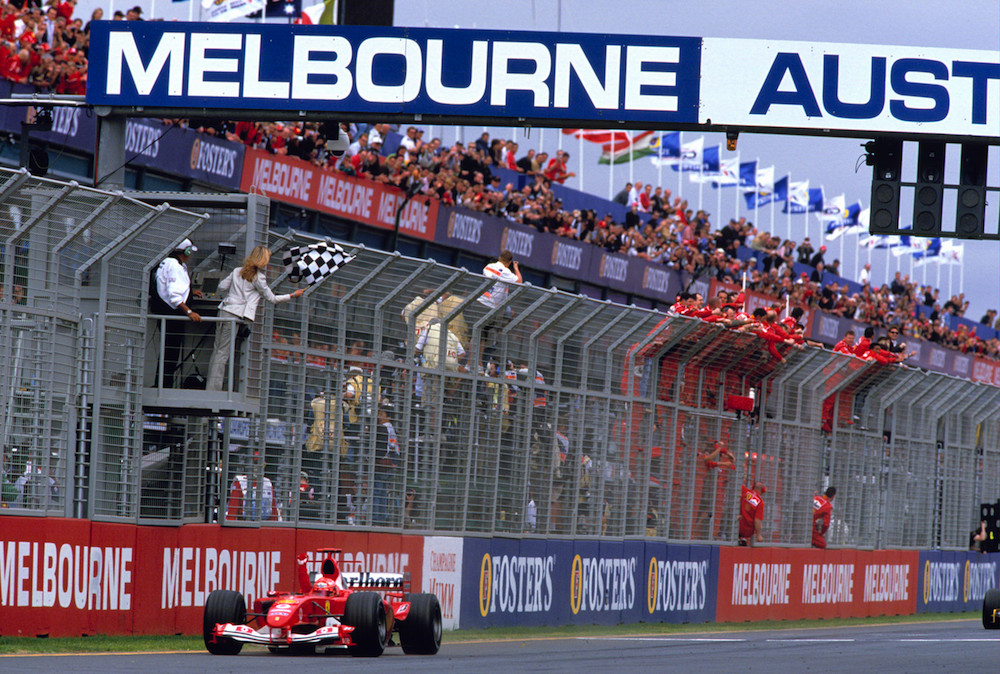
Max from Bethlehem, PA can't remember the years of Schumacher/Ferrari dominance, so we'll help him out. Basically, almost every GP in 2004 looked like this. Image by Bellanca/LAT
Q: I think that a good race has to be defined by some form of compelling thread or story to follow throughout the race. I know that’s super general, but let me explain. Let’s start with a few easy examples from Formula 1, since that seems to be the main series that people struggle with. First, look at Baku from the last few years. This year was a bit boring, because there was no unpredictability. Even without unpredictability, there was nothing particularly compelling to watch, since we were just looking at Mercedes take another 1-2. At the beginning of 2014, we all thought that was amazing, because we had a new dominant team. But after a while, it lost its magic. I think in Formula 1, “great races” are very rare, and we instead look back with nostalgia at “great seasons” or “great eras.”
I don’t remember the Schumacher-Ferrari dominance, but I do remember Vettel-Red Bull. At the time, the races sucked. No one loved them. But looking back, I think F1 fans are appreciative of having seen a period of time where one team got everything right. We feel privileged to have witnessed dominance. Getting back to a “great race” in F1, we really need something unusual to happen. I think great F1 races are built on the backs of boring F1 races, or on the backs of predictable races. My favorite race of last year was COTA. If you really look back at it, the action itself was never amazing. There weren’t tons of passes, there weren’t tons of safety cars. But the strategy meant that we never fully knew who was going to win.
F1 fans are starting to appreciate strategy races, even if the action isn’t the best. What we hate is a race where you know the victor by the end of the first lap. Baku wasn’t actually that boring to watch, because we always expected something wild to happen or a safety car. We were disappointed in the end because nothing came of it, but we were still engaged to near the end because of that expectation. A great F1 race either needs a good battle, a good level of unpredictability, or a feel-good story. Monza 2008 (Vettel’s first win) was a pretty damned boring race, but everyone loved watching a kid in a Toro Rosso stick it to Ferrari and McLaren.
In IndyCar, I think it’s the same. We just need something unpredictable, or something that makes us excited. Barber wasn’t great to watch because a yellow was never really expected (at least by me), But Sato winning made me happy because it was a feelgood story. COTA was great because of the action. I can’t comment on Long Beach because being a diehard Rossi fan skews my judgment. And St. Pete was a really fun and entertaining street course race. IndyCar races are unpredictable by design, so we see more races that we think are great. IndyCar fans are probably getting a bit spoiled by this, which is why people are starting to complain about “boring” races.
I think the reason short ovals are dying out in IndyCar is because its conducive to one person dominating (Hinch at Iowa, Newgarden at Iowa 2017, SeaBass at Milwaukee 2015). There isn’t much side-by-side racing, and there isn’t much chance to jump off strategy. They reward the one driver who gets the setup perfect. There’s nothing wrong with that, and I imagine that a few years ago, when there wasn’t as much close racing, people liked it more. But now, we have an idea of IndyCars running right next to each other and passing all the time, which just doesn’t work on a short track.
Boiling it all down, a great race is one that stimulates you in some way. Either it excites you, whether that be with close racing throughout or even just one great battle for the lead, makes you nervous with its unpredictability, or makes you feel happy with someone you love winning. People loved the Unsers and the Andrettis, which is probably why they loved watching them kick ass and lap the field. I promise, if Marco lapped the field at Long Beach, you wouldn’t have gotten a lot of complaints, because it would be the feel-good IndyCar story of the decade.
It occurs to me now that another kind of stimulation we racing fans love is being able to apply hyperbole to an otherwise boring race. Look at the examples you gave in your article. Mears won by two laps. Only four cars finished. Mario lapped the field. Probably weren’t fun races to watch, but it sure is cool to be able to say you saw that. Saying Rossi won by 30 seconds doesn’t have the same ring to it as saying Andretti won by a lap.
Max Camposano, Bethlehem, PA
Q: What makes a great race? The answer is simple: when your favorite driver wins. Doesn't matter if they dominate the whole race or only lead the last lap. Even better when your favorite driver falls to the back on the first lap, then drives as if every lap was a qualifying lap, such as Paul Tracy at Road America, 2000.
John Risser, Muskegp, WI
Q: First, there needs to be excitement. Manufactured or otherwise, there needs to be excitement. We tune in or show up because we want to see the spectacle and we want there to be excitement. And while NASCAR has done some incredibly stupid things over the last decade, they created (artificial) excitement by adding stage racing. They added strategy, and they added a pair of instances when the race essentially resets. It prevents what I find too often in F1 and IndyCar, and that’s the runaway leader. It’s worse in F1, but it’s seen in IndyCar too. One car races out to a large lead, and for the next two hours, it’s a parade. At least with NASCAR, I’m getting what amounts to three races for the price of one. Three chances for my driver to compete. And at least two opportunities for my driver to get a chance to reset and make changes. Does that mean that the best car wins every race? Nope. But it creates excitement, artificial as it may be. Cars racing doorhandle to doorhandle, bumping and rubbin’, drivers getting pissed off… it may not be “racing”, but it’s exciting.
Second, it helps if there’s a connection. Driver or team, it helps if you’re rooting for someone (or something). I grew up a Petty fan, and while the 43 doesn’t have a prayer of winning each week, I still root for that car to win. There’s a nostalgia involved – a history, if you will. I see the 88 running around and remember when it was Junior (or DW). Or the Tide colors on a car. Or that red and blue 43 running around, and I am reminded of a time when the fascination and wonder surrounded the sport for me.
I remember the Foyt Coyote and the twin cars of Dallenbach and Johncock at Indy. But the cars don’t look like the spec cars of today. Gone are the big wings and big bodies that would have made the cars unique. Now, does today’s NASCAR Camaro look like a 70s Charger? No, but the similarities are more prevalent than the Coyote and today’s Dallara. And don’t get me started on F1. Even when Senna and Prost were going back and forth, the McLaren and Ferrari were different enough and bore a modicum of resemblance to the cars before them (although nothing compares to the cars of the 70s). Today, there are so many winglets and doo-dads hanging off the car, it looks more like a parade float than a race car.
I have about 100 more things that are vying for my entertainment eyeballs on any given Saturday or Sunday. You want me to tune in? You better be providing an experience that makes it worth my time. You see NASCAR and Indy trying to do that with the fan experiences at the track. A good step, but it ignores what’s going on on the track. Driver accessibility is great and might make me think about spending the $100 to drive to the track, but if team accessibility was all that was important, I’d be heading to the local NHRA event.
Doug Palmer
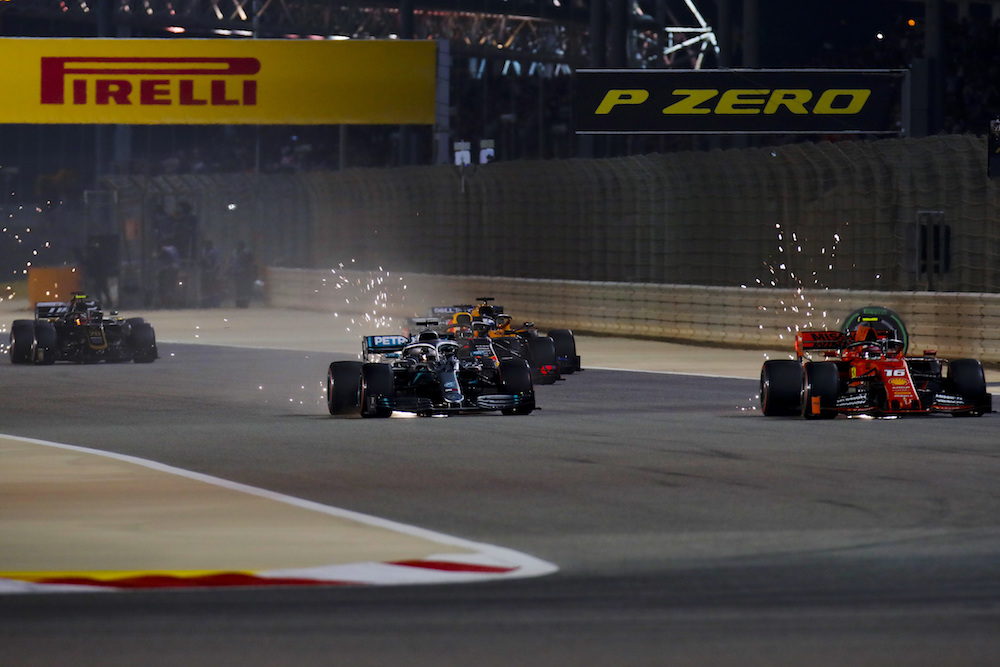
This year's Bahrain GP ticked all the right boxes for Ryan from West Michigan. Image by Portlock/LAT
Q: There are a lot of things that make for a great race. A race doesn’t need to have all of these to be a good one. Sometimes a race decided by competing strategies is intense and exciting because you don’t know how it will play out until the final pit stops or because of tire life until the final flag in event of a yellow. It is easiest to talk about what makes a good open-wheel race by referencing Formula 1 (because so many are bad the good ones stand out).
If readers saw the 2019 Bahrain Grand Prix, that was a textbook great race. There were on-track passes for position in the top five. There was reliability drama. There were battles throughout the field. There were mistakes made by the best drivers in the series. Competition at the front. The threat of a pass is sometimes as exciting as actual passing. Multiple strategies in play. Trying to figure out what each team is or should do is fun. Parity at the front. No Milka Dunos (everyone has a reasonable chance for a solid finish). Actual passing. Drivers with a personality. I really feel like Ricciardo’s personality is wasted in F1. A good venue. Many of the above factors are significantly impacted by the track design.
Ryan in West Michigan
Q: I consider myself a race fan, but I used to always favor IndyCar back in the 80s and 90s. Besides IndyCar, I follow F1, NASACAR and IMSA. I’m a former race official with the SCCA and a current member of the NASCAR fan council. IndyCar is finally making a good comeback, but it is missing some drama. Tires blow out less, engines hardly fail, and the drivers seem to be overly careful about competing side by side. Give me more drama to go along with the great talent. The cars appear slow on road courses but fast on ovals. Need more horsepower for road courses.
IndyCar is a great series to watch and it is exciting. I like drama, side-by-side racing and speed to keep me watching. NBC Sports and MSNBC is also doing a much better job of keeping me from changing the channel. F1 is an awesome parade of awesome cars. The driver talent is no better or worse than IndyCar. just the cars. I love the speed through the corners, the best race tracks in the world and the looks of the cars. The TV production and talent are also very good and keeps me tuned in.
NASCAR has lots of drama and promotes its talent very well. The cars are OK, but I like the fact that drivers are aggressive. I used to not always watch a complete race due to races being way too long. The middle of the race was a drag. However, shortening some of the races and stage racing has made a difference. The stages have now given the fight for position during the middle of the race meaning, more action and more drama. I’m not a fan of the lucky dog or multiple restarts, but I have no problem with a red flag if the race is under caution with three to 10 laps remaining.
Lastly, what I feel is killing TV audiences is the expense of cable TV. For me to watch any of my favorite sports, including baseball and football, I like most, must pay a premium for a sports package. This is on top of the already-expensive basic cable bill. Now you want me to pay $50 for practice. When does it end? I can afford a lot more than some, but I’ve reached my max on what I want to spend for TV. I really like F1 but if it goes to PPV like I’m hearing, they will lose me as a viewer. I’m done paying more for TV. I hope Comcast/Xfinity and all series start listening to the fans on this topic.
Jerry, Williamstown, N.J.
Q: It's all about competitiveness and strategy. IndyCar and sports car/GT racing (IMSA, WEC, Blancpain, Super GT) are all great examples. Cars can run close together, drivers are able to fight for position, and pit crews have an active role. A great example is the first round of the BES at Monza – there were battles throughout the field, and strategy dropped some cars down the field while others rose as the race went on.
Series like Formula E, BTCC, and NASCAR offer the competitiveness but lack the strategy. And without strategy, there is always something to be desired. I don't need constant lead changes or passes on every lap or crazy crashes or insane technology (although LMP1 was the best racing in the world). And if a guy hits the setup right and dominates a race, like Sato or Rossi, then good for him/her, they deserve it. It doesn't make the race worse as long as the rest of the field is fighting.
Fadi Sallumi
Q: There are many factors that make you feel you are a seeing a great race - favorite driver, favorite team, good passing, etc. I think another factor is having something significant at stake. Even though Indy prize money is not what it should be, Indy is still a big event and doing well there is extremely important because of the prize money, prestige, publicity, and points at stake. For some teams, doing poorly there is an existential threat. In contrast, though I'm an F1 fan, each F1 race, with possibly the exception of Monaco, is pretty much equal in importance. F1 teams will get their reward at the end of the season – each race only has small ramifications. Of course, in all series, the later races in the series tend to become bigger events because of championships being decided.
Charles, Alto, NM
Q: Multiple lead changes, skillful driving, minimal cautions, maximum speed, cold beer and grid girls.
JRW, Chandler, AZ
Q: I think last lap battles, underdog stories, come-from-behinders, and even utter domination in some instances all make for good races. But I think the thing that really makes a good race are the bad ones. Without the boring races, we wouldn’t appreciate the truly good ones. Over the last couple decades, we’ve become accustomed to better and better races. Unfortunately that means we don’t appreciate the races that are not so great any more. As a parallel, I live in the Great White North, aka Canada. After a long cold winter, a sunny 45-degree spring day feels glorious. Take a Californian into the same conditions and they think it’s a cold miserable day. Perhaps it’s not the racing that’s changed, but the excitement threshold of us fans!
Jeff DeJong (starting to thaw out in Canada).
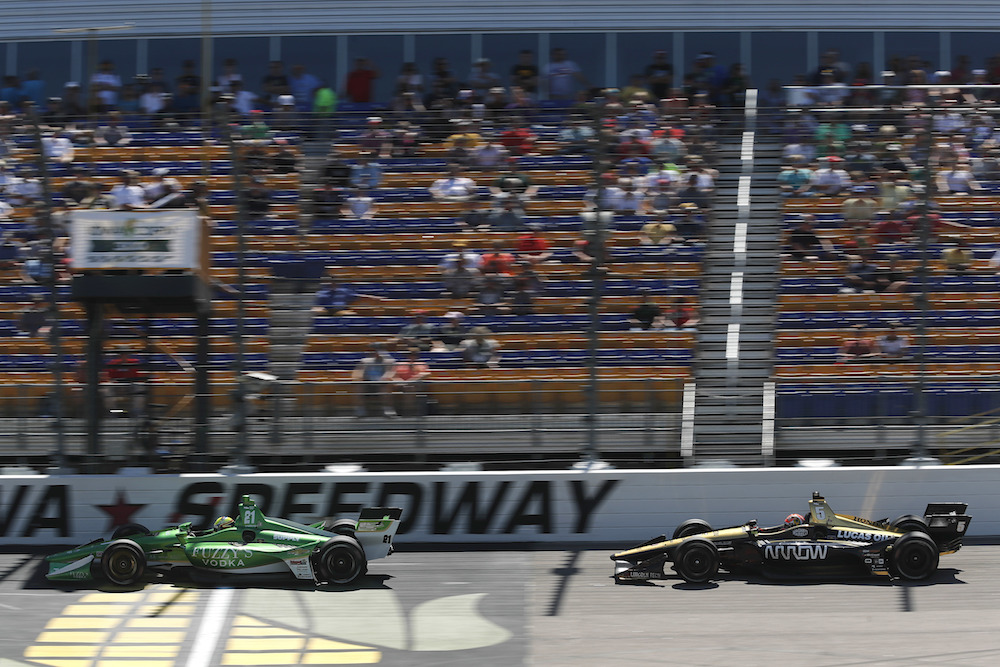
Ben from Toronto points out that battles like that between Spencer Pigot and James Hinchcliffe at Iowa last year probably wouldn't happen in F1. (And not just because Formula 1 doesn't race at Iowa). Image by Abbott/LAT
Q: As someone who has watched racing (IndyCar, IRL, CART, three levels of NASCAR and F1) since I was three years old, I have a strong opinion on what makes a good race. This has changed over time. In the 80s and early 90s, a driver lapping the field was considered a good race because we marveled at the speed and ability of the car and the driver. Now, the speeds have peaked (and come down in the name of safety, which is a good thing), and more and more drivers have raced their whole lives and possess a lot of talent.
With that said, in today's racing world I think a good race is one that is competitive. One where passing is possible throughout the field and at the front, where the cream rises to the top but an upset is still a possibility, and where drivers are challenged and can show their ability, whether that is mentally like the race at Talladega where they had to be on their game door-to-door all day, mindful of big runs and whether or not to block; physically like Bristol two weeks ago; or Toronto's bumpiness; or where there is so little downforce that they fight the cars, track, strategy and each other to prevail, like Indianapolis.
I break it down by series, too. F1 has been garbage for years. There are between one and five cars that can win on a given weekend, and unless there's a mechanical issue, the race is usually decided in turn one. NASCAR has put on great shows on short tracks, superspeedways and road courses because they meet the criteria I mentioned, whereas mile-and-a-halfs are snoozefests, especially this year, because there's no challenge and minimal passing.
IndyCar almost always puts on a great show and is the best all-round series right now. Races are usually competitive – you have a few guys who win a lot (Dixie, JoNew, Power, Rossi, RHR) but upsets and surprises happen, too (Herta at COTA, the Hinch-Pigot battle at Iowa last year). Drivers are clearly challenged mentally, physically and by the cars, tracks and each other, and races always feature a lot of passing! That is excitement! So if you want to know what makes a race exciting, it is hard to pinpoint exactly one thing, but when many of these factors come together – competition, passing, favorites with a chance at upsets, and challenge – that's what makes a race exciting!
Ben from Toronto
Q: Not to be trite, but a good race is one that entertains me. Full stop. That being said, what entertains me? When I watch a race and I really don't know who will win while I'm watching. It's like a good murder mystery where you are entertained throughout the mystery and are rewarded at the end. I do enjoy watching the pack further back to see who gets second, thirrd, fourth, etc, but I often don't get to see those that much because of coverage on TV.
Doug B.
Q: I been following racing since I was a kid. I never got to see the Clark, Foyt, Gurney, or Mario race – or I don't remember them racing, I am only 31 now, so I might have been to young to see some of the greats. But for me, what makes a race good and exciting is going into a race weekend and not knowing who is going to win the race, where majority of the drivers have a possibility to win. Heck, even last year’s 24 Hours of Le Mans had a little suspense going into it, even though Toyota had the field covered – it is a 24 hour race, so anything can happen. Also though that same thing that made last year's Le Mans makes exciting, it can make F1 races somewhat boring for me; basically wanting a mechanical failure or a crash to make a race exciting. That's just my two cents and I will watch cars race on anything, so sometimes it doesn't really matter to me.
Vinny, Florida
Q: What makes a good race is knowing the specifics. It’s knowing the technical hurdles both the teams and drivers are trying to clear in order to finish as high up on the grid (or win) as their hard work, and fate, will allow. It’s in the very process of racing that interests me most. The results are variable, but the efforts and struggles associated with racing are always the constant and most entertaining.
Take last year’s 500 and the radical aero changes (reductions) made to the ground effects; the challenges associated with just that one change alone was a handful all month long for all involved. Come race day’s heat, we saw the masters of their craft struggling to keep all four tires under them and a few of the greats completely lost control, which was unprecedented in their 500 careers. Come May 2019, we'll have a newly revised aero package with a plethora of brand new combinations for the teams/drivers to discover what’s best for their setup, weather and track conditions. All of which makes for a good (and fascinating) Month of May and race day. The devil and entertainment value is found in the details. The more the fan knows about the specifics of their sport, the more they'll understand what those teams and drivers are struggling to overcome, and, within that process, a greater appreciation is gained for those teams and drivers. What’s taking place before our racing eyes is nowhere close to being as easy as they all make it appear.
Jesse, Franklin, IN
Q: I have been watching motorsports since the mid-1970s. The noise, power, and speed have always been thrilling. I am always happy and satisfied with any race that goes green the entire way because the winner fully deserves to win, and it allows all the teams' strategies to play out through the totality of the race without artificial interruptions (yellows). To use a music analogy, a motor race should be like one uninterrupted piece of music that develops and then comes to a nice conclusion. A motor race should not be like a concert with 10 or more separate songs and an intermission. Thus, I change the channel when the yellow or red flag comes out. Because of my philosophy, I'll continue to advocate for virtual safety car as the best way to keep the race free of artificial interruptions and to ensure that the fastest driver with the best strategy wins the race (and doesn't get screwed by closed pits from an ill-timed yellow). Let's hope there's a way it can be implemented in the future.
Marc, Orange County, CA
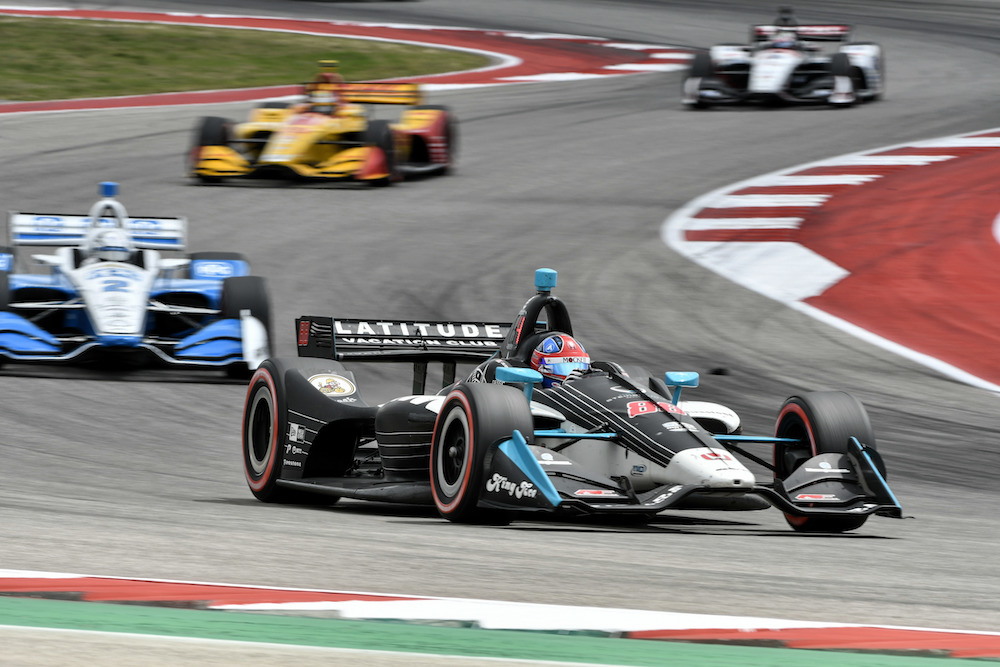
There's a definite appetite for seeing the underdogs take on the establishment. Image by LAT
Q: Great races come in all shapes and sizes. What I want is to be impressed, excited, and occasionally, surprised. I've been to Indy, Barber, Road America, and Gateway. I've loved them all, except for the rain at Barber. But every year now, the morning of Indy, I wake up like it’s Christmas. There's a reason: there is nothing more impressive to me in motorsports than the speed and daring on display at the 500; the excitement is impossible to deny; and, most important of all, the prospect for a major surprise seems greater than at almost any other track. The length of the race and its high risks make it predictably unpredictable, even when the pole-sitter wins.
When I watch a race, I want to see some unexpected faces starting toward the front, the usual contenders putting forth their best effort but not necessarily winning or even finishing the race, the drivers of the future taking risks to grab glory right now rather than patiently wait, and maybe a great strategy call or two. Admittedly, I don't want to see Scott Dixon win, though I'm always impressed by him. I want to see Rossi pass three cars in a row, Newgarden put the moves on a veteran like his pass of Power at Mid-Ohio, Herta and O'Ward run with the big boys, and tortured drivers find redemption where they've suffered misfortunes in the past. Basically, I love a race that tells a bold and riveting story, and doesn't just fill the corporate coffers.
IndyCar consistently provides that – the Indy 500 more perhaps than any other race. It's the history, the characters, the emotions. The more diverse stories and divergent possibilities we can get out on that track, the better the racing, because IndyCar shines brightest when it reminds us that yet another seemingly impossible thing is, yes, if only in this series, stunningly possible.
Taylor from St. Louis
Q: There are a few things that come to mind when I think of an exciting race. But to keep it short, I think one of the less-obvious ones is how easy it looks (or can look). When cars are making passes and closely challenging each other for each position, the casual observer can see the skill of the driver at work. It's the knowledge that if either competitor makes a mistake, then it's likely to end in a cloud of carbon fibre that creates the suspense. In a processional, strung-out race, it just looks like a Sunday drive, so who cares? This also feeds into why close finishes are so exciting. In addition to the above, victory is now on the line. Throw in an underdog or two and the desperation level ramps everything up to 11.
To your point about Daytona, it's why Daytona and Talladega generally get the biggest viewership. Sure, some watch for the wrecks, but on the other hand, those are two tracks where the cars tend to be inches apart at high speeds, so to my point above - you run the risk of "one mistake and it's over." You referenced the glory days of yore when leaders had multi-lap leads or few cars even finished at all. In my opinion, the reason this is no longer exciting is that the durability is so high. Part of the whole raison d'être of the Indy 500 was that it was an endurance race. In those days, one (or more) of those cars still might lose an engine or break a piece with just a lap to go. When someone blows an engine or has a mechanical breakdown nowadays, it is a true shock. It just doesn't happen. (Obviously it does, but not nearly to the degree it used to). So if someone gets a huge lead, it may as well be over, which is why those cases where it flips at the end are so memorable. I don’t recall anything at all about a certain Indy 500, but I'll never forget JR Hildebrand had one corner to go...
Rick S., Lafayette, IN
Q: Been a long time since I wrote, but I figured I would take you up on your request in your recent article. I think "good racing" can simply be summed up in three words: authenticity, overtaking, and speed. Passing and speed is what makes racing exciting, but authenticity is what gives it meaning. If the cars aren't wildly fast, nobody is impressed by the feat of the drivers; if there is no passing, nobody can stay awake during the round-around parade; and if it's not authentic, the race has no meaning. Needless to say, hitting all three of these at the same time is a never-ending struggle for sanctioning bodies: F1 has more agility in its cars (speed) and more open competition (authenticity) than any other series, but most races have hardly any action past Turn 1 (no overtaking).
NASCAR generally achieves lots of passing (overtaking) and is the fastest stock car series around (speed), but only by manipulating the cars’, races/, and championship’s design (no authenticity). USAC/WoO might be the greatest shows on dirt (overtaking) and all about raw car control (authentic), but will always be seen as second-rate or amateurish to the casual observer because it's "slower" (no speed). Like everything else with its product, IndyCar suffers an identity crisis in never hitting any of these quite right. IndyCar will always play second fiddle to F1 in the speed department, employs gimmicks like P2P, full-course cautions, and double points that hurt its authenticity, and is totally hit or miss when it comes to overtaking depending on the track and tech rules at the time (Texas is a prime example: too much downforce and it's what you dub "death race 2000", too little and the broadcast turns into a college lecture about tire degradation cause there is no on-track action).
It doesn't help fans differ in how they prioritize the three things – personally, I favor overtaking and speed, and could almost not care less if the whole thing is made up as long as I am entertained, but then you see the utter resentment from purists lambasting BoP, stages, P2P, the Chase/playoffs, F1 cost caps, etc as WWE-esque insults to "real" race fans. Create an engaging show at the thinking man's expense, or risk putting the audience to sleep so the best car always wins? At least we can all agree we like to go fast. So in brief: you can't win.
Daniel, Cincinnati
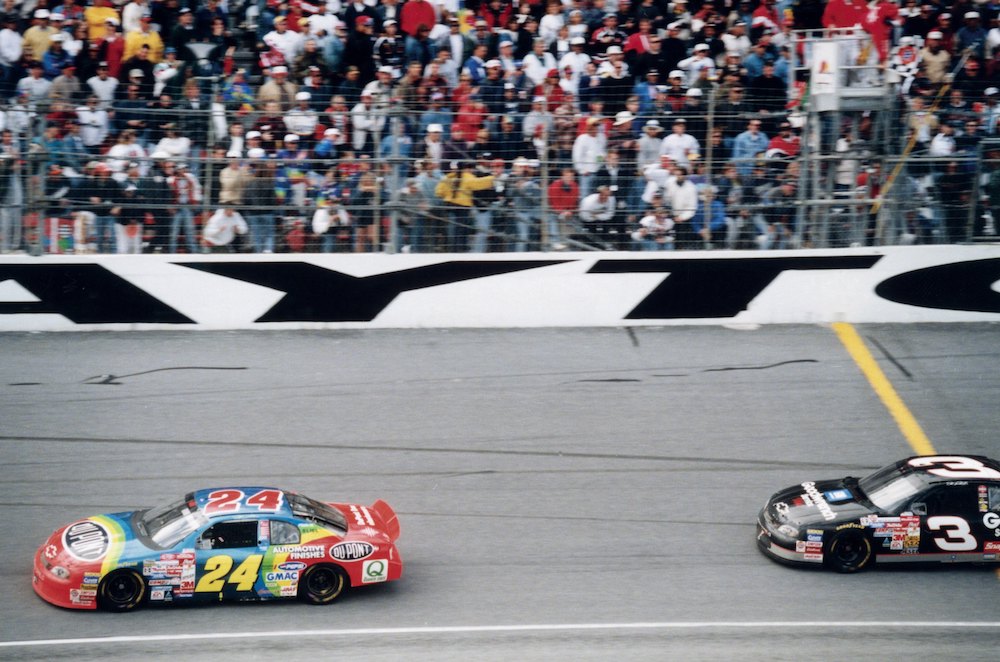
The 1999 Daytona thriller made a lifelong fan of Jeremy from Raleigh. Image by ISC Archives via Getty
Q: My definition of great racing comes from the perspective of that fan back in 1999, and I will throw out two races to draw my picture. First, the 1999 Daytona 500 was my first flag-to-flag race on TV. Jeff Gordon was my favorite driver, and I watched him beat Dale Earnhardt in a thriller of a finish. At 12, I did not remember the first 400 miles except for the large wreck, but I sure as heck remember the last 25 miles of the race. I can watch that race on YouTube now and still fall in love with it.
Second, the 1999 Napa AutoCare 500, the all race at Martinsville Speedway. This was the first race I ever attended. The in-person experience only flamed the ingredients that attracted me in the first place. In Jeff Gordon’s first race of his career without Ray Evernham as crew chief, Gordon held off a fresh-tired Dale Earnhardt while on old tires himself, and beat The Intimidator by a car length. I was ecstatic. Those two races are a picture of what I think is a good race. The top ingredient is driver personality. When I was sitting at Martinsville, I could watch before the race in the garage or during the race and say “Oh my God! That’s Jeff Gordon!” Or “That’s Darrel Waltrip!... ”Rusty Wallace!”… “Dale Earnhardt!”
You could just feel the electricity in the seats and on the track. It was like the current was running through you and to the person next to you in the seats. Fans lived vicariously through these superhuman daredevils that they identified with more than any other driver. A lot of factors may be at play, but it does not seem that that is the case today at all, and so today, I simply hope for competitive passing in a race. But if I have a harder time appreciating drivers as gladiators risking their lives for glory (in a much safer sport today), it is hard for me to appreciate a great pass or a dominating win. I still appreciate it, but it is harder to do.
A casual fan might have a hard time seeing a balls to the wall racing move for that reason. These electric personalities, for whatever reason, seem diminished these days, and that I think is the unifying factor in the making of a great race that supersedes all other factors.
Jeremy Lambert, Raleigh, NC
Q: I am 41 years old, and I have watched every season of F1 and Indy (and that other series, thanks Tony) for as far back as I can remember. I started watching IMSA and the WEC about five years ago, and Formula E when it began. This week, I made the decision to stop watching F1 after 20+ years. Here's why. The actual on-track racing is terrible. After lap 1, you're lucky if you see three actual passes. The commentators are painfully bad. There are no compelling personalities anymore.(Alonso). The regulations and penalties are the story, not the racers or cars. If you aren't a fan of Mercedes and/or Lewis Hamilton there just isn't a reason to watch.
In contrast, Indy has a pass almost every lap (a few races not withstanding) and the endurance racing has so much going on it borders on needing an Adderall for focus. While Formula E isn't quite there yet (wider courses would fix everything wrong with E), I'm watching if for no better reason than Bob Varsha is an absolute legend and makes every race he calls better.
Steve S.
Q: I’m 62-year-old former hydroplane driver and have attended several hundred races. The first was Indy 1964, where I sat, for better or worse, at the exit of Turn 4, right where McDonald/Sachs cashed in their chips. The five best races I have ever seen were 2014 Indy (Hunter-Reay vs. Castroneves), 1982 Indy (Johncock vs, Mears), 1976 Unlimited Hydroplanes at Detroit (Muncey vs. D’Eath), 1973 Can-Am at Mid-Ohio (Donohue vs. Follmer), and 2017 Rolex 24 (Ricky Taylor vs. Filipe Albuquerque).
Though I’ve been to about 75 NASCAR races, they don’t crack the top 20. Neither does Formula 1. So, what makes the best races in history? Two (or more) drivers absolutely wringing the necks out of the cars or boats, mano a mano (or woman) for the win. The number of passes for the lead. No crashes! I hate crashes! Crashes take out competitive cars, and they hurt people. (NASCAR is absurd for its crash-encouraging rules – especially at plate races). Familiarity with the drivers and cars; meeting the drivers in person. No-one beats IMSA and NHRA and the fan walks for that. Nothing else comes close. Not IndyCar, and certainly not NASCAR, which hides the drivers from the fans. Shame on them. The ultimate in equipment and technology. But even that (F1) is worthless in a parade.
Mark Lamontia, Landenberg, Pa.
Q: I liken my relationship with IndyCar to the one I have with my best friend, who happens to be my wife. On most days, and like many races, she’s engaging, fun, interesting, and an absolute pleasure to have in my life; much less frequently, she’s aloof, boring, a bit disappointing, and difficult to be around. As hard as she and I work to achieve harmony and perfection in our marriage, we understand that each is an impossibility. We keep working at it, though, and understand that whether it’s been a bad day, an average day, or a great day, at the end of the day (as Helio says — perhaps a little too much), we love one another and are truly thankful for our relationship. It’s much like IndyCar, and racing, in general. Neither of us can envision our lives without it.
Daniel Pratt, Georgetown, Texas

Robin Miller
Robin Miller flunked out of Ball State after two quarters, but got a job stooging for Jim Hurtubise at the 1968 Indianapolis 500 when Herk's was the last roadster to ever make the race. He got hired at The Indianapolis Star a month later and talked his way into the sports department, where he began covering USAC and IndyCar racing. He got fired at The Star for being anti-Tony George, but ESPN hired him to write and do RPM2Nite. Then he went to SPEED and worked on WIND TUNNEL and SPEED REPORT. He started at RACER when SPEED folded, and went on to write for RACER.com and RACER magazine while also working for NBCSN on IndyCar telecasts.
Read Robin Miller's articles
Latest News
Comments
Comments are disabled until you accept Social Networking Cookies. Update cookie preferences
If the dialog doesn't appear, ad-blockers are often the cause; try disabling yours or see our Social Features Support.