Images by Marshall Pruett
INSIGHT: 2018's Indy 500 tuning options
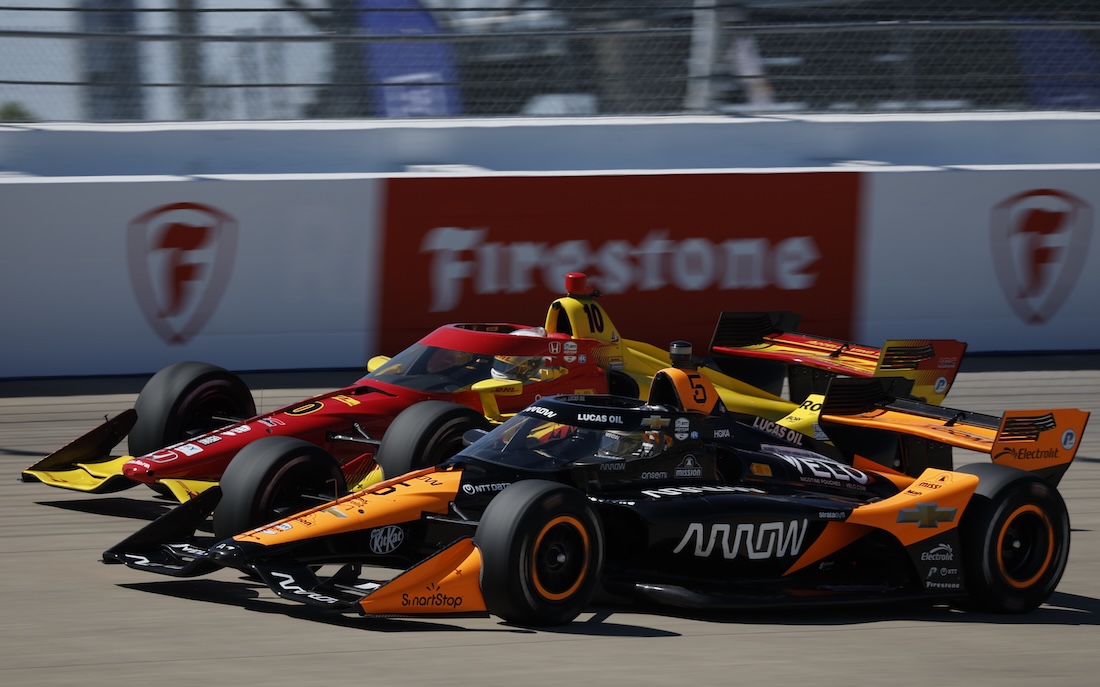
Transforming IndyCar's beast into a beauty has come at a price. That price is evidenced by the lack of stunning speed produced so far during practice for the Indianapolis 500, but the sacrifice was necessary to remodel Dallara’s DW12 chassis.
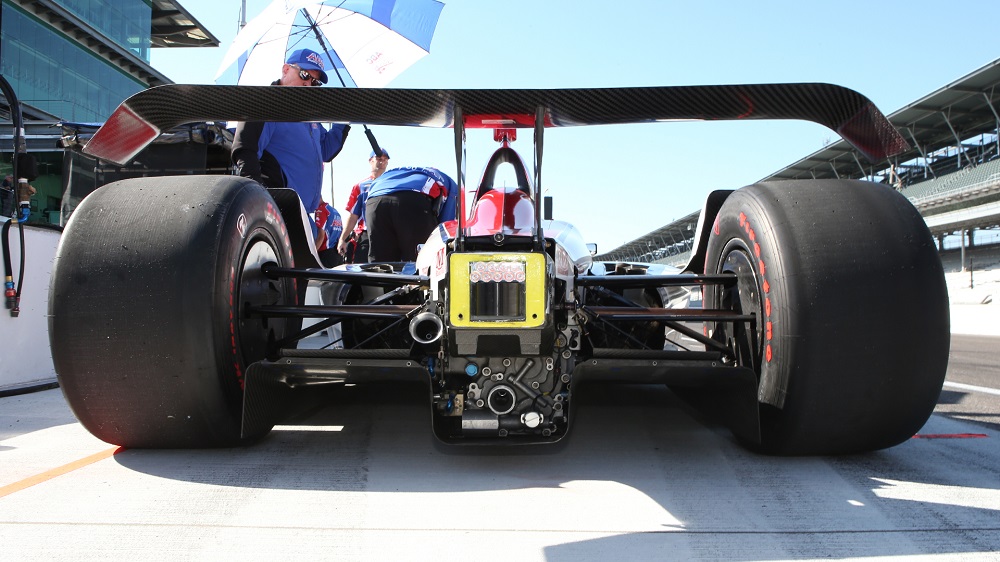
The one key change from last year’s manufacturer aero kits produced by Chevy and Honda to IndyCar’s new Universal Aero Kit has been the removal of the unsightly rear wheel guards. With their deletion, the DW12’s looks have vastly improved, and in the opposite direction, average lap speeds have decreased by a few miles per hour. It’s simply a byproduct of losing the rear wheel guards.
Thanks to the tapered guards behind the rear tires, aerodynamic drag was reduced as air flowed over and behind each car. In their absence, drivers are no longer expecting to see the 232mph lap speeds generated in qualifying around the 2.5-mile Indianapolis Motor Speedway from 2017. It’s a guessing game until qualifying gets under way, but cracking the 230mph mark, according to some of the fastest in the field, could be an unreasonable expectation.
Looking inside the numerical differences for downforce, drag, and the aero tuning options available to teams, provides deeper answers on why speeds are slightly down and the cars are harder to drive.
Last year, and without naming the aero kit manufacturer, drivers went into qualifying with approximately 2080 pounds of downforce applied. And with that downforce, roughly 645 pounds of drag was pulled through the air.
Those figures were achieved through careful manipulation of dozens of bodywork configurations created by the manufacturers. Drivers, free to refine the intersection of speed and handling to their liking, rarely complained about an inability to tailor cars to suit their needs. At Indianapolis with the UAK18, drivers have not been as fortunate.
In an effort to reduce costs and complexity, the pretty new bodywork is surprisingly short on aero tuning pieces, and as a result, dialing downforce numbers down to last year’s qualifying figures will be tough without embracing insanity. Drag figures, in light of the rear wheel guard removal, have also gone up.
Qualifying downforce should be up in the 2160-pound range with 680 pounds of drag, and on the surface, the 80-pound hike in downforce might appear to be the big issue, but it’s actually the 35 extra pounds of drag that is responsible for the lowered speeds. On average, for every 10-11 pounds of drag added to a car, one mile per hour is lost. Using Scott Dixon’s 2017 pole of 232mph as a guide, 2018’s pole could be 228-229mph or so.
And even with the added turbo boost for Fast Friday and both days of qualifying, the 40-50hp jump in power will not be enough to overcome the new aerodynamic limitations. The best no-tow in cool, Happy Hour-like conditions laps today have been in the same 228-229mph range most engineers predicted would be seen.
Where the manufacturer aero kits once gave great freedom for teams to play with a variety of front wing Gurney flaps, multiple sidepod and rear wheel ramp configurations, rear wheel pod wing and Gurney packages, and the option to remove one or both diffuser sidewalls to shed downforce and drag, the rules governing the UAK18 at Indy paints race engineers into a very narrow tuning window.
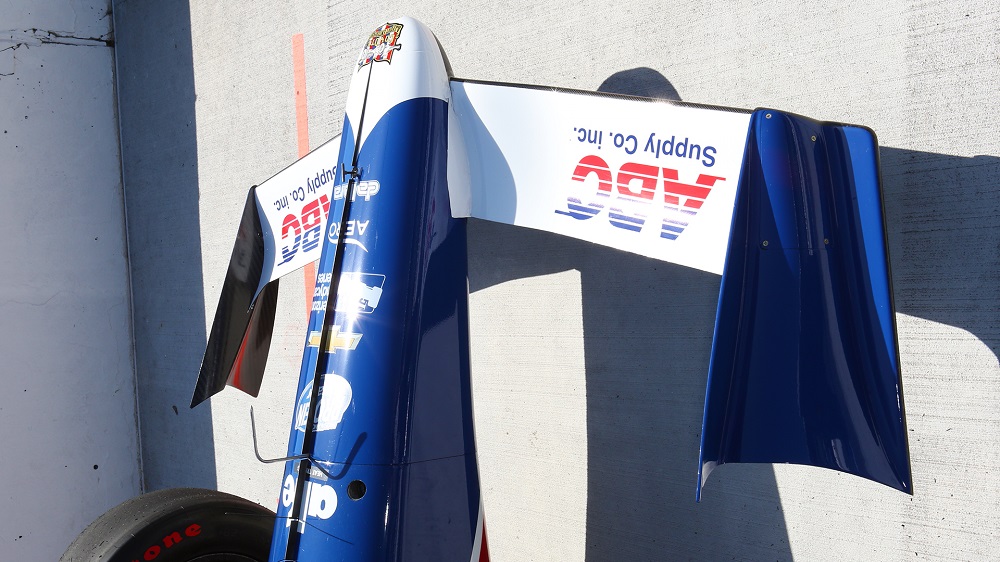
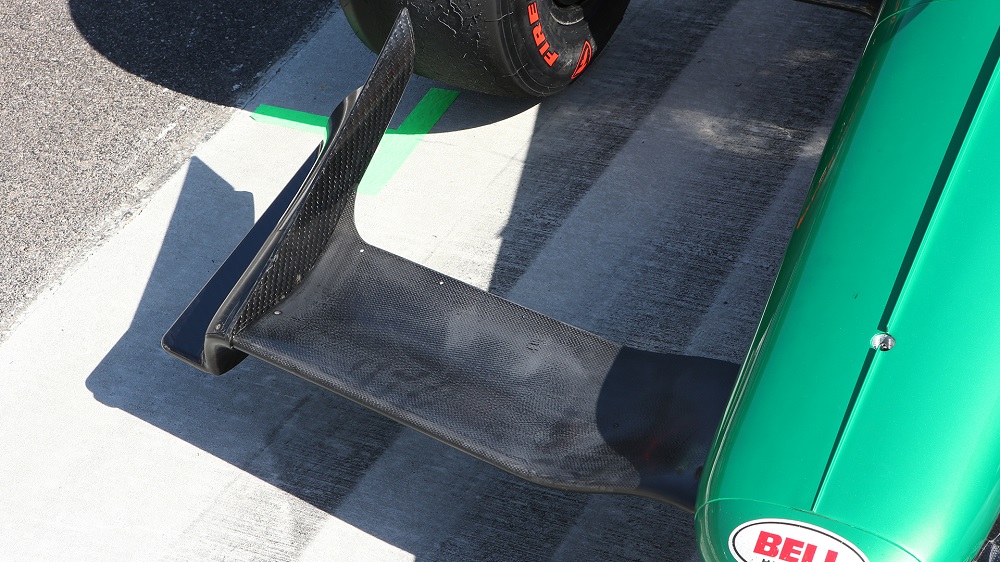
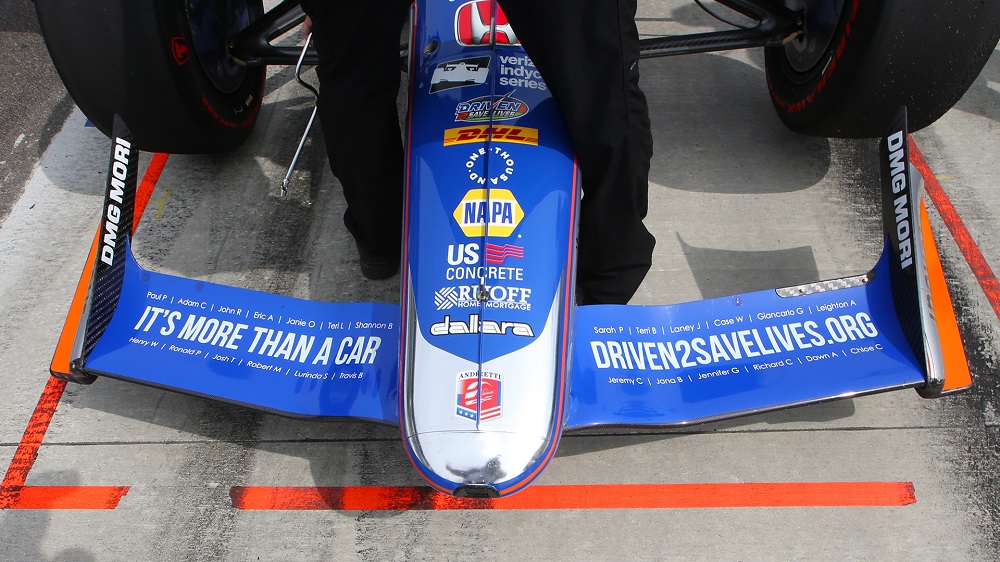
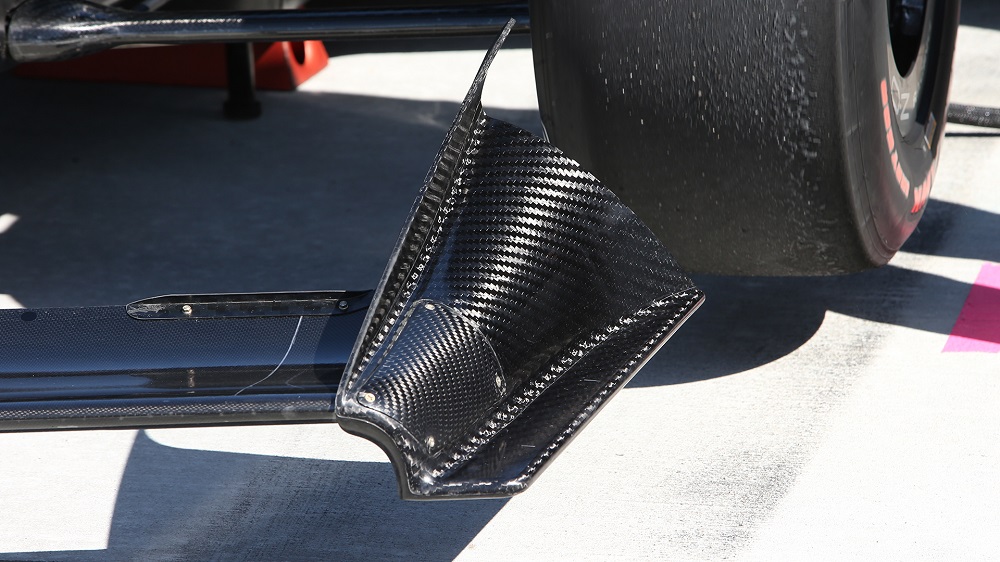
The new, swept front wing is constructed as a one-piece unit, which means adding or removing wing angle affects the left and right side equally. Teams are limited to four Gurney flap options to choose from for the front wing, and nothing more. The spec front wing endplates can be adjusted – and it’s a lengthy process – to keep them relatively level to the ground after an angle change is made to the wing, but that would only be done during practice.
Unlike the rear wing, IndyCar has not mandated a fixed range of front wing angles, so engineers can crank in as much as they want to combat understeer, or wind some out to reduce oversteer. Although front wings angles are open, there’s a practical limit to what’s useful.
Wing angle and four Gurneys; that’s all teams and drivers have to work with up front to find or maintain aero balance. From their comments across three days of practice, the tuning variables are too few to achieve true happiness.
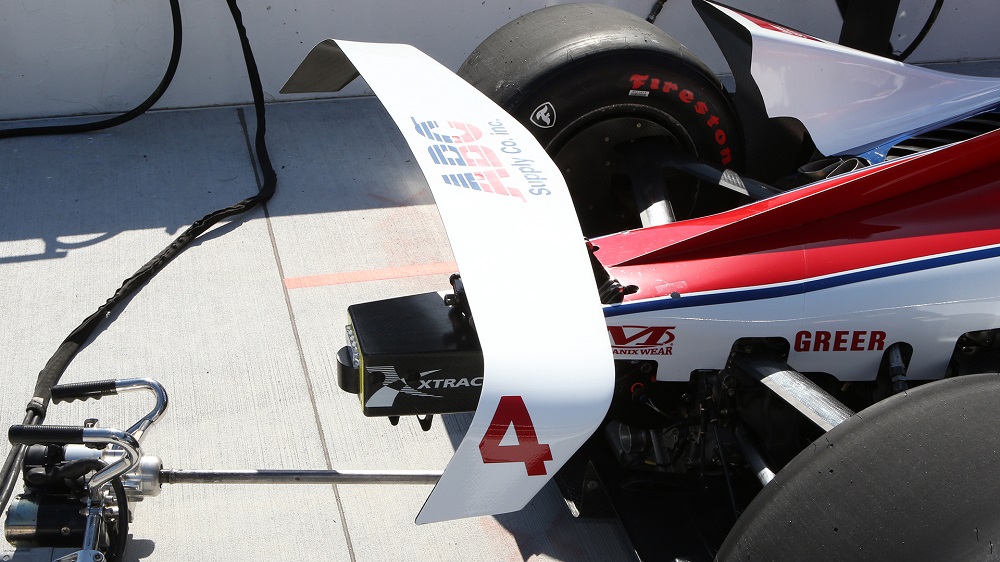
At the back of the UAK18, a new, Honda-like rear wing is wider than the 2017 version and comes as a one-piece unit. IndyCar has given teams a tuning range of two degrees positive (meaning the leading edge of the wing is tilted downward) to nine degrees negative (where the leading edge of the wing is tilted upward). Gurneys aren’t allowed on the rear wing, or atop the diffuser, or anywhere else other than the outer edge of the front wings.
In qualifying trim, engineers have reported an expectation to play within the 0 to -4 range; going lower than -4 is a possibility, but the loss of efficiency is rather drastic. Another consideration to keep in mind is when teams start to tilt the rear wing back to remove downforce, the decrease isn’t provided solely by the lower wing angle.
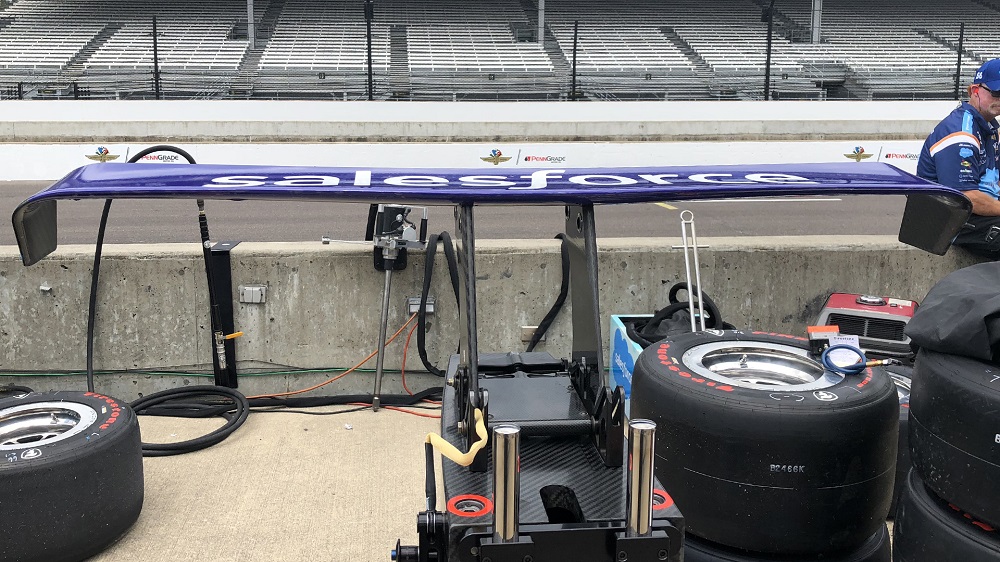
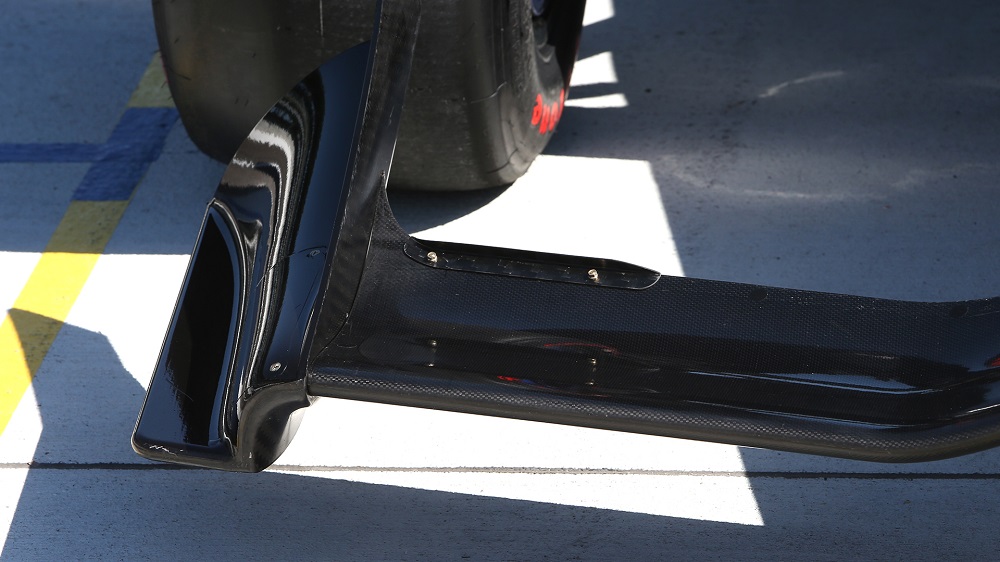
By tilting the wing back and exposing more of the wing’s underside to the oncoming air, that underside air is pushed down as it leaves the wing. That fast, downward air stream then intersects with the air leaving the car’s diffuser and, critically, creates some separation with the underbody air from the diffuser which also reduces downforce.The UAK18’s underbody and diffuser package has also undergone some changes that are central to tuning and safety. A new shape at the front and sides of the sidepods are visible, as is the hole in the floor used to cut downforce on the speedways.
A significant advancement by IndyCar’s technical department has removed the unloved dome skid that was required in recent years to be used directly beneath the car. The dome skid served its purpose when a driver was caught in a spin; while sideways, the rounded skid helped produce downforce as air went under the car from the side and gave the driver greater control, but teams were also forced to raise the car’s ride height which affected performance and handling.
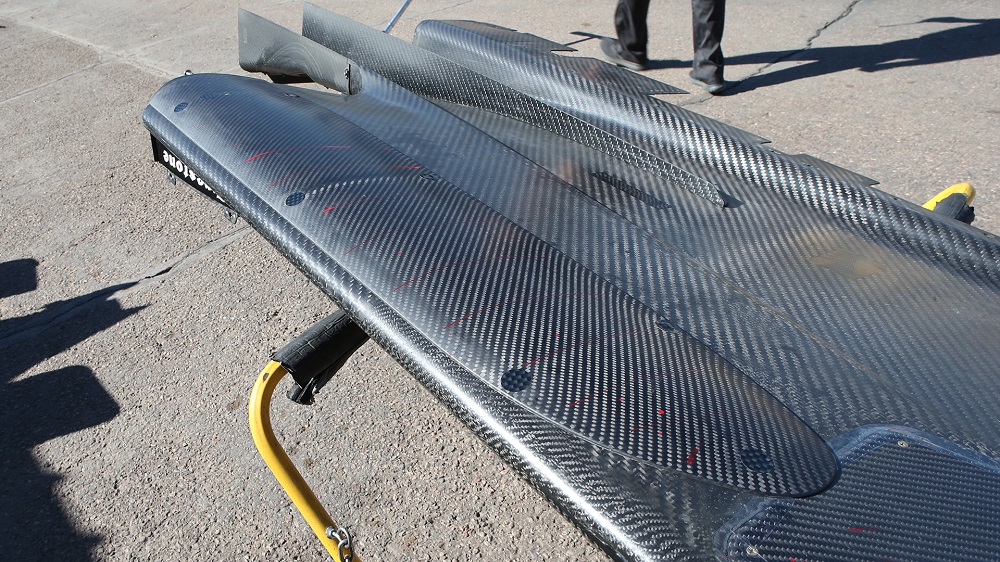
The new solution has been to remove the dome skid and install elongated ‘bumps’ (pictured above) on the outer edges of the underwing. Those rounded add-on oval safety pieces act in the same manner by creating downforce while sideways but, thankfully, teams do not need to raise the ride height.
Another notable trait that’s new to the UAK in Speedway configuration is the sensitivity to hot track temperatures. With the underwing responsible for a much greater portion of downforce production at Indy, hot days and a hot track means thinner air is working beneath the cars. Just as that thinner air makes less downforce when running below the front and rear wings, a much bigger loss is experienced below the car’s biggest wing – the one out of sight that sits inches above the circuit.
If it’s hot in qualifying or the race, teams will need to pile on more topside downforce because they do not have the ability to make more downforce with the underwing. There are no provisions for doing so in the rules, and as we’ve already covered, the rules do not give much leeway to use the topside wings to glue the cars to the ground.
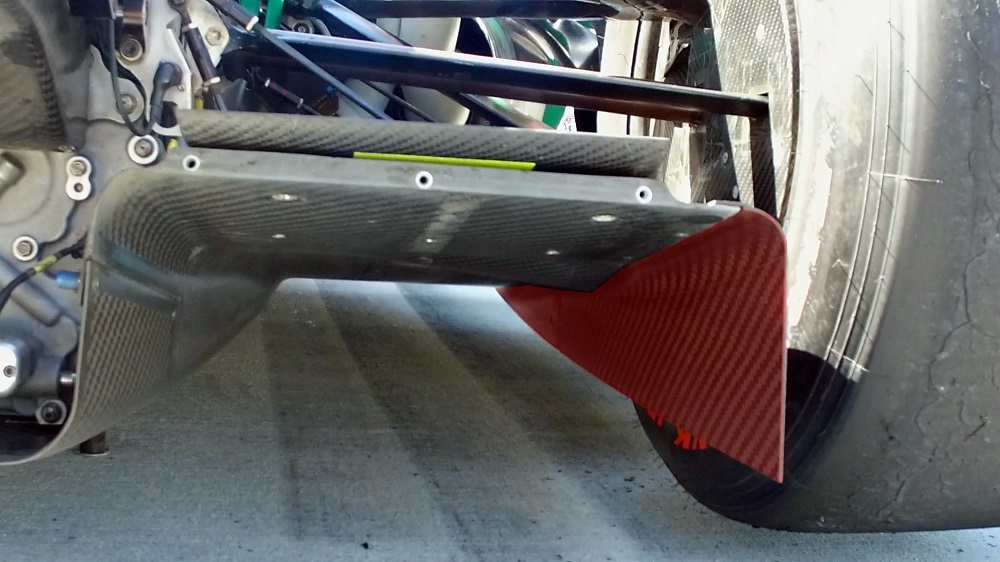
The last area of tuning for engineers is found with the diffuser, and frankly, the options there aren’t worth exploring. Through 2017, teams were allowed to remove one or both sidewalls, which came with a heavy downforce cut and a minimal drag reduction. Most drivers could get comfortable running with only one sidewall in place, and only the brave – and crazy – tried lapping with both sidewalls taken off the diffuser.
For 2018, IndyCar has given teams three sidewall choices: the standard sidewalls can be used (the longer sidewalls from 2017 have been banned), a highly trimmed sidewall version can be installed, but those are close to having no sidewalls, and teams can remove both sidewalls. The option to remove a single sidewall has also been banned which, in all reality, means most teams will likely stick with keeping both standard sidewalls attached in qualifying.
Only the desperate would take the second or third options.
A few Gurney options, some wing angle, and a lot of talent will be required to extract speed in qualifying. Knowing how few aero options teams have at their disposal, mechanical setups will be more important than ever.
Some might get most of the pieces in order but, as a whole, solving the UAK18 puzzle just might be impossible at Indy this year.

Marshall Pruett
The 2026 season marks Marshall Pruett's 40th year working in the sport. In his role today for RACER, Pruett covers open-wheel and sports car racing as a writer, reporter, photographer, and filmmaker. In his previous career, he served as a mechanic, engineer, and team manager in a variety of series, including IndyCar, IMSA, and World Challenge.
Read Marshall Pruett's articles
Latest News


Comments
Comments are disabled until you accept Social Networking Cookies. Update cookie preferences
If the dialog doesn't appear, ad-blockers are often the cause; try disabling yours or see our Social Features Support.