Fall/winter tests targeted for IndyCar aeroscreen
According to IndyCar aerodynamic director Tino Belli, the effort to produce an aeroscreen for future use on the spec Dallara DW12 chassis is reaching its latter stages. Although a specific date for its public introduction has yet to be finalized, Belli says manufacturing has begun on a prototype.
"First and foremost, there are a lot of hurdles to still get over, in terms of putting a screen on the car," he told RACER. "We have a screen designed, it's being manufactured right now, and it was designed in conjunction with the [new 2018 bodywork] to try and be as aesthetically pleasing as possible within its function."
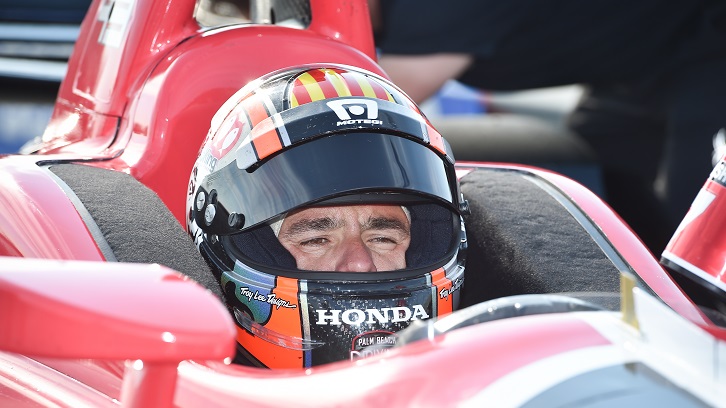
Having seen the aeroscreens tried in Formula 1, Belli is confident IndyCar's bespoke solution will avoid the distortion reported by Ferrari's Sebastian Vettel (pictured below).
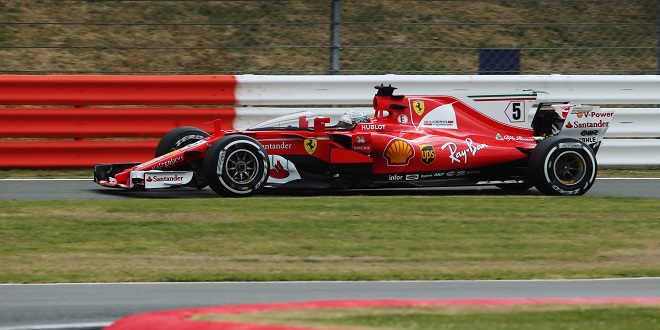
"With ours, [IndyCar director of engineering] Jeff Horton and Dr. Terry Trammell did a fair amount of work in the Dallara simulator to find what was going to be acceptable from a distortion point of view. We pushed very hard to make sure it was acceptable from a visual point of view, so I think we're going to be OK from that perspective."
IndyCar competition president Jay Frye recently told RACER aeroscreen track testing was expected to commence before the end of the year, and as soon as a Chevy- or Honda-powered DW12 gets moving with one in place, Belli is confident new issues will come to light.
"We still have a lot of practical tests to do, and there's all sorts of unintended consequences that could come out of adding an aeroscreen with an actual driver placed behind it," he said. "We've got to make sure we've done as good a job as we can, checking all the boxes and making sure that we're not making any mistakes as we go there."
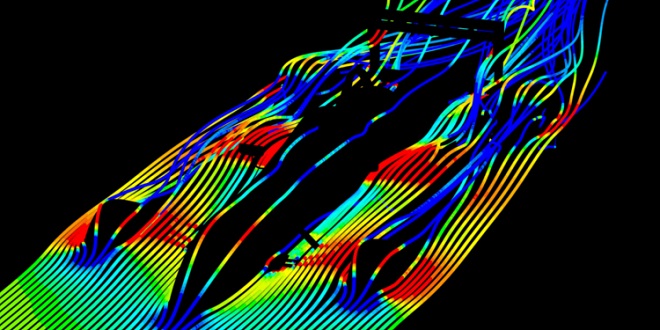
"There's also the helmet pushing forwards," he said. "We have seen that in CFD, and we have to work on preventing that from happening. And we are working on that in CFD. We lose the stagnation point on the front of the helmet, and there's a stagnation point on the back of the helmet, which then pushes the head forward. We've got to make that stagnation point move somewhere else."
With the helmet cockpit pressure issue to solve, Belli and IndyCar's aeroscreen partners will continue working the problem through CFD and then prove the concept on the Dallara simulator before hitting the track. The question of whether IndyCar's aeroscreen will be used in competition next year remains open.
"Step one's going to be to try what we would call our final prototype design in the simulator," he said. "If everything goes well and we don't get negative feedback in the simulator, we're probably looking to the fall to winter to test it on a car. Everything would have to go really, really well with no hiccups for it to be on a car for next year."

Latest News
Comments
Comments are disabled until you accept Social Networking Cookies. Update cookie preferences
If the dialog doesn't appear, ad-blockers are often the cause; try disabling yours or see our Social Features Support.