INSIGHT: Juncos’ journey to the big stage
So here's a cool fact about this year's Indianapolis 500: There are almost as many rookie team owners as there are rookie drivers.
Fernando Alonso, Ed Jones, Zach Veach and Jack Harvey will all receive their first starter's rings at next week's drivers briefing. And when the track opened for official practice today, Ricardo Juncos, Mike Shank and Mike Harding settled in for their first day on the Brickyard's pitwall.
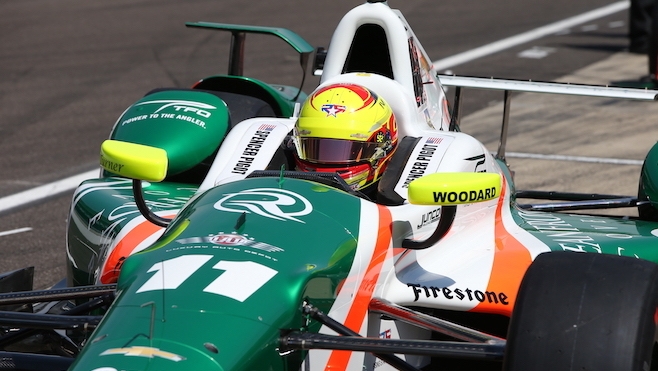
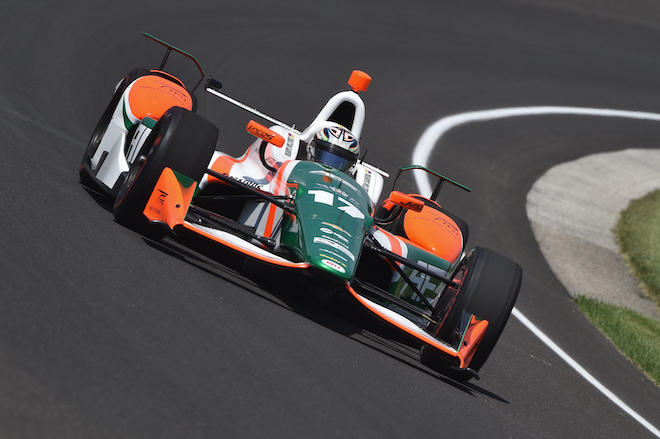
Shank and Harding will be profiled here in the coming days. For Juncos though, this two-car campaign with Spencer Pigot and Sebastian Saavedra is a first step toward what he hopes will be a full-time IndyCar presence – a welcome ambition at a time when three teams run more than half the field. Among the current crop of full-time owners, the newest arrival – Ed Carpenter – can still date his program back to 2012.
Juncos' ambitions to scale his Mazda Road to Indy team into one competing in the big leagues first took shape when he cut the ribbon on the team's new 40,000-square-foot workshop in Indianapolis in December (pictured below), although at that point, ramping up for an Indy 500 program just six months later wasn't really on his radar. Then, KV Racing closed, and all the equipment needed to run an IndyCar went up for auction in March. Juncos pounced.
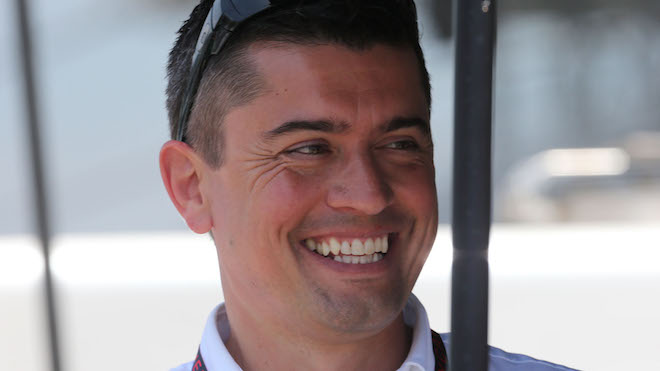
"The right opportunity appeared at the right time," Juncos (pictured below) says. "It was always my thinking that if the right opportunity happens at the right time, we will do it. And that's exactly what happened. A lot of little things aligned together; there wasn't just one thing. You sometimes hear that something is too good to be true, but ... we did it.
"Everything moved very, very quickly – putting together a team in two months was not easy, but we did a good job, and obviously it has been a team effort."
In addition to securing some of KV's former hardware, Juncos hired as its team manager former KV crew chief Greg Senerius, whose experience helped Juncos to wrap his head around the challenge he was taking on.
“Obviously that has been a huge, huge help from many different points of view, because Greg was part of that team before and he knew what they had, and it allowed me to make the best of things in terms of what we acquired from KV,” he says.
“Greg and I interviewed a lot of people, and it is always a hard decision to choose guys. It’s not easy. But we took our time. Even two weeks before we started to run, we were still hiring people. But we have a very good group, some of them have a lot of experience, and I am very comfortable.”
It’s broadly accepted that the single biggest challenge facing IndyCar teams is making the numbers work: It was precisely that problem that led to KV’s demise, and made Juncos’ presence at the Speedway possible. Juncos, though, believes that an even bigger hurdle has been securing the right people. For any IndyCar team, the whole must be greater than the sum of the parts when it comes to the crew: Every person needs to have the skills and experience to do their job, but they also need to buy into the team philosophy to ensure that everyone is pushing in the same direction. For a team like Penske, some of that shared mentality can be cultivated over time. But time wasn’t something that Juncos had.
“Chemistry is very important,” he says. “When you meet someone for the first time and you feel like you’ve known them for a long time – that's how everybody feels here. And yet we’re still getting to know each other every day; a month ago, none of us knew each other. But we have that feeling like everybody has been working together for a long time. I’m actually relaxed, and feeling like I can delegate and that everybody knows what they are doing, and that is very good for me.”
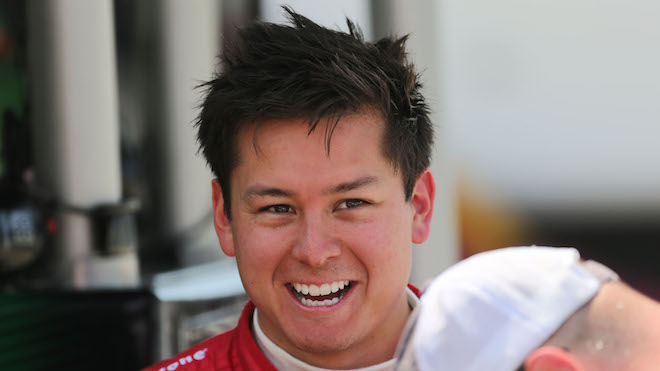
Juncos has grown into his role of IndyCar team owner organically. What began as a single go-kart team in his native Argentina grew into a two-kart team, and kept expanding until his kart count hit 47. He added Formula Renaults to the mix, and then moved to the U.S. and started over: karts, then Pro Mazda – winning the championship with Conor Daly in 2010, the team’s second season – and stepping up to Lights in 2012. Pigot earned the team’s first Lights drivers’ title in 2015.
“The whole time, I was slowly learning things every day, and working every day with my guys like I was one of them,” says Juncos. “And I think that is a big difference [compared] to some other teams. It’s not easy if you’re not hands-on every day, in my opinion.”
Hands-on, and for the next few weeks, hands full. Juncos says he is not intimidated by the prospect of moving into IndyCar, but he admits that there’s still a lot that he needs to learn.
“But everything else around IndyCar, like sponsorship … in IndyCar, that’s usually not something that a driver’s father can pay for. So I have to go into this huge new world, and I’m already on a huge learning curve this year, trying to learn how to understand the system, and how I can make the most of it, and I feel it is a good experience.
“But this, I hope, is the beginning. We’re going to start with the 500, after the 500 we are going to learn a lot – at least in my case, because I don’t have a lot of experience [with IndyCar] – and if the opportunity comes to do more races [this year], that would be fantastic, with the intention to be a full-time IndyCar team in 2018. And that’s the goal. How difficult it is, we’ll see what the future brings us. But that’s the intention.”
His medium-term ambitions are grand, but for now, the biggest box on the Juncos white board has been ticked by the simple fact that Saavedra and Pigot are out there turning laps. Anything else that happens over the rest of May is a bonus.
“Just to be here and be part of the race cannot have a price,” he says. “It’s hard to describe. And beyond that, I want everyone on the team to relax and do their best, because they are very good at what they do. The target is to finish the race with both drivers. If we can do that, I don’t care what position they are in.”

Latest News

Comments
Comments are disabled until you accept Social Networking Cookies. Update cookie preferences
If the dialog doesn't appear, ad-blockers are often the cause; try disabling yours or see our Social Features Support.