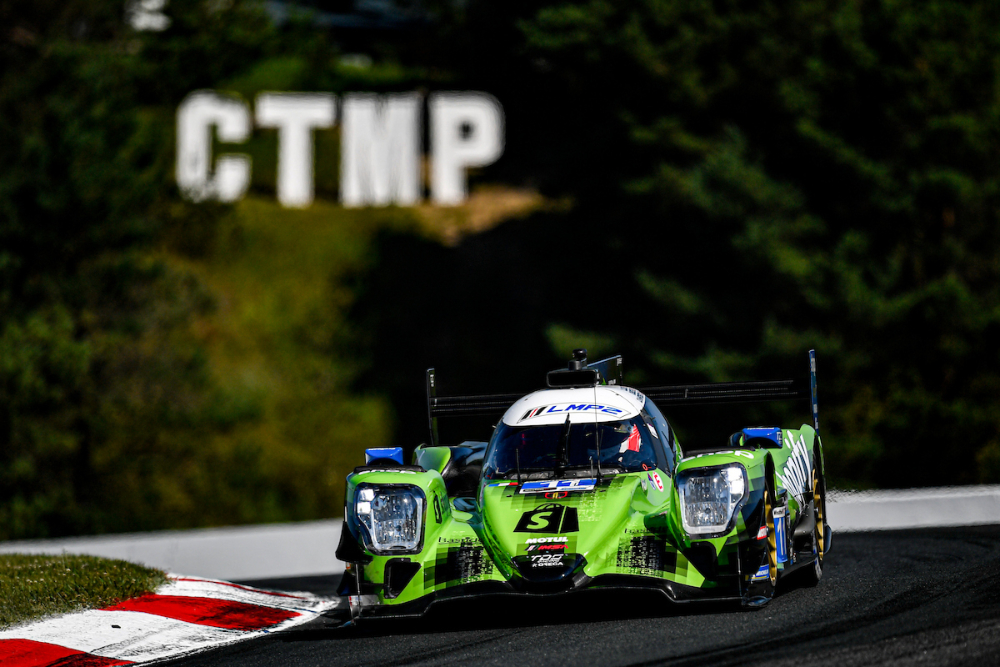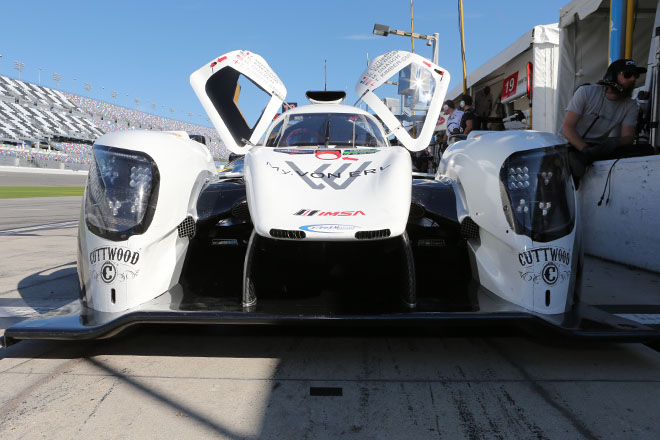
IMSA 2017 Prototype Tech Profile: Ligier JS P217
Take a look inside each of the brand-new cars that will comprise IMSA's WeatherTech SportsCar Championship Prototype class in RACER's six-part technical preview leading into the Rolex 24 at Daytona.
• Tech Profile #1: ORECA 07
ORIGINS AND PERFORMANCE:
Onroak Automotive, builders of the Ligier JS P217 from its base at the 24 Hours of Le Mans circuit, are the second French prototype constructor in the series. Like their domestic rivals at ORECA, Onroak brings extensive knowledge and vast success to its latest product. Ligier also manufactures the Nissan Onroak DPi using the JS P217 as the base chassis.
Where ORECA carried over the tub from its previous 05 chassis to form its new 07 model, Ligier started from scratch with the JS P217. Although the car is brand-new, it's safe to say many of the general ideas that formed the JS P2 chassis used through 2016 are alive and developed to a higher level with the JS P217.
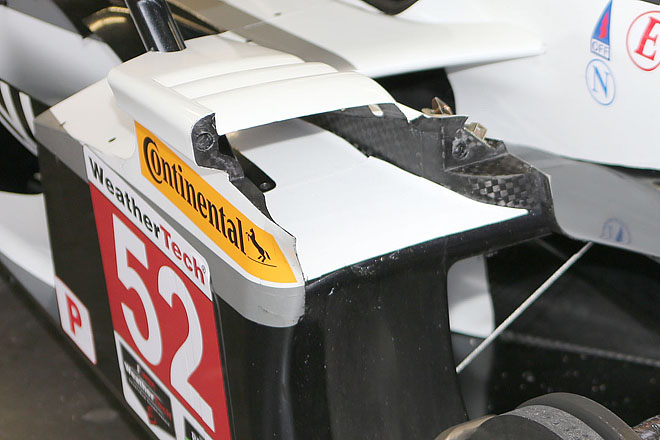
Delving into at the JS P217's performance at the three-day Roar Before the 24 test, it was exceptionally fast in light of the limited resources on offer. Where ORECA has three teams using the 07 and generating meaningful data to expedite its performance development, the Ligier was represented by a single team, the championship-winning PR1/Mathiasen Motorsports PC program, which is new to the car and the Prototype class.
Despite the single entry, the JS P217 revealed itself to be a contender. Its fastest lap from the test wasn't far from the best set by ORECA, and there has been at least one suggestion the Ligier was holding some speed in reserve. Its top speed was also impressive, which is key at Daytona.
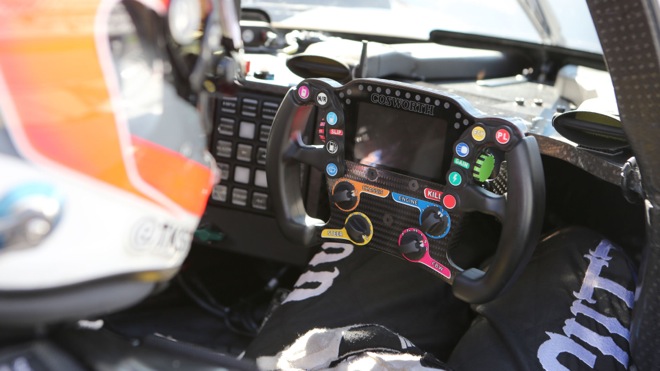
In what has become a standard note, new-car reliability will be the main concern for the PR1/Mathiasen team entering the opening race and, thanks to the ongoing problems with the spec Cosworth electronics every WEC P2 is forced to carry, time was lost in testing and the software and hardware installed in the JS P217 is an ongoing source of concern.
DAYTONA TEST PERFORMANCE NUMBERS
The aforementioned six prototype models were represented by 12 cars entered at the Roar (3 x ORECA 03, 3 x Cadillac DPi.V-R, 2x Mazda RT24-P, 2 x Nissan Onroak DPi, 1 x Ligier JS P217 and 1 x Riley/Multimatic Mk30).
JS P217's Fastest Roar Lap: 1m38.596s (P3 among the six models, P4 of the 12 cars, -0.253s to the fastest lap set by the ORECA 07)
JS P217's Best Roar Top Speed: P2, 194.3 mph (-2.8 mph to the top 197.1 mph set by Mazda's RT24-P)
NAMES AND SPECIFIC VEHICLE DATA
Lead Chassis Designer(s): Nicolas Clémençon
Lead Aerodynamicist(s): Nicolas Clémençon (in collaboration with EXA engineers for the CFD and with RUAG engineers for the wind tunnel studies)
Transmission Vendor: Hewland
Brake Package Vendor: Brembo Calipers with carbon AP discs and pads
Data and ECU Electronics Package Vendor: Cosworth (spec)
Engine displacement and cylinder count: 4.2-liter V8 by Gibson Technology (spec)
Engine air induction system: Naturally-aspirated
SPEC 2017 P2-BASED DATA FOR EVERY PROTOTYPE MODEL:
Minimum Weight: All WEC P2s and DPis have a minimum of 930 kilos (2050 pounds) with no fuel or driver for the Rolex 24. 930 kg is also the minimum in the WEC.
Maximum Length: 4750 mm (187 in.), which is 100 mm/4 in. longer than the previous LMP2 max length.
Maximum/Minimum Width: 1900 mm max (approx. 75 in.) to 1800 mm min (approx. 71 in.), which is narrower than the previous maximum of 2000 mm/75-3/4 in.
Maximum Height: 1050 mm (approx. 41.5 in.), slightly up from the previous 1030 mm (40.5 in.) standard.
Wheel Size: 18x12.5 in. fronts and 18x13 in. rears.
Tires: All supplied by Continental. Unique use of DP-derived Daytona specification for the Rolex 24, only. Brand-new 2017-spec Continental tires will be used from Round 2 at Sebring onward.
Transmissions: Six-speeds are required for every car. In the WEC, P2 teams are severely limited on the number of gear ratios that may be used (three sets), which will compromise the ability to perfect power and torque curves at some tracks. IMSA has removed the restriction for WEC P2s running in the WeatherTech Championship, and there are no limitations for DPis.
FRONT SUSPENSION
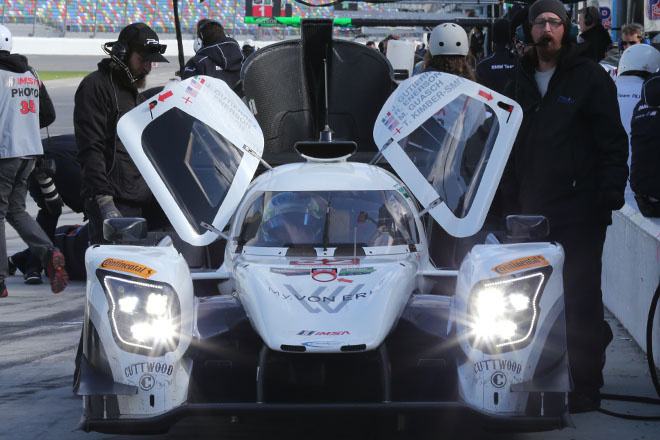
The JS P217 offers the most accessible torsion-bar suspension package of the six prototype models.
Like the ORECA 07 and Dallara-based Cadillac DPi-V.R, the JS P217's torsion bar arrangement replaces bulkier coilover springs and provides a compact solution housed inside the front of the tub.
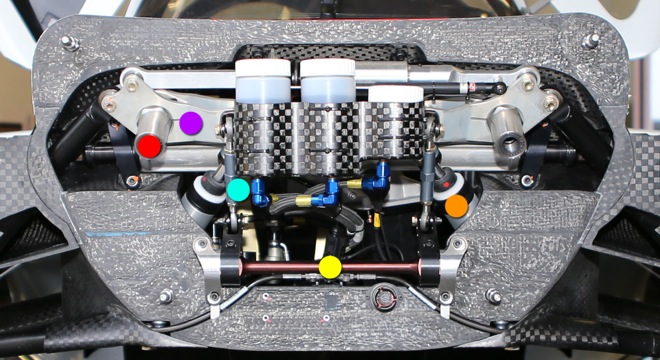
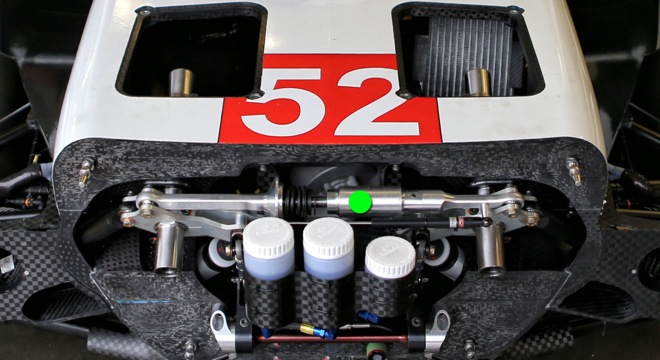
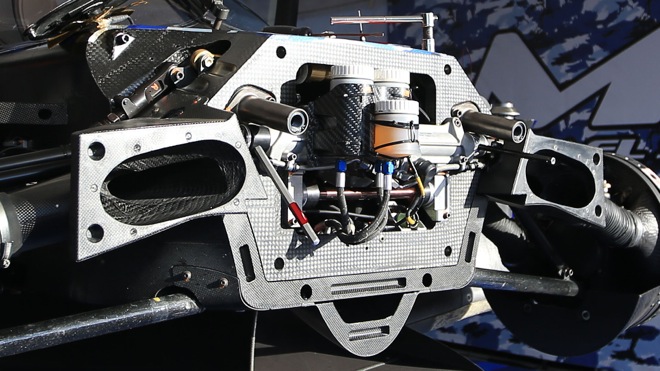
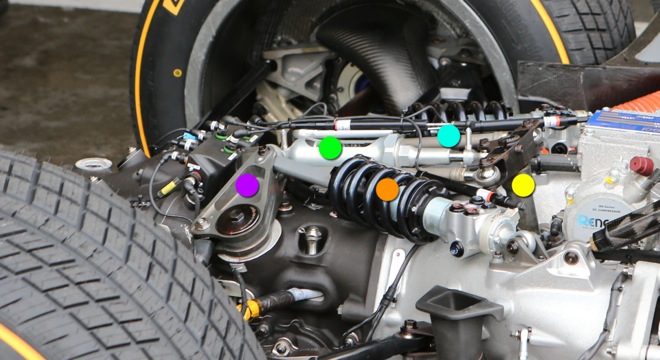
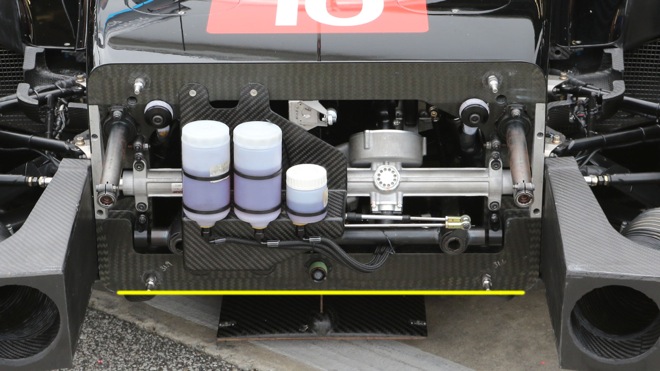
Actuated by pushrods connected to the lower control arms, the torsion bars are twisted by rocker arms that connect to individual dampers. Secondary links connect the dampers and torsion bars to an anti-roll bar. Finally, a front third spring/damper is connected between the rocker arms that controls chassis pitch and dynamic ride height.
Below: Torsion bars (red, inside their forward housings), rocker arms (purple), dampers (orange), rocker-to-anti-roll bar links (cyan), anti-roll bar (yellow), third spring/damper (below, green).
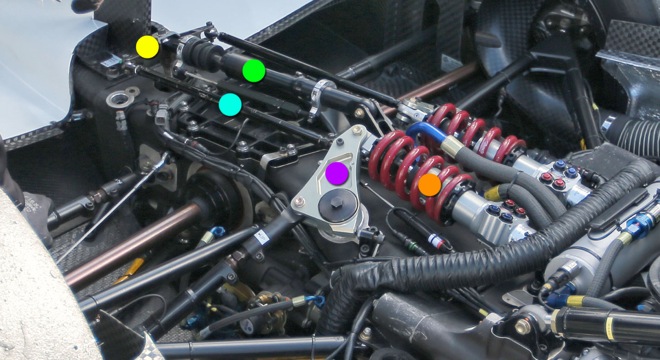
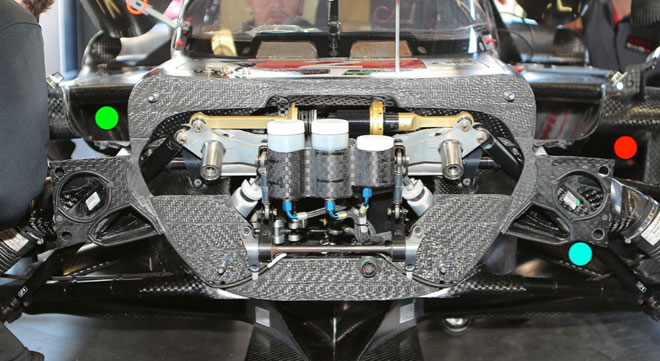
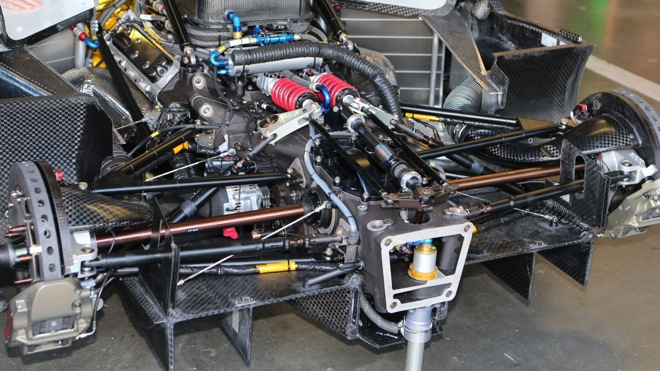
Like every new 2017 model, barring the Riley/Multimatic and the Riley/MM-based Mazda RT24-P, the JS P217 uses a conventional suspension layout at the rear.
Below: Rocker arms (purple), dampers with coilover springs (orange), rocker-to-anti-roll bar links (cyan), T-style anti-roll bar (yellow), third spring/damper (green).
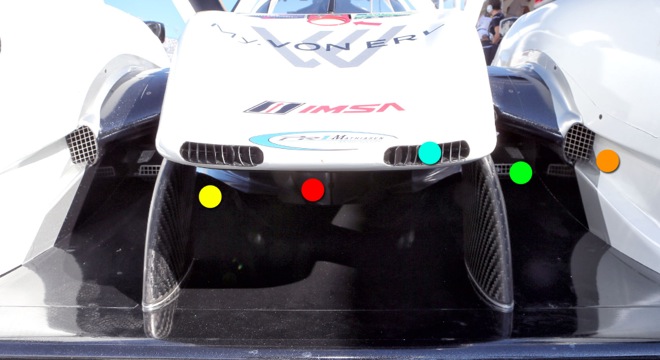
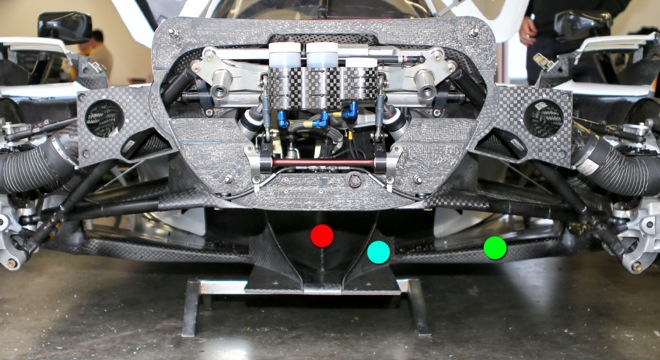
Like every 2017 P2-based chassis, the JS P217 was constructed using a raised forward section of the tub to flow air through the keel.
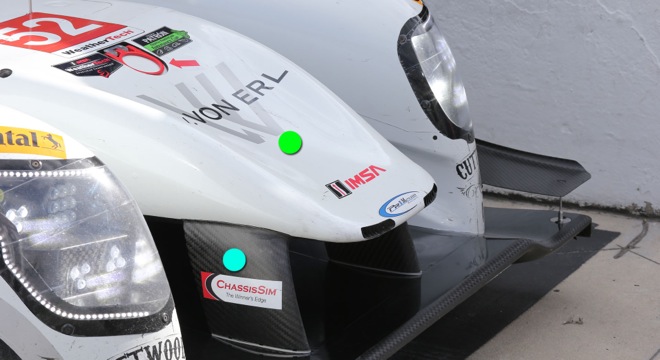
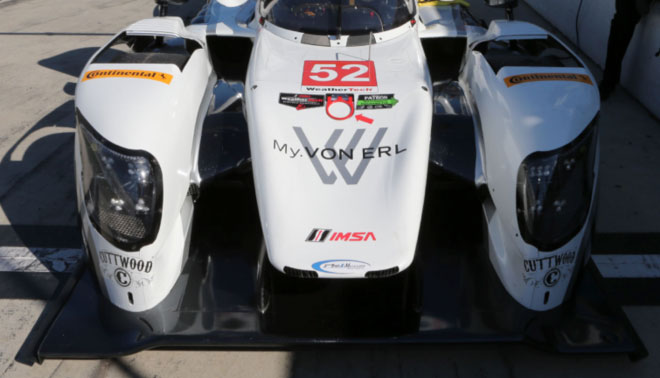
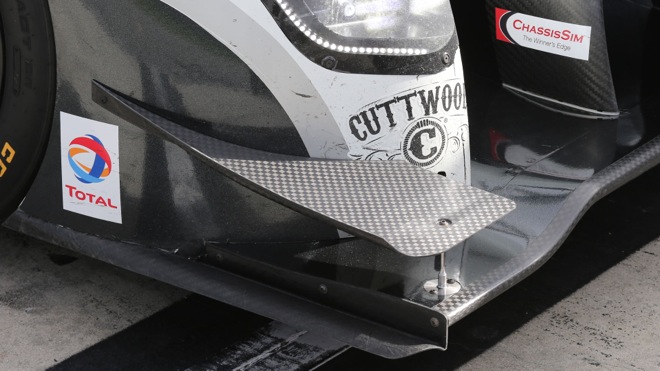
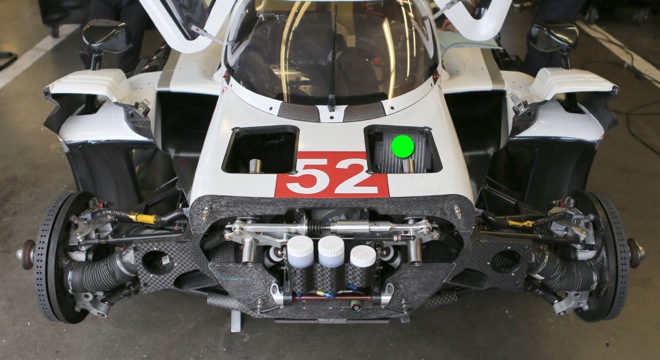
And like the JS P2, the JS P217 drives its front aero through a monster diffuser and wing profile (yellow) that extends deep into the keel (red). Plenty of ducting is included in the nose as the cockpit air inlet (cyan) and brakes (orange) are fed. Per the rules, mesh screens (green) are used to cover some of the mechanical componentry that would otherwise be viewable from the front of the car.
The high nose, splitter, and high-flow keel make for a powerful combination as the Ligier's underside downforce is said to be formidable. Compared to some models that place a greater reliance on topside downforce to produce grip, the JS P217's aerodynamic performance is more heavily influenced by the underbody.
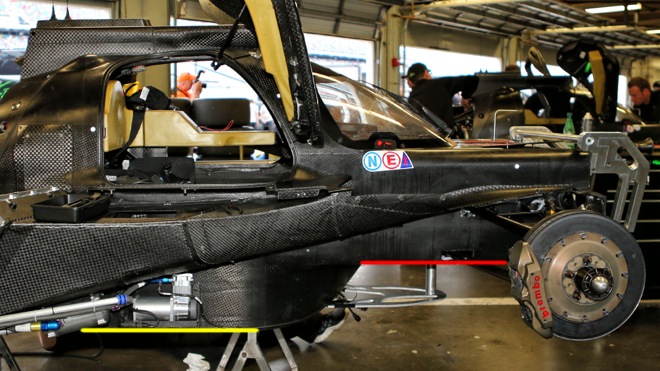
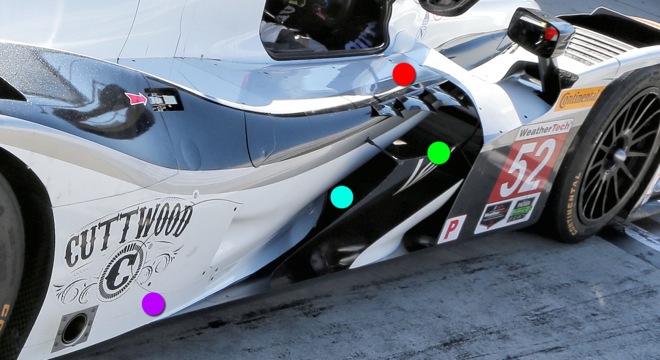
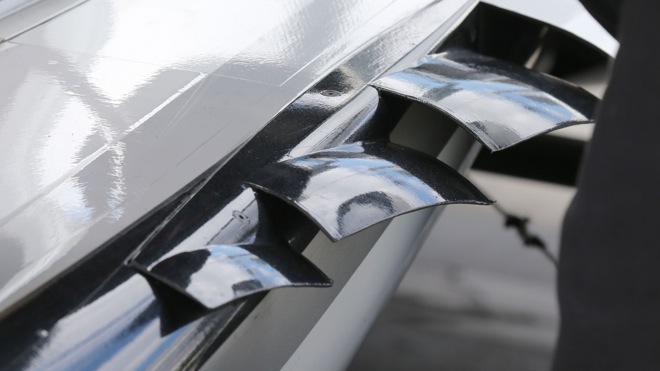
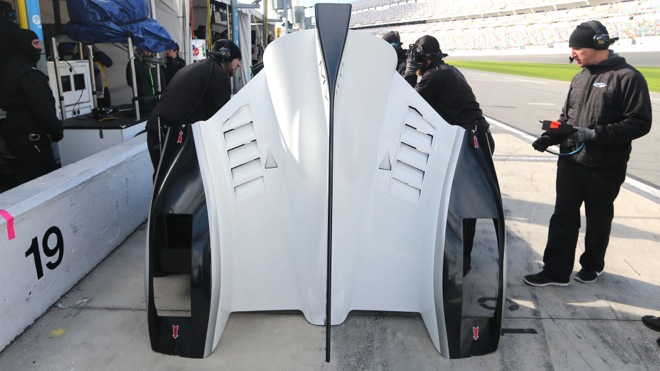
The tapered, elevated sidepod inlets allow for a scalloped channel (behind the cyan) and use big turning vanes (green) to further shape the airflow leaving the keel. While the JS P217's sidepods are narrow up front, they depart from some other models by extending all the way out to the edge of the floor (purple) at the trailing edge.
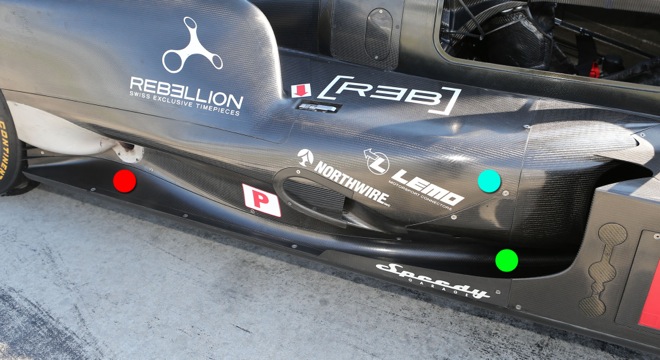
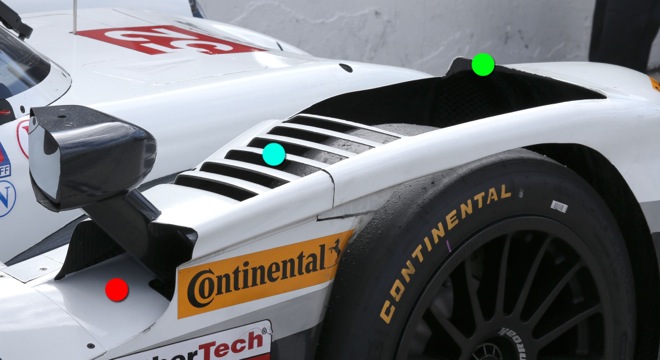
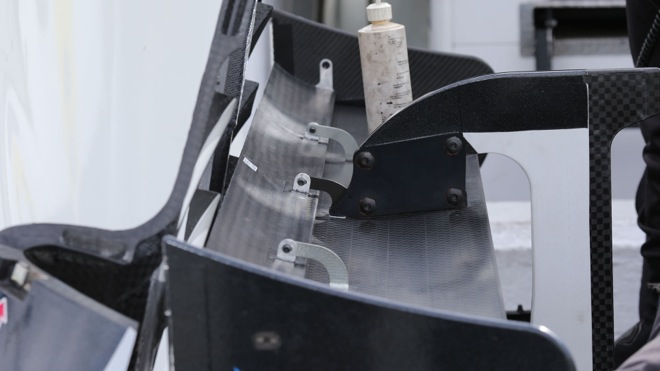
Similar to ORECA's 07, the JS P217 features rear fenders that use a canted leading edge shape to direct some air onto the base of the engine cover, and to route some air to the side of the car (red). The Ligier also has ducting inlets in the middle of the sidepods (cyan) used to cool the rear brakes, and the system comes with a variety of panel sizes (green) to allow more or less air through the duct.
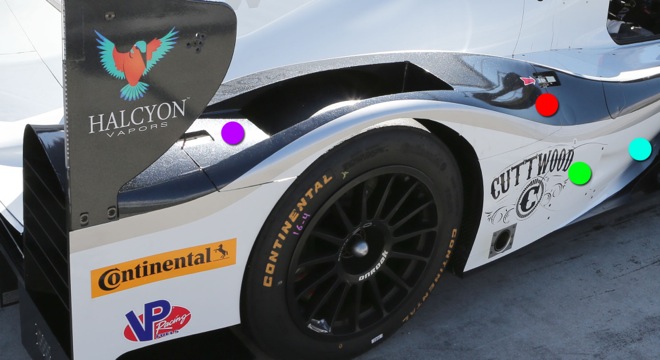
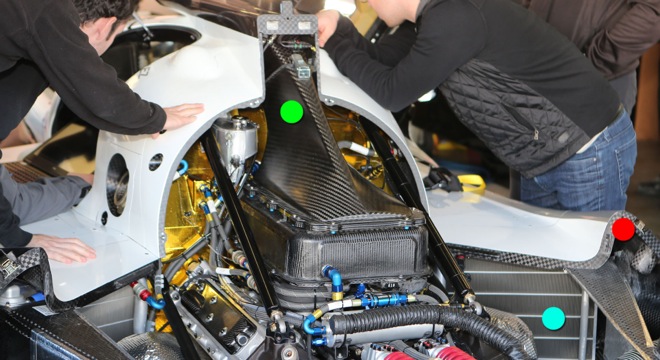
A look at the tiny air box intake for the Gibson engine (green). The beginning of the inner channel created by the rear fenders can be seen (red), along with the impressively clear and unobstructed space behind the radiators (cyan) to improve airflow through the back of the car.

Latest News
Comments
Comments are disabled until you accept Social Networking Cookies. Update cookie preferences
If the dialog doesn't appear, ad-blockers are often the cause; try disabling yours or see our Social Features Support.