IMSA 2017 Prototype Tech Profile: ORECA 07
Take a look inside each of the brand-new cars that will comprise IMSA's WeatherTech SportsCar Championship Prototype class in RACER's six-part technical preview leading into the Rolex 24 at Daytona.
ORIGINS AND PERFORMANCE
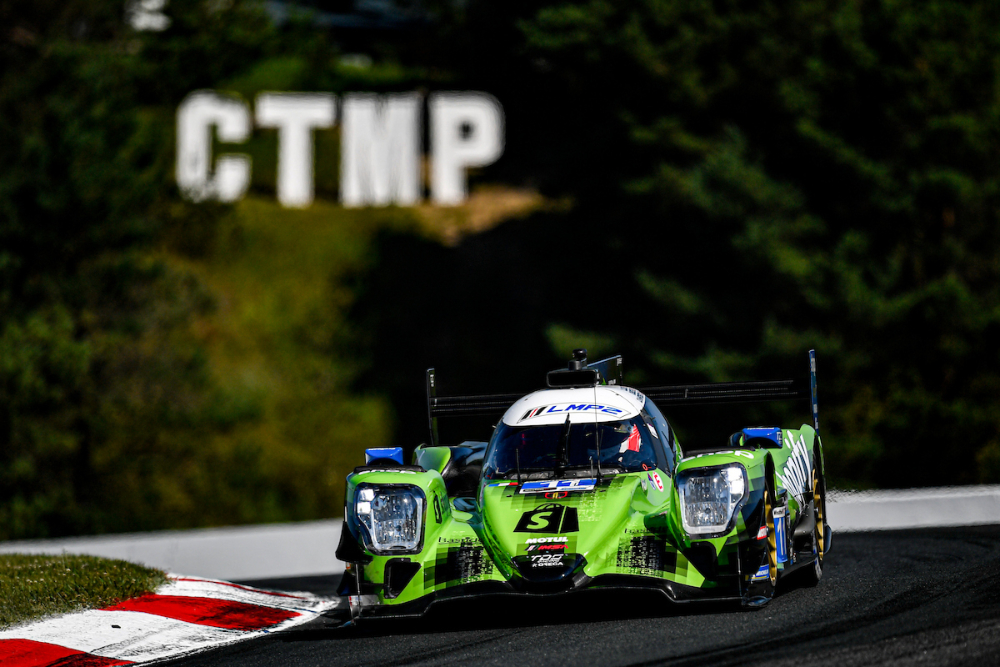
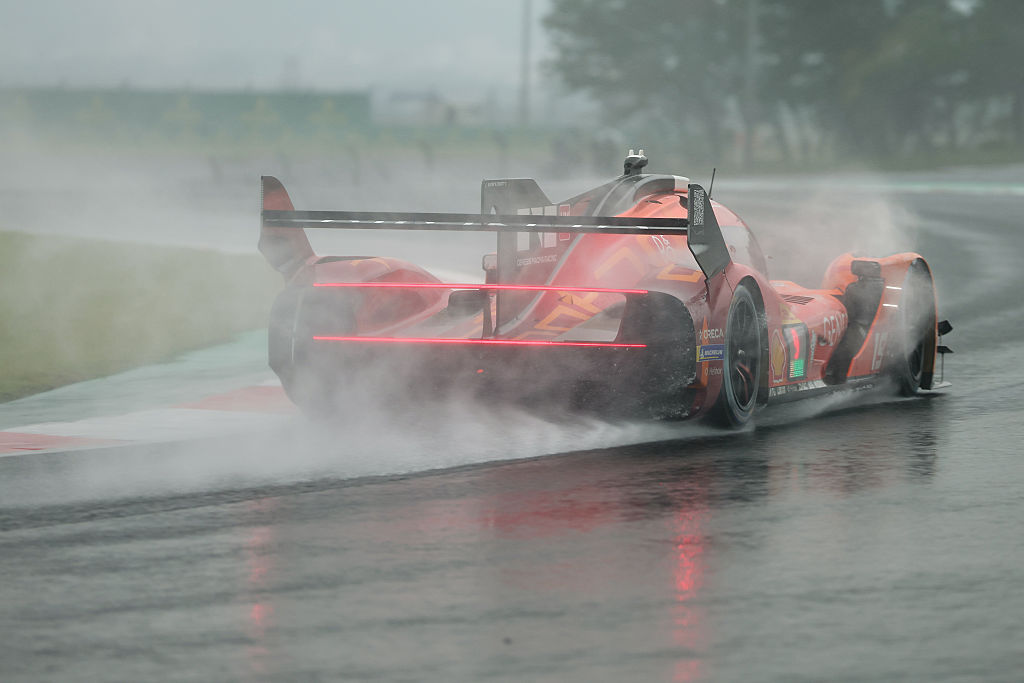
French racecar manufacturer ORECA took a unique approach to creating its brand-new "07" LMP2 car for 2017. Unlike the other five P2 constructors with completely models, ORECA committed early to carrying over the same carbon-fiber tub that formed the basis of its existing P1 and P2 products.
The ORECA-built Rebellion R-ONE P1 car, and its ORECA 05 P2, shared the same P1-grade tub in the models that earned considerable success in the FIA World Endurance Championship through 2016, and with its crash certification in place, it formed the core of the 07 as the design team started working on the 05's replacement.
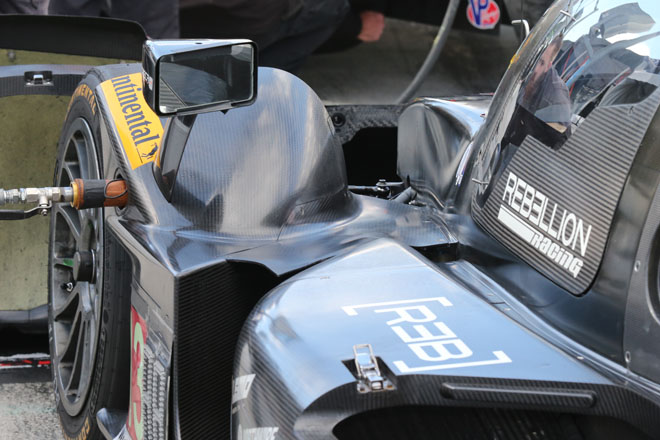
And due to the use of the same tub, existing 05 owners like the DragonSpeed Racing were able to purchase all of the new-for-2017 items and upgrade the rest of its car to 07 specifications.
Far from a surprise, ORECA experts like DragonSpeed and Rebellion arrived at Daytona with 07s and dominated the three-day Roar test from start to finish. Considering the shortened learning curve they possess compared to the rest of the teams and manufacturers in the class, it could serve as an advantage leading into the race.
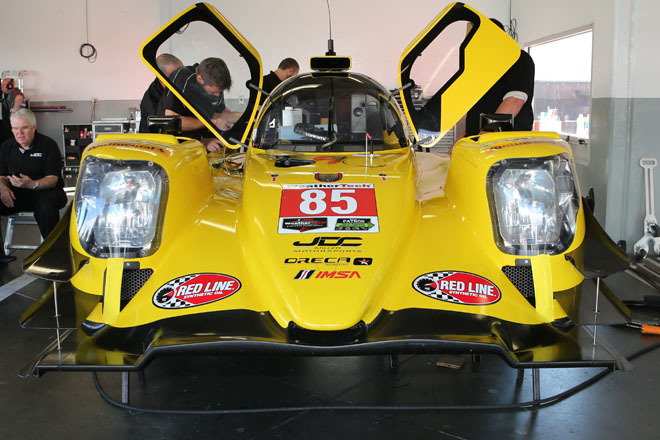
Even the JDC-Miller Motorsports team, which is new to IMSA's Prototype class after competing in the second-tier PC category, was able to find a decent amount of speed while learning to work with its new 07 at the Roar.
Altogether, the ORECA 07 made a bold statement about its potential in its first head-to-head outing with its rivals. There are natural concerns about reliability – an issue facing every car in the Prototype class at Daytona – and with the problematic spec Cosworth electronics on board, the ORECA's outright speed could be tempered by software and hardware gremlins.
Look for the 07 to be fast in the hands of the most experience ORECA teams, but there's no telling if new-car reliability gremlins will halt their march.
DAYTONA TEST PERFORMANCE NUMBERS
The aforementioned six prototype models were represented by 12 cars entered at the Roar (3 x ORECA 03, 3 x Cadillac DPi.V-R, 2x Mazda RT24-P, 2 x Nissan Onroak DPi, 1 x Ligier JS P217 and 1 x Riley/Multimatic Mk30).
Courtesy of DragonSpeed, the 07 recorded the fastest lap of the test, and from the combined work of DragonSpeed and Rebellion, the 07 was also the fastest model in each of the six dry sessions at the Roar.
The lap time gap from the 07 to the second-fastest WEC P2/DPi model in those six sessions was considerable in most instances. Whether one or more of the slower models were sandbagging at the test – and will draw closer to or ahead of the 07 during the race – will be an interesting theme to follow.
07's Fastest Roar Lap (+Margin to P2): P1, 1m38.343s (+0.020s to Mazda's RT24-P DPi)
07's Best Roar Top Speed: P3, 193.3 mph (-3.8 mph to the top 197.1 mph set by Mazda's RT24-P)
NAMES AND SPECIFIC VEHICLE DATA
Lead Chassis Designer(s): Christophe Guibbal / David Floury
Lead Aerodynamicist(s): Jean-Philippe Pélaprat / David Floury
Transmission Vendor: Xtrac
Brake Package Vendor: Brembo Calipers with carbon AP discs and pads
Data and ECU Electronics Package Vendor: Cosworth (spec)
Engine displacement and cylinder count: 4.2-liter V8 by Gibson Technology (spec)
Engine air induction system: Naturally-aspirated
SPEC 2017 P2-BASED DATA FOR EVERY PROTOTYPE MODEL
Minimum Weight: All WEC P2s and DPis have a minimum of 930 kilos (2050 pounds) with no fuel or driver for the Rolex 24. 930 kg is also the minimum in the WEC.
Maximum Length: 4750 mm (187 in.), which is 100 mm/4 in. longer than the previous LMP2 max length.
Maximum/Minimum Width: 1900 mm max (approx. 75 in.) to 1800 mm min (approx. 71 in.), which is narrower than the previous maximum of 2000 mm/75-3/4 in.
Maximum Height: 1050 mm (approx. 41.5 in.), slightly up from the previous 1030 mm (40.5 in.) standard.
Wheel Size: 18x12.5 in. fronts and 18x13 in. rears.
Tires: All supplied by Continental. Unique use of DP-derived Daytona specification for the Rolex 24, only. Brand-new 2017-spec Continental tires will be used from Round 2 at Sebring onward.
Transmissions: Six-speeds are required for every car. In the WEC, P2 teams are severely limited on the number of gear ratios that may be used (three sets), which will compromise the ability to perfect power and torque curves at some tracks. IMSA has removed the restriction for WEC P2s running in the WeatherTech Championship, and there are no limitations for DPis.
FRONT SUSPENSION
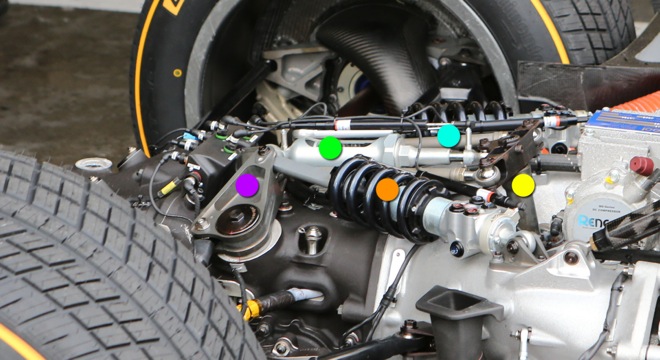
The ORECA 07 uses the most popular front suspension layout among the six P2-based models competing in the Prototype class. Its torsion bar arrangement, which replaces bulkier coilover springs, provides a compact solution housed inside the front of the tub.
Actuated by pushrods connected to the lower control arms, the torsion bars are twisted by rocker arms that connect to individual dampers. Secondary links connect the dampers and torsion bars to an anti-roll bar. Finally, a front third spring/damper is connected between the rocker arms that controls chassis pitch and dynamic ride height.
Due to the busy packaging at the front of the tub with the steering column and brake/clutch fluid reservoirs, gaining access to all of the suspension components is more of a challenge than some of the other models. Along with reaching in through the front when the nose is taken off, two small access hatches can be removed atop the tub to reach inside and make changes from above.
Below: Torsion bars (red, inside their forward housings), rocker arms (purple), dampers (orange), rocker-to-anti-roll bar links (cyan), anti-roll bar (yellow), third spring/damper (green).
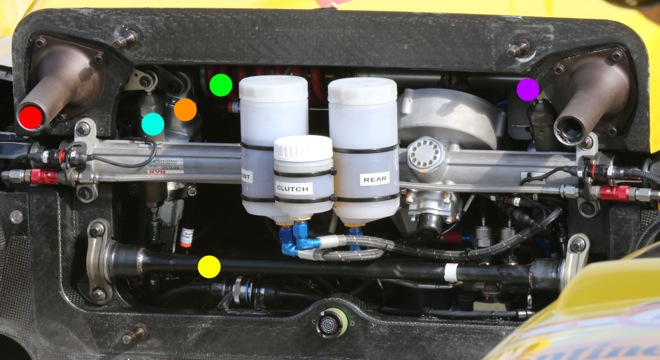
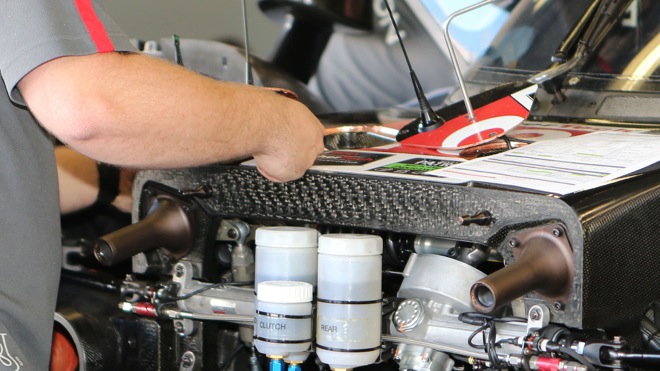
The ORECA 07 also uses the most popular rear suspension solution with pushrod-activated rocker arms that connect to coilover springs and dampers. Those spring/damper combinations are linked to a T-style anti-roll bar, and the anti-roll bar compresses the rear third spring/damper.
Below: Rocker arms (purple), dampers with coilover springs (orange), rocker-to-anti-roll bar links (cyan), anti-roll bar (yellow), third spring/damper (green).
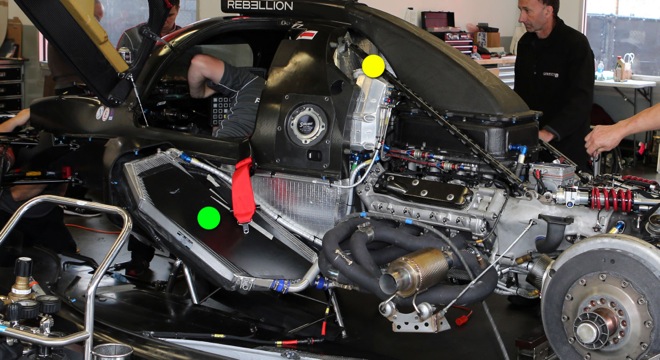
Like every 2017 P2-based chassis, the 07 was constructed using a raised forward section to flow air through the keel. The elevated section (red) that sits above the bottom of the tub (yellow) creates an intentional void below where the air flowing through the front of the car can be channeled into the leading edge of the keel (green, second image below) and then out to interact with the sidepods.
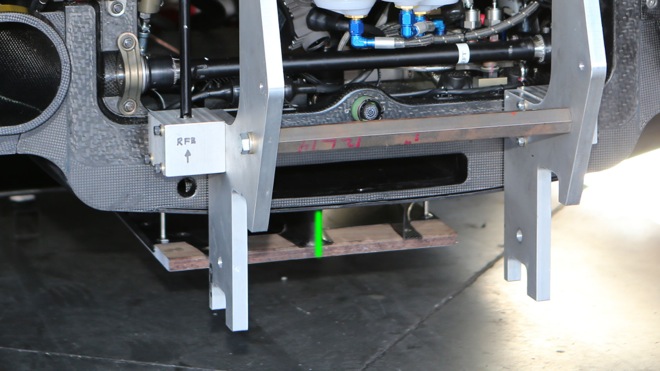
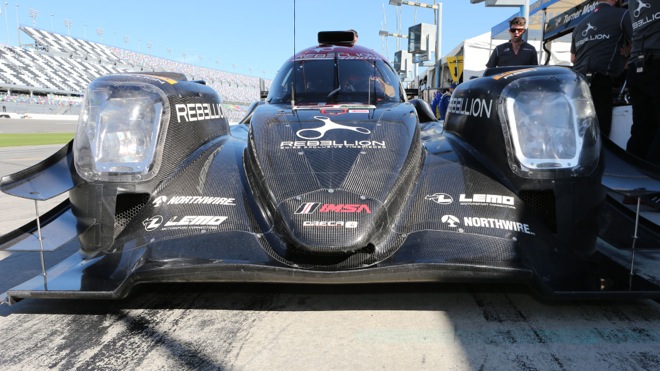
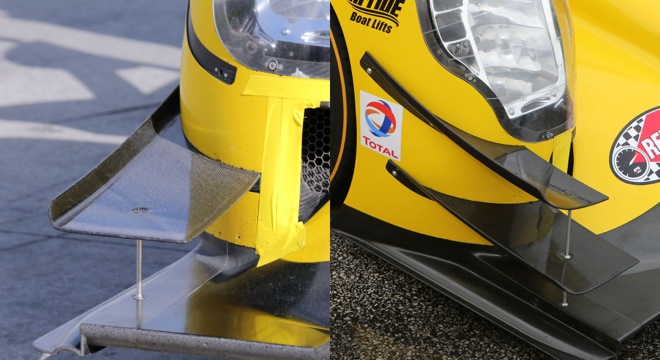
There is an elegance to its simplicity: the low nose, with a small cooling ducts for the brakes and air conditioning, and options at the outer edges for downforce-generating dive planes, sits in stark contrast to some models that use ornate designs to twist and bend the oncoming air to produce their desired results.
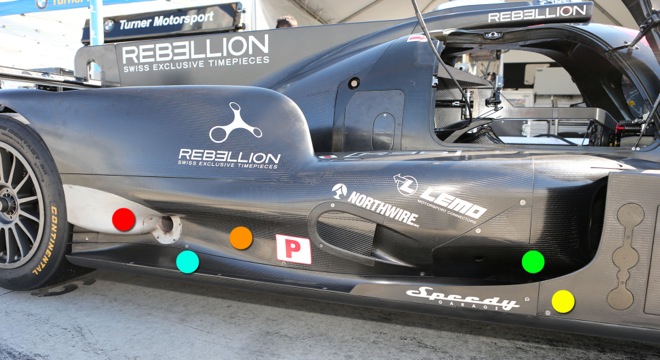
Viewed from the side, the 07 has the longest rear fender extensions (yellow) of any WEC P2/DPi model. It goes so far forward, it sits parallel to the front of the Gibson V8 engine. That long extension, used to smooth and condition the flow of air over and around the mandatory bodywork cutouts (red) above the rear tires, helps to diminish turbulence (drag) created by those cutouts.
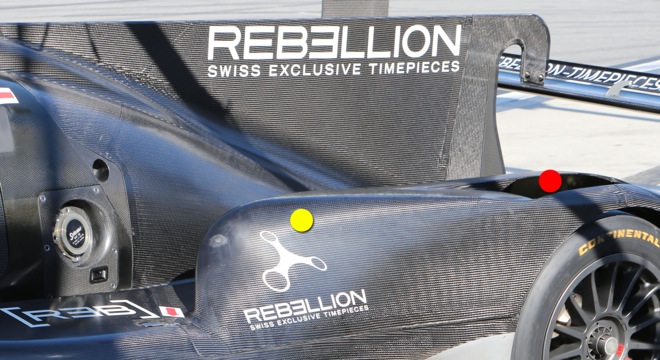
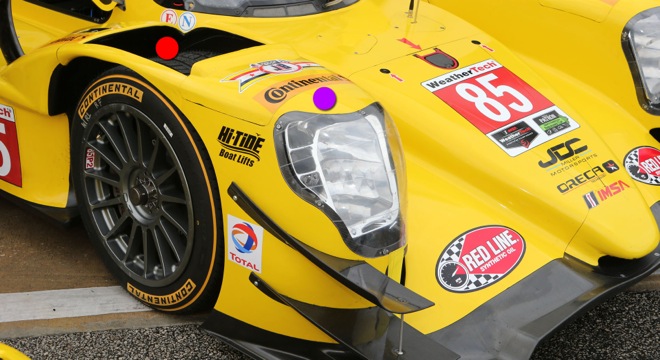
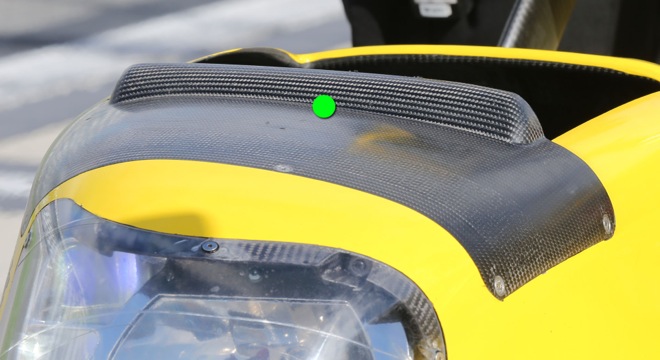
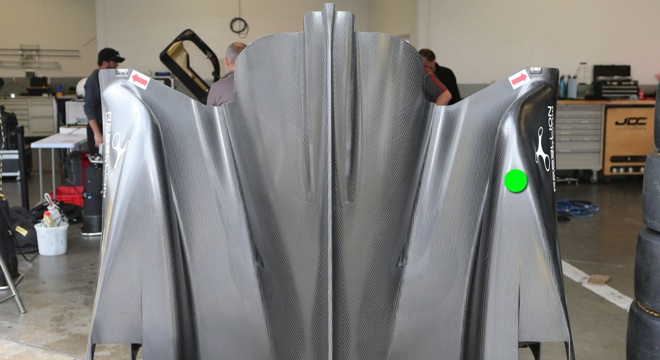
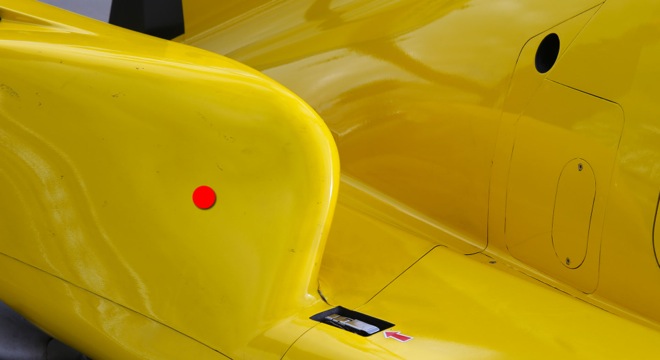
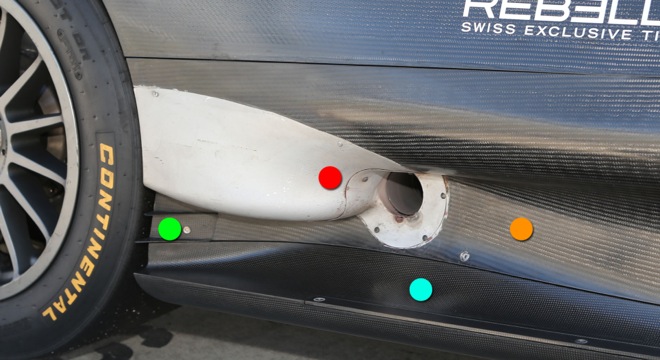
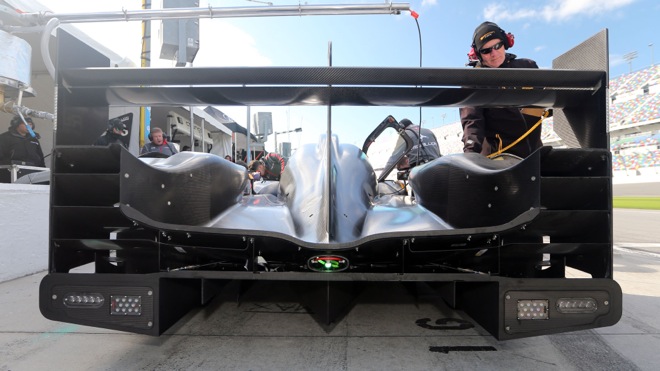
The aforementioned fender extensions are anything but straight. The cantilevered rotation toward the middle of the car is used to channel some air over the base of the engine cover (green) and some around the outside of the fender (red, second image below), which is a concept taken to a greater extreme on the 07 than any other model.
MISCELLANEOUS
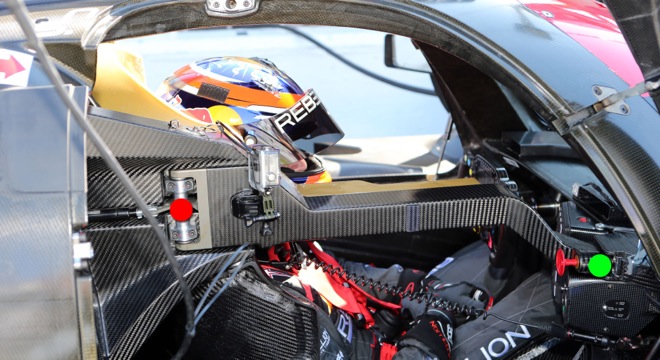
The 07 incorporates the new and standard swinging center head support that is hinged at the back (red) and can be freed up front by pulling a quick-disconnect pin (green) to allow rapid access to the driver from the passenger side of the cockpit, if necessary.
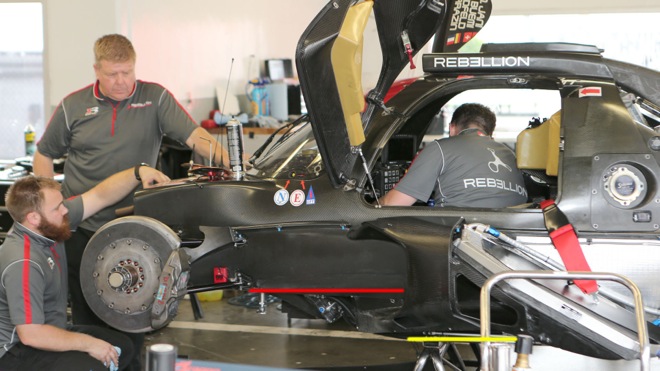
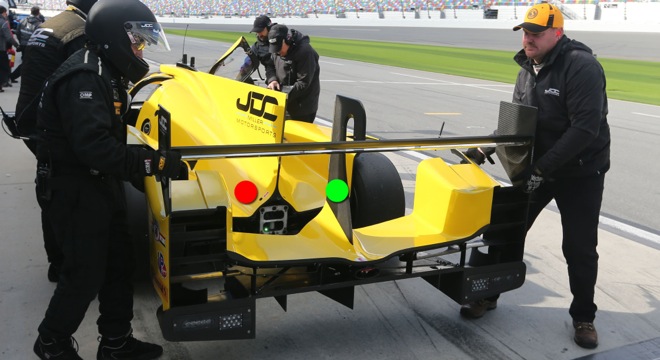
The solution is to turn the two quick-disconnect cams (red) that hold the rear wing assembly, remove the assembly as shown here by two JDC-Miller mechanics, and then remove the engine cover.

Latest News
Comments
Comments are disabled until you accept Social Networking Cookies. Update cookie preferences
If the dialog doesn't appear, ad-blockers are often the cause; try disabling yours or see our Social Features Support.