INSIGHT: Prepping for IMSA's DPi future
IMSA will be busy in the months ahead as its technical department prepares the new Daytona Prototype international formula for introduction in 2017. It's a complex process that involves wind tunnel testing the custom manufacturer-styled bodywork in scale and full-size form, testing the unique engines each DPi manufacturer will use, baselining the bodywork and engines, and then balancing both categories to produce close racing.
Track testing will also be part of IMSA's efforts to establish Balance of Performance (BoP) tables for its DPis, and the new spec World Endurance Championship P2s that will participate in the WeatherTech SportsCar Championship's Prototype class.
To further understand all of the processes in motion, and those that will come on-line before the end of the year, RACER sat down with IMSA's Mark Raffauf, its project manager in charge of DPi development, to get an update on all things related to the series' new flagship formula.
"Precisely where we are today is I go to England [this week] and we will run for the first time two DPi bodies on our 40-percent scale model," Raffauf said. "We have designed our own LMP2 car, that car has been verified and tunneled at the same tunnel twice already."
Four chassis constructors were approved to build spec P2s and/or DPis. Dallara, Onroak (Ligier), ORECA, and Riley/Multimatic have been active in the wind tunnel with their respective prototypes, and with multiple sets of bodywork to digest, IMSA has taken the wise decision to commission its own 2017-compliant P2 chassis design as a neutral platform to benchmark those spec and custom panels.
DPi testing to begin next month
Four DPis in the pipeline
"We wanted our own baseline design that is not one of the four so we can test all the P2 cars and all of the DPi cars and have a common a line through all of them," Raffauf continued. "We are already trying different elements that we attempt to use on the DPi cars to help with the balance of the standard [WEC] P2 car.
"That actually is a back-to-back-to-back over three days, using a model with interchangeable panels from the first two DPi manufacturers, to begin to identify the differences, where the difference is and what right out-of-the-box can be done to have them end up performing the right way.
"All the P2 cars will be done as well in the same fashion on our model. The focus is DPi first, but our [DPi] car is considered to be relative to the data we have from those [four constructors] that have completed their own P2 model testing. Ours is the fifth [P2] design; you could take this car and build it and it would work. It is a totally functional 2017 P2 design."
Raffauf's team will also continue the aero testing using completed 2017 cars late in the year.
"We have quite a bit of Windshear full-scale tunnel time set for the end of the year," he confirmed. "We may have room for one additional body, maybe. But at this point, it is already signed up for. So it's like, 'OK, I know what I'm doing Thanksgiving and Christmas.'
"That's another positive thing – not only is everyone on board for the first part of the process and there's time to do all of that, they have already scheduled their time on our days at Windshear for the full-size cars."
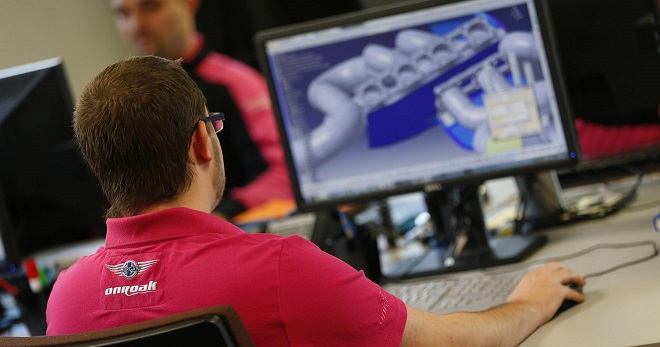
"Basically, we have two buckets going, one is the aero package and one is the engines," he explained. "On the engines, we should probably start to see the first manufacturer engines soon, and we have all the information from Gibson as to what that is and how it will run. We will verify that on our dynos at [the NASCAR R&D facility] as well, but we know with the target is. There's five of the [Gibson engines] that are ready. Each constructor is going to get two, for which they can go test their LMP2 cars."
Prototype teams will have the ability to run in WEC P2 configuration or with a manufacturer DPi platform, and convert between the two styles as desired. By working through all the bodywork and engine permutations in the wind tunnel and on the dyno, Raffauf expects IMSA's teams to have a relatively easy road to converting base P2s to fit their needs in the years that follow.
"They can change their cars into something else if they want to," he said. "The cars and the installs, the engine, the biggest difference technically would be going from a [naturally-aspirated] Gibson package to a turbo package. But that will already have been done, so the logical ways to do it will already be out there. And it is not that difficult, it just requires a different air-in, different air-out leads, relative to the Gibson, so that is the biggest difference. Bolting the engine to the back of the car, all that sort of stuff, the parameters of the space, the crank height, all those other elements that are fixed makes it pretty interchangeable. It is not that big of a deal."
IMSA has also worked with the ACO and WEC to ensure the 2017 engines, which come in all sizes, do not pose a significant advantage or disadvantage with vehicle dynamics. A tall, wide Gibson V8 would present less of an ideal chassis balance and center of gravity (CG) package than a short, narrow turbocharged four-cylinder engine, and while IMSA has no mechanism to balance different CGs, it has ensured engine weight and overall weight distribution numbers are equalized.
"Some of those elements like the weight distribution are fixed," Raffauf said. "In our manual, anybody with a light engine is required to ballast within that 640 mm space so that the mass in that area is comparable. It may not have precisely the same CG because as you said, one might be a V motor, one might be a straight motor, they've different CGs; we can't balance it that finely. But we're going to make every effort to give each part of the car the same dimension and the same mass considerations so they should end up being really close.
"Not micromanaged, but pretty close. We even have that in DP where a four-valve V8 has a different CG than a two-valve V8. You can't fix that. So there are some considerations that if you pick that, that is what you have. We're making every packaging decision as comparable from one to the other as can be. So even when ballast has to be added to the car, we will specify that you cannot use that in certain places for the benefit of changing the balance of the car, it has to be located only in certain parts of the car, which is good. We just have to manage the deviations that we are doing for them and end up with two products that work more or less same."
IMSA is also tailoring the driveline needs for the DPi to match the diverse tracks it will visit.
"There are some challenges there," Raffauf added. "Gearboxes, final drives; we race at Long Beach (pictured) and Daytona, the difference is immense, so you can't have a spec final drive – it won't work. You have to have a couple of choices for everybody, which then is related to how the engine works, the range of RPMs, which then affects the types of gears you have to have. You can't use spec gears because they don't work the same with different engines. So there's a lot of nuances to that that will end up being different technically from the standard [WEC] P2 car, but by necessity.
"Same with the same chassis with the turbo in it versus the [non-turbo]; they're going to different air needs. So venting in and venting out will be controlled but it has to work. Those are the little things that we have to adjust and play with through the bodywork development."
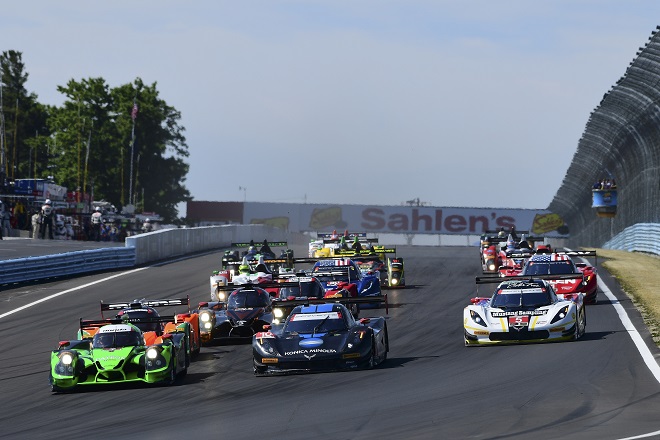
"New word: efficiency," he said. "Shift from downforce to efficiency, which is essentially the ability for the car to create the downforce without the drag. These cars are more efficient. That is the way to put it. These are essentially the current LMP1 cars in dimension, which is smaller than the current P2 cars. And more tightly controlled. In other words, there's not as much leeway with the length – they are longer and narrower, so that creates a different dynamic of the aerodynamic elements that you use. There are some controls that are not P1-relative. The [WEC P2 and DPi] splitter and diffuser are less potent than what they use on the current P1 cars."
Pressed for further definition, Raffauf believes the 2017 P2s will be able to achieve higher downforce levels to complement the approximate 50-horsepower jump increase in the engine bay.
"They will have the ability to create equal or better downforce with probably less drag and we will have more power, so if you add all that it will go faster," he said. "What does that mean? We already used the simulations on our own, and done Daytona in this [DPi] car as a video game, so to speak.
"The simulations that we do are simply taking the power expected for 2017 and putting it into a model of a 2016 car to see what the difference is at Daytona. It is not perfect, but it's already showing you the trend that the car will go faster."
IMSA will not require its DPi manufacturers to conduct special tests to help the series benchmark the cars in race trim, but Raffauf does expect to have IMSA's tech team embedded in some capacity to capture data during private and public testing on the road to January's Rolex 24 At Daytona.
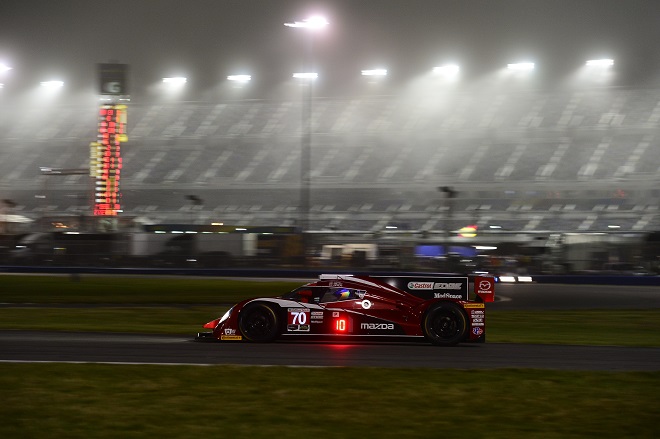
"We are encouraging and allowing them to freely test and freely develop and freely make functional these cars before they come to the first official tests, so they will be better prepared there. From there, as I said, everybody has a scheduled slot at Windshear. Shortly after the November test there are three, shortly after the December test there are two more."
The need to have the wind tunnel and dyno benchmarking completed for the DPis WEC P2s prior to the Rolex 24 is the only hard date on IMSA's calendar, according to Raffauf, although having everything wrapped up before the early January Roar Before the 24 test at Daytona would be optimal.
"Everybody knows what the process is and in order to be eligible for Daytona at the Roar, you will have to have completed the process," he said. "Right now we're working to try to get one or two [Windshear] shifts in early January after the Roar as a backup because, again, human nature, we expect to see some delays due to reasons beyond our control, and we want to give everybody an equal effort to try and be there.
"So, as an example, if one of the P2 cars doesn't get to the wind tunnel, they could probably still go to the Roar because we know what it did in the 40-percent scale size and we will do with the relationship of 40 scale numbers as to full-size from the other P2 cars. So we'll give it a pretty good shot at the Roar but then take it after the Roar back to Windshear to complete the process and verify. A January slot would be just helpful for somebody who is a little bit behind schedule."
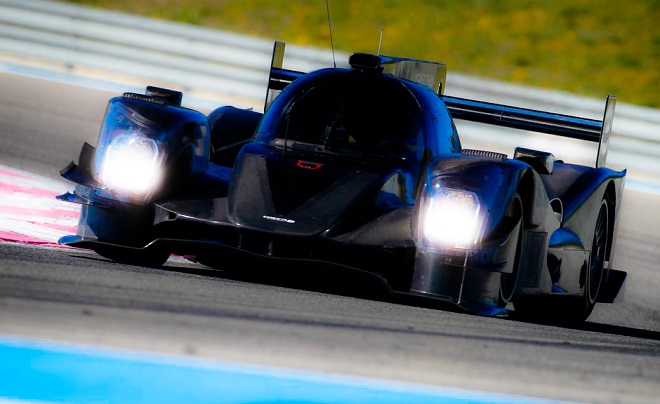
Cadillac, which last fielded a prototype sportscar in 2002 (pictured), is tipped to be among manufacturers interested in fielding an DPi.
So far, Raffauf is pleased and encouraged by everything involved with bringing the DPi formula from concept to reality.
"In my view, it is all working as we expected to, if not better, as far as process," he said.
as Raffauf told RACER
, two more DPi programs are in the works with a slightly longer lead time that would push their debuts to later in 2017 or the beginning of 2018.
Latest News
Comments
Comments are disabled until you accept Social Networking Cookies. Update cookie preferences
If the dialog doesn't appear, ad-blockers are often the cause; try disabling yours or see our Social Features Support.