INDY 500: Rules rundown for the 100th Running
Take a look through the rules for the 100th running of the Indy 500 and you'll find plenty of familiar entries, but a number of interesting changes have also been made since the 99th race last May.
- Click here for the official entry list.
Click here
for 's Indy 500 Resource Guide
The 2015 event was marred by unexpected, aero-driven flights and crashes and, in the wake of those accidents, IndyCar altered the qualifying procedure in the name of safety.
The practice of qualifying in low-drag and low-downforce aero specification and moving to higher downforce levels for the race was taken away as an option. The series implemented a new rule requiring teams to race in whatever downforce level its drivers used in qualifying and with that adjustment, teams spent the rest of the event running in race trim.
IndyCar also took away the extra 40-50hp provided for qualifying – the higher boost setting – to slow the car even more.
Both changes produced the desired effect IndyCar was seeking. Scott Dixon's pole position average in his Target Chip Ganassi Racing Chevy was a 226.760mph average, down from Ed Carpenter's 231.067mph average set for the 2014 race in the Chevy-powered car bearing his name.
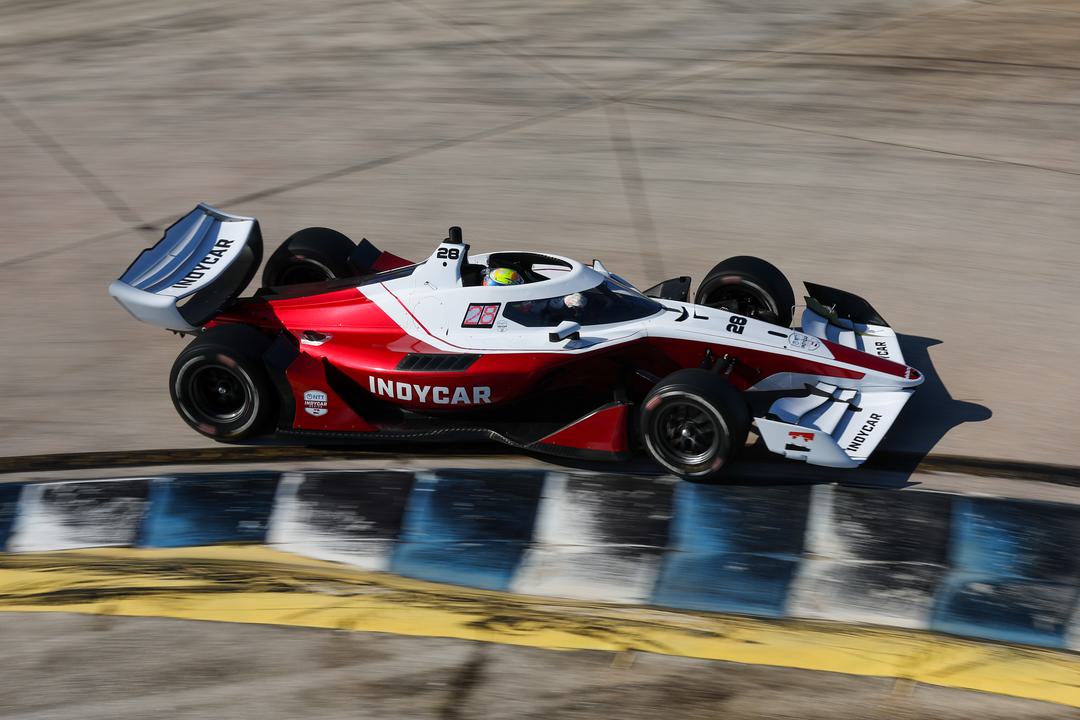
AERO
As most IndyCar fans have surely heard by now, the series has mandated the use of dome-shape skid blocks mounted below the standard titanium skid plate beneath each Dallara DW12 chassis.
The installation of those dome skids require each car to be raised so the skids clear the track surface without making routing contact. Increasing the ride height reduces downforce from the DW12's underwing, and to help recover some of the lost downforce, teams have been allowed to lower the diffuser exit sidewalls. Lowering the sidewalls is said to add somewhere between 60-80 pounds of downforce.
The use of strakes in the diffuser, which would help to concentrate the air leaving the underwing and produce more downforce, is not permitted. The dome skids, which are said to prevent the DW12 from losing significant amounts of downforce in a broadslide, come as a response the last year's flights. The addition of rear beam wing flaps, which flip and lock upward once a DW12 is turned backward at speed, is also an improvement for 2016.
Honda teams are required to use the chassis centerline wicker while Chevy teams are forbidden from using the piece.
TURBO BOOST
Teams will practice from Monday-Thursday using the "low boost" race setting of 130KPa (18.84 psi), then move to "high boost" on Friday to practice for qualifying. The extra 40-50hp provided from the 140KPa (20.3 psi) is only allowed Friday-Sunday, and once qualifying is over, all cars will return to the low setting.
ENGINES
IndyCar's rules regarding minimum engine mileage between motor changes still applies at the Indy 500, but only through practice and qualifying. That means most teams will use the motors that just completed the Grand Prix of Indy, and most teams went into the GP with fresh engines featuring the latest and greatest updated from Chevy and Honda. The rules allow teams to fit a new engine for the race (which is run during the one-hour Carb Day session), and those motors are likely to contain anything new both manufacturers have learned – or had in the development pipeline – and incorporated into a late May installation.
The Honda teams, in particular, are happy to take receipt of the first full 2016-spec engines after starting the season using a specification that had roots in the motors that finished the 2015 season at Sonoma. The manufacturer confirmed Monday afternoon that all its teams are now running the fresh engines.
TIRES
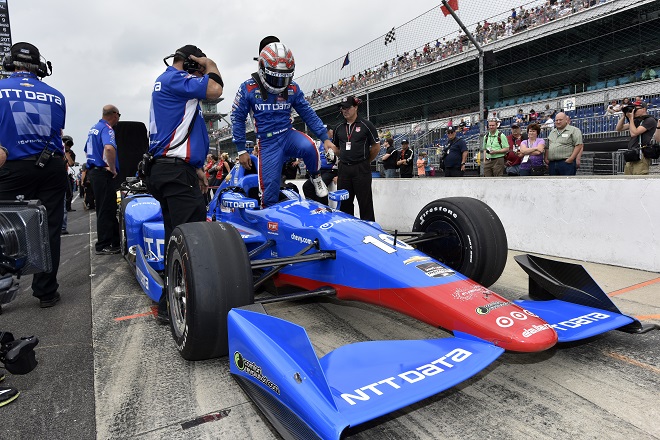
Firestone provides each entry a maximum of 36 sets of tires for the event in each lease agreement.
QUALIFYING PROCEDURE
If you thought last year's qualifying procedure was a complicated mess, wait until you digest what's in store for 2016.
To understand the basic flow of qualifying, take a look at the schedule for Saturday and Sunday before we delve into the mechanics of how it will work.
Saturday, May 21
8:00 a.m.–8:30 a.m., Indy 500 Practice: Group 1
8:30 a.m.–9:00 a.m., Indy 500 Practice: Group 2
9:00 a.m.–10:00 a.m., Indy 500 Practice: Entire field
11:00 a.m.–5:50 p.m., Indy 500 Qualifying (Top nine drivers advance to Fast 9)
Sunday, May 22
12:00—12:30 p.m., Indy 500 Practice — P22-33
12:45 p.m.–1:15 p.m., Indy 500 Practice — P10-21
1:30 p.m.–2:00 p.m., Indy 500 Practice — Fast 9
2:45 p.m.–4:45 p.m., Indy 500 Qualifying — P10-33
5:00 p.m.–5:45 p.m., Indy 500 Fast 9 Qualifying — P1-9
So, IndyCar will once again use two days of qualifying to set the field of 33.
The most notable change is the introduction of a motocross-style LCQ – the "Last Chance Qualifying" round – for those trying to fill the final spots left on the grid. The introduction of a LCQ could be moot unless more than 33 cars attempt to qualify for the Indy 500. It would also be moot if only 33 cars appear for qualifying on Saturday and successfully complete their runs.
The LCQ is meant to give entries that were unable to qualify on Saturday one last chance to make the field on Sunday in the group for P10-33.
Looking at the standard process IndyCar has created, the field will "qualify" on Saturday and, from that process, the series will identify the nine fastest drivers. Those nine will be given a shot at earning pole position in a special session to close time trials on Sunday. IndyCar will also have a list of cars qualifying for positions 10-33 on Sunday in a session of their own. Per IndyCar, LCQ cars will run on Sunday at a time specified by the series.
Other than building its list of top-nine pole contenders and the rest that will vie for the remaining positions, the speeds set on Saturday are meaningless. All speeds will be wiped clear when Sunday's final qualifying process begins.
Saturday is about setting speeds to cleave P1-9 from P10-33, and Sunday is about setting the field using the new four-lap average speeds set by the fastest 33 cars.
There are a variety of smaller rules that govern Saturday's activities, but they only clutter the process.
Moving to Sunday, the qualifying order for cars in the P10-33 group will be set by their speed rankings from Saturday (P10 will make the first attempt; P33 goes last). This group could also include cars from the special LCQ session, and those cars would, presumably, be the last to qualify in this group.
The "Fast 9" qualifying order will go in the opposite direction: P9 will make the first attempt; P1 goes last. At the conclusion of the Fast 9 session, the field for the 100th Indy 500 will be set.
Below, you'll find the most recent qualifying rule adjustments:
8.4.3.1 A car must be presented in pit lane at the designated area. When instructed, the car will move directly south into the staging area. When signaled by IndyCar, the car will move to the head of the qualifying line and wait until signaled to leave pit lane to begin a qualifying attempt. Notwithstanding the end of the qualifications session, a car may begin its qualifications attempt, provided it has received the signal and is moving with its engine running. The car is not required to have completed its qualifications attempt prior the end of the qualifications session.
8.4.3.4 If a car is unable to complete its guaranteed attempt because of a mechanical condition or on track incident and is prevented from making a second attempt during Saturday qualifying as determined by IndyCar, then IndyCar shall provide that car an opportunity to complete its second attempt on Sunday at a time determined by IndyCar ("Last Chance Qualifying").
8.4.3.4.1 The fastest 33 cars completing qualifying attempts on Saturday shall be listed in the starting field. However, for every car unable to complete their guaranteed attempt, as described in Rule 8.4.3.4, there will be an equal number of temporary positions available at the rear of the starting field.
8.4.3.4.2 IndyCar shall provide each car from Rule 8.4.3.4 one qualification attempt during Last Chance Qualifying, with the order being determined by a random draw. If a car from Rule 8.4.3.4 can post a time faster than any car occupying one of the temporary positions, that car will earn a position in the starting field, subject to the bumped car having one last opportunity to requalify and reclaim a position.
8.4.3.4.3 All cars earning spots in the starting field during Last Chance Qualifying shall be listed in order of speed rank behind cars that qualified on Saturday.
8.4.4.1.3 The fastest 33 qualified cars from Saturday qualifying, subject to the results of Last Chance Qualifying, shall determine the groups for Sunday qualifying.
8.4.4.2.1 Pre-qualifications practice sessions on Sunday shall be open to all qualified cars and any cars from Rule 8.4.3.4 participating in Last Chance Qualifying.
8.4.4.3.1 "Group One" qualifying shall consist of positions 10 through 33 from Saturday qualifying, subject to the results of Last Chance Qualifying.
8.4.4.3.2 "Group One" qualifying order will be based on Saturday's qualifying positions, subject to the results of Last Chance Qualifying. The "Group One" order will begin with position 33 to position 10.

Latest News
Comments
Comments are disabled until you accept Social Networking Cookies. Update cookie preferences
If the dialog doesn't appear, ad-blockers are often the cause; try disabling yours or see our Social Features Support.