IMSA: Baron looks ahead to 2017 P2 program
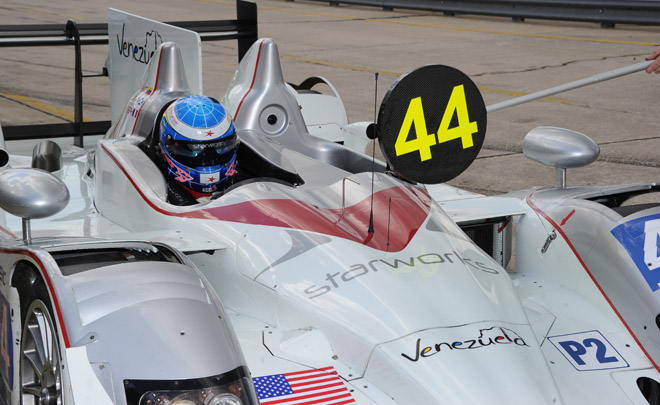
Above: Back to the future? Starworks fielded an HPD ARX 03b P2 in 2012.
IMSA entrant Peter Baron is eagerly anticipating the arrival of his new 2017 Riley-Multimatic P2 chassis his Starworks Motorsport team will campaign in the WeatherTech SportsCar Championship's Prototype class.
Baron was the first team owner to commit (at least publically) to IMSA's revised category where his privateer P2 will compete against factory programs using custom "Daytona Prototype international" P2s.
"We're looking forward to a September delivery, Riley and everybody there is still working on the project, and nobody is showing pictures of anything publicly because I think everybody is looking to see what everybody else is doing," Baron told RACER. "It is a little bit secretive and all that, which is kind of fun in one way. Nobody knows what the other guy's [P2] car will look like at this point, so there's a lot of anticipation while we wait."
"The purchase was Starworks-driven, and we will figure it out as we go along," he said. "I have no problem with using the Gibson, and I've worked with the Rileys for a long time and know how good their cars are, so there was no need for me to wait and see which chassis to go with."
As RACER recently discussed with IMSA President Scott Atherton
, it would appear only two DPi manufacturers will be on the grid to start the 2017 season at Daytona. IMSA has also confirmed it will use the WEC P2 as the performance benchmark for its DPi cars, which could position Starworks as one of the leading contender with its Riley-Gibson, and with overall Prototype car counts still up for debate, the numbers could also favor a strong privateer effort."I've only read about the Mazdas with Riley and the Caddy Dallaras in DPi, and other than our team, I haven't heard of any WEC P2s being sold for racing here," he said. "I am only speculating, but I would assume we could see three other Rileys sold and four Dallaras sold in DPi configuration associated with a manufacturer, and I think what we are buying is going to be quick.
"Just in numbers, I don't think we'll see 15 of these things driving around out there in the beginning, so it is worth it to take a shot and go for it."
Even with so many unanswered questions about DPi participation and grid size, Baron sees one significant advantage the new era of P2 racing should deliver for independent Prototype entrants.
"The costs are going to be better than the current [Prototype] class," he said. "You can do anything in the world with the car. Go to WEC, ELMS, over here in IMSA, which is what our intentions are. It's the first of four years with it, which helps spread the costs, and if you're getting a new car in the first year, you might as well take advantage of the lower running costs.
"I'm thinking it will be about 20 percent less. And a lot of that is just with the [spec Gibson] motor. The Rileys are built like a freight train and the parts should last a lot longer, so there's a good savings."
Baron thinks IMSA's Prototype class could grow if budget levels come down to a more reasonable rate than the $3.5-4.5 million most teams are spending per entry this season.
"What has to happen is the cost has to re-center itself," he said. "If a sponsor brought $4 million to IndyCar, what are they going to get with television and audiences versus bringing $4 million to WEC – what are you going to get with the P2 program over there? Because that is what a P2 budget is right now in WEC and you about the same [in IMSA]. The [Prototype] budget has to level itself below those two series – it's supply and demand. The [Prototype] market needs to get down to $3 million before it can thrive again, which I think is possible."

Latest News
Comments
Comments are disabled until you accept Social Networking Cookies. Update cookie preferences
If the dialog doesn't appear, ad-blockers are often the cause; try disabling yours or see our Social Features Support.