.jpg?environment=live)
F1 retro gallery: U.S. Grand Prix winners - 1959-’80
From Sebring, Fla., to Riverside, Calif., in its first two years, the Formula 1 United States Grand Prix finally established itself at Watkins Glen from 1961 until 1980. By then, a new venue had been found on the West Coast – the streets of Long Beach. Then came Las Vegas (’81-’82) and Detroit (’82-’88) while Long Beach switched to Indy cars in ’84, the year Dallas had its one-off fling with F1. Phoenix replaced Detroit to muted reception (’89-]91) and then for eight straight seasons, nothing.
Indianapolis Motor Speedway became the USGP's new home for seven glorious years and one shameful one (remember the six-car fiasco of 2005?) through no fault of IMS. Since 2012, F1 has visited Circuit of The Americas, and has been a success, at least in terms of crowd numbers. We hope it will thrive.
But here, let's look back at the first 21 years of the Formula 1 World Championship in America, featuring each winning driver, as captured by LAT Photographic. (Part 2, 1981-2013, will follow tomorrow.)
ABOVE: Classic Watkins Glen Turn 1 shot. Graham Hill leads, Jim Clark, Dan Gurney, Chris Amon, Jack Brabham, Denny Hulme, Bruce McLaren, Jackie Stewart, Jochen Rindt, Moises Solana, Jo Siffert, John Surtees, Mike Spence, Chris Irwin, Jo Bonnier, Jacky Ickx, Guy Ligier and Jean-Pierre Beltoise.
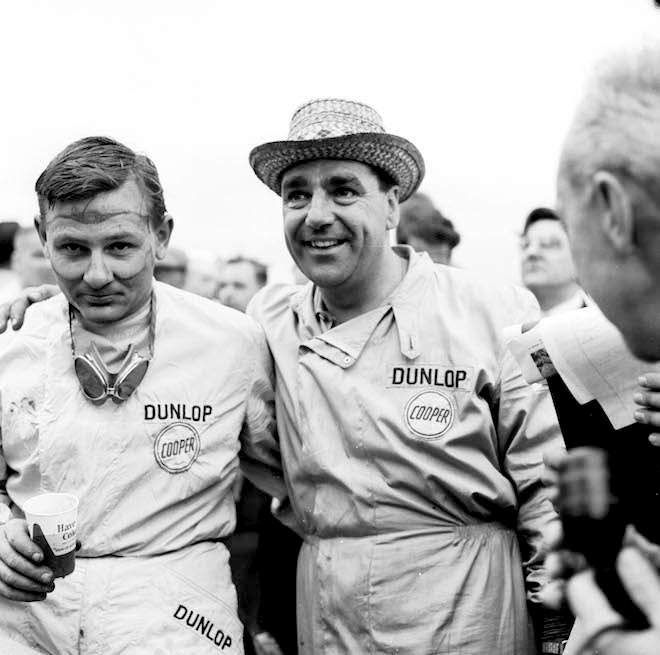
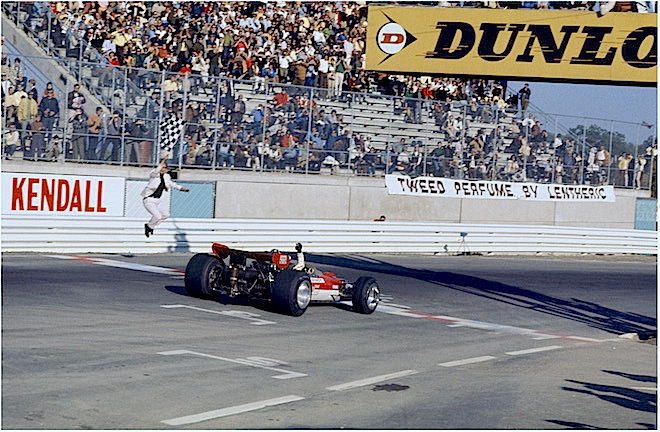
BELOW: Inaugural U.S. GP winner Bruce McLaren with team owner John Cooper who has extra reason to be happy – his other car, driven by Jack Brabham, has just won the World Championship.
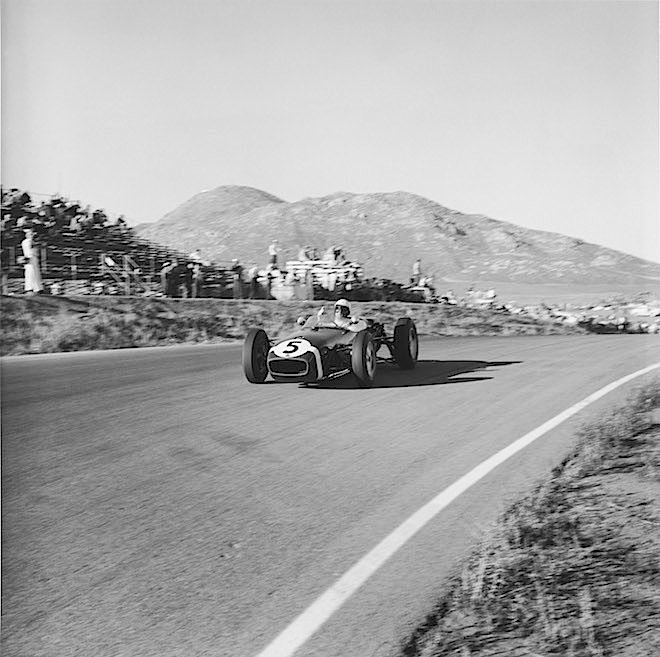
BOTTOM: Stirling Moss drives his Lotus-Climax to victory at Riverside in 1960.
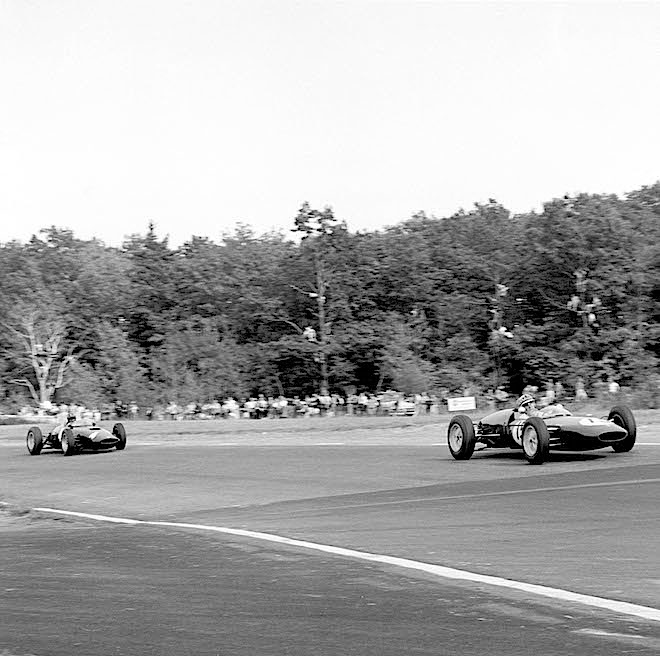
ABOVE: It's sometimes forgotten that it was Innes Ireland (here chased by Graham Hill) who scored the first victory for Team Lotus, at Watkins Glen in ’61. The marque's first four victories had come in the hands of Rob Walker Racing's privateer effort, driven by Stirling Moss.
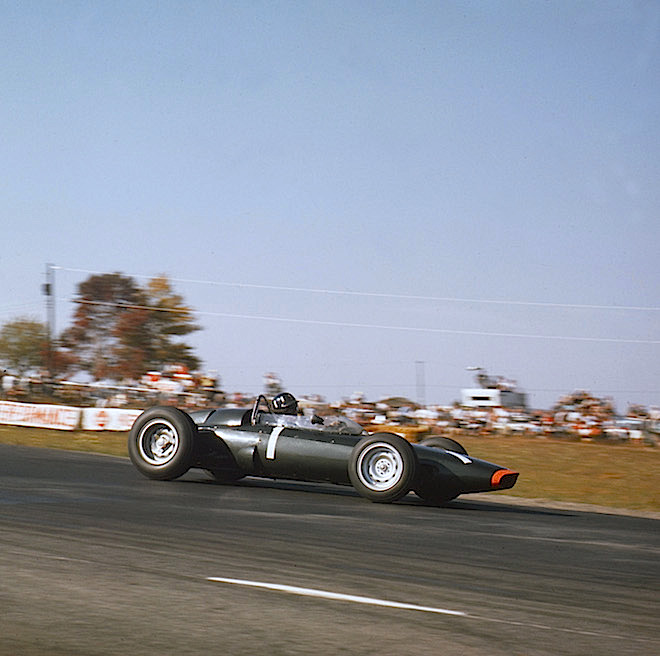
BELOW: The Graham Hill/BRM combo scored three consecutive U.S. GP triumphs, starting here in 1963.
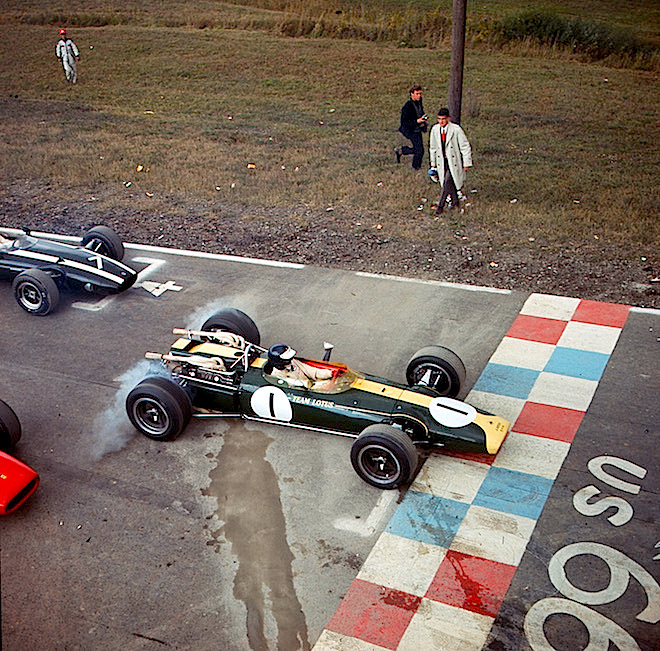
BOTTOM: Jimmy Clark would also win three times at the Glen, in ’62, ’66 (PICTURED) and ’67. We chose this pic because it was the rarest; this is the Lotus 43 with the BRM H16 engine. It was this engine's only triumph, as it was unusual for all 16 cylinders to be working for the entire duration of a race. The Cosworth DFV – with half that number of cylinders – could not come soon enough.
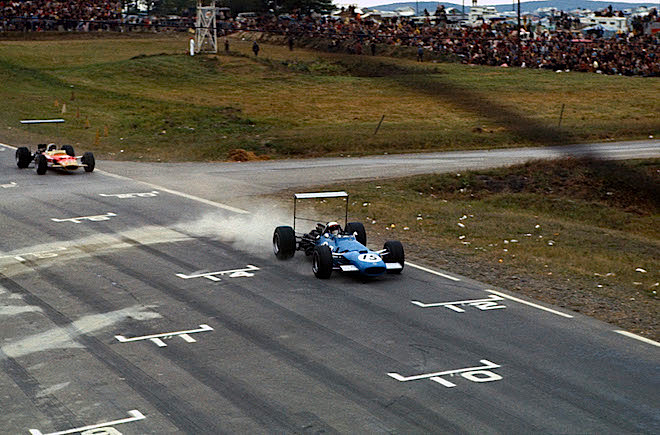
Jackie Stewart was twice a winner at Watkins Glen. The second time was in ’72, the first time was in ’68 (ABOVE) in the Tyrrell-run Matra. He's pictured leading surprise polesitter, F1 debutant Mario Andretti, driving the Lotus 49.
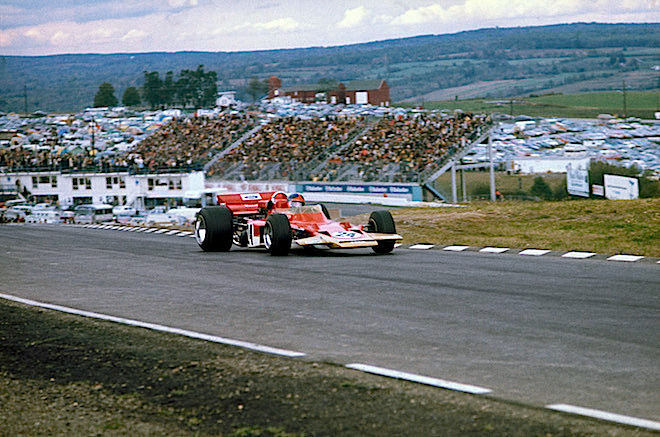
BELOW: Jochen Rindt broke through to Victory Lane for the first time in a championship race with this victory at the end of the ’69 season. He would go on to win the 1970 World Championship, but was dead by the time F1 next visited the Glen. His replacement, a young Brazilian by the name of Emerson Fittipaldi, stood in ably for the shell-shocked team, and won the race in his Lotus 72, helping prevent Jacky Ickx from overtaking Rindt's points tally.
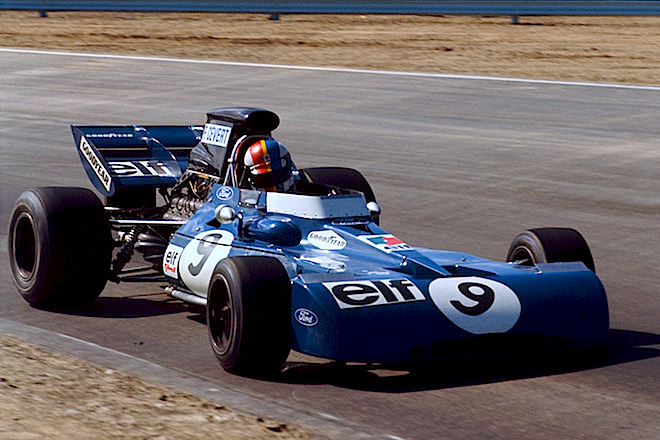
Who knows what Francois Cevert might have achieved. A willing and able understudy to Jackie Stewart, he appeared just about capable of matching the three-time World Champion in their final few races together in 1973. Sadly, Cevert died in a huge accident during practice at Watkins Glen, the very circuit where he'd scored his solitary F1 victory two years earlier (ABOVE).
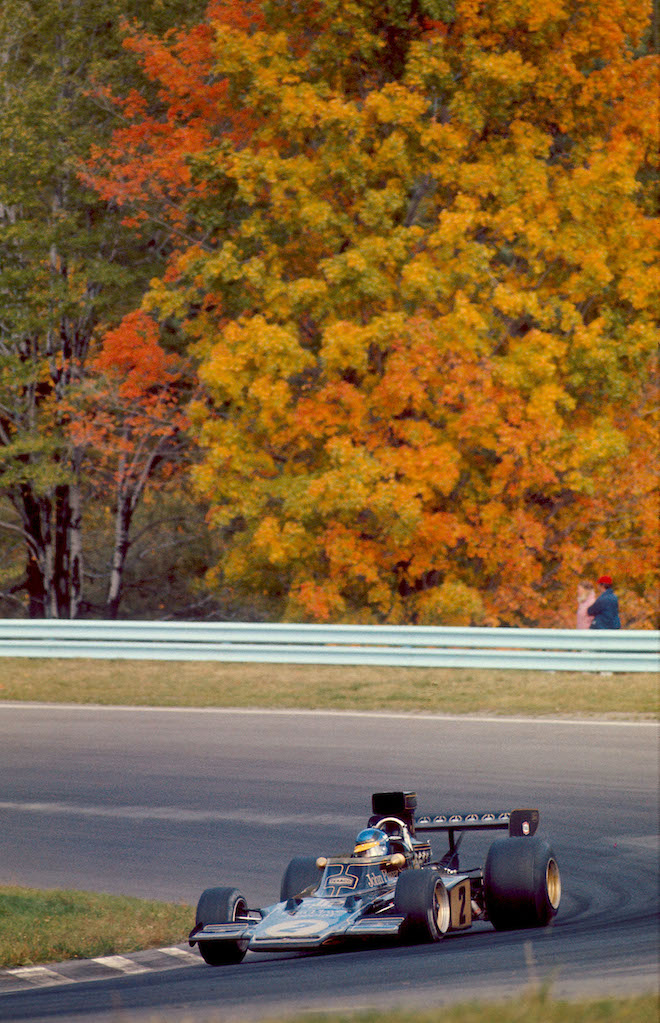
The gloomy ’73 race, from which the Tyrrell team withdrew beforehand, was won by the Lotus 72 of Ronnie Peterson (BELOW).
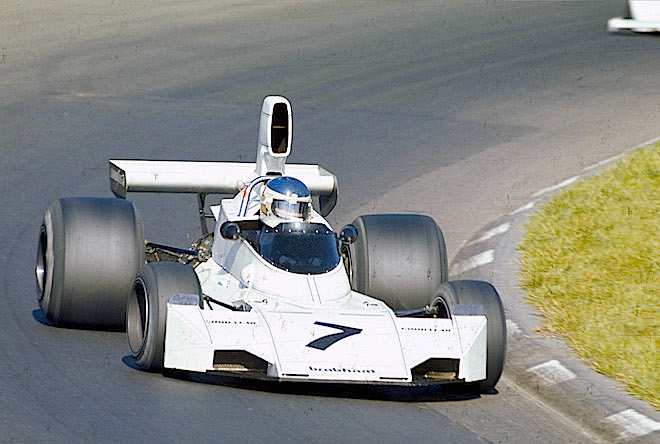
The mood was no lighter the following year, when Carlos Reutemann (BOTTOM) led a 1-2 finish for Brabham ahead of Carlos Pace, as privateer Helmuth Koinigg had crashed fatally on the 10th lap.
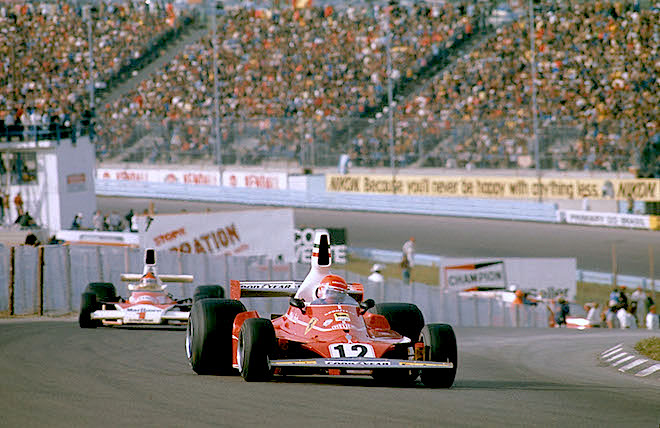
(ABOVE) Niki Lauda arrived at Watkins Glen in 1975 having already claimed the World Championship, but his sixth win of the season was the first for Ferrari in a U.S. Grand Prix. Here he's chased by outgoing champ, Emerson Fittipaldi whose McLaren M23 set fastest lap and finished second.
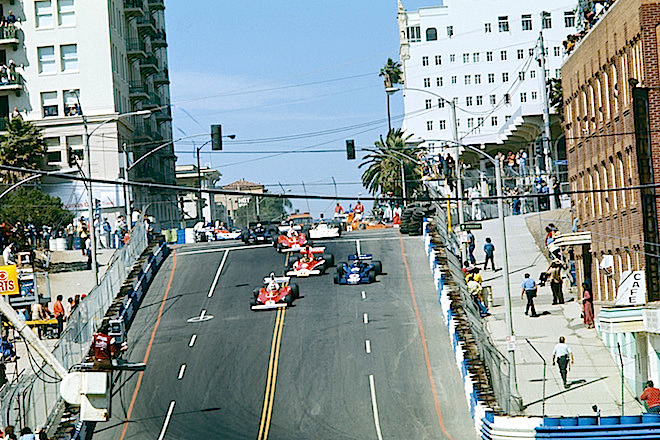
(BELOW) The first American grand prix of 1976 was not the last, as a new tradition started with the inaugural Grand Prix of Long Beach, and Clay Regazzoni's Ferrari led all the way from pole position.
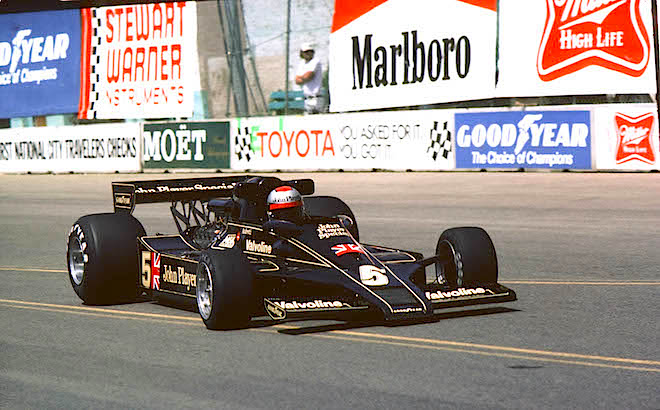
In contrast, Mario Andretti scrapped hard for a win at the same venue the following year in his Lotus 78 (BOTTOM) to defeat Jody Scheckter's Wolf and Lauda's Ferrari.
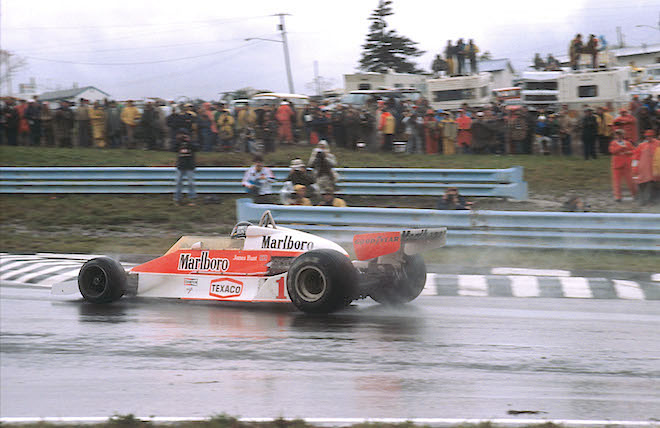
In ’76, James Hunt had scored his sixth win of the season at Watkins Glen, a vital victory in his eventual World Championship triumph over Niki Lauda. In ’77 (ABOVE), Hunt held off Mario Andretti's Lotus by two seconds to claim his third win of the season in the handsome McLaren M26.
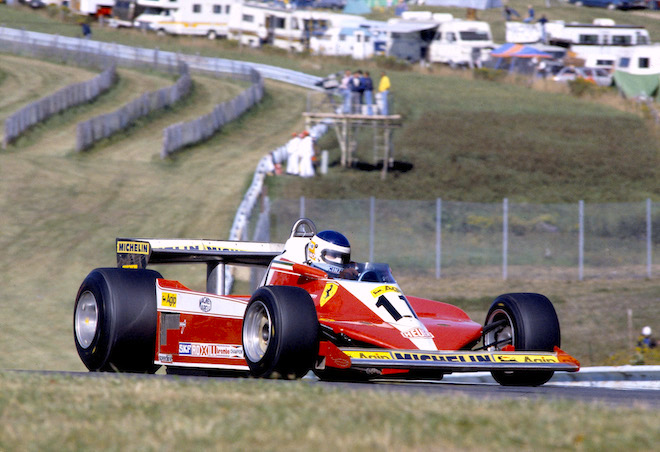
And that same day, Lauda reclaimed the title. (BELOW) Carlos Reutemann's natural pace and the Michelin radial tires enabled the Ferrari team leader to take the championship fight to the dominant Lotus 79s in 1978. Two of his four victories came on American soil, with wins at Long Beach and at Watkins Glen (BELOW).
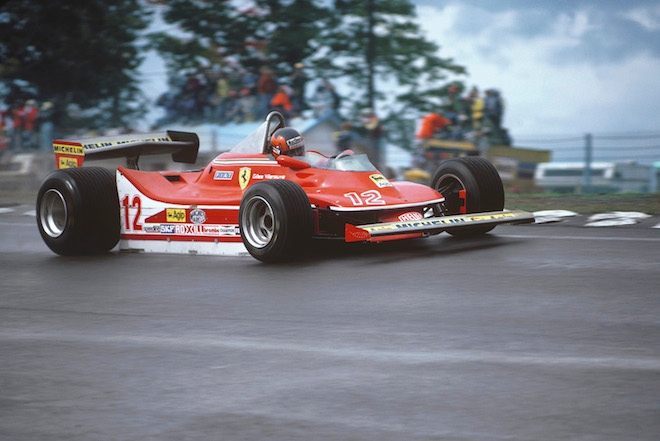
The following year, Gilles Villeneuve (BOTTOM) replicated that U.S. double in the 312T4.
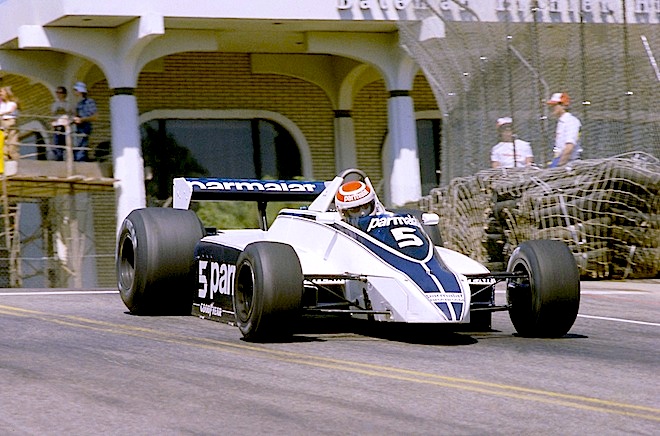
It's become one of those classic name-association combos: think Nelson Piquet, think Gordon Murray-designed Brabham, dressed in a simple but handsome livery. Here in Long Beach in 1980, Piquet scored the first of his 24 GP career wins, and he did it from pole position and leading all the way in the BT49.
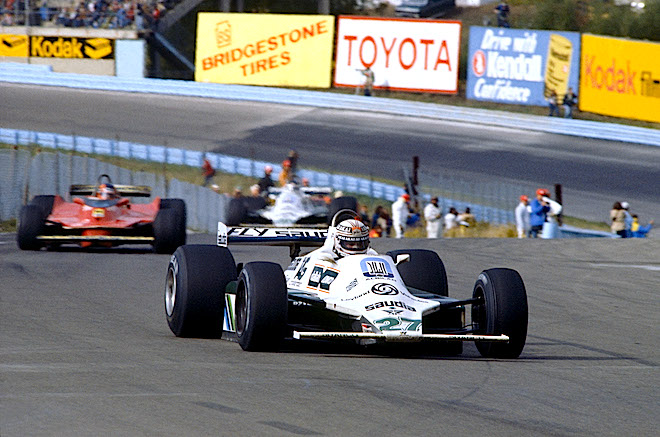
He didn't go on to win the World Championship that year, as instead the title went to Piquet's first F1 nemesis, Alan Jones (BELOW) who became Formula 1's final winner at Watkins Glen in 1980.
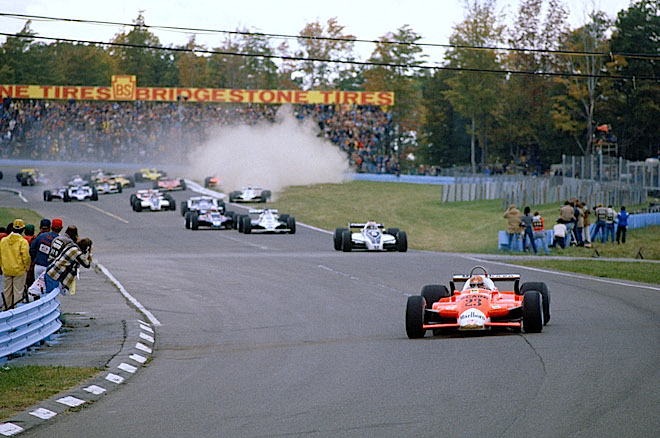
The victory wasn't simple, as the new champ fell off the circuit on the first lap (BOTTOM), and had to charge hard through the field. The polesitting Alfa Romeo of Bruno Giacomelli (in the foreground) obligingly blew up, however, making Jonesy's life a little easier.
Tomorrow: more gems from the LAT Photographic archives, covering U.S. Grands Prix 1981-2013.
Presented by:

Latest News
Comments
Comments are disabled until you accept Social Networking Cookies. Update cookie preferences
If the dialog doesn't appear, ad-blockers are often the cause; try disabling yours or see our Social Features Support.